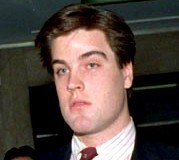
Robert Chambers
Murderer Brian Kevin Rosenfeld
Murderer · USA · 1985
Brian Kevin Rosenfeld Brian Kevin Rosenfeld was sentenced to three concurrent l…
23 victims
Brian Kevin Rosenfeld
Murderer · USA · 1985
Brian Kevin Rosenfeld Brian Kevin Rosenfeld was sentenced to three concurrent l…
23 victims
 Yahweh ben Yahweh
Murderer · USA · 1980
Yahweh ben Yahweh was born and legally named Hulon Mitchell Jr. (October 27, 19…
23 victims
Yahweh ben Yahweh
Murderer · USA · 1980
Yahweh ben Yahweh was born and legally named Hulon Mitchell Jr. (October 27, 19…
23 victims
 Russell Ellwood
Murderer · USA · 1991
Russell Ellwood was a former taxi driver. Authorities suspected him of killing…
20 victims
Russell Ellwood
Murderer · USA · 1991
Russell Ellwood was a former taxi driver. Authorities suspected him of killing…
20 victims
 Patricia Allanson
Murderer? · USA · 1974
Patricia Taylor Allanson Patricia Allanson was born in 1937. She grew up as “Pa…
3 victims
Patricia Allanson
Murderer? · USA · 1974
Patricia Taylor Allanson Patricia Allanson was born in 1937. She grew up as “Pa…
3 victims
 Ricky Lee Green
Serial killer · USA · 1985
Offender: Ricky Lee Green (#984) · October 8, 1997 — Scheduled execution date.…
12 victims
Ricky Lee Green
Serial killer · USA · 1985
Offender: Ricky Lee Green (#984) · October 8, 1997 — Scheduled execution date.…
12 victims
 Troy Burkhart
Murderer · USA · 1997
Troy Alan Burkhart was convicted of three counts of murder and three counts of…
3 victims
Troy Burkhart
Murderer · USA · 1997
Troy Alan Burkhart was convicted of three counts of murder and three counts of…
3 victims
 Aileen Wuornos
Serial killer · USA · 1989
Aileen Carol Wuornos was an American serial killer who killed seven men in Flor…
7 victims
Aileen Wuornos
Serial killer · USA · 1989
Aileen Carol Wuornos was an American serial killer who killed seven men in Flor…
7 victims
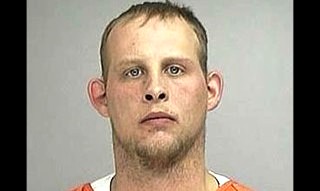 Michael Zabawa
Murderer
Michael Zabawa was a Minnesota man who lived in Matawan, and he worked at a hog…
2007 victims
Michael Zabawa
Murderer
Michael Zabawa was a Minnesota man who lived in Matawan, and he worked at a hog…
2007 victims
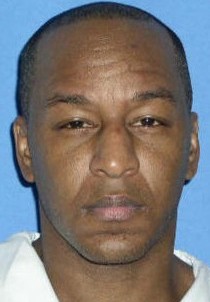 Kenneth Wayne Morris
Murderer · USA · 1991
Kenneth Wayne Morris was convicted of capital murder in connection with the mur…
1 victim
Kenneth Wayne Morris
Murderer · USA · 1991
Kenneth Wayne Morris was convicted of capital murder in connection with the mur…
1 victim
- Gender
- male
- Country
- USA
- Location
- New York City, New York, USA
- Date of birth
- September 25, 1966
- Age at first offence
- 20
- Characteristics
- rape, drug addict, alcohol, domestic violence, drug dealer
- Victim profile
- Jennifer Levin, 18
- Method of murder
- Strangulation
- Date(s) of murder
- August 26, 1986
- Years active
- 1986
- Date of arrest
- Next day
- Status
-
Imprisoned
Released on February 14, 2003; on March 22, 1988 he was sentenced to 5 to 15 years in prison for manslaughter, and on September 2, 2008 he was sentenced to 19 years on the drug charge after pleading guilty to selling drugs on August 11, 2008
Case information
Robert Emmet Chambers, Jr. (born 25 September 1966) was an American murderer, nicknamed the Preppy Killer. He killed 18-year-old Jennifer Levin in New York's Central Park during the early morning of 26 August 1986.
Background
Chambers was raised by his mother, Phyllis (née Shanley), a nurse who emigrated from County Leitrim in Ireland to New York City. He served as an altar boy and attended a series of prep schools on scholarship because his mother could not afford to pay private school tuition. Chambers had problems with poor grades and antisocial behavior, including stealing and drug abuse.
Among the schools he attended were Saint David's School (New York City), Choate-Rosemary Hall, The Browning School and ultimately York Preparatory School. Chambers also attended Wilbraham Junior High in Massachusetts during middle school.
Chambers was accepted by Boston University, where he completed one semester but was asked to leave because of difficulties, one involving a stolen credit card. He subsequently committed other petty thefts and burglaries in connection with his drug and alcohol abuse.
Unable to hold a job, he was issued a summons for disorderly conduct one night after leaving the Upper East Side bar Dorrian's Red Hand, located at 300 East 84th Street in Manhattan. Chambers destroyed the summons as the police were leaving the scene, yelling, "You fucking cowards, you should stick to niggers!" He later entered and was discharged from the Hazelden Clinic in Minnesota, an addiction treatment center.
Chambers lived with his mother in an apartment in a townhouse at 11 East 90th Street.
The offence
Chambers’s girlfriend, Alex Kapp, publicly broke up with him at Dorrian's Red Hand on the night of Levin's death. Kapp was heard to express jealousy regarding the presence of Jennifer Levin, Chambers' secret lover, throwing a bag of condoms at him and yelling "You can take these back because you're not using them with me!" as she ended the relationship. Chambers subsequently left the bar with Levin.
Levin’s strangled, half-naked corpse, covered in bruises, bite marks, and cuts, was found by a bicyclist beneath an elm tree on a grassy knoll near Fifth Avenue and 83rd Street, behind the Metropolitan Museum of Art. Her bra and shirt were pushed up to her neck, and her skirt was around her waist.
The city Medical Examiner's office said that Levin had died of "asphyxia by strangulation". Police officials said there were numerous bruises on her neck, both from the strangulation and from her own fingernails as she clawed at her killer's hands.
The investigators found Levin's panties some 50 yards (46 m) away. Later, Chambers watched from nearby as police officers investigated the scene.
Investigation
Police were given Chambers' name by patrons at the bar who had seen him leaving with Levin. When authorities arrived to question him at his home, he had fresh scratches on his face and arms, which he initially said were "cat scratches". He was then taken in for questioning.
Chambers changed his story several times:
- "'his cat had been declawed'"
- "he 'didn't part from Levin immediately upon leaving the bar'"
- "she had parted from him to purchase cigarettes"
In the final version of his confession, he claimed that some time after he and Levin had left the bar, she had asked him for "rough sex", tied the 6'5" Chambers' hands with her panties, and hurt his genitals as she stimulated him, and that she had been killed accidentally when he freed his hands and pushed her off him.
Confronted with this explanation, the examining Assistant District Attorney Saracco said: "I've been in this business for a while, and you're the first man I've seen raped in Central Park".
The rape scenario was considered to be highly unlikely because Chambers was more than a foot taller than the 5'4" Levin, and at 220 lb (100 kg), he was almost double her weight.
Before booking, Chambers was permitted to see his father. Chambers told his father: "That fucking bitch, why didn't she leave me alone?"
Arrest
Chambers was arrested after police were given his name by patrons who saw him leaving with Levin. Hours later, police picked him up at his home a few minutes' walk from the slaying site. His face was covered with scratches.
On October 22, 2007, Chambers was arrested again in his own apartment and charged with three counts of the criminal sale of a controlled substance in the first degree, three counts of the criminal sale of a controlled substance in the second degree and one count of resisting arrest. Kovell was also arrested on one count of the criminal sale of a controlled substance in the second degree.
On Tuesday, 23 October 2007, Chambers was jailed without bail until Thursday after he said he did not have a lawyer and could not afford to hire one.
Trial
Chambers was charged with, and tried for, two counts of second-degree murder.
His defense was that Levin's death had occurred during "rough sex". He was defended by prominent Harvard-trained lawyer Jack T. Litman, who had previously used the temporary insanity defense on behalf of Richard Herrin for the murder of Yale University student Bonnie Garland.
Prosecutor Linda Fairstein stated: "In more than 8,000 cases of reported assaults in the last 10 years, this is the first in which a male reported being sexually assaulted by a female."
The case popularized the strategy later colloquially termed the "rough sex defense". The defense sought to depict Levin as a promiscuous woman who kept a "sex diary"; however, no such diary existed. Levin instead kept a small notebook that contained the names and phone numbers of her friends and notations of ordinary appointments.
Protests took place outside the courtroom, including some calling themselves "Justice for Jennifer".
Chambers had secured bail through his family and the owner of the bar, Jack Dorrian, who used his $650,000 East Side townhouse to secure the $150,000 bond. Chambers remained free on bond for the two years of his trial, reporting regularly to family friend Monsignor Thomas Leonard, a former teacher.
Archbishop Theodore Edgar McCarrick of Newark, New Jersey, later Archbishop of Washington, wrote a letter of support for Chambers' bail application. McCarrick had known Chambers and his mother because Phyllis Chambers had been employed as a nurse by Cardinal Terence Cooke. McCarrick had served as Robert's godfather at his baptism.
The media labeled the crime "The Preppie Murder". Some New York media sources reported lurid aspects of the case, including New York Daily News headlines that read: "How Jennifer Courted Death" and "Sex Play Got Rough".
With the jury deadlocked for nine days, a plea bargain was struck in which Chambers pleaded guilty to the lesser crime of manslaughter in the first degree (a Class B felony), and to one count of burglary (a Class C felony) for his thefts in 1986. He was sentenced to serve 5 to 15 years, with the sentence for burglary being served concurrently.
Sentencing
Manslaughter and burglary
On March 22, 1988, Chambers was sentenced to 5 to 15 years in prison.
Aftermath
Tabloid television and prison record
In April 1988, the tabloid television program A Current Affair obtained and broadcast a home video showing Chambers at a party when he was free on bail. In the video, Chambers played with four lingerie-clad girls, choked himself with his hands while making loud gagging noises, and twisted a Barbie doll's head off, saying in falsetto: "My name is…Oops! I think I killed it."
Chambers served most of his 15-year sentence at Auburn State Prison, but was later moved to Clinton Correctional Facility due to infractions that cost him all his time off for good behavior. He assaulted a correctional officer and was cited repeatedly for weapons and drug infractions, some of which resulted in additional criminal charges.
Nearly five years of his term were served in solitary confinement. In 1997, Chambers sent an untitled essay he wrote to prison anthologist Jeff Evans. The piece, subsequently titled "Christmas: Present," appeared in the book, Undoing Time: American Prisoners in Their Own Words. Written while Chambers was incarcerated at Green Haven Correctional Facility in Stormville, New York, the essay was an entry from one of his journals, which he called "a record of the meaningless hope and frightening losses of a person I don’t even know."
Parole opposition and release
Ellen Levin, mother of Jennifer Levin, pleaded before the New York parole board to deny Chambers parole.
Chambers was released from Auburn Prison on February 14, 2003 after having served the entirety of his prison term due to his numerous infractions. His release was a media event, with news media staking out prime sections of sidewalk opposite the prison as early as 13 hours before his 7:30 a.m. release time.
The same day, a documentary was aired on Dateline, interviewing Chambers.
Civil settlement and activism
The owner of Dorrian's Red Hand came to a private settlement with Levin's parents on their claim that the bar had served alcohol to Chambers in excess.
A wrongful death lawsuit, to which Chambers pleaded no contest, provided that he must pay all lump sums he receives, including any income from book or movie deals, plus 10 percent of his future income (up to $25 million), to the Levin family. The family said that all the money it received from Chambers would go to victims' rights organizations.
Ellen Levin became an activist for victims' rights, helping to secure the passage of 13 pieces of legislation.
Post-release life
After leaving prison, Chambers settled in Dalton, Georgia with his girlfriend, Shawn Kovell, who had appeared in the Barbie doll video made before his sentencing. The two lived there for eight to nine months.
Chambers found a job at the Pentafab dye factory. Chambers and Kovell moved to an East 57th Street Sutton Place, Manhattan apartment in New York when the death of Kovell's mother in the autumn of 2003 left it vacant.
Chambers found a job at a limousine company in Queens and later in a New Jersey sports trophy manufacturer’s engraving plant.
Drug charges and later proceedings
2004 heroin and cocaine case
Shortly before Thanksgiving 2004, Chambers was stopped in his Saab for driving with a suspended driver’s license in Manhattan on Harlem River Drive at 139th Street. A search of the car he was driving found glassine envelopes containing an unknown substance.
Chambers was charged on November 29, 2004, with possession of heroin and cocaine, driving with a suspended license, and driving a car without a valid inspection sticker.
Chambers pleaded guilty in July 2005. On August 29, he was sentenced to a reduced sentence of 90 days in jail and fined $200 for the license violation. The judge added 10 days to the time prosecutors and Chambers’ lawyer had agreed on because Chambers was an hour late for the hearing. He faced up to a year in jail if he had been convicted after trial.
2007 cocaine sales case
On October 22, 2007, Chambers was arrested again and charged with three counts of the criminal sale of a controlled substance in the first degree, three counts of the criminal sale of a controlled substance in the second degree and one count of resisting arrest.
The New York Daily News reported: Cops said Chambers, 41, struggled with officers who tried to handcuff him on the felony charges. One detective suffered a broken thumb in the fracas.
In commenting on his new arrest, former Assistant District Attorney Linda Fairstein said: "Doesn't surprise me. I always believed his problem with drugs and alcohol would get him in trouble again. He's had the opportunity in prison to detox and take college courses, to straighten out his life, but that clearly is of no interest to him. He's learned nothing in the last 20 years."
Chambers and Kovell were charged with running a cocaine operation out of the apartment. The two had previously been given notices for not paying the rent on the apartment and the phone had been disconnected.
Chambers appeared in court on December 18. According to the New York Post, his lawyer, Valerie Van Leer-Greenberg, filed "new papers elaborating on his psychiatric defense". The filing claimed that Chambers had become an addict at the age of 14 and was, by 2007, using 10 to 12 bags of heroin a day. It was also reported that he used cocaine, was smoking marijuana and taking prescription drugs. Chambers planned to plead insanity.
Prosecutors countered that Chambers was a drug dealer and had sold as much as $2,800 in heroin at a time to undercover police. Chambers faced life in prison on the drug charges.
Guilty plea and sentence for drug charge
On August 11, 2008, the Manhattan DA's office announced that Chambers had pleaded guilty to selling drugs. On September 2, 2008, he was sentenced to 19 years on the drug charge.
Timeline
- 26 August 1986 — Jennifer Levin’s body was found in Central Park; Chambers was later arrested after police questioned him and he changed his story.
- March 22, 1988 — Chambers was sentenced to 5 to 15 years in prison.
- April 1988 — A Current Affair broadcast a home video showing Chambers at a party while he was free on bail.
- February 14, 2003 — Chambers was released from Auburn Prison.
- November 29, 2004 — Chambers was charged with possession of heroin and cocaine, driving with a suspended license, and driving a car without a valid inspection sticker.
- July 2005 — Chambers pleaded guilty in the heroin and cocaine case.
- August 29, 2005 — Chambers was sentenced to 90 days in jail and fined $200 for the license violation.
- October 22, 2007 — Chambers was arrested in his own apartment and charged with criminal sale of controlled substances and resisting arrest.
- December 18 (year not stated) — Chambers appeared in court; his lawyer filed papers elaborating on a psychiatric defense.
- August 11, 2008 — Chambers pleaded guilty to selling drugs.
- September 2, 2008 — Chambers was sentenced to 19 years on the drug charge.
Other details
Central Park and trial context
Chambers watched police investigate the scene after Levin’s body was found under an elm tree on a grassy knoll near Fifth Avenue and 83rd Street behind the Metropolitan Museum of Art.
Prosecutors said he was drunk and high on drugs and killed her in a rage when he was unable to perform sexually.
Chambers’s trial on a charge of second-degree murder lasted 11 weeks. John Zaccaro Jr., the son of 1984 Democratic vice presidential nominee Geraldine Ferraro, testified that he had been bartending at Dorrian's that night and had known Chambers since elementary school.
In the trial narrative, Chambers squeezed Levin's neck very hard for a long time and the jury deliberated nine days before deadlocking.
At a later time, Ellen Levin said: "I was horrified when I saw it, but in a way I was also glad that he showed himself for what he really was."
Quotes from interviews and proceedings included in the record
Chambers told Troy Roberts: "Every day, something reminds me of her, reminds me of her family," "And every day, I know that I'm in prison because somebody died, and I'm responsible for that. It's not an easy feeling. You don't get comfortable with it. And it's part of my life for the rest of my life."
Chambers said: "People say, 'I don't believe he's changed; I don't believe he's grown up; I don't believe he's going to be any different,'" "I will. I really will. I mean, it's a wake-up call. You know, you may not wake up immediately, like people want you to, but towards the end, there's something that clicks in your mind, and you realize, you have to change."
Chambers said: "I'd choose solitary in a second," "It's a lot easier than this. I don't want to be here."
Chambers said: "Would I like to be forgiven? I wouldn't even think of asking for that," "Would I like the opportunity to apologize for my actions? Yes. Am I acting? I don't know how to act. I'm too scared to act right now. You say I'm well mannered and everything. I'm here holding my hands. I'm scared."
Chambers recalled: "My attorney entered the room, and he said, 'The district attorney is offering you 5 to 15.' I didn’t like the deal."
Chambers said: "It’s rough. It’s dangerous. It’s scary."
Chambers said: "Everybody was just acting silly," "and I acted silly. Reenacting a crime? Certainly not."
Chambers said: "My story hasn't changed," "There is nothing to change. It's not a story that's pleasant. It's not a story people like. It's not a story that fits into people's perceptions. You know why? Cause it's not a story. It's the truth."
Chambers said: "While we were talking, she became upset about one thing," "And the one thing was that I did not take her seriously. I did not take her feelings seriously. And I guess, in a way, I degraded her feelings. And with that, she scratched me. There was not a struggle for life. There was not an all-out war in there fighting for her life."
Chambers said: "Sure. Just as they will when they see this," "They will look at every time I move my thumb. If I jiggle my leg, if I sit forward, if I lean back, they’re gonna look for it."
Chambers said: "It’s not an easy feeling.
Chambers said: "This is real life, this is real death," "Somebody is dead. There has to be some action after the words. My action of doing 15 years. No… That’s just the beginning, it’s not an end. The trial didn’t end. The trial lives with me. Every day, I’m on trial."
Popular culture references included in the record
The song "Eliminator Jr." from Sonic Youth's album Daydream Nation (1988) was about the Chambers case. In 1989, the Chambers case was the basis of a TV movie titled The Preppie Murder, starring William Baldwin as Chambers and Lara Flynn Boyle as Levin. In 1990, the television series Law and Order based the episode "Kiss the Girls and Make Them Die" on the case. Mike Doyle has stated that his character, Adam Guenzel on Oz (1997–2003), was based on Chambers. The 2003 Law & Order: Criminal Intent episode "Monster" was based on both the Chambers case and the Central Park Jogger case.
The Killers' Murder trilogy songs from their 2004 album Hot Fuss ("Leave the Bourbon on the Shelf", "Midnight Show", and "Jenny Was a Friend of Mine") were based on the Chambers case. The case was briefly mentioned in Kerry Cohen's memoir Loose Girl (2008). In the novel American Psycho, Patrick Bateman mentioned trying to start a defense fund for Chambers.
Additional description included in the record
Chambers was described as tall, lean and unshaven during the 23 October 2007 arrest reporting. He wore a black T-shirt with black sweatpants and dirty white sneakers with no laces and no socks and answered the judge's questions in a clear voice with his hands cuffed behind him.
Police said undercover officers had purchased roughly a quarter kilogram of cocaine, with a street value of around $20,000, in eight buys over the summer, and recovered 10 crack pipes and five small bags of cocaine. Assistant District Attorney Dan Rather estimated Chambers could be sentenced to 150 years in prison if convicted on the most serious drug charges. District Attorney Robert Morgenthau said Kovell "was directly involved in the sales" and Kovell has no prior record.
Spotted an error, or have more information about this case?