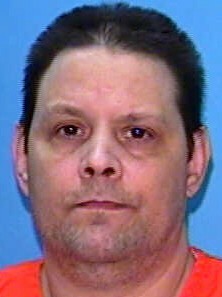
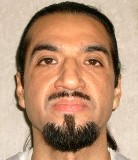
Glen James Ocha
Murderer Russell Ellwood
Murderer · USA · 1991
Russell Ellwood was a former taxi driver. Authorities suspected him of killing…
20 victims
Russell Ellwood
Murderer · USA · 1991
Russell Ellwood was a former taxi driver. Authorities suspected him of killing…
20 victims
 Robert Martines Perez
Murderer · USA · 1994
Name: Robert Martines Perez · Other name used in proceedings: Robert Martinez P…
15 victims
Robert Martines Perez
Murderer · USA · 1994
Name: Robert Martines Perez · Other name used in proceedings: Robert Martinez P…
15 victims
 Billy Frank Vickers
Murderer · USA · 1993
Billy Frank Vickers Vickers was executed by lethal injection in Texas on Januar…
14 victims
Billy Frank Vickers
Murderer · USA · 1993
Billy Frank Vickers Vickers was executed by lethal injection in Texas on Januar…
14 victims
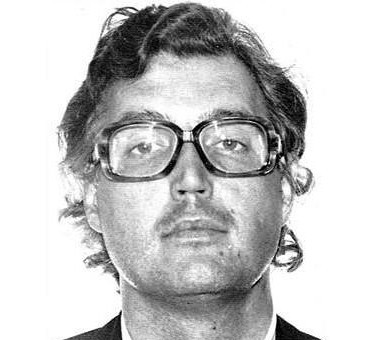 Peter Demeter
Murderer · Canada · 1973
Peter Demeter was a Canadian murderer and a real-estate developer who was born…
1 victim
Peter Demeter
Murderer · Canada · 1973
Peter Demeter was a Canadian murderer and a real-estate developer who was born…
1 victim
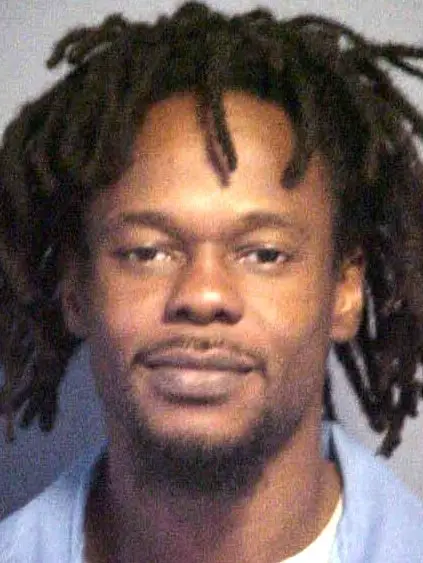 Michael Pennington
Murderer · USA · 1991
Michael L. Pennington was an in-prison convert to Islam at the Oklahoma State P…
1 victim
Michael Pennington
Murderer · USA · 1991
Michael L. Pennington was an in-prison convert to Islam at the Oklahoma State P…
1 victim
 Allen Wayne Janecka
Murderer · USA · 1975
Name: Allen Wayne Janecka · July 6, 1979 — A neighbor discovered the corpses of…
4 victims
Allen Wayne Janecka
Murderer · USA · 1975
Name: Allen Wayne Janecka · July 6, 1979 — A neighbor discovered the corpses of…
4 victims
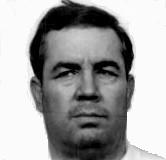 James Otto Earhart
Murderer · USA · 1987
James Otto Earhart · May 4, 1987 — Earhart visited the Kirtland home in respons…
1 victim
James Otto Earhart
Murderer · USA · 1987
James Otto Earhart · May 4, 1987 — Earhart visited the Kirtland home in respons…
1 victim
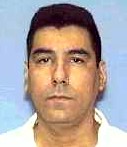 Anibal Canales
Murderer · USA · 1997
Anibal Canales, Jr. was convicted in Texas of capital murder and was sentenced…
1 victim
Anibal Canales
Murderer · USA · 1997
Anibal Canales, Jr. was convicted in Texas of capital murder and was sentenced…
1 victim
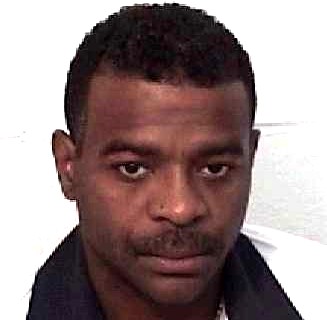 Frederick Whatley
Murderer · USA · 1995
Frederick Whatley (Frederick Ramone Whatley) was sentenced to death on January…
1 victim
Frederick Whatley
Murderer · USA · 1995
Frederick Whatley (Frederick Ramone Whatley) was sentenced to death on January…
1 victim
- Gender
- male
- Country
- USA
- Location
- Osceola County, Florida, USA
- Date of birth
- October 27, 1957
- Age at first offence
- 42
- Characteristics
- alcohol, drugs, torture
- Victim profile
- Carol Skjerva (female, 28)
- Method of murder
- Strangulation by hanging
- Date(s) of murder
- October 5, 1999
- Years active
- 1999
- Date of arrest
- Same day
- Status
-
Executed
Executed by lethal injection in Florida on April 5, 2005
Case record
Defendant: Glen James Ocha (also called himself “Raven Raven”) Victim: Carol Skjerva Victim’s age: 28 Defendant’s age: 47 Race: WHITE Sex: MALE Hair color: BROWN Eye color: BROWN Height: 5'11'' Weight: 291 Birth date: 10/27/57 Current facility: FLORIDA STATE PRISON DC number: 911117
Timeline
- October 5, 1999 — Glen James Ocha met Carol Skjerva at Rosie's Pub in Kissimmee, Florida; they left the bar together and the victim drove the appellant to his home where they had consensual sexual intercourse; afterwards the victim made disparaging comments about Ocha and threatened to tell her boyfriend about the incident; Ocha became angry, forced the victim to sit in a chair, and entered the garage where he found a length of rope and used it in strangling the victim; during the strangling he lifted her off the floor several times to ensure that she was dead; because he ascertained the victim’s heart was still beating, he again tightened the rope around Skjerva's neck, hung the cord over an interior door to the garage, and closed the door on the rope, catching it between the door and its frame; he left the victim hanging from this door location; he then consumed a beer, cleaned the area by removing bottles and ash from the kitchen table, and changed his clothing; after several minutes he returned to lower the victim's body from the door and force it into the cabinet portion of an entertainment center located in the garage; thereafter he left the premises and drove the victim’s car to Daytona Beach.
- October 6, 1999 — While in jail, Ocha confessed to detectives of the Daytona Beach Police Department that he had murdered Skjerva; he was arrested on October 6, 1999 for disorderly intoxication.
- October 7, 1999 — Ed Boykin arrived at Ocha's home after a “well-being check” by the Osceola Sheriff's Office prompted by a report from the Volusia County Sheriff's Department revealed the victim’s body in the garage.
- October 11, 1999 — Detective Boykin identified an audio tape and transcript of Ocha’s October 11, 1999, statement to the Osceola Sheriff's Office.
- November 1, 1999 — Ocha was indicted for first-degree murder.
- July 6, 2000 — The trial court reconvened for a hearing on sentencing.
- June 11, (year not stated) — Ocha was ruled competent to enter a guilty plea and later discharged his state lawyer, Mark Gruber, after being ruled competent.
- (May, year not stated) — The Florida Supreme Court ordered the trial court to hold a hearing on his mental competency.
- 2002 — The Florida Supreme Court affirmed his conviction.
- April 5, 2005 — Glen Ocha was executed by lethal injection in Florida.
The offence
On October 5, 1999, Glen James Ocha met Carol Skjerva at Rosie's Pub in Kissimmee, Florida. They left the bar together and the victim drove the appellant to his home, where they had consensual sexual intercourse. Afterward, the victim made disparaging comments about Ocha and threatened to tell her boyfriend about the incident. Ocha became angry and forcefully told the victim to sit in a chair as he paced back and forth deciding how he would address the situation.
Ocha entered the garage where he found a length of rope and proceeded to use it in strangling the victim. As he applied pressure, he lifted her off of the floor several times to ensure that she was dead. Finally, because he ascertained that the victim’s heart was still beating, Ocha again tightened the rope around Skjerva's neck, hung the cord over an interior door to the garage, and closed the door on the rope, catching it between the door and its frame. Ocha left the victim hanging from this door location.
Ocha then consumed a beer, cleaned the area by removing bottles and ash from the kitchen table, and changed his clothing. After several minutes he returned to lower the victim's body from the door and force it into the cabinet portion of an entertainment center located in the garage. Thereafter, Ocha left the premises and drove the victim's car to Daytona Beach, where he was arrested for disorderly intoxication.
In the sentencing proceedings, Dr. Sashi B. Gore testified that the victim’s death resulted from ligature strangulation.
Investigation
A “well-being check” by the Osceola Sheriff's Office prompted by a report from the Volusia County Sheriff's Department revealed the victim's body in the garage at Ocha’s home. Ed Boykin testified that he arrived at Ocha's home on October 7, 1999, and identified photographs of the crime scene and an audio tape and transcript of Ocha’s October 11, 1999 statement to the Osceola Sheriff's Office. Boykin recounted Ocha’s version of the events in relation to the photographs.
While in jail, Ocha confessed to detectives of the Daytona Beach Police Department that he had murdered Skjerva. The detectives promptly notified the Osceola County Sheriff’s Office of Ocha’s statements, and Ocha was transferred to incarceration in Osceola County where he gave a detailed description of the murder to detectives.
Arrest
Ocha was arrested on October 6, 1999 for disorderly intoxication.
Trial
Ocha was indicted for first-degree murder on November 1, 1999. Based on testimony of three mental health professionals, the trial judge concluded that Ocha was competent to enter a guilty plea.
Ocha signed the plea form, waiver of jury trial, waiver of presentation of mitigation of evidence, and the acknowledgment that the State was seeking the death penalty, voluntarily and without coercion after reading and understanding the documents. Ocha acknowledged to the trial court that he was not currently suffering from, nor had he been treated in the past for, mental or emotional disorders, and that he was not under the influence of drugs or alcohol.
At sentencing, the State presented evidence of three aggravating factors: Ocha’s prior commission of a violent felony, that the murder was especially heinous, atrocious, or cruel (HAC), and that it was cold, calculated and premeditated (CCP).
Sentencing evidence and findings
- Prior violent felony aggravator: the trial court admitted certified copies of Ocha’s conviction in Kentucky for attempted premeditated murder and robbery in the first degree, and his incarceration in various Kentucky prisons.
- HAC and CCP: the court received testimony from Dr. Sashi B. Gore (chief medical examiner) and Ed Boykin (Deputy Sheriff of Osceola County).
Dr. Gore testified that strangulation of a conscious person to the point that one becomes unconscious requires “from thirty, sixty seconds to up to three to four minutes.” He also testified that initially a victim may experience cardiac arrhythmia when she sees the perpetrator approaching with intent and capacity to strangle, and that the victim then experiences pain during actual strangulation. Dr. Gore stated that he could not conclusively testify as to defensive wounds due to decomposition prior to the autopsy, but he could identify the ligature used because its texture matched patterns left on the victim’s neck.
Defense counsel did not cross-examine Dr. Gore, consistent with Ocha’s wishes and instructions.
Ed Boykin identified photographs of the crime scene and an audio tape and transcript of Ocha’s October 11, 1999 statement. Defense counsel again reiterated that Ocha did not want him to cross-examine the witnesses.
The trial court found the prior violent felony and HAC aggravators proved beyond a reasonable doubt, but did not find the CCP aggravator present because Ocha did not act with a heightened and premeditated plan or design to kill.
Mitigating evidence
Despite Ocha’s waiver of the right to present mitigation, defense counsel proffered competency hearing testimony of Drs. Tressler, Berns, and Berland that, absent Ocha’s instructions to the contrary, he would have otherwise fully presented for the trial court’s consideration. Dr. Berland’s testimony would have addressed the existence of fifteen possible mitigating factors.
Defense counsel also proffered letters written by Ocha to the victim’s fiancé, to the prosecuting assistant state attorney, and to defense counsel, which showed remorse. Counsel also submitted Ocha’s cooperation with investigating police departments.
The trial court assigned relative weight to numerous mitigating circumstances, including:
- little weight to the mitigator that Ocha was a good prisoner in Kentucky;
- some weight to his history of suicidal thinking;
- some weight to his artistic ability;
- little weight to his report of two severe head injuries;
- some weight to his extensive history of alcohol and drug abuse;
- little weight to Ocha’s learning disability;
- little weight to Ocha’s ability to form a warm and caring relationship;
- little weight to his urging his ex-wife to seek a more professional career;
- no weight to his military service;
- little weight to his post-traumatic stress disorder;
- little weight to his chaotic and violent childhood;
- little weight to Ocha’s remorse for the murder;
- some weight to the fact that he was intoxicated with alcohol and Ecstasy (MDMA) on the night of the offense;
- little weight to his psychiatric disturbance; and
- little weight to his having been a hard worker in the Kentucky prison system.
The trial court determined that the aggravators “far outweigh[ed]” the mitigators and sentenced Ocha to death.
Appeals
After his conviction, Ocha appealed. The Florida Supreme Court had on appeal a judgment of conviction of first-degree murder and a sentence of death.
The Florida Supreme Court held that:
- the sentencing court did not abuse its discretion by failing to order further psychological testing to determine Ocha’s mental condition;
- Ocha’s murder of the victim was especially heinous, atrocious, or cruel (HAC);
- it was not inconsistent for Ocha to waive his right to present mitigating evidence at trial level, yet have appellate counsel appointed against his wishes;
- Ocha’s guilty plea was voluntary; and
- the death sentence was proportionate.
The Florida Supreme Court affirmed the appellant’s conviction and sentence of death. Pariente, J., concurred as to conviction and concurred in result only as to sentence, with written opinion, in which Anstead, J., joined. The decision was by Per Curiam.
Ocha later waived further appeals and dismissed his attorneys after his direct appeal failed.
Other details
Name change
Ocha had changed his name legally to Raven Raven.
Final meal and last visits
Ocha received a final meal: a chicken breast, potato salad, corn, two biscuits and a large glass of Pepsi.
He received final visits from two Catholic priests: the Rev. Dale Recinella of Macclenny and retired Bishop John Snyder from Jacksonville, plus a visit with his brother, Martin Ocha.
Final statement and written statement
Ocha’s final statement included: “I would like to say I apologize to Carol Skjerva, the girl that I murdered, her family and her friends. This is the punishment that I deserve. I'm taking responsibility for my actions. I want everybody to know I'm not a volunteer but this is my responsibility I have to take.”
In a written statement, Ocha stated: “I unjustly took the life of Carol Skjerva. I have made my peace with my God and go now to face His judgment.”
In his final statement from the death gurney, Ocha stated: “This is the punishment that I deserve. I am taking responsibility for my actions,” and he apologized to Skjerva and her family and friends.
A handwritten instruction attributed to Ocha in a letter to Assistant Attorney General Stephen D. Ake stated: “Sir I wish for my execution to come swift and unhampered.”
Outcome
Glen Ocha was executed by lethal injection in Florida on April 5, 2005, following his guilty plea and death sentence for the strangulation murder of Carol Skjerva. He had dropped all appeals.
Spotted an error, or have more information about this case?