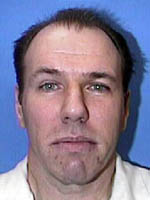
Craig Neil Ogan
Murderer Brian Kevin Rosenfeld
Murderer · USA · 1985
Brian Kevin Rosenfeld Brian Kevin Rosenfeld was sentenced to three concurrent l…
23 victims
Brian Kevin Rosenfeld
Murderer · USA · 1985
Brian Kevin Rosenfeld Brian Kevin Rosenfeld was sentenced to three concurrent l…
23 victims
 Yahweh ben Yahweh
Murderer · USA · 1980
Yahweh ben Yahweh was born and legally named Hulon Mitchell Jr. (October 27, 19…
23 victims
Yahweh ben Yahweh
Murderer · USA · 1980
Yahweh ben Yahweh was born and legally named Hulon Mitchell Jr. (October 27, 19…
23 victims
 Russell Ellwood
Murderer · USA · 1991
Russell Ellwood was a former taxi driver. Authorities suspected him of killing…
20 victims
Russell Ellwood
Murderer · USA · 1991
Russell Ellwood was a former taxi driver. Authorities suspected him of killing…
20 victims
 Robert Martines Perez
Murderer · USA · 1994
Name: Robert Martines Perez · Other name used in proceedings: Robert Martinez P…
15 victims
Robert Martines Perez
Murderer · USA · 1994
Name: Robert Martines Perez · Other name used in proceedings: Robert Martinez P…
15 victims
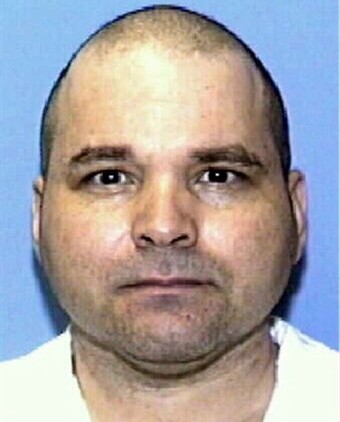 Michael Anthony Rodriguez
Murderer · USA · 1994
Michael Anthony Rodriguez was executed by lethal injection in Texas on August 1…
2 victims
Michael Anthony Rodriguez
Murderer · USA · 1994
Michael Anthony Rodriguez was executed by lethal injection in Texas on August 1…
2 victims
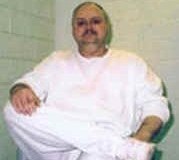 David Paul Hammer
Murderer · USA · 1996
David Paul Hammer (October 9, 1958–) was an American murderer and a prisoner on…
1 victim
David Paul Hammer
Murderer · USA · 1996
David Paul Hammer (October 9, 1958–) was an American murderer and a prisoner on…
1 victim
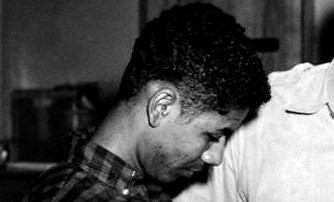 Wilbert Rideau
Murderer · USA · 1961
Wilbert Rideau (born February 13, 1942) was described by Life magazine in March…
1 victim
Wilbert Rideau
Murderer · USA · 1961
Wilbert Rideau (born February 13, 1942) was described by Life magazine in March…
1 victim
 Jessy San Miguel
Mass murderer · USA · 1991
Name: Jessy San Miguel (also referred to as Jessy Carlos San Miguel) Status: Ex…
4 victims
Jessy San Miguel
Mass murderer · USA · 1991
Name: Jessy San Miguel (also referred to as Jessy Carlos San Miguel) Status: Ex…
4 victims
 Lynda Block
Murderer · USA · 1993
Lynda Block was convicted for the murder of Opelika Police Sgt. Roger Lamar Mot…
1 victim
Lynda Block
Murderer · USA · 1993
Lynda Block was convicted for the murder of Opelika Police Sgt. Roger Lamar Mot…
1 victim
 Nelson Earl Mitchell
Murderer · USA · 1986
Nelson Earl Mitchell, 34, was sentenced to death on February 14, 1990. He was s…
1 victim
Nelson Earl Mitchell
Murderer · USA · 1986
Nelson Earl Mitchell, 34, was sentenced to death on February 14, 1990. He was s…
1 victim
- Gender
- male
- Country
- USA
- Location
- Harris County, Texas, USA
- Date of birth
- December 18, 1954
- Age at first offence
- 35
- Characteristics
- —
- Victim profile
- James C. Boswell, 29 (Houston police officer)
- Method of murder
- Shooting
- Date(s) of murder
- December 9, 1989
- Years active
- 1989
- Date of arrest
- Same day
- Status
-
Executed
Executed by lethal injection on November 19, 2002 in Texas
Case record: Craig Neil Ogan
Background
Craig Neil Ogan worked as a confidential informant for the Drug Enforcement Administration (DEA) and acted as an informant in the Houston area. He moved from St. Louis, Missouri, to Houston, Texas, in late 1989.
Ogan had a DEA supervisor in Houston, and the DEA supervisor instructed him not to carry a weapon under any circumstances and told him to “just let his face be known” around Houston and not to be involved in any drug deals. Despite these explicit instructions, Ogan insisted on arming himself and continued to seek involvement in drug transactions.
Ogan’s moves to Houston were linked to efforts to protect his informant identity after state court proceedings involving secretly made tape recordings revealed it.
The offence
On December 8, 1989, Ogan called his DEA supervisor from a Houston restaurant and said he had encountered someone with whom he had previously attempted to set up a drug deal. Ogan said an armed confrontation resulted, and he said a man put a gun to his head and he put a gun to the man’s head. Ogan told the supervisor he feared for his life and asked to be escorted safely off the premises.
Houston police officers Darryl O’Leary and Steven Hanner escorted Ogan from the restaurant. Ogan asked the officers to take him to his apartment so that he could remove papers and tapes related to a DEA investigation. At Ogan’s apartment, the officers observed Ogan pack his belongings, including what appeared to be a .38-caliber pistol, a sawed-off shotgun, and at least two hunting knives.
Officers O’Leary and Hanner then followed Ogan as he drove to a motel. Ogan checked into his motel room, attempted to make long-distance telephone calls, and the service was disconnected because he had not left a deposit for long-distance calls. Ogan complained that the heater in his room was not functioning.
Ogan went to the office to pay for his calls and to leave a deposit, and he then left the office area after complaining. A short time later, Ogan returned to the motel office and renewed his complaints. He told the desk attendant that he did not want to pay for his long-distance calls and wanted his money back. Ogan became more angry when the attendant threatened to call security, and Ogan began kicking at the office door. The desk attendant called 9-1-1. Ogan left the motel.
Ogan saw a police car across the street and walked to it. Houston police officers Morgan Gainer and James Boswell had pulled into the parking lot to stop a car for a traffic infraction.
Ogan knocked on the window of the police car. Officer Boswell rolled down his window and asked what Ogan wanted. Ogan responded:
“DEA dropped me off out here, and I'm cold.”
Officer Boswell told Ogan to back away from the car until the officers finished the traffic stop. Ogan persisted and demanded immediate assistance. When Ogan persisted after being told to wait and step back, Officer Boswell told him:
“You need to get out of here if you are not willing to step out of the way and wait. You either need to leave, or you are going to jail.”
Officer Boswell took his gun from the holster and, holding it behind his right leg, reached into the police car to unlock the back door. Ogan then, without warning or provocation, shot Officer Boswell in the head.
After Officer Boswell fell against the back door of the police car, Officer Gainer chased and caught Ogan, wounding him in the process.
Investigation
A DEA agent acted as Ogan’s supervisor in Houston and supervised him after Ogan had moved there. The DEA supervisor told Ogan he could not carry a weapon under any circumstances, per DEA policy.
Ogan insisted on arming himself and sought involvement in drug transactions despite those instructions. Ogan’s supervisor had arranged for police escort for Ogan after Ogan said he feared for his life following an armed confrontation.
Arrest
Officer Gainer chased Ogan after Ogan shot Officer Boswell and caught Ogan, wounding him in the process.
Trial
Guilt-innocence phase
On June 25, 1990, Ogan was convicted in Harris County, Texas, for the intentional murder of Houston police officer James C. Boswell.
Ogan testified at trial that Officer Boswell threatened to tell people that he was a “DEA snitch” and testified that Officer Boswell was “lunging” toward him and frantically attempting to remove his gun from the holster. Ogan claimed that he killed Officer Boswell in a reflexive action without thinking and fearing that Officer Boswell was going to shoot him. The jury found Ogan guilty.
A forensic psychologist, Sally Webster, testified for the defense. She testified that Ogan was anxious, agitated, and fearful for his life after moving to Houston. She testified that Ogan suffered from functional paranoia, which she described as not a form of insanity, and described Ogan’s passive aggressive personality disorder. She described Ogan’s mental state around December 8 and December 9 as “anxious, agitated, almost hyperactive, very touchy, very worried.”
Darryl O’Leary testified that Ogan was “extremely excited” when he arrived to assist Ogan. O’Leary said that when told Ogan he could not take him until backup arrived, Ogan became “impatient, hostile, and loud.”
Sentencing
Ogan received a death sentence after a separate punishment hearing. On June 29, 1990, Ogan was sentenced to death.
The jury answered affirmatively three special issues after the punishment phase. The special issue numbered 2 asked:
“Is there a probability that the defendant, Craig Neil Ogan, would commit criminal acts of violence that would constitute a continuing threat to society?”
The special issue numbered 3 asked:
“Was the conduct of the defendant, Craig Neil Ogan, in killing the deceased unreasonable in response to the provocation, if any, by the deceased?”
During the penalty phase, the state presented testimony about Ogan’s history of aggressive behavior, and Ogan countered with testimony from friends and relatives.
At sentencing, the jury rejected Ogan’s self-defense argument.
Appeals
Ogan filed a direct appeal to the Texas Court of Criminal Appeals raising three points of error challenging (1) sufficiency of the evidence for deliberate conduct, (2) sufficiency of the evidence for future dangerousness, and (3) effectiveness of trial counsel at the penalty stage regarding counsel’s requested jury instruction on mitigation. The Texas Court of Criminal Appeals affirmed the conviction and sentence.
The Supreme Court denied Ogan’s petition for writ of certiorari on March 28, 1994.
The Texas Court of Criminal Appeals denied Ogan’s application for state writ of habeas corpus on April 28, 1999. In a brief order, the court stated:
“In the instant cause, applicant presents a single allegation challenging the validity of his conviction and resulting sentence. The trial court has entered findings of fact and conclusions of law recommending the relief sought be denied. This court has reviewed the record. The findings and conclusions entered by the trial court are supported by the record and upon such basis the relief sought by the applicant is denied.”
On September 29, 2000, the district court denied Ogan’s federal writ of habeas corpus, denied his request for an evidentiary hearing, and denied a certificate of appealability (COA).
Ogan filed an application for COA to the Fifth Circuit Court of Appeals on January 29, 2001. The Director filed a response in opposition on February 28, 2001.
On December 12, 2001, the Fifth Circuit requested supplemental briefing regarding the applicability of Penry II (Penry v. Johnson, 532 U.S. 782 (2001)) to Ogan’s case.
After oral argument, the Fifth Circuit denied Ogan’s request for COA on June 28, 2002.
Ogan filed a petition for writ of certiorari to the Supreme Court on October 30, 2002.
Outcome
Ogan was executed by lethal injection in Texas on November 19, 2002.
Ogan made a final statement while the lethal drugs were administered. His final statement included the following:
“In killing me, the people responsible have blood on their hands, because I am not guilty. I acted in self-defense and reflex in the face of a police officer who was out of control.”
During his lengthy final statement, Ogan also complained of “police and prosecutorial perjury,” which the courts ignored.
Ogan’s execution proceeded after the U.S. Supreme Court considered late appeals questioning his competency and mental health. Ogan was pronounced dead at 7:13 p.m. CST after the lethal dose began at 7:05 p.m. The lethal injection was given while Ogan was still speaking.
Other details
- Ogan had numerous unadjudicated assaults where charges were dismissed, and he had no prior criminal record.
- Ogan was described as having an IQ of 140, and he attended college and spoke several languages.
- Ogan was 35 at the time the verdict was discussed, and he received the death penalty in 1990.
- Ogan was identified as having aspired to be a CIA agent and had a longstanding interest in espionage.
- The state presented testimony portraying Ogan as paranoid and quick-tempered, including testimony from his former girlfriend, nurse Linda Dunajcik, about their six-year live-in affair and Ogan’s angry outbursts.
- The defense psychologist testimony included that Ogan had functional paranoia and a passive-aggressive personality disorder, and described his condition as anxious and agitated.
- Procedurally, in Ogan’s federal habeas appeal before the U.S. Court of Appeals for the Fifth Circuit, the court affirmed the district court’s denial of habeas relief and denied a COA.
- In that Fifth Circuit decision (issued June 28, 2002), the court noted that Ogan’s claims were procedurally defaulted and denied relief, concluding:
“For the reason stated herein, we find that the district court properly refused to grant habeas relief to Ogan. AFFIRMED.”
- In the final statement and associated accounts, Ogan claimed he was acting in self-defense, blamed Officer Boswell, and described police treatment and court proceedings as involving “police and prosecutorial perjury.”
Spotted an error, or have more information about this case?