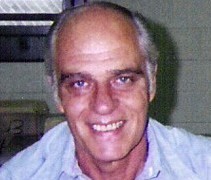
Joseph Roger O'Dell III
Murderer Brian Kevin Rosenfeld
Murderer · USA · 1985
Brian Kevin Rosenfeld Brian Kevin Rosenfeld was sentenced to three concurrent l…
23 victims
Brian Kevin Rosenfeld
Murderer · USA · 1985
Brian Kevin Rosenfeld Brian Kevin Rosenfeld was sentenced to three concurrent l…
23 victims
 Marvin Gray
Murderer · USA · 1975
Marvin Gray was convicted killer who claimed responsibility for 23 slayings and…
23 victims
Marvin Gray
Murderer · USA · 1975
Marvin Gray was convicted killer who claimed responsibility for 23 slayings and…
23 victims
 Yahweh ben Yahweh
Murderer · USA · 1980
Yahweh ben Yahweh was born and legally named Hulon Mitchell Jr. (October 27, 19…
23 victims
Yahweh ben Yahweh
Murderer · USA · 1980
Yahweh ben Yahweh was born and legally named Hulon Mitchell Jr. (October 27, 19…
23 victims
 Russell Ellwood
Murderer · USA · 1991
Russell Ellwood was a former taxi driver. Authorities suspected him of killing…
20 victims
Russell Ellwood
Murderer · USA · 1991
Russell Ellwood was a former taxi driver. Authorities suspected him of killing…
20 victims
 Justen Grant Hall
Murderer · USA · 2002
Justen Grant Hall Hall was sentenced to death on May 11, 2005. The trial court’…
2 victims
Justen Grant Hall
Murderer · USA · 2002
Justen Grant Hall Hall was sentenced to death on May 11, 2005. The trial court’…
2 victims
 Attina Cannaday
Homicide · USA · 1982
Attina Marie Cannaday was convicted in Harrison County Circuit Court of the kid…
1 victim
Attina Cannaday
Homicide · USA · 1982
Attina Marie Cannaday was convicted in Harrison County Circuit Court of the kid…
1 victim
 Storm Brooke
Murderer · Australia · 1990
Storm Brooke was an Australian prisoner who stabbed fellow prisoner Debbie Dick…
1 victim
Storm Brooke
Murderer · Australia · 1990
Storm Brooke was an Australian prisoner who stabbed fellow prisoner Debbie Dick…
1 victim
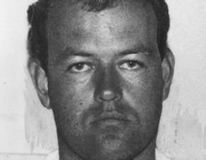 Colin Pitchfork
Murderer · United Kingdom · 1983
Colin Pitchfork was born in 1961 in Bristol, England. He was described as a loc…
2 victims
Colin Pitchfork
Murderer · United Kingdom · 1983
Colin Pitchfork was born in 1961 in Bristol, England. He was described as a loc…
2 victims
- Gender
- male
- Country
- USA
- Location
- Virginia Beach, Virginia, USA
- Date of birth
- 1943
- Age at first offence
- 42
- Characteristics
- rape
- Victim profile
- Helen Schartner
- Method of murder
- Strangulation
- Date(s) of murder
- February 5, 1985
- Years active
- 1985
- Date of arrest
- Next day
- Status
-
Executed
Executed by lethal injection in Virginia on July 23, 1997
Case overview
Joseph Roger O'Dell III was convicted of rape. He was sentenced to death and executed by lethal injection in Virginia on July 23, 1997.
Background
On February 5, 1985, Helen Schartner was raped and bludgeoned to death by O'Dell outside night club in Virginia Beach. Her body was then dumped in a vacant lot. She was last seen alive late in the evening of February 5, 1985, leaving the County Line Lounge in Virginia Beach, Virginia. Her lifeless body was discovered the next day, in a muddy field across a highway from the lounge.
Ten years previously, a Florida woman had narrowly escaped meeting a similar fate at the hands of O'Dell and testified for the prosecution at the Schartner trial in Virginia that O'Dell had trapped her in the back of a car and said: 'do you know what necrophilia is? I'm going to have sex with you whether you're alive or dead'.
O'Dell represented himself at trial. Afterward, he continued to make his case, sending letters on stationery headed with an address of "P.O. Box 500-Death Row." In one letter, he petitioned the Circuit Court for release of the evidence in his case for DNA testing.
The offence
Helen Schartner was found with her head laid open by several blows with the barrel of a handgun. She had been strangled with such violence that bones in her neck were broken and finger imprints were left on her skin.
O'Dell was indicted on counts of capital murder, rape, sodomy, and abduction, and the abduction count was later dismissed. After a jury trial, he was found guilty on the murder, rape, and sodomy counts.
During the subsequent sentencing hearing, the prosecution sought to establish two aggravating factors: that petitioner presented a future danger, and that the murder had been "wanton, vile or inhuman." Evidence was presented that, prior to Schartner's murder, petitioner had been convicted of other offenses, including the kidnaping and assault of another woman while he was on parole, and the murder of a fellow inmate during an earlier prison stint.
The jury found beyond a reasonable doubt that petitioner "would constitute a continuous serious threat to society" and that "his conduct in committing the offense was outrageously wanton, vile, or inhuman." 46 Record 208.
The jury recommended that petitioner be sentenced to death. The trial judge adopted the jury's recommendation and sentenced petitioner to 40 years' imprisonment each for the rape and sodomy convictions, and to death by electrocution for Schartner's murder.
Investigation
The victim's blood type was found on the seat of O'Dell's car. Tire tread marks that were unique to O'Dell's vehicle were found at the scene where the body was dumped. Seminal fluids and pubic hairs found in and on the victim's body matched that of O'Dell.
At trial, prosecutors showed that the wounds on Schartner's head matched the shape of a pellet gun owned by O'Dell. Tire tracks from the crime scene matched his car, and the semen matched O'Dell's blood and enzyme types. Hairs found in his car matched those of the victim.
An abundance of physical evidence linked petitioner to the crime scene and crime. Tire tracks near Schartner's body were consistent with petitioner's car, and bodily fluids recovered from Schartner's body matched petitioner.
Arrest
On February 6, 1985, Joseph Roger O'Dell was arrested for the murder, rape, and sodomy of Helen Schartner.
Trial
O'Dell’s trial resulted in convictions on the murder, rape, and sodomy counts.
At sentencing, petitioner sought a jury instruction explaining that he was not eligible for parole if sentenced to life in prison. The trial judge denied petitioner's request.
After the sentencing hearing, the jury found beyond a reasonable doubt that petitioner "would constitute a continuous serious threat to society" and that "his conduct in committing the offense was outrageously wanton, vile, or inhuman." 46 Record 208. The jury recommended death, and the trial judge sentenced him to death by electrocution for Schartner's murder.
Sentencing
The trial judge sentenced O'Dell to 40 years' imprisonment each for the rape and sodomy convictions, and to death by electrocution for Schartner's murder.
Appeals
O'Dell appealed to the Supreme Court of Virginia, which affirmed both the conviction and the sentence: O'Dell v. Commonwealth, 234 Va. 672, 364 S. E. 2d 491 (1988).
The U.S. Supreme Court denied certiorari: O'Dell v. Virginia, 488 U.S. 871(1988). Petitioner's efforts at state habeas relief were unsuccessful, and the Court again denied certiorari: O'Dell v. Thompson, 502 U.S. 995 (1991).
Petitioner then filed a federal habeas claim. He contended, inter alia, that newly obtained DNA evidence established that he was actually innocent, and that his death sentence was faulty because he had been prevented from informing the jury of his ineligibility for parole. The District Court rejected petitioner's claim of innocence: O'Dell v. Thompson, Civ. Action No. 3:92CV480 (ED Va., Sept. 6, 1994), App. 171-172.
The District Court agreed with petitioner that he was entitled to resentencing under the intervening decision in Simmons v. South Carolina, supra. The District Court described Simmons as holding "that where the defendant's future dangerousness is at issue, and state law prohibits the defendant's release on parole, the Due Process Clause of the Fourteenth Amendment requires that the sentencing jury be informed that the defendant is not eligible for parole." App. 198. The court concluded that the Simmons rule was not new and thus was available to petitioner. Because the prosecutor "obviously used O'Dell's prior releases on cross examination, and in his closing argument, to argue that the defendant presented a future danger to society," App. 201 (citations omitted), the District Court held that petitioner was entitled to be resentenced if it could be demonstrated that he were in fact ineligible for parole.
A divided en banc Court of Appeals for the Fourth Circuit reversed: 95 F. 3d 1214 (1996).
The U.S. Supreme Court addressed whether the rule in Simmons was new for Teague purposes. The opinion concluded that it was new and could not be used to disturb petitioner's death sentence, which had been final for six years when Simmons was decided.
Supreme Court opinion details
Supreme Court of the United States, No. 96-6867: JOSEPH ROGER O'DELL, III, PETITIONER v. J. D. NETHERLAND, WARDEN, et al. on writ of certiorari to the united states court of appeals for the fourth circuit [ June 19, 1997 ].
Justice Thomas delivered the opinion of the Court. The case presented the question whether the rule set out in Simmons v. South Carolina, 512 U.S. 154 (1994), was "new" within the meaning of Teague v. Lane, 489 U.S. 288 (1989), and thereby inapplicable to an already final death sentence.
The opinion stated: The Court concluded that Simmons was "new" within the meaning of Teague and could not, therefore, be used to disturb petitioner's death sentence. The opinion included a discussion of when petitioner's conviction became final, stating that petitioner's conviction became final on October 3, 1988, when the U.S. Supreme Court declined to review the Virginia Supreme Court's decision affirming his sentence on direct review.
The opinion also discussed the Teague three-step inquiry, and it addressed petitioner's argument that the rule should be retroactively applied under a watershed rules exception. The opinion stated that the judgment of the Court of Appeals was affirmed and that it was so ordered.
Dissenting opinion
Justice Stevens, with whom Justice Souter, Justice Ginsburg, and Justice Breyer join, dissented. The dissent stated that it was undisputed that the conduct of the sentencing hearing violated the Due Process Clause of the Fourteenth Amendment and described the trial court's refusal to allow petitioner to advise the jury that if the death sentence were not imposed, he would be imprisoned for the rest of his life without any possibility of parole. The dissent described how the prosecutor emphasized petitioner's misconduct and argued that he had "forfeited his right to live among us," and included a discussion of the majority's conclusion about the rule being new and whether it should be retroactively applied.
The dissent included quotes from the prosecutor's closing statement preserved in footnote 1, including: "Isn't it interesting that he is only able to be outside of the prison system for a matter of months to a year and a half before something has happened again?" App. 61.
"We are a society of fair, honest people who believe in our government and who believe in our justice system; and I submit to you there was a failure in the Florida criminal justice system for paroling this man when they did." App. 64.
"[Y]ou may still sentence him to life in prison, but I ask you ladies and gentlemen[,] in a system, in a society that believes in its criminal justice system and its government, what does this mean? . . . [A]ll the times he has committed crimes before and been before other juries and judges, no sentence ever meted out to this man has stopped him. Nothing has stopped him, and nothing ever will except the punishment that I now ask you to impose." App. 66.
Clemency and post-conviction DNA requests
O'Dell asked the state to conduct DNA tests on other pieces of evidence to demonstrate his innocence but was refused.
He was executed after clemency was denied. Gov. George F. Allen rejected a plea for clemency. A Federal appeals court refused to order newer, more sophisticated DNA tests of semen taken from the victim, Helen Schartner.
O'Dell's lawyers had argued that the tests could prove their client's innocence.
O'Dell asked the state for DNA testing and had a petition rejected in June, 1997. The U.S. Supreme Court rejected his last appeal in June, 1997. That same month, the Virginia Circuit Court rejected a petition filed on O'Dell's behalf to release the evidence for testing.
Following his death, efforts to conduct further tests continued. Late in 1997, the Roman Catholic Diocese of Richmond, Virginia, petitioned the Circuit Court of Virginia Beach to release evidence for testing, but the Court denied the request and suggested that the evidence be disposed of as required by law.
In March of 2000, the last of the DNA evidence in the O'Dell case being stored in the circuit court of Virginia Beach was burned without any further testing.
Aftermath
O'Dell was executed on July 23, 1997.
According to coverage immediately before and at the time of execution, O'Dell was 54 at the time he died, and he was pronounced dead at 9:15 p.m. EDT.
In the hours before his execution, O'Dell married Lori Urs, a Boston University law student who had been a volunteer paralegal on his case. A death row chaplain officiated as O'Dell and Urs exchanged wedding vows through the bars of his cell. Sister Helen Prejean, a death penalty opponent and the author of "Dead Man Walking," served as a witness. For security reasons, the bride and groom were not permitted to touch.
After being strapped to the gurney, O'Dell said: "it was the happiest day of my life, because I got married to my wife." He pledged to love his bride "throughout eternity." He also reiterated his innocence and made a direct appeal to the son of the woman he was convicted of killing, believed to be witnessing the execution, saying: "Eddie, I did not kill your mother."
Gail Lee, the victim's sister, said: "It's just like the Italians hate us," and also said: "They, in essence, have said to my family, 'You are worthless. Helen's life didn't matter.'"
Emily Capps, Schartner's mother, said: "His case has been appealed and reviewed so many times by so many courts that we've lost track. It's been many long years, and we're hoping for closure."
Other details
O'Dell had a criminal record with 17 felony convictions stretching back to 1958.
The evidence in the case included the victim's blood type found on the seat of O'Dell's car, tire tread marks unique to O'Dell's vehicle found at the dump site, and seminal fluids and pubic hairs found in and on the victim's body that matched that of O'Dell.
In one argument to the Supreme Court, O'Dell's lawyers asked that the execution be barred because of his claim that another man, David Mark Pruett, had killed Helen Schartner. The Virginia Attorney General, Richard Cullen, responded that Pruett could not have committed the crime because his blood type was AB, while semen taken from the victim contained type A blood. Mr. Cullen said: "Thus O'Dell's longstanding claim that Pruett was the real killer is simply biologically impossible." The record also stated that Mr. Pruett was executed for stabbing a woman to death in 1985.
At trial, prosecutors showed that wounds on Schartner's head matched the shape of a pellet gun owned by O'Dell. Semen on her body matched O'Dell's blood and enzyme types, and hairs found in his car matched hers.
The jury recommended death based on the aggravating factors found beyond a reasonable doubt, and the trial judge adopted that recommendation and sentenced O'Dell to death by electrocution.
Spotted an error, or have more information about this case?