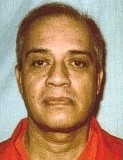
Ignacio Alberto Ortiz
Murderer Ervil LeBaron
Murderer · USA · 1972
Ervil Morrell LeBaron (1925 to August 16, 1981) was the leader of a polygamous…
35 victims
Ervil LeBaron
Murderer · USA · 1972
Ervil Morrell LeBaron (1925 to August 16, 1981) was the leader of a polygamous…
35 victims
 Brian Kevin Rosenfeld
Murderer · USA · 1985
Brian Kevin Rosenfeld Brian Kevin Rosenfeld was sentenced to three concurrent l…
23 victims
Brian Kevin Rosenfeld
Murderer · USA · 1985
Brian Kevin Rosenfeld Brian Kevin Rosenfeld was sentenced to three concurrent l…
23 victims
 Marvin Gray
Murderer · USA · 1975
Marvin Gray was convicted killer who claimed responsibility for 23 slayings and…
23 victims
Marvin Gray
Murderer · USA · 1975
Marvin Gray was convicted killer who claimed responsibility for 23 slayings and…
23 victims
 Yahweh ben Yahweh
Murderer · USA · 1980
Yahweh ben Yahweh was born and legally named Hulon Mitchell Jr. (October 27, 19…
23 victims
Yahweh ben Yahweh
Murderer · USA · 1980
Yahweh ben Yahweh was born and legally named Hulon Mitchell Jr. (October 27, 19…
23 victims
 William Anthony Boyle
Murderer · USA · 1969
William Anthony "Tony" Boyle (December 1, 1904 - May 31, 1985) was president of…
3 victims
William Anthony Boyle
Murderer · USA · 1969
William Anthony "Tony" Boyle (December 1, 1904 - May 31, 1985) was president of…
3 victims
 James Randall Rogers
Murderer · USA · 1980
James Randall Rogers was convicted in Floyd County of murder and aggravated ass…
1 victim
James Randall Rogers
Murderer · USA · 1980
James Randall Rogers was convicted in Floyd County of murder and aggravated ass…
1 victim
 Roger Hoan Brady
Murderer · USA · 1993
Roger Hoan Brady was a convicted killer who pleaded innocent to gunning down a…
2 victims
Roger Hoan Brady
Murderer · USA · 1993
Roger Hoan Brady was a convicted killer who pleaded innocent to gunning down a…
2 victims
 Anthony Garcia
Murderer · USA · 2008
Anthony Garcia was a former doctor who was found guilty on all counts including…
4 victims
Anthony Garcia
Murderer · USA · 2008
Anthony Garcia was a former doctor who was found guilty on all counts including…
4 victims
 James Edward Swann
Serial killer · USA · 1993
James Edward Swann, Jr., also known as “The Shotgun Stalker,” was an American s…
4 victims
James Edward Swann
Serial killer · USA · 1993
James Edward Swann, Jr., also known as “The Shotgun Stalker,” was an American s…
4 victims
- Gender
- male
- Country
- USA
- Location
- Pima County, Arizona, USA
- Date of birth
- December 21, 1941
- Age at first offence
- 37
- Characteristics
- jealousy, arson
- Victim profile
- Manuelita McCormack (his ex-lover and the mother of his godson)
- Method of murder
- Stabbing with knife
- Date(s) of murder
- December 21, 1978
- Years active
- 1978
- Date of arrest
- —
- Status
-
Executed
Executed by lethal injection on October 27, 1999 in Arizona
Case name and identification
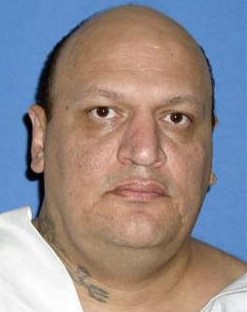
Ignacio Alberto Ortiz was executed by lethal injection on October 27, 1999 in Arizona.
Status / Outcome
Ortiz’s execution was carried out on October 27, 1999. The lethal injection process began at 3:04pm and ended at 3:05pm. When Corrections Director Terry L Stewart asked inmate Ortiz if he had any last words, Ortiz replied: "Yes I Do. Jesus Christ is the Lord. Heavenly Father, into your hands I commit my spirit." He then repeated the words in Spanish. Ortiz did not look at the family members of his victim who were in the witness room and offered no apology to them. He was declared dead at 3:05 p.m.
Timeline
- December 21, 1978 — Ignacio Alberto Ortiz went to the McCormack home, strangled and stabbed Manuelita McCormack, stabbed her daughters, poured gasoline through the house, placed a delayed ignition device at the foot of the 3-year-old’s bed, instructed the children to stay in the house until the fire department arrived, and then ignited the gasoline.
- December 22, 1978 — Ortiz was arrested and jailed.
- June 11, 1979 — Trial began.
- July 2, 1979 — A Pima County jury found Ortiz guilty on multiple counts.
- October 15, 1979 — Judge Ben C. Birdsall imposed sentences, including the death penalty for first-degree murder.
- December 19, 1979 — With new counsel, Ortiz filed a motion to vacate the judgment based on newly discovered evidence and ineffective assistance of trial counsel.
- April 2, 1980 — The state trial court denied Ortiz’s motion to vacate after an evidentiary hearing.
- November 23, 1981 — The Arizona Supreme Court affirmed the judgments of guilt and sentences.
- 1982 — The United States Supreme Court denied a petition for certiorari.
- October 10, 1984 — The Arizona Supreme Court denied Ortiz’s petition for review.
- December 7, 1984 — Ortiz filed a petition for writ of habeas corpus pursuant to 28 U.S.C. § 2254 in federal district court in Arizona.
- December 10, 1984 — The district court stayed Ortiz’s execution, which had originally been scheduled for December 19, 1984.
- August 23, 1985 — On Ortiz’s request, the district court stayed the proceedings to allow Ortiz to return to the state court to raise an unexhausted issue.
- September 11, 1985 — Ortiz filed his second petition for post-conviction relief.
- February 28, 1986 — The state court denied Ortiz’s petition for rehearing in a minute order.
- June 10, 1986 — The Arizona Supreme Court denied review without comment.
- December 5, 1986 — Ortiz filed an amended petition for writ of habeas corpus.
- March 11, 1988 — The district court stayed the matter, citing Ortiz’s failure to exhaust state remedies.
- April 22, 1988 — Ortiz filed a comprehensive third Rule 32 post-conviction relief petition.
- September 9, 1991 — The state trial court conducted an evidentiary hearing on the perjury claim and ultimately denied relief.
- April 19, 1993 — Ortiz filed an amended petition raising claims previously denied as procedurally barred.
- August 6, 1993 — The state filed a motion for summary judgment.
- November 14, 1995 — The federal district court granted partial summary judgment for the state on 36 of Ortiz’s claims.
- November 7, 1996 — The federal district court entered final judgment denying Ortiz’s habeas petition.
- March 9, 1998 — The appeal was argued before the United States Court of Appeals for the Ninth Circuit.
- July 1, 1998 — The Ninth Circuit decided to affirm.
- July 1, 1998 — The Ninth Circuit affirmed the district court’s denial of summary judgment.
- October 27, 1999 — Ortiz was executed by lethal injection in Arizona; the lethal injection process began at 3:04pm and ended at 3:05pm.
Background
Ignacio Alberto Ortiz and his wife, Mary Ortiz, were the godparents of Manuelita and Charles McCormack, Jr.’s youngest child, Charles McCormack III (“Baby Charlie”). The McCormacks also had two daughters, Patricia and Bernice.
Charles and Manuelita McCormack experienced marital difficulties in 1977-78 and eventually separated with consideration of filing for divorce. During those two years, Ortiz helped Manuelita with the children, and there was some suggestion in the record that Ortiz and Manuelita had an affair. Manuelita and Charles reconciled, and Charles moved back into the McCormack residence. Ortiz continued to visit Manuelita when Charles was not at home, and Manuelita apparently tried to discourage his visits and phone calls.
Ortiz claimed that he had been at home sleeping at the time of the slaying.
The offence
On December 21, 1978, at around 9:00 p.m., the McCormack children went to bed in Patricia’s room. Around 10:00 p.m., Charles McCormack, Jr. left for work.
During the night, Baby Charlie awoke and asked Bernice to bring him a glass of water. When Bernice went to get the water, she saw Ortiz (who she called “Nacho”) with his hands around her mother’s neck. Bernice returned to the bedroom, awoke Patricia, and told her what she had seen.
Shortly thereafter, Ortiz entered Patricia’s bedroom and told the children that he was going to call an ambulance for their mother. Ortiz left the room, and the children remained awake. An ambulance never arrived. Ortiz returned to Patricia’s bedroom and told Patricia that her mother wanted to see her. When Patricia entered the living room, Ortiz grabbed her from behind and stabbed her twice in the chest with a knife.
Patricia, screaming, ran into her mother’s bedroom and collapsed on the bed. Bernice ran into her mother’s bedroom after hearing Patricia’s screams. Ortiz grabbed Bernice from behind and stabbed her in the chest. Bernice ran back to Patricia’s bedroom, where Baby Charlie was playing.
Ortiz brought a can of gasoline to the McCormack residence. He poured gasoline on the unconscious Manuelita and over the bedroom exits. He also placed a delayed ignition device on a pile of clothes at the foot of Baby Charlie’s bed. On his way out of the house, Ortiz told the children not to leave until the fire department arrived. He then ignited the gasoline and departed.
When Bernice smelled the fire, she helped Patricia and Baby Charlie out of the house. Bernice and Baby Charlie struggled to a neighbor’s house. Patricia collapsed on the sidewalk and was near death when paramedics found her. By the time firefighters arrived, Manuelita’s body had been badly charred.
A pathologist found stab wounds in Manuelita’s neck and, judging from the pool of blood discovered under her body, deduced that she also had been stabbed in the chest. Manuelita’s chest was too burned to find any stab wounds. The pathologist testified that Manuelita may have been alive when the fire started.
These events occurred in Pima County.
Investigation and evidence
Ortiz was arrested and jailed the next day, December 22, 1978.
While awaiting trial, Ortiz shared a cell with Jose Alvarez, who was in jail pending trial on numerous robbery charges. Alvarez had a history of drug abuse and had tried to escape from prison in the past.
While Ortiz and Alvarez were in the jail hospital for knee surgery, Alvarez contacted the Pima County Attorney’s office and informed prosecutors that Ortiz offered him $10,000 to kill the three children, their father, their father’s girlfriend, and Manuelita’s sister. Alvarez was apparently supposed to commit these murders after his escape from the hospital. Alvarez also told prosecutors that Ortiz had confessed in detail to Manuelita’s murder. Alvarez agreed to help prosecutors with further investigation, which led to Ortiz and his wife being indicted for conspiracy to commit first-degree murder.
In the attack, Ortiz had been in possession of the hunting knife and gas can used in the attack. A matchbook used to start the blaze had his fingerprints on it.
A neighbor testified that Ortiz’s truck was parked behind the family’s home on the night of the murder.
Arrest
Ortiz was arrested and jailed on the next day after the crimes.
Trial
Ortiz was tried on both the murder and conspiracy charges in a single two-and-a-half week long trial.
Ortiz raised an alibi defense to the murder-related charges. His defense to the conspiracy charge was that Alvarez had coerced his help in the conspiracy through threats of physical force.
On July 2, 1979, a Pima County jury found Ortiz guilty of:
- one count of first-degree murder,
- three counts of attempted first-degree murder,
- two counts of aggravated assault,
- one count of arson of an occupied structure,
- one count of first-degree burglary,
- and one count of conspiracy to commit first-degree murder.
The case included “Baby Charlie” (Charles McCormack III) and two daughters, Patricia and Bernice, who were ages 9 and 8 respectively at the time of the charged crimes, with Baby Charlie being 3 years old.
The state court and later reviewing courts addressed testimony, including Bernice McCormack’s testimony on redirect examination about whether she was afraid of Ortiz. Ortiz’s trial counsel moved for a mistrial on the ground that the dialogue was “too inflammatory,” and the trial court denied the motion. The Arizona Supreme Court affirmed the denial of the mistrial motion, reasoning that "the questions and answers were proper to rehabilitate the witness" in light of Bernice having difficulty remembering events.
Sentencing
Following an aggravation-mitigation hearing, Judge Ben C. Birdsall imposed the death penalty for the first-degree murder conviction. He imposed life imprisonment for the conspiracy conviction and the maximum sentence on each of the other charges.
Ortiz filed a motion to vacate the judgment based on newly discovered evidence and ineffective assistance of trial counsel on December 19, 1979 with new counsel. The trial court denied the motion on April 2, 1980 after an evidentiary hearing.
At sentencing, the aggravating circumstances were described as:
- Prior conviction punishable by life imprisonment (struck on appeal)
- Grave risk of death to others
- Especially heinous/cruel/depraved (cruel struck on appeal)
The mitigating circumstances were stated as:
- None sufficient to call for leniency
At the sentencing hearing, the court observed that evidence presented at Ortiz’s trial and at his wife’s trial for conspiracy indicated that Ortiz was “an adulterer, a violent wife beater, and a liar.” Based on that evidence, the court concluded that "it would be incongruous ... to find mitigating circumstances because of the outward appearance of the defendant's personal and family life with knowledge that the defendant was actually a mean, violent, unfaithful, and false person."
The Arizona death penalty statute was amended to conform with State v. Watson. A minute entry dated July 10, 1979 indicated sentencing under Ariz.Rev.Stat. § 13-703, “as amended, and effective May 1, 1979.” At sentencing, the judge referenced Watson as "that being the same, so far as the Court is concerned, as the new statute ... which I thought gave the defendant every possibility of presenting any mitigating circumstances." The Arizona Supreme Court agreed that Ortiz was sentenced under the amended statute.
For aggravating factors notice, the State filed a statement indicating it intended to present evidence regarding aggravating factors listed in Ariz.Rev.Stat. § 13-703(F)(3) and (6) on September 10, 1979. On October 2, 1979, thirteen days before the sentencing hearing (continued from its original date of October 5), the State filed a supplemental statement indicating it would introduce evidence of Ortiz’s conviction for conspiracy to commit first-degree murder to establish an aggravating circumstance under § 13-703(F)(1).
Appeals
The Arizona Supreme Court affirmed Ortiz’s convictions and sentences on November 23, 1981 in State v. Ortiz, 131 Ariz. 195, 639 P.2d 1020 (1981). The United States Supreme Court denied certiorari in Ortiz v. Arizona, 456 U.S. 984 (1982).
Ortiz filed post-conviction relief petitions under Arizona Rule of Criminal Procedure 32 and related habeas petitions under 28 U.S.C. § 2254 in various stages, including:
- A first state post-conviction relief petition denied by the state trial court; the Arizona Supreme Court denied review on October 10, 1984.
- A federal habeas petition filed December 7, 1984; the district court stayed the execution on December 10, 1984.
- A second petition for post-conviction relief filed September 11, 1985, with rehearing denied in a minute order issued February 28, 1986 and review denied by the Arizona Supreme Court on June 10, 1986.
- An amended habeas petition filed December 5, 1986, with a stay on March 11, 1988 citing failure to exhaust state remedies.
- A comprehensive third Rule 32 petition filed April 22, 1988; relief was denied except as to the allegation that Jose Alvarez perjured himself. After an evidentiary hearing on September 9, 1991, the state trial court denied relief, and the Arizona Supreme Court denied review without comment. Arizona, 506 U.S. 978 (1992).
- An amended petition filed April 19, 1993, and subsequent proceedings including partial summary judgment granted on November 14, 1995 and final judgment entered on November 7, 1996.
In the federal appeal, Ortiz appealed the district court’s denial of summary judgment on his petition for a writ of habeas corpus under 28 U.S.C. § 2254. The United States Court of Appeals for the Ninth Circuit affirmed on July 1, 1998 in Ortiz v. Stewart, 149 F.3d 923 (9th Cir. 1998). The Ninth Circuit described procedural default issues, ineffective assistance claims, prosecutorial misconduct claims, sentencing due process claims, and Eighth Amendment claims, and concluded: "Because we find no merit to any of Ortiz's arguments, the district court's decision to grant summary judgment in favor of the State is AFFIRMED."
Aftermath
Ortiz spent 21 years on death row before his execution.
Before the execution, son Charles and daughter Patricia said Ortiz’s execution would end years of fear. Charles said: "I have grown up knowing I had to be careful what I did and who I talked to," and Ramirez said: "We would have grown up without that fear."
The execution day included a group of 29 witnesses. The materials named Ortiz’s elderly mother from Tucson, Isabel M. Rodriguez, and his lead attorney, Sean Bruner. Also present were McCormack’s husband, Charles McCormack Jr., and children Patricia McCormack Ramirez and Charles McCormack III. A second daughter did not attend.
Last meal
Ortiz’s last meal was listed as:
- 2 fried eggs
- 4 oz Pace hot sauce
- 4 strips bacon
- 1 12oz sirloin steak
- 10oz french fries
- 3oz ketchup
- 1 pint vanilla ice cream
- 1 pint milk
- 1 cup hot coffee
Other details
Ortiz was described as 57 at the time of execution. The materials listed "57, 99-10-27, Arizona."
The materials described that Ortiz was convicted of murdering Manuelita McCormack at her Tucson home on Dec. 21, 1978, that he tried to kill her 3 children that night to eliminate witnesses, that he later plotted to have them killed by a jail cellmate, and that he had been involved in an affair with Manuelita McCormack.
Presiding Judge at trial was stated as Ben C. Birdsall, and the Prosecutor was stated as Ken Peasley.
Spotted an error, or have more information about this case?