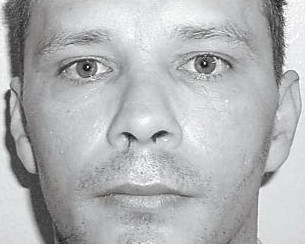
Robert Earl O'Neal
Murderer Ervil LeBaron
Murderer · USA · 1972
Ervil Morrell LeBaron (1925 to August 16, 1981) was the leader of a polygamous…
35 victims
Ervil LeBaron
Murderer · USA · 1972
Ervil Morrell LeBaron (1925 to August 16, 1981) was the leader of a polygamous…
35 victims
 Brian Kevin Rosenfeld
Murderer · USA · 1985
Brian Kevin Rosenfeld Brian Kevin Rosenfeld was sentenced to three concurrent l…
23 victims
Brian Kevin Rosenfeld
Murderer · USA · 1985
Brian Kevin Rosenfeld Brian Kevin Rosenfeld was sentenced to three concurrent l…
23 victims
 Marvin Gray
Murderer · USA · 1975
Marvin Gray was convicted killer who claimed responsibility for 23 slayings and…
23 victims
Marvin Gray
Murderer · USA · 1975
Marvin Gray was convicted killer who claimed responsibility for 23 slayings and…
23 victims
 Yahweh ben Yahweh
Murderer · USA · 1980
Yahweh ben Yahweh was born and legally named Hulon Mitchell Jr. (October 27, 19…
23 victims
Yahweh ben Yahweh
Murderer · USA · 1980
Yahweh ben Yahweh was born and legally named Hulon Mitchell Jr. (October 27, 19…
23 victims
 James Hutchins
Murderer · USA · 1979
Name: James W. Hutchins Full name used: James W. Hutchins; James W. Hutchins (A…
3 victims
James Hutchins
Murderer · USA · 1979
Name: James W. Hutchins Full name used: James W. Hutchins; James W. Hutchins (A…
3 victims
 Lisa Montgomery
Murderer · USA · 2004
Lisa Marie Montgomery (born February 27, 1968) was an American woman from Melve…
1 victim
Lisa Montgomery
Murderer · USA · 2004
Lisa Marie Montgomery (born February 27, 1968) was an American woman from Melve…
1 victim
 Adrienne Hickson
Murderer · USA · 2005
Adrienne Emily Hickson was a 24-year-old law student and had been a student at…
1 victim
Adrienne Hickson
Murderer · USA · 2005
Adrienne Emily Hickson was a 24-year-old law student and had been a student at…
1 victim
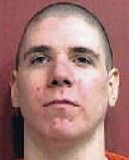 Douglas Turner
Homicide - Murderer · USA · 1987
Douglas Turner was a juvenile who was released from an alcohol treatment progra…
9 victims
Douglas Turner
Homicide - Murderer · USA · 1987
Douglas Turner was a juvenile who was released from an alcohol treatment progra…
9 victims
 Bertrand Cantat
Homicide · Lit h uania · 2003
Bertrand Lucien Bruno Cantat (born 5 March 1964) was a French singer and songwr…
1 victim
Bertrand Cantat
Homicide · Lit h uania · 2003
Bertrand Lucien Bruno Cantat (born 5 March 1964) was a French singer and songwr…
1 victim
- Gender
- male
- Country
- USA
- Location
- Missouri, USA
- Date of birth
- September 25, 1961
- Age at first offence
- 17
- Characteristics
- robbery
- Victim profile
- Elderly man / Arthur Dade (prison inmate)
- Method of murder
- Stabbing with knife / St abbing with an ice pick type weapon
- Date(s) of murder
- 1978 / 1984
- Years active
- 1978–1984
- Date of arrest
- —
- Status
-
Executed
Executed by lethal injection in Missouri on December 6, 1995
Case identification
Robert Earl O’Neal was convicted in Missouri and was executed on December 6, 1995.
Timeline
- 02/22/1980 — O’Neal was convicted of Murder I and Armed Criminal Action in Springfield, Missouri, and was sentenced to life and 15 years consecutive in the Missouri Department of Corrections.
- 09/10/1981 — O’Neal was convicted of Offering Violence to a Correctional Officer in Jefferson City, Missouri, and was sentenced to five years concurrent in the Missouri Department of Corrections.
- 06/21/1983 — O’Neal was convicted of Offering Violence to an Officer of a Correctional Institution in Jefferson City, Missouri, and was sentenced to seven years concurrent in the Missouri Department of corrections.
- 06/27 (1983) — O’Neal was convicted of Assault I in Jefferson City, Missouri, and was sentenced to seven years concurrent in the Missouri Department of Corrections.
- 02/03/1984 — Robert O’Neal, assisted by two inmate accomplices, murdered fellow prison inmate Arthur Dade by stabbing him in the chest with an ice pick type weapon.
- 02/07/1984 — An indictment was filed in the Circuit Court of Cole County, Missouri, charging Robert O’Neal and his two accomplices with capital murder of Arthur Dade.
- 03/20–22/1985 — O’Neal was tried and convicted by a jury in Butler County of the Capital murder of Arthur Dade on change of venue from Cole County; the jury recommended a sentence of death.
- 05/14/1985 — The Circuit Court of Cole County denied O’Neal’s motion for a new trial and sentenced him to death.
- 05/22/1985 — A Notice of appeal was filed with the Missouri Supreme Court.
- 10/14/1986 — The Missouri Supreme Court affirmed O’Neal’s conviction and sentence on direct appeal.
- 03/09/1987 — The United States Supreme Court declined to grant certiorari.
- 04/16/1987 — O’Neal filed a Rule 27.26 motion seeking post-conviction relief in the Circuit Court of Butler County, Missouri.
- 08/24/1987 — O’Neal filed an amended Rule 27.26 motion through counsel.
- 09/01/1987 — O’Neal filed an addendum to the amended Rule 27.26 motion.
- 03/17/1988 — The Circuit Court of Butler County denied the Rule 27.26 motion.
- 02/14/1989 — The Missouri Supreme Court affirmed the denial of the Rule 27.26 motion.
- 10/02/1989 — The United States Supreme Court declined to grant certiorari.
- 10/06/1989 — O’Neal filed a pro se petition for the writ of habeas corpus in the United States District Court for the Eastern District of Missouri.
- 02/15/1990 — O’Neal filed an amended federal habeas corpus petition through counsel.
- 11/29/1990 — The federal habeas petition was ordered held in abeyance to allow petitioner to pursue a state habeas corpus petition.
- 12/10/1990 — O’Neal filed state habeas corpus petition.
- 03/05/1991 — The Missouri Supreme Court denied the state’s habeas corpus petition.
- 04/15/1991 — O’Neal filed a motion to recall the mandate in the Missouri Supreme Court.
- 04/30/1991 — The Missouri Supreme Court denied the motion to recall the mandate.
- 09/28/1992 — United States Magistrate Judge recommended that the United States District Court deny the petition for the writ of habeas corpus.
- 11/20/1992 — The United States District Court for the Eastern District of Missouri denied the petition for the writ of habeas corpus.
- 12/04/1992 — Motion to Alter or Amend Judgment was denied.
- 01/09/1993 — Notice of Appeal filed.
- 01/06/1995 — The Eighth Circuit Court of Appeals affirmed.
- 10/02/1995 — Certiorari denied by the United States Supreme Court.
- 10/27/1995 — Missouri Supreme Court set O’Neal’s execution date for December 6, 1995.
- 12/06/1995 — O’Neal was executed by lethal injection in Missouri.
Background
Robert Earl O’Neal was white. The state's evidence suggested a racial motive for the murder of fellow Missouri State Penitentiary inmate Arthur Dade, who was black.
O’Neal appealed to the United States Court of Appeals for the Eighth Circuit from the order of the District Court denying his 28 U.S.C. Sec. 2254 petition for a writ of habeas corpus. The appeal was adjudicated in March 9, 1995 in No. 93-1193, with BOWMAN and MAGILL, Circuit Judges, and HENDREN, District Judge.
The Missouri Supreme Court record included State of Missouri v. Robert Earl O’Neal, 766 S.W.2d 91 (Mo. Banc 1986).
The offence
Prison incident and death of Arthur Dade
On February 2, 1984, inmates from the Special Management Unit at the Jefferson City Correctional Center in Jefferson City, Missouri were released to lunch. During the inmate movement, correction officers observed inmate Rodney Stewart approach inmate Arthur Dade. Stewart was carrying an ice cream container such as those purchased in the inmate commissary. Stewart threw a liquid contained in the ice cream carton into Dade’s face.
As Dade shielded his eyes from the liquid, inmate Lloyd Schlup approached Dade from behind and grabbed Dade’s hands. While Schlup was holding Dade, inmate Robert Earl O’Neal ran forward and stabbed Dade with an ice pick type weapon four times in the chest, penetrating his heart and lungs. Dade ran a short distance from the scene where he collapsed and died.
As correctional officers pulled Stewart off Dade, O’Neal ran to a nearby window, broke the window pane, and threw the weapon out the window. O’Neal then went to a nearby sink where he washed blood off his hands and arms.
Evidence located before arrest and on arrest
Before O’Neal’s arrest, correctional officers found blood stained clothing in a bathroom marked with O’Neal’s prison issued numbers. Blood stains were also found on O’Neal’s clothing, the broken window, and the sink where O’Neal washed his hands. When arrested, O’Neal was observed to have a severe laceration to the hand he used to stab Dade.
Investigation and indictment
On 02/07/1984, an indictment was filed in the Circuit Court of Cole County, Missouri charging Robert O’Neal and his two accomplices with the capital murder of Arthur Dade.
Arrest
O’Neal was arrested after blood-stained clothing and other physical evidence were found.
Trial
Change of venue and jury recommendation
O’Neal was tried and convicted by a jury in Butler County on 03/20–22/1985 on change of venue from Cole County. The jury recommended a sentence of death.
Verdict and sentence
On 05/14/1985, the Circuit Court of Cole County denied O’Neal’s motion for a new trial and sentenced him to death.
The United States Court of Appeals described the state outcome as follows: on May 14, 1985, a Missouri jury found O’Neal guilty of capital murder in the stabbing death of fellow Missouri State Penitentiary inmate Arthur Dade. The jury imposed the death penalty. O’Neal’s conviction and sentence were affirmed on direct appeal.
Sentencing
O’Neal was sentenced to death by the Circuit Court of Cole County after the jury recommended a sentence of death.
Appeals
Direct appeal (Missouri)
The Missouri Supreme Court affirmed O’Neal’s conviction and sentence on 10/14/1986 on direct appeal.
Certiorari and later proceedings
On 03/09/1987, the United States Supreme Court declined to grant certiorari.
On 10/02/1989, the United States Supreme Court declined to grant certiorari.
The federal appellate proceedings included a statement of issues raised in O’Neal’s federal habeas petition. The Eighth Circuit later considered eight claims of error, including:
- ineffective assistance of counsel for failure to obtain necessary psychiatric examination and tests;
- constitutional rights violation from testimony regarding alleged membership in a racist prison organization, the Aryan Brotherhood and/or the Aryan Nations Church of Jesus Christ Christians;
- grand jury not drawn from a fair cross-section of the community;
- petit jury not drawn from a similarly unfair cross-section of the community;
- incorrect jury instruction on second degree murder preventing consideration of a lesser-included offense rather than capital murder;
- denial of fair trial in punishment phase by prosecutor’s improper closing argument;
- incorrect jury instruction on mitigating circumstances during sentencing phase;
- denial of right of allocution.
Post-conviction proceedings (Rule 27.26)
O’Neal filed a Rule 27.26 motion on 04/16/1987, followed by an amended motion on 08/24/1987 and an addendum on 09/01/1987.
On 03/17/1988, the Circuit Court of Butler County denied the Rule 27.26 motion. On 02/14/1989, the Missouri Supreme Court affirmed the denial.
U.S. District Court habeas and abeyance; Rule 91 state petition
O’Neal filed a pro se federal habeas petition in the Eastern District of Missouri on 10/06/1989. He filed an amended federal habeas petition on 02/15/1990.
On 11/29/1990, the federal habeas petition was ordered held in abeyance to allow petitioner to pursue a state habeas corpus petition. O’Neal filed a state habeas corpus petition on 12/10/1990.
On 03/05/1991, the Missouri Supreme Court denied the state’s habeas corpus petition.
Motion to recall mandate and procedural posture
O’Neal filed a motion to recall the mandate on 04/15/1991; on 04/30/1991, the Missouri Supreme Court denied the motion to recall the mandate.
Federal habeas claims were addressed with procedural default analysis for claims raised belatedly in state courts through the Rule 91 petition, and with separate merits review for the exhausted grounds.
Federal habeas disposition and appellate outcome
On 11/20/1992, the Eastern District of Missouri denied the petition for the writ of habeas corpus. On 12/04/1992, a Motion to Alter or Amend Judgment was denied.
The Eighth Circuit affirmed on 01/06/1995. Certiorari was denied by the United States Supreme Court on 10/02/1995.
Other legal proceedings contained in the record
Examination by Dr. Lucas and requests for additional psychiatric evaluation
Prior to trial, counsel arranged for O’Neal’s examination by Dr. Lucas, a psychiatrist. Dr. Lucas concluded that O’Neal “was basically free of psychotic illness at the time the murder occurred.” Dr. Lucas found that O’Neal was responsible for his conduct at the time of the murder and believed O’Neal was competent to stand trial. Dr. Lucas suggested further tests to rule out “the remote possibility of a progressive organic brain disease” and to confirm the competency evaluation.
Dr. Lucas’s letter stated: “I feel that these tests are important to do to rule out the possibility of a specific, treatable brain disease, but frankly doubt that they will show anything positive and am suggesting them for the sake of thoroughness and because of the gravity of Mr. O'Neal's legal situation.”
Based on Dr. Lucas’s report and at O’Neal’s request, counsel moved at the pretrial conference for a second psychiatric examination. The trial court rejected the motion, grounding its ruling on Dr. Lucas’s report and O’Neal’s demeanor. Counsel renewed the motion on the day trial began. The motion was not granted and no further psychiatric examination was performed.
At the Rule 27.26 hearing, O’Neal’s trial counsel testified that O’Neal was fully able to assist and that, in counsel’s judgment, a second psychiatric examination was unnecessary. The prosecutor also testified at the Rule 27.26 hearing that he had been acquainted with O’Neal for several years, that O’Neal was above-average in intelligence, and that O’Neal appeared competent to stand trial.
The Rule 27.26 court made findings including that the psychiatric condition of Movant was not an issue at trial in phase one, and that O’Neal testified to self-defense, including that he was attacked by the victim and disarmed the victim, and that he stabbed the victim in self-defense. It found that O’Neal was not acting under the influence of a mental disease or defect. Mitigating evidence about background was presented through testimony from O’Neal’s mother, father, grandmother, and aunt, and testimony concerning a deprived background and drug usage was entered in the second phase.
Outcome
The United States Court of Appeals affirmed the denial of O’Neal’s federal habeas petition by stating: “We affirm.”
O’Neal was executed by lethal injection in Missouri on December 6, 1995.
Other details
Prior convictions and sentences listed in the record
- On 02/22/1980, O’Neal was convicted of Murder I and Armed Criminal Action in Springfield, Missouri, and was sentenced to life and 15 years consecutive in the Missouri Department of Corrections.
- On 09/10/1981, O’Neal was convicted of Offering Violence to a Correctional Officer in Jefferson City, Missouri, and was sentenced to five years concurrent in the Missouri Department of Corrections.
- On 06/21/1983, O’Neal was convicted of Offering Violence to an Officer of a Correctional Institution in Jefferson City, Missouri, and was sentenced to seven years concurrent in the Missouri Department of corrections.
- On 06/27 (1983), O’Neal was convicted of Assault I in Jefferson City, Missouri, and was sentenced to seven years concurrent in the Missouri Department of Corrections.
Indictment and sentence phrasing contained in the record
The record contains a disposition line stating: “Life term on first count; condemned, 1983; executed Dec. 6, 1995.”
Grounds for habeas relief described in the federal appellate record
Claims exhausted and unexhausted were listed in the federal appellate record, including additional grounds labeled (A) through (CC) and denial/procedural default analysis. The listing included allegations such as:
- unfair cross-section claims for grand jury (A) and petit jury (B);
- ineffective assistance for psychiatric testing (C);
- denial of motions for a psychiatric examination including first and second motions (D and E);
- admission of a prejudicial photograph (J);
- unbridled discretion allegation in the death penalty statutory scheme (K);
- being forced to stand trial bound and shackled (L);
- defense witnesses compelled to testify in prison garb, bound, and shackled (M);
- potential juror improperly excluded (N);
- testimony about membership in the Aryan Brotherhood and/or the Aryan Nations Church of Jesus Christ Christians (P);
- ineffective assistance regarding differences between the organizations (Q);
- exclusion of testimony of Earl Bays and Ivan Johnson during the penalty phase (T);
- challenges for cause removing veniremen expressing opposition to the death penalty (U);
- refusal to allow separate juries for guilt and penalty phases (V);
- claim about proportionality of the death penalty given circumstances and mitigating evidence (W);
- denial of writ of habeas corpus ad testificandum for a New Mexico inmate as a necessary defense witness (X);
- exclusion from a hearing on a motion to quash the special venire (Y);
- equal protection and cruel-and-unusual-punishment comparison claims (Z); and unexhausted claims including alleged incorrect instructions on second degree murder and mitigating circumstances, prosecutor closing argument issues, ineffective assistance regarding objections or failure to object, disclosure of exculpatory evidence, absence of black jurors in the petit jury selection (BB), and cumulative effect claims (CC).
The record also included that the state court denied relief on procedural grounds for some claims in the Rule 91 habeas petition and that a motion to recall the mandate was denied.

Spotted an error, or have more information about this case?