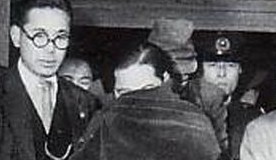
Miyuki Ishikawa
Murderer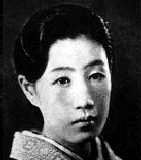 Sada Abe
Murderer · Japan · 1936
Sada Abe ( 阿部 定 , Abe Sada ) was a Japanese woman who erotically asphyxiated he…
1 victim
Sada Abe
Murderer · Japan · 1936
Sada Abe ( 阿部 定 , Abe Sada ) was a Japanese woman who erotically asphyxiated he…
1 victim
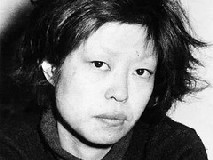 Hiroko Nagata
Murderer · Japan · 1972
Hiroko Nagata (Japanese leftist radical; also sometimes mistakenly referred to…
14 victims
Hiroko Nagata
Murderer · Japan · 1972
Hiroko Nagata (Japanese leftist radical; also sometimes mistakenly referred to…
14 victims
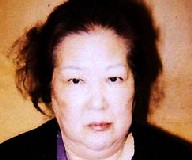 Kayoko Nakai
Murderer · Japan · 2000
Kayoko Nakai was 66 and ran a rival telephone dating club in Kobe at the time o…
4 victims
Kayoko Nakai
Murderer · Japan · 2000
Kayoko Nakai was 66 and ran a rival telephone dating club in Kobe at the time o…
4 victims
 Suzuka Hatakeyama
Murderer · Japan · 2006
Suzuka Hatakeyama was an Akita Prefecture woman who was sentenced to life in pr…
2 victims
Suzuka Hatakeyama
Murderer · Japan · 2006
Suzuka Hatakeyama was an Akita Prefecture woman who was sentenced to life in pr…
2 victims
 Zheng Yongshan
Murderer · Japan · 2006
Zheng Yongshan (鄭 永善, born 1972) also went by the name of Mie Taniguchi (谷口 充恵)…
2 victims
Zheng Yongshan
Murderer · Japan · 2006
Zheng Yongshan (鄭 永善, born 1972) also went by the name of Mie Taniguchi (谷口 充恵)…
2 victims
 Diego Santoy
Murderer · Mexico · 2006
Diego Santoy Riveroll was a Mexican university student who was accused of stabb…
2 victims
Diego Santoy
Murderer · Mexico · 2006
Diego Santoy Riveroll was a Mexican university student who was accused of stabb…
2 victims
 Josephine Gray
Murderer · USA · 1974
Josephine Virginia Gray, also known as Josephine Stribbling and Josephine Mills…
3 victims
Josephine Gray
Murderer · USA · 1974
Josephine Virginia Gray, also known as Josephine Stribbling and Josephine Mills…
3 victims
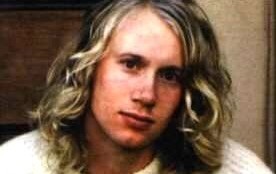 Martin Bryant
Spree killer · Australia · 1996
Martin Bryant was born May 7, 1967, and was the elder of two children of Mauric…
35 victims
Martin Bryant
Spree killer · Australia · 1996
Martin Bryant was born May 7, 1967, and was the elder of two children of Mauric…
35 victims
 Faryion Wardrip
Serial killer · USA · 1984
Name: Faryion Wardrip · TDCJ Number: 999331 · Full name: Wardrip, Faryion Edwar…
5 victims
Faryion Wardrip
Serial killer · USA · 1984
Name: Faryion Wardrip · TDCJ Number: 999331 · Full name: Wardrip, Faryion Edwar…
5 victims
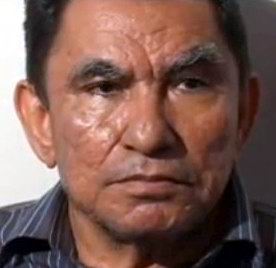 Anisio Ferreira de Sousa
Murderer · Brazil · 1989
September 4, 2003 — Anísio Ferreira de Sousa was sentenced to 77 years in priso…
19 victims
Anisio Ferreira de Sousa
Murderer · Brazil · 1989
September 4, 2003 — Anísio Ferreira de Sousa was sentenced to 77 years in priso…
19 victims
 George Bernard Harris
Murderer · USA · 1989
George Bernard Harris was the defendant in the case. Harris hit a lucky streak…
1 victim
George Bernard Harris
Murderer · USA · 1989
George Bernard Harris was the defendant in the case. Harris hit a lucky streak…
1 victim
- Gender
- female
- Country
- Japan
- Location
- Tokyo, Japan
- Date of birth
- 1897
- Age at first offence
- 47
- Characteristics
- abuse, serial rapist, nurse
- Victim profile
- Infants
- Method of murder
- Neglect
- Date(s) of murder
- April 1944 - January 1948
- Years active
- 1944–1948
- Date of arrest
- January 15, 1948
- Status
-
Imprisoned
Resentenced to 4 years in prison in 1952; originally sentenced to 8 years in prison
Case identification
Miyuki Ishikawa (石川 ミユキ, Ishikawa Miyuki; born 1897; date of death unknown) was a Japanese midwife and serial killer who was believed to have murdered many infants with the aid of several accomplices throughout the 1940s.
Background
Ishikawa was born in Kunitomi, Miyazaki Prefecture, and graduated from the University of Tokyo. She later married Takeshi Ishikawa, and the relationship did not produce any children.
She worked as a hospital director in the Kotobuki maternity hospital (寿産院, Kotobuki San-in) and was an experienced midwife. She was described as an "hospital director in the Kotobuki maternity hospital".
Kenji Yamamoto (山本健治, Yamamoto Kenji) referred to the incident as "unbelievable and unbearable."
The offence
In the 1940s, there were many babies in her maternity hospital, and Ishikawa faced what she perceived as a quandary. The parents of many of these infants were poor and unable to raise their children properly without financial struggle, and she was unable to help the infants because of a lack of social and charitable services.
To address this, Ishikawa chose to neglect numerous infants, many of whom died as a direct result of this abuse. The exact number of victims was unknown, but it was estimated that she killed at least 103 babies. Almost all of the other midwives employed by the Kotobuki maternity hospital were disgusted by this practice and resigned from their positions.
Ishikawa later attempted to garner payment for these murders. She and her husband Takeshi solicited large sums of money from the parents, claiming the payments would be less than the actual expense of raising the unwanted children.
A doctor, Shiro Nakayama, was also complicit in this scheme and aided the couple by falsifying death certificates. The Shinjuku ward office ignored their actions.
The victims were deserted children, and Ishikawa insisted that parents were responsible for their deaths. The public supported this assertion, but Yuriko Miyamoto criticized it, saying it was an example of discrimination.
The authorities viewed the homicides as a crime of omission. The length of time over which the murders took place and the sheer number of dead bodies recovered made it difficult for the authorities to determine the exact number of victims, so the exact death toll remained unknown. The victims were believed to number between 85 to 169, while the general estimate was 103.
Arrest
Two police officers from the Waseda police station accidentally found the remains of five of Ishikawa's victims on January 12, 1948. Autopsies performed on the bodies of the five babies proved that they had not died of natural causes.
Ishikawa and Takeshi were arrested on January 15, 1948.
Upon further investigation, the police found over 40 dead bodies in the house of a mortician. Thirty corpses were later discovered in a temple.
Trial
In the Tokyo District Court, Ishikawa was sentenced to eight years in prison. Takeshi and Dr. Shiro Nakayama were each sentenced to four years imprisonment.
Appeals
The couple appealed their sentences. In 1952, the Tokyo High Court revoked the original sentence and sentenced Ishikawa to four years in prison and Takeshi to two years.
Aftermath
This incident was regarded as the principal reason the Japanese Government began to consider the legalisation of abortion in Japan.
On July 13, 1948, the Eugenic Protection Law (now the Mother's Body Protection Law) and a national examination system for midwives were established.
On June 24, 1949, abortion for economic reasons was legalised under the Eugenic Protection Law in Japan.
Ishikawa was surrounded by police officers at the Waseda police station.
Asahi Shimbun on January 17, 1948, described their suspicion for 169 murders and her admitting "malice aforethought".
Other details
Prior incidents
Similar cases had occurred in Japan before this incident. In 1930, the people of Itabashi were accused of murdering 41 foster children. Hatsutarō Kawamata was arrested in 1933 for murdering at least 25 foster children.
The Japanese government was aware of this crisis but did nothing.
Japanese tradition also disputed the rights of infants. Cases of infanticide by a parent had been typically regarded as bodily injury resulting in death under the Criminal Code of Japan until 1907.

Spotted an error, or have more information about this case?