
Lyndon Fitzgerald Pace
Serial killer Glen Edward Rogers
Serial killer · USA · 1993
Glen Edward Rogers was a spree killer whose cross-country rampage in 1994-95 le…
70 victims
Glen Edward Rogers
Serial killer · USA · 1993
Glen Edward Rogers was a spree killer whose cross-country rampage in 1994-95 le…
70 victims
 Michael Swango
Serial killer · USA · 1981
Michael Swango (Joseph Michael Swango) was a physician and American serial kill…
60 victims
Michael Swango
Serial killer · USA · 1981
Michael Swango (Joseph Michael Swango) was a physician and American serial kill…
60 victims
 Efren Saldivar
Serial killer · USA · 1989
Efren Saldivar (born 30 September 1969) was an American serial killer who murde…
50 victims
Efren Saldivar
Serial killer · USA · 1989
Efren Saldivar (born 30 September 1969) was an American serial killer who murde…
50 victims
 Gary Ridgway
Serial killer · USA · 1982
Gary Leon Ridgway Ridgway was born 18-February-1949 in Salt Lake City, UT. He w…
49 victims
Gary Ridgway
Serial killer · USA · 1982
Gary Leon Ridgway Ridgway was born 18-February-1949 in Salt Lake City, UT. He w…
49 victims
 Charles Cullen
Serial killer · USA · 1984
Charles Cullen (born February 22, 1960) was a former nurse and the most prolifi…
45 victims
Charles Cullen
Serial killer · USA · 1984
Charles Cullen (born February 22, 1960) was a former nurse and the most prolifi…
45 victims
 Dmitry Vinogradov
Mass murderer · Russia · 2012
Dmitry Vinogradov was held in prison awaiting trial. · 7 November 2012 — A gunm…
6 victims
Dmitry Vinogradov
Mass murderer · Russia · 2012
Dmitry Vinogradov was held in prison awaiting trial. · 7 November 2012 — A gunm…
6 victims
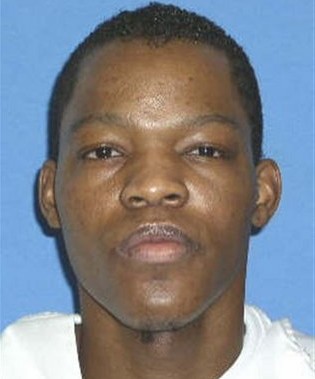 Derrick Lamone Johnson
Murderer · USA · 1999
Derrick Lamone Johnson was a Black male with black hair and brown eyes. He was…
1 victim
Derrick Lamone Johnson
Murderer · USA · 1999
Derrick Lamone Johnson was a Black male with black hair and brown eyes. He was…
1 victim
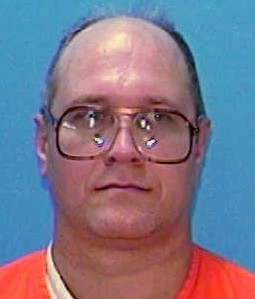 Thomas Michael Overton
Murderer · USA · 1991
Defendant: Thomas Michael Overton (born 11/05/55) DOB: 11/05/55 Age: Sixteen ju…
2 victims
Thomas Michael Overton
Murderer · USA · 1991
Defendant: Thomas Michael Overton (born 11/05/55) DOB: 11/05/55 Age: Sixteen ju…
2 victims
 Thomas Harrison Provenzano
Murderer · USA · 1984
21 July 2000 — Thomas Harrison Provenzano was executed by lethal injection in F…
1 victim
Thomas Harrison Provenzano
Murderer · USA · 1984
21 July 2000 — Thomas Harrison Provenzano was executed by lethal injection in F…
1 victim
- Gender
- male
- Country
- USA
- Location
- Fulton County, Georgia, USA
- Date of birth
- J uly 1964
- Age at first offence
- 24
- Characteristics
- rape
- Victim profile
- Women ages 86, 78, 79 and 42
- Method of murder
- Strangulation
- Date(s) of murder
- 1988 - 1989
- Years active
- 1988–1989
- Date of arrest
- October 2, 1992
- Status
-
Sentenced to death
Sentenced to death on March 7, 1996
Case record: Lyndon Fitzgerald Pace
Background
Lyndon Fitzgerald Pace was 32 years old when he was sentenced to death in March 1996 in Fulton County. He committed a series of rapes and murders between August 1988 and February 1989, mainly preying on elderly women. He was convicted of killing women aged 78, 86, 79, 78 and 42, and he was convicted of several burglaries during that time period.
Pace was tried in a capital case under the name PACE v. THE STATE (S99P0647) (271 Ga. 829) (524 SE2d 490) (1999). HINES, Justice. The trial court was the Fulton Superior Court, before Judge Long.
Timeline
- August 28, 1988 — A roommate found the nude body of 86-year-old Lula Bell McAfee lying face-down on her bed; she was sexually assaulted and strangled to death with a strip of cloth.
- September 10, 1988 — Mattie Mae McLendon, 78, was found lying dead on her bed covered by a sheet; she was sexually assaulted and strangled to death.
- February 4, 1989 — The police discovered the body of 79-year-old Johnnie Mae Martin lying on her bed nude from the waist down; she was sexually assaulted and strangled to death with a shoelace.
- March 4, 1989 — The brother-in-law of 42-year-old Annie Kate Britt found her body lying on her bed; she was sexually assaulted and strangled to death with a sock that was still knotted around her neck.
- August 1992 (3:00 a.m.) — At 3:00 a.m., 69-year-old Sarah Grogan confronted an intruder in her kitchen; she obtained her gun and fired a shot which forced him to flee.
- September 24, 1992 — The intruder entered Sarah Grogan’s house by climbing through a window; fingerprints were lifted from Grogan’s kitchen.
- September 30, 1992 (2:00 a.m.) — At 2:00 a.m., Susie Sublett, an elderly woman who lived alone, awoke to find an intruder taking money from her purse in her bedroom.
- September 30, 1992 — The intruder threatened to “blow [her] brains out”; Susie Sublett fought with him and fled to a neighbor’s house; a crime scene technician lifted fingerprints from Susie Sublett’s window screen.
- October 2, 1992 — Pace was arrested for the crimes against Ms. Sublett.
- September 17 (within consent form) — The consent form Pace signed stated he was a suspect in a murder that occurred on September 17 and identified the victim as Mary Hudson.
- September 1995 — At a hearing, a prosecutor stated he would not introduce hair comparison evidence.
- January 19, 1996 — The State served Pace with a Crime Lab report showing Pace’s pubic hair was microscopically similar to pubic hairs found at two murder scenes; voir dire was expected to last four to six weeks and the guilt-innocence phase did not start until February 20.
- January 22 to March 7, 1996 — Pace’s trial took place.
- March 5, 1996 — Pace was convicted of all counts.
- March 7, 1996 — The jury recommended four death sentences for the malice murder convictions; Pace was sentenced to death; the felony murder convictions were vacated by operation of law after Malcolm v. State.
- March 14, 1996 — Pace filed a motion for new trial.
- August 12, 1997 — Pace’s motion for new trial was amended.
- July 8, 1998 — The trial court denied the amended motion for new trial.
- August 7, 1998 — Pace filed a notice of appeal.
- February 2, 1999 — This case was docketed in the Supreme Court of Georgia.
- May 5, 1999 — This case was orally argued.
- December 3, 1999 — The case was decided.
- December 20, 1999 — Reconsideration was denied.
The offence
Murders of four women in Atlanta homes (1988 and 1989)
The evidence at trial showed that four women were murdered in their Atlanta homes in 1988 and 1989.
- On August 28, 1988, 86-year-old Lula Bell McAfee was found nude, lying face-down on her bed. She was sexually assaulted and strangled to death with a strip of cloth.
- On September 10, 1988, 78-year-old Mattie Mae McLendon was found lying dead on her bed covered by a sheet. She was sexually assaulted and strangled to death. No ligature was found.
- On February 4, 1989, 79-year-old Johnnie Mae Martin was found nude from the waist down on her bed. She was sexually assaulted and strangled to death with a shoelace.
- On March 4, 1989, 42-year-old Annie Kate Britt was found by her brother-in-law lying on her bed. She was sexually assaulted and strangled to death with a sock still knotted around her neck.
The police determined the killer entered each victim’s home by climbing through a window, and each attack occurred in the early morning hours. Vaginal lacerations and the presence of semen indicated that the victims had been raped, and two of the women had been anally sodomized. The medical examiner removed spermatozoa from each victim and sent samples to the FBI lab.
DNA testing revealed the same DNA profile for each sperm sample, indicating a common perpetrator.
September 1992 intrusions and robbery (armed threat and burglary)
On September 24, 1992, 69-year-old Sarah Grogan confronted an intruder in her kitchen at 3:00 a.m. She obtained her gun and fired a shot forcing him to flee. The police discovered that the intruder entered Grogan’s house by climbing through a window. Fingerprints were lifted from Grogan’s kitchen.
On September 30, 1992, at 2:00 a.m., Susie Sublett awoke to find an intruder taking money from her purse in her bedroom. The intruder was armed and threatened to “blow [her] brains out.” Sublett fought with him and managed to flee to a neighbor’s house. The neighbor called the police. The police determined the intruder entered Sublett’s house by climbing through a window, and fingerprints were lifted from Sublett’s window screen.
Burglary and armed robbery link to later arrest
Pace was arrested and agreed to give hair and blood samples. He was arrested pursuant to a valid arrest warrant for the armed robbery of Ms. Sublett.
Investigation
DNA and physical evidence connected the crimes.
- The medical examiner removed spermatozoa from each of the four murder victims and sent samples to the FBI lab.
- A DNA expert determined Pace’s DNA profile matched DNA profiles taken from sperm in the McAfee, Martin, McLendon, and Britt murders.
- The expert testified that the probability of a coincidental match of this DNA profile was one in 500 million in the McAfee, Martin, and Britt cases, and one in 150 million in the McLendon case.
- Pace’s pubic hair was consistent with a pubic hair found on the sweat pants Annie Kate Britt wore on the night she was murdered and with a pubic hair found on a sheet near Johnnie Mae Martin’s body.
Fingerprints linked the September 1992 incidents to Pace:
- A crime scene technician lifted fingerprints from Ms. Sublett’s window screen.
- Fingerprints from Ms. Grogan’s kitchen were also lifted.
- The fingerprints from the Sublett and Grogan crime scenes matched Pace’s fingerprints, which were already on file with the police.
For the evidence collection context:
- Pace was arrested for the crimes against Ms. Sublett on October 2, 1992.
- At that time, police were investigating the September 1992 murder of an elderly woman named Mary Hudson that they believed might be connected to the murders of McAfee, McLendon, Martin, and Britt.
- Because of similarities between the Sublett robbery and the Hudson murder, police sought Pace’s consent to obtain hair and blood samples.
Arrest
Sublett on October 2, 1992. Sublett.
Trial
Charges and convictions
A jury convicted Lyndon Fitzgerald Pace of:
- Four counts of malice murder
- Four counts of felony murder
- Four counts of rape
- Two counts of aggravated sodomy
The jury recommended a death sentence for each malice murder conviction after finding beyond a reasonable doubt the existence of 19 statutory aggravating circumstances under OCGA 17-10-30 (b) (2), (7).
Pace appealed and the Supreme Court of Georgia affirmed.
Sufficiency of evidence
The Supreme Court concluded the evidence was sufficient to enable a rational trier of fact to find beyond a reasonable doubt Pace’s guilt of:
- Four counts of malice murder
- Four counts of felony murder
- Four counts of rape
The court also concluded the evidence was sufficient to authorize the jury to find beyond a reasonable doubt the 19 statutory aggravating circumstances supporting his death sentences.
Sentencing
Death sentences and related rape sentences
Pace was sentenced to death on March 7, 1996.
In addition to the death sentences, the trial court sentenced Pace to six consecutive life sentences for the rape and aggravated sodomy convictions. The felony murder convictions were vacated by operation of law.
The trial court sentenced Pace to life imprisonment for each rape count, and life imprisonment without parole was not a sentencing option at Pace’s trial under OCGA 17-10-16 (a). The court prevented Pace from asking questions about parole during voir dire and denied argument or presentation of evidence about parole eligibility.
Jury questions about sentencing options
The transcript reflected a jury note about whether life without parole was possible. The Supreme Court stated the trial court’s written response to the jury was appropriate and not error, and concluded Pace showed no harm from the failure to transcribe any colloquy.
Appeals
Pace raised multiple issues on appeal, many of which the Supreme Court resolved against him. The issues included:
- Denial of motion to sever murder counts: The Supreme Court found no abuse of discretion in denying the motion to sever murder counts.
- Consent to DNA and blood/hair samples: After a suppression hearing, the trial court found Pace’s consent voluntary and the Supreme Court agreed. The court described the consent form and rejected arguments that the police exceeded the scope of consent or obtained consent through deceit.
- Challenges to juror qualification for capital punishment: The Supreme Court rejected challenges that death qualification was unconstitutional and rejected claims that jurors were biased or improperly qualified.
- Pretrial motions and evidentiary hearings: The Supreme Court held the trial court complied with the Unified Appeal Procedure, and Pace was allowed to file motions with supporting briefs and received hearings where counsel could argue each motion.
- Excusal of prospective jurors for cause: The Supreme Court discussed multiple prospective jurors excused for cause due to views on death penalty, opposition to death penalty, anxiety attacks, and religious reasons, finding no reversible error.
- Gender-based strikes: The Supreme Court rejected Pace’s J.E.B. motion, finding the State’s reasons for the struck female jurors were gender-neutral, reasonably specific, and related to the case.
- Voir dire colloquy involving Bruce Harvey: The Supreme Court found Pace showed no harm because the prospective juror was stopped before anything prejudicial was said.
- Voir dire limits: The Supreme Court held the trial court did not abuse its discretion in refusing to permit questions about bumper stickers and that voir dire was sufficient to ascertain bias.
- Child care costs for prospective jurors: The Supreme Court rejected Pace’s claim.
- Brady claims relating to a psychological profile: The Supreme Court rejected the Brady claims regarding a psychological profile prepared by GBI agents, and also rejected a claim regarding information allegedly heard by a neighbor of Annie Kate Britt.
- Limitation of cross-examination about other suspects: The Supreme Court concluded limitations were not an abuse of discretion because Pace failed to show a reasonable inference of innocence that directly connected another person with the corpus delecti and that some questions were hearsay.
- Admission of burglaries as similar transactions: The Supreme Court found admission proper to show identity, scheme, and course of conduct.
- Hair comparison evidence:
- The Supreme Court upheld the denial of a motion for continuance after late notice of a hair comparison report.
- The Supreme Court upheld the admissibility determination for hair comparison evidence.
- Recharges during deliberations: The Supreme Court rejected Pace’s claim that recharging on definitions of robbery and burglary improperly emphasized them.
- DNA expert testimony and chain of custody issues: The Supreme Court rejected Pace’s challenges regarding DNA expert qualification, testimony, and issues about refreshing recollection and chain of custody.
- Closing argument and prosecutorial misconduct:
- The Supreme Court acknowledged unprofessional characterizations by the prosecutor and found mistrial was denied within trial court discretion, and did not conclude reversal was warranted given the evidence.
- Sentencing-phase closing argument and jury instructions: The Supreme Court addressed a number of claimed errors, including use of a cartoon, comparisons to other serial killers, arguments about prior acts, religious references, victim-imagery “golden rule” style remarks, and jury instruction issues.
- Non-admission of execution evidence: The Supreme Court held evidence on the nature of execution by electrocution was not admissible in the sentencing phase.
- Overall review under OCGA 17-10-35: The Supreme Court concluded the death sentences were not imposed under passion, prejudice, or other arbitrary factors, and were not excessive or disproportionate.
Consent form quotation
The Supreme Court reproduced part of the consent form Pace signed:
“I fully understand that these hair and bodily fluid samples are to be used against me in a court of law and I am in agreement to give these hair samples for further use in this particular investigation.”
The consent form also stated Pace was a suspect in a murder that occurred on September 17 and identified the murder victim as Mary Hudson.
Threat quotation from victim
Susie Sublett testified in the trial record described by the Supreme Court that the intruder threatened:
“blow [her] brains out”
Other details
Indictment and procedural history (as noted in the case)
- Pace was indicted on June 22, 1993, for malice murder (four counts), felony murder (four counts), rape (four counts), and aggravated sodomy (two counts).
- The State filed a notice to seek the death penalty on August 13, 1993.
- Pace’s trial took place from January 22 to March 7, 1996.
- Pace was convicted of all counts on March 5, 1996, and the jury recommended four death sentences for the malice murder convictions on March 7, 1996.
- The felony murder convictions were vacated by operation of law (Malcolm v. State).
- Pace filed a motion for new trial on March 14, 1996, amended on August 12, 1997, and denied on July 8, 1998.
- Pace filed a notice of appeal on August 7, 1998.
- This case was docketed in the Supreme Court of Georgia on February 2, 1999, and orally argued on May 5, 1999.
- The case was decided December 3, 1999, and reconsideration was denied December 20, 1999.
Evidence comparison note about Hudson murder
The Supreme Court described that the FBI and GBI crime labs were unable to match Pace’s DNA or hair to any evidence from the Hudson murder, but were able to obtain matches with evidence from the McAfee, McLendon, Martin, and Britt cases.
Prosecutorial statements quoted in dissent (victim-imagery dispute)
In part of a dissent, the Supreme Court included the following verbatim description attributed to the prosecution’s argument:
“Imagine that night. Ms. McAfee is laying in bed asleep. She is violently awakened by somebody standing over her. Somebody grabbing at her. If you could imagine being asleep, and you wake up to hands tearing off your clothes. You wake up to hands grappling your body. And just as you wake up and realize what's going on, your clothes are ripped from you. Something is tied around your neck, and you are strangled.”
The dissent also included a verbatim portion attributed to the prosecutor:
“So come with me and think about [the next] crime scene. How would you feel in Ms. McClendon's situation? Again, to wake up with some man standing up over you choking the life out of you and pulling on your clothes.”
Appellate participation in concurring/dissenting opinions
- SEARS, Justice, concurred in part and dissented in part. The concurring/dissenting discussion addressed staying a ruling on the constitutionality of death by electrocution pending guidance from the United States Supreme Court.
- HUNSTEIN, Justice, dissented in part, addressing the sentencing argument and golden rule-type victim-imagery concerns. The dissent also stated that Presiding Justice Fletcher joined the dissent in part and that the dissenters concurred in the affirmance of Pace’s convictions.
Parties listed for the State
Paul L. Howard, Jr., District Attorney; Bettieanne C. Hart, Peggy R. Katz, Assistant District Attorneys; Thurbert E. Baker, Attorney General; Susan V. Boleyn, Senior Assistant Attorney General; Allison B. Goldberg, Assistant Attorney General, appeared for appellee.
Outcome
The Supreme Court of Georgia affirmed Pace’s adjudication of guilt and affirmed the imposition of death sentences, with the status being sentenced to death on March 7, 1996.


Spotted an error, or have more information about this case?