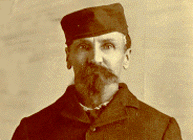
Alfred Packer
Murderer ? Gary Krist
Murderer ? · USA · 1959
Gary Krist Gary Steven Krist (born April 29, 1945) lived part of his childhood…
4 victims
Gary Krist
Murderer ? · USA · 1959
Gary Krist Gary Steven Krist (born April 29, 1945) lived part of his childhood…
4 victims
 Lamont Underwood
Murderer ? · USA · 1994
Lamont Claxton Underwood, known as “L.C.,” was a former Salisbury policeman. Pr…
2 victims
Lamont Underwood
Murderer ? · USA · 1994
Lamont Claxton Underwood, known as “L.C.,” was a former Salisbury policeman. Pr…
2 victims
 Ellis Wayne Felker
Murderer ? · USA · 1981
Ellis Wayne Felker (c. 1948 – November 15, 1996) was convicted of murder and re…
1 victim
Ellis Wayne Felker
Murderer ? · USA · 1981
Ellis Wayne Felker (c. 1948 – November 15, 1996) was convicted of murder and re…
1 victim
 John Kogut
Murderer ? · USA · 1984
John Kogut was a 21-year-old high school dropout and unemployed landscaper. In…
1 victim
John Kogut
Murderer ? · USA · 1984
John Kogut was a 21-year-old high school dropout and unemployed landscaper. In…
1 victim
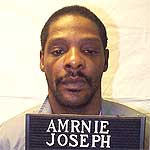 Joseph Amrine
Murderer ? · USA · 1985
Joseph Amrine was a death row inmate in Missouri. He was housed with the victim…
1 victim
Joseph Amrine
Murderer ? · USA · 1985
Joseph Amrine was a death row inmate in Missouri. He was housed with the victim…
1 victim
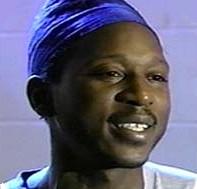 Larry Griffin
Murderer ? · USA · 1980
Larry Griffin — defendant; executed in Missouri on June 21, 1995 · Quintin Moss…
1 victim
Larry Griffin
Murderer ? · USA · 1980
Larry Griffin — defendant; executed in Missouri on June 21, 1995 · Quintin Moss…
1 victim
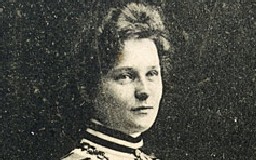 Grete Beier
Murderer · Germany · 1907
Marie Margarethe (Grete) Beier was executed by guillotine on July 23, 1908. She…
1 victim
Grete Beier
Murderer · Germany · 1907
Marie Margarethe (Grete) Beier was executed by guillotine on July 23, 1908. She…
1 victim
 Dano Sonnex
Murderer · United Kingdom · 2008
Dano Sonnex was convicted of murder and sentenced to life in prison with a mini…
2 victims
Dano Sonnex
Murderer · United Kingdom · 2008
Dano Sonnex was convicted of murder and sentenced to life in prison with a mini…
2 victims
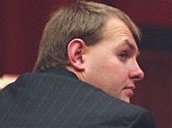 John Walter Bardgett
Homicide · USA · 2001
John Walter Bardgett was a 25-year-old nurse. Bardgett worked at Harborside-Nor…
2 victims
John Walter Bardgett
Homicide · USA · 2001
John Walter Bardgett was a 25-year-old nurse. Bardgett worked at Harborside-Nor…
2 victims
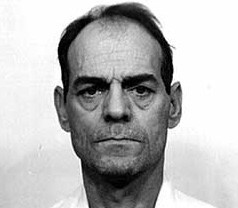 Johnny Meadows
Serial killer? · USA · 1968
Johnny J. E. Meadows was a convicted murderer. A later appellate decision descr…
4 victims
Johnny Meadows
Serial killer? · USA · 1968
Johnny J. E. Meadows was a convicted murderer. A later appellate decision descr…
4 victims
- Gender
- male
- Country
- USA
- Location
- Lake City, Colorado, USA
- Date of birth
- January 21, 1842
- Age at first offence
- 32
- Characteristics
- cannibalism
- Victim profile
- Shannon Wilson Bell, James Humphrey, Frank Miller, George Noon and Israel Swan (gold prospectors)
- Method of murder
- Shooting ?
- Date(s) of murder
- February-March 1874
- Years active
- 1874
- Date of arrest
- May 8, 1874 / Escape / March 11, 1883
- Status
-
Released
Sentenced to death April 13, 1883; reversed; sentenced to 40 years in prison on June 8, 1886; paroled on February 8, 1901; died April 23, 1907
Case summary
Alfred Packer was convicted of cannibalism after killing and eating five companions in the Colorado Territory. His name was misspelled “ALFERD” by a dyslexic tattoo artist and the misspelling became an in-joke.
Packer was born in Allegheny County, PA, on January 21, 1842. He worked as a shoemaker. He enlisted in the Union Army at age 20 on April 22, 1862, at Winona, Minnesota, and he was honorably discharged on December 29, 1862, at Fort Ontario, New York, due to disability. He went west working at his trade and engaged in prospecting. On November 8, 1873, he left Bingham Canyon, Utah as a guide for a party of 21 men to go to the gold fields of the Colorado Territory.
In late January 1874, the party arrived at Chief Ouray’s camp near Montrose, Colorado. On February 9, Packer and five companions left the camp, contrary to the advice of Ouray. Packer arrived alone at the Los Pinos Indian Agency near Saguache, Colorado, on April 16, 1874. He was questioned by Otto Mears and General Adams due to his conduct. Packer broke down and made two confessions. He admitted that he lived off the flesh of his five companions for the bigger part of the sixty days he was lost between Lake San Cristobal and the Los Pinos Agency. The five bodies were found.
Packer was placed in a dungeon in Saguache but escaped with the aid of an accomplice on August 8, 1874. He was arrested eight years later near Fort Fetterman, Wyoming, on March 11, 1883. He was tried in Lake City, Colorado, from April 6 to April 13, 1883, found guilty, and sentenced to death. To prevent a Lynch Mob, Packer was moved during the night to the Gunnison jail, where he remained for three years. His case was appealed to the Colorado Supreme Court and reversed on October 30, 1885, due to a technicality: he was charged after a Territorial law but tried under a State law. The second trial was held in Gunnison, Colorado, from August 2 to August 5, 1886. The jury returned guilty verdicts of manslaughter for each of the five victims, resulting in a total of forty years.
Packer served in the penitentiary at Canon City, Colorado, from 1886 to 1901. His parole was supported by efforts by Polly Pry of The Denver Post and lawyer Wm. W. “Plug Hat” Anderson. A parole agreement was signed on January 10, 1901, with a requirement that he proceed to Denver and remain for at least six years and nine months, if practicable. He was paroled on February 8, 1901. Packer died April 23, 1907 and was buried in Littleton, Colorado.
Timeline
- Nov 1873 — Bishop Frank Hamilton Rice led six followers plus a goat to the Packer gravesite in Littleton Cemetery, and in a ceremony absolved Packer and his victims of sin by transferring those sins to the goat.
- April 22, 1862 — Alfred Packer enlisted in the Union Army at Winona, Minnesota.
- Dec 29, 1862 — Alfred Packer was honorably discharged at Fort Ontario, New York, due to disability.
- Nov 8, 1873 — Alfred Packer left Bingham Canyon, Utah, as a guide for a party of 21 men to go to the gold fields of the Colorado Territory.
- Feb 9, 1874 — Packer and five companions left Chief Ouray’s camp near Montrose, Colorado.
- Apr 16, 1874 — Packer arrived alone at the Los Pinos Indian Agency near Saguache, Colorado.
- May 8, 1874 — Packer’s confession was given and signed under General Charles Adams’ supervision at the Los Pinos Indian Agency.
- Aug 8, 1874 — Packer made good his escape through the aid of an accomplice from the dungeon in Saguache.
- Aug 1874 — John A. Randolph found five sets of human remains near Slumgullion Pass.
- Jan 10, 1901 — Packer signed a parole agreement.
- Feb 8, 1901 — Packer was paroled.
- Mar 11, 1883 — Packer was arrested near Fort Fetterman, Wyoming.
- Apr 6, 1883 — Packer’s trial began at the Hinsdale County Courthouse in Lake City, Colorado.
- Apr 13, 1883 — Packer was convicted and sentenced to death.
- Apr 23, 1907 — Packer died.
- Apr 24, 1907 — A stroke caused Packer’s death.
- Aug 2, 1886 — The second trial began in Gunnison, Colorado.
- Aug 5, 1886 — The second trial ended with a manslaughter verdict for each of the five victims.
- Oct 30, 1885 — The Colorado Supreme Court reversed Packer’s conviction on a technicality.
- Jun 8, 1886 — Packer was sentenced to 40 years in prison.
- May 19, 1883 — Judge Gerry imposed a plan for execution.
- Aug 7, 1897 — Packer wrote a letter to D.C. Hatch of the Denver Rocky Mountain News.
- Mar 16, 1883 — Packer offered a second confession.
- Aug 2, 1901 — A jury disagreed and was discharged in the second trial of Anderson’s assault case.
- Apr 19, 1900 — Anderson’s first trial started in the assault case.
- Nov 12, 1901 — Anderson’s third trial started.
- Nov 16, 1901 — Four days after the third trial started, the jury returned a verdict of “not guilty.”
- Jan 7, 1901 — Governor Charles S. Thomas issued a conditional parole order.
- Oct 30, 1885 — Colorado Supreme Court reversal on technicality.
- Feb 8, 1901 — Parole granted.
- Aug 1874 — Randolph’s discovery at Slumgullion Pass.
- May 8, 1874 — Confession at Los Pinos Indian Agency.
Background
Alfred Packer was by occupation a shoemaker. He enlisted in the Union Army at age 20 and was discharged due to disability. He went west and worked at his trade and engaged in prospecting. He was later described as a cannibal after killing and eating five companions in the Colorado Territory.
There was long confusion about the correct spelling of Packer’s name. Official documents from the military, court proceedings, and his tombstone listed “Alfred G. Packer,” while during his first stint in the military he had written it as “Alferd” and had tattooed the spelling “Alferd” on his arm. The invitations to his hanging also followed the “Alferd” spelling.
The offence
Packer killed and ate five companions.
The five companions were:
- Israel Swan (about 65),
- James Humphrey,
- Frank “Reddy” Miller,
- George “California” Noon (only 18),
- Shannon Wilson Bell.
Packer admitted he lived off the flesh of his five companions for the bigger part of the sixty days between Lake San Cristobal and the Los Pinos Agency. The five bodies were found. The remains included evidence described as bound feet, torn clothing and blankets, missing head from Frank Miller, and cut pieces described as taken from the breast and thigh. A set of remains was described as missing its head, and pieces of flesh were described as cut out.
Investigation
John A. Randolph, an artist sent out to Colorado for Harper’s Weekly Magazine, found human remains in August 1874 at Slumgullion Pass in a cluster near the bank of the lake fork of the Gunnison River, about two miles from present-day Lake City. He sketched the remains and reported his discovery. Hinsdale County coroner W. F. Ryan hurried to the spot to hold an inquest but put nothing into writing.
Preston Nutter identified the remains as those of his former companions. By a process of elimination it was determined that Frank Miller was the one without a head. The bodies were buried together in graves on a high bluff nearby, with individual slabs set up to memorialize each deceased. The area became known as “Dead Man’s Gulch.”
Arrest
Packer was arrested near Fort Fetterman, Wyoming, on March 11, 1883.
After arrest, he went before a grand jury, which returned five indictments against him for the hatchet murders of the five prospectors. Packer offered a second confession on March 16, 1883, under the supervision of General Adams.
Trial
First trial (murder)
Packer’s trial began on April 6, 1883, at the Hinsdale County Courthouse in Lake City, Colorado, for the murder of the elderly Israel Swan.
Judge Melville B. Gerry presided. Preston Nutter testified as a lay witness to what he had seen and what he knew. Using illustrations, he described for the jury the positions of the bodies as they had been found and said that all but one bore hatchet wounds to the head; the lone individual had been struck hard in the back of the head, which was described as “mashed in.” The coroner did not testify at all.
Packer defended himself for more than two hours, denying blame in the deaths of most of the party while admitting he had shot and killed Wilson Bell in self-defense. He also addressed the deaths of the others and said that some who had survived longer had eaten the others to stay alive. Packer told several lies on the witness stand, including about his age, the nature of his military service, the fact that he had enlisted twice and was discharged twice, and the cause of his epilepsy.
On Friday, April 13, 1883, nine years after he emerged from the wilderness, Alfred Packer was convicted of the premeditated murder of Israel Swan. The Lynch Mob was ready to take over and Packer was moved to the Gunnison jail during the night to prevent it. His trial included sentence proceedings in which Judge Gerry imposed a death sentence.
Judge Gerry’s death sentence was stated as being imposed on May 19, 1883, with the sheriff of Hinsdale County taking Packer to a place of execution within the corporate limits of Lake City.
Judge Gerry’s sentencing remark included the following statements found in court materials:
“Close up your ears to the blandishments of hope. Listen not to its flattering promises of life; but prepare for the dread certainty of death. Prepare to meet thy God; prepare to meet that aged father and mother of whom you have spoken and who still love their dear boy. For nine long years you have been a wanderer upon the face of the earth, bowed and broken in spirit; no home; no loves; no ties to bind you to earth. You have been indeed, a poor, pitiable waif of humanity. I hope and pray that in the spirit land to which you are so fast and surely drifting, you will find that peace and rest for your weary spirit which this world cannot give. Alfred Packer, the judgment of this Court is that you be removed from hence to the jail of Hinsdale County, and there be confined until the 19th day of May, A.D. 1883, and that on said 19th day of May 1883, you be taken from thence by the Sheriff of Hinsdale County, to a place of execution prepared for this purpose, at some point within the corporate limits of the town of Lake City, in the said County of Hinsdale, and between the hours of 10 A.M. and 3 P.M. of said day, you then and there, by the said Sheriff, be hung by the neck until you are dead, dead, dead, and may God have mercy upon your soul.”
The conviction and sentence were later reversed.
A previously circulated version attributed to Judge Gerry included different wording, including:
“Stand up yah voracious man-eatin' sonofabitch and receive yir sitince. When yah came to Hinsdale County , there was siven dimmycrats. But you, yah et five of 'em, goddam yah. I sintince yah t' be hanged by th' neck ontil yer dead, dead, dead, as a warnin' ag'in reducin' th' Dimmycratic populayshun of this county. Packer, you Republican cannibal, I would sintince ya ta hell but the statutes forbid it.”
Second trial (manslaughter)
The Colorado Supreme Court set aside the murder conviction based on a technical legislative oversight: Packer could not be tried in 1883 for a crime he had committed in 1874 because there had been no state murder statute in 1874 allowing it.
The jury convicted Packer of manslaughter for each of the five victims, resulting in a total of forty years in the state penitentiary (eight for each death).
Sentencing
Packer was sentenced to death on April 13, 1883, with execution planned for May 19, 1883. The death sentence was reversed.
After the second trial, Packer was sentenced to 40 years in prison on June 8, 1886.
Appeals
Packer’s case was appealed to the Colorado Supreme Court and reversed on October 30, 1885, due to a technicality regarding being charged after a Territorial law but tried under a State law.
Parole and later events
After serving years in prison, Packer sought parole. A conditional parole order from Governor Charles S. Thomas was issued on January 7, 1901. The conditional parole order stated that Packer had been denied parole when he previously applied, and that he renewed his application successfully due to his physical condition, with prison physician certification of hydrocele and Bright’s Disease. The order noted his advanced age and said continued confinement was dangerous. It stated that leading men had signed a petition urging his release under the indeterminate sentence act. The governor’s conditional parole order granted parole within the limit of the State of Colorado and required compliance with the terms and conditions of the act and the agreement to be signed.
On January 10, 1901, Packer signed a parole agreement providing that he proceed at once to Denver and remain, if practicable, for at least six years and nine months from that date. Packer had earned about $1,500 making hair rope and hair bridles while a prisoner and paid Wm. W. “Plug Hat” Anderson a fee of twenty-five dollars. Bonfils and Tammen demanded half of the fee, and an argument developed in Bonfils’ office with Polly Pry and Anderson present. Bonfils struck Anderson across the face. Anderson went to get his gun and returned to the office, entered without knocking, and shot Bonfils in the neck and chest and Tammen in the shoulder and chest. Anderson fired four times with one shot left in his gun while waiting to use the last bullet.
Anderson was tried three times for the crime of assault with the intent to murder:
- The first trial started April 19, 1900 and lasted nine days; the jury disagreed and was discharged.
- The second trial resulted similarly after a nine-day trial starting August 2, 1901; again the jury disagreed and was discharged.
- The third trial started November 12, 1901, and four days later the jury returned a verdict of “not guilty.”
During Anderson’s proceedings, the defense attorney Col. John G. Taylor stated:
“I believe that The Denver Times was fairer to us than any other paper. The tone all the way through showed the facts exactly as they were, and I desire to give due credit to the stand the paper took in the matter.”
The trial judge said to Anderson:
“Your motive was admirable, but your marksmanship was abominable.”
Packer worked at the newspaper in Denver as a guard but moved to Deer Creek Canyon in Jefferson County. His final years included managing two mines and telling children the stories of his adventures. He dealt with liver and stomach ailments. A state game warden found Packer unconscious a mile from his home in late 1906. Mrs. Van Alstine cared for him for the remaining months of his life.
Packer died April 23, 1907, from a stroke listed as “senility—trouble & worry.” Just before he died on April 24, 1907, he wrote a letter to the governor to request a full pardon, and no action was taken.
Outcome
STATUS: Sentenced to death April 13, 1883. Reversed. Sentenced to 40 years in prison on June 8, 1886. Paroled on February 8, 1901. Died April 23, 1907
Packer was buried in Littleton, Colorado. Thousands of tourists visited his grave every summer. Gene Fowler, Ralph Carr, Herndon Davis, and Fred Mazzulla popularized the Packer story and organized “The Packer Club.”
Aftermath and later controversies
The victims were later found again in an excavation in 1989. James E. Starrs, a law professor from George Washington University, visited Gunnison in 1989 and sought the burial spot. Starrs obtained permission to dig and planned an archaeological dig. The dig commenced on July 17, 1989. Starrs used a ground-penetrating radar device, which suggested an anomaly not deep and possibly only a foot down. The team began with hand trowels and discovered human remains. Starrs and the team uncovered all five victims laid out side-by-side. The bones were not intermingled. The remains were photographed, boxed, labeled, and taken to the anthropology lab at the University of Arizona at Tucson. Some pieces were sent to Douglas Ubelaker for dating and age analysis.
Starrs reported that three of the bodies had blunt force blows to the head and cuts to the arms and hands that he interpreted as defensive wounds. He also believed nicks on bones appeared to be evidence of defleshing. Starrs went on record saying that Packer was a murdering cannibal and liar. The remains were reburied in a wooden box in the same spot.
In 1997, a curator for the Museum of Western Colorado in Gunnison claimed to have discovered Packer’s revolver, an 1862 Colt, loaded with three bullets. Starrs disputed that Packer owned such a gun and said there were no records that a revolver was recovered when the victims’ remains were found. The narrative stated that even if a bullet hole existed on a member of the party, it would not clarify whether any killing was self defense.
In 1981, Governor Lamm denied Judge Kushner’s posthumous pardon of Alfred Packer. In 1989, the dig attracted national attention.
Confessions and verbatim statements
First confession (Los Pinos Agency)
The following statement was presented as a copy of a statement made by Alfred Packer at Los Pinos Agency, with a date line and notarization included in the materials:
Old man Swan died first and was eaten by the other five persons, about ten days out from camp; four or five days afterwards Humphrey died and was also eaten; he had about one hundred and thirty three dollars. I found the pocket-book and took the money. Some time afterwards while I was carrying wood, the Butcher was killed as the other two told me accidentally and he was eaten. Bell shot "California" with Swan's gun, and I killed Bell; shot him - covered up the remains, and took a large piece along. Then traveled fourteen days into the "Agency" Bell wanted to kill me, struck at me with his rifle, struck a tree and broke his gun. I A.G. Packer do solemnly swear that the above statement is true and nothing but the truth So help me God. A. G. Packer
Sworn to and subscribed before me this 8th day of May A.D. 1874. James P. Downer J.P.
Second confession (March 16, 1883)
The second confession was given as a statement by Alfred Packer:
I, Alfred Packer, desire to make true and voluntary statement in regard to the occurrences in Southern Colorado during the winter of 1873 - 1874. I wish to make it to General Adams because I have made one once before about the same matter. When we left Ouray's camp we had about seven days of food for one man, we traveled two or three days and it came a storm. We came to a mountain, crossed a gulch and came onto another mountain, found the snow so deep, had to follow the mountain on the to p and on about the 4th day we had about a pint of flour left; we followed the mountain, until we came to the main range, do not remember how many days we were travling then - about 10 days - living on rosebuds and pine gum and some men were crying and pr aying. Then we came over the main range we camped twice on a stream which runs into a big Lake, the second time just above the lake. The next morning we crossed the lake cut holes into the ice to catch fish, there were no fish so we tried to catch snail s, the ice was thin, so some broke through. We crossed the lake and went into a grove of timber, all the men crying and one of them was angry - Swan asked me to go up and find out whether I could see something from the mountians - I took the gun and went up the hill. Found a gulch and came onto another mountain, found a big rosebush with buds sticking through the snow, but could see nothing but snow all around. I was a kind of a guide for them but I did not know the mountains from that side. When I ca me back to camp after being gone nearly all day I found the redheaded man [Bell] who acted crazy in the morning sitting near the fire roasting a piece of meat which he had cut out of the leg of the german butcher [Miller] the latters body was lying the fu rthest off from the fire down the stream, his skull was crushed in with the hatchet. The other three men were lying near the fire, they were cut in the forehead with the hatchet some had two some three cuts - I came winthin a rod of the fire, when the ma n saw me, he got up with his hatchet towards me when I shot him sideways through the belly, he fell on his face, the hatchet fell forwards. I grabbed it and hit him in the top of the head. I camped that night at the fire, sat up all night, the next morn ing I followed my tracks up the mountain but I could not make it, the snow was too deep and I came back, I went sideways into a piece of pine timber set up two sticks and covered it with pine boughs and then made a shelter about three feet high, this was my camp until I came out. I went back to the fire covered the men up and fetched to the camp the piece of meat that was near the fire. I made a new fire near my camp and cooked the piece of meat and ate it. I tried to get away every day but could not s o I lived off the flesh of these men, the bigger part of the 60 days I was out. Then the snow began to have a crust and I started out up the creek to a place where a big slide seemed to come down the mountian of yellowish clay there I started to get up b ut got my feet wet and having only piece of blanket around them I froze my feet under the toes and I camped before I reached the top of the hill making a fire on top of a log - and on two logs close together [and] I camped [there]. I cooked some of the flesh and carried it with me for food. I carried one blanket. There was seventy dollars amongst the men I fetched it out with me and one gun. The redheaded men had a 50 Dollar Bill in his pocket all the others together had only 20 Dollars. I had 20 Do llars myself. If there was any more money in the outfit, I did not know of it and it remains there. At the last camp just before I reached the Agency I ate my last pieces of meat This meat I cooked at the camp before I started out and put it in to a bag and carried the bag with me, I could not eat but a little at a time. When I went out with the party to search for the bodies, we came to the mountains overlooking the stream but I did not want to take them further. I did not want to go back to the camp myself. If I had stood in that vicinity longer I would have taken you [Mr. Adams] right to the place, but they advised me to go away [refusing to tell the names of the parties]. When I was at the Sheriff in Saguache I was passed a key made out of a pen knife blade with which I could unlock the irons I went to the Arkansas and worked all summer for John Gill 18 miles below Pueblo, then I rented Gilberts ranche still further down, put in a crop of corn, sold it to John Gill and went to Arizona. State of Colorado County of Arapahoe I, Al Packer, of my own free will and voluntarily do swear that the above statement is true, the whole truth and nothing but the truth So help me God (s) Alferd Packer Subscribed and sworn before me this 16th day of March A.D., 1883 Sim. W. Cantril Notary Public”
Letter to D.C. Hatch (August 7, 1897)
Packer wrote a letter to D.C. Hatch of the Denver Rocky Mountain News on 8/7/1897. The following quoted content includes the narrative of his account:
Mr. D.C. Hatch, 842 Larimer Street, Denver, Colo.: My Kind Friend - Your welcome favor of the 22nd inst. Has been received, and in reply to your request I gladly comply by giving to you as complete a statement as it is possible for me to, viz: In the fall of 1873 a party of men left Salt Lake City by wag on, there being teams and pack animals. In leaving we were deficient in supplies for the entire journey. But this matter can hardly be attributed to either myself or anyone else of the party of twenty one (21), for the agreement was that the men who own ed the teams were to furnish our sustenance. But unfortunately our supplies were exhausted by the time that we reached the Green River, at the head of the Colorado. And now, my kind friend let me impress upon you the painful fact that thus early in our journey we were suffering most terrible from the pangs of hunger. For about five days we had been surviving on horse feed, which was chopped barley. Just at this point we ... Ouray and a band of fifty Indians, from whom we received assistance. And, being informed by Chief Ouray that the mountains were impassable, owing to the great amount of snow, we availed ourselves of his invitation and camped within two mile of him, and from whom we purchased supplies. After having been in this camp for about one week a man by the name of Lutzenheiser and four other men started for the agency, having been informed by Chief Ouray that from his camp to the Indian Agency it was forty miles, while in fact, buy air line, it was eighty miles. Lutzenheizer and his party had no other provisions, only what each man carried, they being on foot. As a result their provisions soon became exhausted. And these five men had concluded to cast lot to see who should be food for the others. But just at this time a coyote was seen, which was immediately killed, and was the means of saving one of that party from a tradgical fate. And, as this party neared the cattle camp where Gunnison now stands, Lutzenheiser saw a cow fast in the snow and he crawled up to her and shot her with his revolver. The man who had charge of the cattle, happening to be out looking for his herd saw the tracks which Lutzenheiser had left, and, following these tracks, he soon found Lutzenheiser in an exhausted condition. He took him into this camp and followed his trail back and found the remaining four of the party, whom he also took into the camp, a man by the name of George Driver being the last, who was carrying the head of the coyote. Here they remained until they had become physically recruited, when they started for the Los Pinos agency, which was forty miles into the mountains, at which place they were again picked up in a fainting condition. All of which was sworn to at the time of my trial and is a matter of court record. And now I return to my own party, which composed six men, myself included. There being two trails to the agency, about one week after Lutzenheiser's party left, we took the upper trail for the purpose of reaching the same destination. We also were on foot, and carried what provisions we could in blankets. After nine days our provisions were entirely exhausted. The snow being deep, we were compelled to keep on top of the divide, in order to travel at all. And these divides led to the top of the Rocky mountains. Our matches had all been used, and we ere carrying our fire in an old coffee pot. Three or four days after our provisions were all consumed we took our moccasins, which were made of raw hide, and cooked them, and, of course, ate them. Our suffering at this time was most intense, such, in fact, that the inexperienced cannot imagine. We could not retrace our steps, for our trail was entirely drifted over. In places the snow had been blown away from patches of wild rose bushes, and we were gathering the buds from these bushes, stewing them and eating them. In following these divides we soon gained the tip of the Rocky Mountains, and the snow being blown away from the top of the mountains and our feet encased in pieces of blankets, we were enabled to travel along steadily. Now my friend, you can imagine our condition, on top of the mountains, with nothing to kill for food and not even any of those rose bushes. Starvation had fastened its deathly talons upon us, and was slowly but most tortuously driving us into the state of imbecility; in fact, Bell, the strongest and most able-bodied man of our party, had succumbed to the power of mental derangement and was causing the party to be very much afraid of him, as well as that which they felt to be the inevitable doom of each, mentally. I am at a loss to fully express our feelings at this stage, but we consulted each other and conclude to come down off the mountai n. For we could not tell whether we had passed the agency or not, for it was either snowing or blowing constantly. And, as it happened, we descended to the lake fork of the Gunnison river. We camped one night just above the lake. In the morning I asce nded the mountain for the next purpose of ascertaining if there were any visible signs of civilization on the opposite side. The snow being very deep, it required the entire day to make this trip and return. As I neared the camp on my return I was confronted by a terrible sight. As I came near I saw no one but Bell. I spoke to him, and then, with the look of a terrible maniac, his eyes glaring and burning fearfully, he grabbed a hatchet and started for me, whereupon I raised my Winchester and shot him. The report from rifle did not arouse the camp, so I hastened to the campfire and found my comrades dead. Can you imagine my situation - my companions dead and I left alone, surrounded by the midnight horrors of starvation as well as those of utter isolation? My body weak, my mind acted upon in such an awful manner that the greatest wonder is that I ever returned to a rational condition. In looking about I saw a piece of flesh on the fire, which Bell had cut from Miller's leg. I took this flesh from the fire and lay it to one side, after which I covered the bodies of my dead comrades. I remained here with them during the night. In the morning I moved about 1,000 yards below, where there was a grove of pine trees. I distinctly remember of taking a piece of the flesh and boiling it in a tin cup. I also know that I became sick and suffered most terribly. My mind at this period failed me. But I am satisfied that I must have eaten some of the flesh, but my mind was a total blank for a considerable period of time. When my mind returned I found, by my tracks, that I had been visiting around the adjacent territory, seeking rose buds, which I apparently found, for I noticed that by force of habit I had been stewing them in my tin cup. The record of time now becomes a nonentity. I do not know how long I remained here. I did not know how near I was to the close of the year. I could not tell how near spring was. But the weather began to moderate and I wandered around seeking rose buds for food, when all of a sudden I was confronted by the Los Pinos agency. It would be a mild assertion for me to say that I was surprised. And most agreeable it was, too. I found out that in my searching for food and civilization I had traveled forty miles from the lake fork of the Gunnison. For three weeks I was taken care of at the agency. I have learned that Lutzenheiser and his party had crossed the mountains into Siwatch. The remaining of the twenty-one men now at the end of this three weeks came through with a band of Indians. They questioned me as to where my comrades were. I replied that I had killed Bell and that evidently he had killed the others. In a day or two we left the agency and started with the teams to go over to Siwatch. We remained in Siwatch until General Adams, the Indian agent, returned from Denver. I then explained to the general all I knew about my dead comrades, and an expedition was fitted out to return and bury them. We had not gone far on this journey before we were compelled to turn back to the agency, owing to the great depth of snow and the crust which was upon it. After returning to the agency I was turned over to the sheriff of Siwatch, with whom I remained until the middle of July. At this time the sheriff, Amos Wall, asked me if I could realize what I had passed through. In reply I gave him as complete an explanation as I could, after which he told me to go away and not permit it to longer worry me. I did as he advised, so far as to the going away, and after the lapse of ten years I was arrested in 1885 upon the charge of having murdered my companions. The result of my trial is well known to all; how the supreme court granted me a new trial, and how I was convicted of manslaughter upon five different indictments, tried by one and the same jury, receiving an accumulative sentence of forty years, being eight years for each. Now, my kind friend, in conclusion permit me to say that I am to-day, as ever before, a member of the human family, although isolated and away from that which is dear to the heart of every man. Am I the villainous wretch which some have asserted me to be? No man can be more heartily sorry for the acts of twenty-four years ago than I. I am more a victim of circumstances than of atrocious designs. No human being living can say that I in cold blood, with evil intent, murdered my companions upon that awful occasion. What could be the object of my taking their lives in a wanton manner? I bear no malice towards living man. Even though I may feel that I have been unjustly dealth with, still that Supremacy which rules over all knows that I forgive as I would wish to be forgiven. In this the darkest hour of my earthly existence I feel, as I have long felt, that I would have far better off had my execution taken place years ago, and I might now be with those companions, whose ghosts, I assure you do not haunt me, for if the soul has existence beyond this mortal life, each and every one of those unfortunate men knows that I am innocent. As it is there is some unexplainable power which retrains my hand from freeing my soul. Hence all the brightness in the firmament of my earthly future is centered in the hope that I may eventually be given an opportunity of proving to the world that I am "less black than has been painted." And to all my kind friends I can but reiterate that my heart to-day, as before, abounds with thankful gratitude for your many expressions of good will. I should like to be set at liberty under the banner of a pardon, but if that should not be deemed best, I would gladly avail myself of the opportunity that a commute would give of showing that I came into existence under circumstances similar to that of others, and that I still possess a desire to live and do right. O! my friend! Were it not for the flame of hope which forever burns within the human heart, life would certainly be beyond endurance. Gratefully Yours, Alfred Packer”
Other details
- Packer was associated with canon city penitentiary service from 1886 to 1901.
- His parole was linked to attempts to have him released and potentially displayed for profit; the narrative stated he was not pardoned.
- A reported last remark included: “I’m not guilty of the charge.”
- Gene Fowler, Ralph Carr, Herndon Davis, and Fred Mazzulla organized “The Packer Club.” The membership card text included:
“They was siven Dimmycrats in Hinsdale County, but you, yah voracious, man-eatin' son of a bitch, yah eat five of thim!”
“I agrees to eliminat five Nu Deal Dimmycrats witch makes me a mimber of th' Packer Club of Colorado” - The materials also included “Execution Of Alferd Packer” invitations drafted and signed by the sheriff of Hinsdale County.
- Bibliography entries listed numerous works and individuals, including Katherine Ramsland, Oliver Nagel Porter, James E. Banks, Malcolm Campbell, Doris Cerveri, Edward V. Dunklee, and others.
Spotted an error, or have more information about this case?