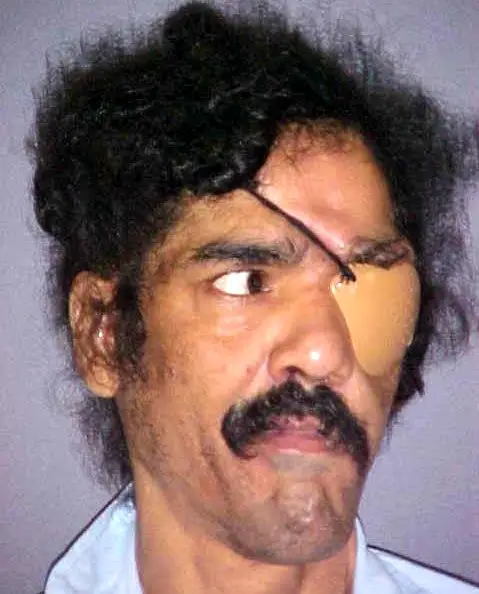
Garry Thomas Allen
Murderer Brian Kevin Rosenfeld
Murderer · USA · 1985
Brian Kevin Rosenfeld Brian Kevin Rosenfeld was sentenced to three concurrent l…
23 victims
Brian Kevin Rosenfeld
Murderer · USA · 1985
Brian Kevin Rosenfeld Brian Kevin Rosenfeld was sentenced to three concurrent l…
23 victims
 Yahweh ben Yahweh
Murderer · USA · 1980
Yahweh ben Yahweh was born and legally named Hulon Mitchell Jr. (October 27, 19…
23 victims
Yahweh ben Yahweh
Murderer · USA · 1980
Yahweh ben Yahweh was born and legally named Hulon Mitchell Jr. (October 27, 19…
23 victims
 Russell Ellwood
Murderer · USA · 1991
Russell Ellwood was a former taxi driver. Authorities suspected him of killing…
20 victims
Russell Ellwood
Murderer · USA · 1991
Russell Ellwood was a former taxi driver. Authorities suspected him of killing…
20 victims
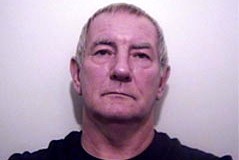 William Collis
Murderer · England United Kingdom · 2006
William Collis (also known as John Ryder) William Collis was a 60-year-old teac…
1 victim
William Collis
Murderer · England United Kingdom · 2006
William Collis (also known as John Ryder) William Collis was a 60-year-old teac…
1 victim
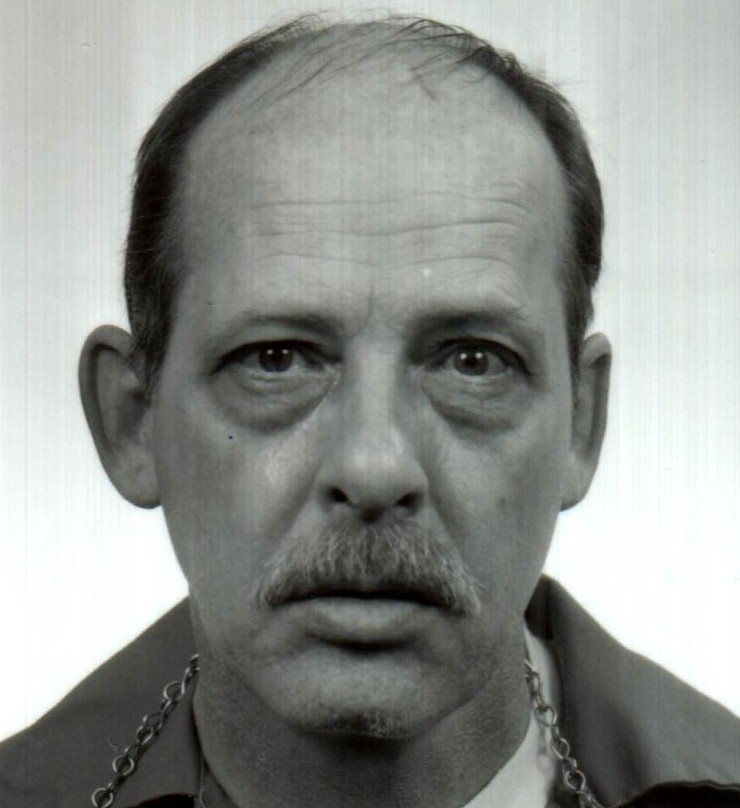 John Ingle
Murderer · USA · 1996
Name: John Ingle Sex/Race: White male Date of birth: 10-29-49 Age: not stated D…
1 victim
John Ingle
Murderer · USA · 1996
Name: John Ingle Sex/Race: White male Date of birth: 10-29-49 Age: not stated D…
1 victim
 Shonda Johnson
Murderer · USA · 1997
Shonda Johnson was also known as Shonda Nicole Richards. She was White. She was…
1 victim
Shonda Johnson
Murderer · USA · 1997
Shonda Johnson was also known as Shonda Nicole Richards. She was White. She was…
1 victim
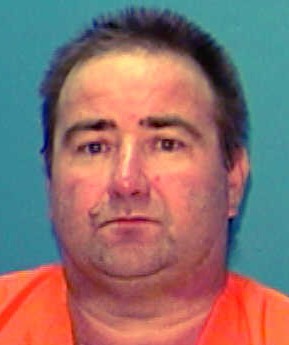 James D. Ford
Murderer · USA · 1997
James D. Ford was a defendant in a capital case in Florida. Ford’s date of birt…
2 victims
James D. Ford
Murderer · USA · 1997
James D. Ford was a defendant in a capital case in Florida. Ford’s date of birt…
2 victims
- Gender
- male
- Country
- USA
- Location
- Pittsburg County, Oklahoma, USA
- Date of birth
- February 25, 1956
- Age at first offence
- 30
- Characteristics
- parricide, domestic violence, alcohol
- Victim profile
- Lawanna Gail Titsworth, 24 (his girlfriend)
- Method of murder
- Shooting
- Date(s) of murder
- November 21, 1986
- Years active
- 1986
- Date of arrest
- Same day (wounded by police)
- Status
-
Executed
Executed by lethal injection in Oklahoma on November 6, 2012
Case identity
Garry Thomas Allen was convicted in Oklahoma County of murder in the first degree and was sentenced to death.
Timeline
- November 21, 1986 — Allen shot and killed his fiancée, Lawanna Gail Titsworth, outside her children’s day care in Oklahoma City.
- November 24, 1986 — Allen was charged with first degree murder by way of Information filed in Oklahoma County.
- January 21, 1987 — Allen appeared for arraignment when he was not represented by counsel and was provided a copy of the Information.
- January 27, 1987 — The court remanded Allen to Eastern State Hospital for evaluation.
- June 12, 1987 — Dr. Allen Kirk advised the court that Allen had achieved competency.
- October 19-20, 1987 — A jury competency trial was held; the jury found Allen competent to stand trial.
- November 10, 1987 — Allen entered a blind plea of guilty to first-degree murder.
- December 23, 1987 — Allen was sentenced to death.
- May 19, 2005 — Allen was scheduled for execution; a stay was granted by Judge Thomas Bartheld one day before the scheduled execution.
- April 12, 2012 — Allen was scheduled for execution; a stay was issued one day before the scheduled execution by U.S. District Judge David L. Russell.
- October 22, 1993 — Allen was resentenced to death.
- December 28, 1987 — Bartheld signed a legal order vacating Allen’s stay of execution, stating the issue of the sanity of Garry Thomas Allen for execution had been resolved.
- September 26 — A federal district court judge rejected Allen’s last minute claim that he could not be executed due to alleged mental incompetence and lifted the stay of execution previously issued.
- October 31 — The U.S. 10th Circuit Court of Appeals upheld dismissal of the appeal and denied a renewed motion to stay the execution.
- November 6, 2012 — Allen was executed by lethal injection in Oklahoma.
People
- Garry Thomas Allen — defendant and condemned inmate.
- Lawanna Gail Titsworth — victim; Allen’s fiancée and mother of their two sons.
- Anthony — Allen and Titsworth’s son; age 6.
- Adrian — Allen and Titsworth’s son; age 2.
- Mike Taylor — Oklahoma City Police Department officer who responded to the 911 call and fought with Allen.
- Jerry Massie — spokesman for the Oklahoma Department of Corrections.
- Art Lightle — Oklahoma State Penitentiary Deputy Warden.
- Terry Crenshaw — OSP Warden’s Assistant.
- David L. Russell — U.S. District Judge.
- Thomas M. Bartheld — district judge who stayed Allen’s execution; later signed a legal order vacating the stay.
- Richard W. Freeman — judge at resentencing in Oklahoma County District Court.
- Virginia L. Nettleton and Fern L. Smith — prosecutors.
- Robert Mildfelt and Catherine Hammarsten — defense counsel.
- Oklahoma Attorney General Scott Pruitt — stated position through filings and notice of appeal regarding a stay of execution.
- Gov. Mary Fallin — denied a clemency recommendation earlier in 2012.
- Mike Mullin — OSP warden who wrote a letter about evidence of insanity.
- Chris Wilson — Pittsburg county District Attorney.
- Justin Jones — Oklahoma Department of Corrections Director.
- Michael Taylor — referred to as the officer in the court-record recitation of events.
- Stephen Cagle — neurosurgeon.
- Samuel J. Sherman — clinical psychologist at Eastern State Hospital.
- Allen Kirk — psychiatrist at Eastern State Hospital.
- Edith King / Dr. Edith King — clinical psychologist appointed for competency examination.
- Dr. Nelda Ferguson — defense expert at resentencing.
- Gregory McNamara — jail physician who testified Allen communicated rationally.
- David Simms — ear, nose and throat surgeon.
- Dr. David Simms — testified about rational conversations.
- Michael Gelbort / Dr. Michael M. Gelbort — clinical psychologist referenced in later post-conviction context.
- Opio Toure — defense attorney who testified at the competency trial for Allen’s side.
- Eugenia Baumann / MS. BAUMANN — defense counsel at plea and competency matters.
- Mr. Opio Toure — mentioned as trial attorney.
- Steve Olafson — Reuters reporter.
- Justin Juozapavicius — Tulsa World reporter.
- Rachel Petersen — McAlesterNews.com reporter.
- Jerry Massie — state prison spokesman who stated execution time.
- Art Lightle — deputy warden involved in last statement procedure.
Background
Allen was described as having a long history of drug and alcohol abuse and as having been hospitalized for psychological problems. He had been hospitalized after being shot in the face, left eye, and brain injuries after police shot him during a struggle over the officer’s gun.
The offence
Allen pleaded guilty and was sentenced to death for the murder of his fiancée, Lawanna Gail Titsworth. Three days after Titsworth left Allen with their two sons, Allen confronted Titsworth outside the children’s day care and shot her in the chest. He left, and then returned, shooting Titsworth three times in the back.
Allen confronted Titsworth when she arrived to pick up their sons at the day care center on N.W. 8th Street in Oklahoma City. Allen shut the truck door as Titsworth tried to enter and prevented her from entering. As the two argued, Allen reached into his sock, pulled out a revolver, and shot Titsworth twice in the chest. After he looked under her blouse and walked away, a day care employee ran to help her into the day care center; as Titsworth and the employee reached the front door, Allen pushed the employee inside, shoved Titsworth down on the outside steps, and shot her twice in the back at close range.
After being shot, Titsworth begged Allen not to shoot her again and fell to the ground. She managed to get up and began running toward the building with a daycare center employee, and Allen pushed the employee through the door and shoved Titsworth down.
At the time of the shooting, some daycare employees were in the parking lot, and several children were in a van parked a few feet from Titsworth’s truck. It was unclear whether Titsworth was holding her youngest son at the time of the shooting or had picked him up immediately thereafter.
Quoted statements about the intent element and plea
Allen submitted an affidavit in his own hand for the factual basis of the plea, stating: “I shot & killed Gail Titsworth. I had no justifiable cause.”
Investigation and arrest
Officer Mike Taylor of the Oklahoma City Police Department responded to a 911 call within minutes of the shooting. A witness directed Taylor to an alley where Allen was hiding. Taylor spotted Allen as he drove into the alley, drew his service revolver, and ordered Allen to stop and remain still. Allen initially complied, then began walking away. Taylor followed Allen and reached out to place a hand on him. Allen quickly turned and grabbed the policeman’s gun. During the struggle, Allen obtained partial control of the gun and “attempted to make officer Taylor shoot himself by applying pressure to Taylor’s finger which was still on the trigger.” Ultimately, Taylor regained control of the gun and shot Allen in the face.
Allen was hospitalized for approximately two months for injuries to his face, left eye, and brain. A CT scan revealed an air pocket in the front part of his brain and cerebral spinal fluid leaking from his nose and ear.
Competency proceedings and plea
Allen originally planned to go to trial and his attorney filed a motion requesting a competency hearing. A doubt was raised as to Allen’s competency to proceed to trial, and the court ordered Allen committed to the Department of Mental Health for observation, treatment and examination. Allen remained committed for four months.
At the end of this period, examining professionals found:
- Allen was able to appreciate the nature of the charges against him;
- Allen was able to consult with his lawyer and rationally assist in the preparation of his defense;
- Allen was not a mentally ill person and did not require treatment; and
- If released without treatment, therapy or training, he probably would not pose a significant threat to the life or safety of himself or others.
Allen requested a jury trial on competency. His witnesses included the neurosurgeon who operated on him to repair damage from a gunshot wound to his face, the clinical psychologist whose initial finding of incompetence supported the motion, his father, his sister, and one of his defense attorneys.
At trial, the state presented evidence including testimony from:
- the licensed psychiatric resident who performed the court-ordered evaluation;
- the ocularist who constructed Allen’s artificial eye and who had approximately seven hours of contact with Allen;
- the doctor at the Oklahoma County jail who saw Allen twice a week during the previous six months;
- the surgeon who performed an ear operation to remove debris and infection resulting from the gunshot wound;
- a jail LPN nurse; and
- the court-appointed psychologist examined Allen on behalf of the defense.
The jury was instructed on the clear and convincing standard and found Allen competent to stand trial. Allen then decided to plead guilty.
Three weeks after the post-examination competency hearing, Allen entered a blind plea of guilty on November 10, 1987. The trial court asked Allen about whether he had ever been treated by a doctor or confined in a hospital for mental illness, and the record reflects the trial court proceeded after counsel and the court discussed competency-related history including a four-month hospital stay for evaluation and treatment, followed by a finding of competence.
The trial court questioned Allen and his counsel to determine present competency to enter a plea. Allen answered the court’s questions, and defense counsel stated that Allen had been sent to Eastern State Hospital, spent about four months there, and was returned as competent after medication and subsequent competence findings. The trial court accepted the plea after determining it was voluntary and that a factual basis existed.
Sentencing
Allen received a death sentence after pleading guilty. A second sentencing hearing occurred after appellate remand and also resulted in a death sentence.
Aggravating circumstances and findings
At resentencing, the trial judge found three aggravating factors qualified:
- The defendant was previously convicted of a felony involving the use or threat of violence to the person.
- The defendant knowingly created a great risk of death to more than one person.
- The existence of a probability that the defendant would commit criminal acts of violence that would constitute a continuing threat to society.
On direct appeal, the court vacated and remanded in part because the trial court had not considered the sentencing option of life without parole which had gone into effect ten days prior to sentencing. On remand, the trial court again imposed the death sentence and the sentence was affirmed.
Judge’s statements at sentencing (verbatim)
The trial judge stated:
Over the weekend, I had the opportunity to review the evidence that was presented during the preceding week. I examined my trial notes. I took the Court file home with me. I went through that. I also read the Court of Criminal Appeals opinion on reversal and I reviewed the notes I made during the argument of counsel and I did consider all three punishments, life, life without parole and death. My consideration of these matters over the weekend, as I said, took place at my residence in seclusion in a leisurely and relaxed atmosphere. I carefully and prayerfully reviewed the facts, the testimony, the arguments. I was not influenced by passion of prejudice or any other arbitrary factor. I gave consideration to the pleas for mercy by the parents and the children of Mr. Allen and to those pleas that he made himself. I considered what I'm sure would have been the pleas, although unspoken, by Gail Titsworth for justice and those of her family, which also were not presented. It's not an easy case, of course, to decide. Upon consideration of all these various things that I've talked about I do find that the Bill of Particulars has been proven. The Defendant was previously convicted of a felony involving use of or threat of violence to the person. Number two, the Defendant knowingly created a great risk of death to more than one person and I believe there is the existence of a probability that the Defendant would commit criminal acts of violence that would constitute a continuing threat to society. And, accordingly, I find that the appropriate punishment in this case would be death and I do make that finding with his punishment in this Case CRF-86-6295 should be death. [emphasis added to challenged portions]
A prosecutor’s closing statement included:
The Defendant has his mother. He has his father. He has Chandra [His daughter]. Gail's mother and father and brothers and sisters and her children don't have her any more. They didn't get an opportunity to beg for Gail's life, although Gail did. She begged for her life. She begged the Defendant to let her live.... The defendant sat there in that chair, six years after he murdered Gail and he asked you to spare his life. What Gail would have given for those six years with Tony and Adrian, her mother and father and her sisters and brothers.... The Eighth and Fourteenth Amendments require a sentence of death to be based on reason, not caprice, emotion, or other arbitrary factor. Gregg v. Georgia, 428 U.S. 153, 96 S.Ct. 2909, 49 L.Ed.2d 859 (1976); Proffitt v. Florida, 428 U.S. 242, 96 S.Ct. 2960, 49 L.Ed.2d 913 (1976); Saffle v. Parks, 494 U.S. 484, 110 S.Ct. 1257, 108 L.Ed.2d 415 (1989). As evidenced by the acceptance of victim impact evidence at sentencing, it is not sympathy for the victim per se, but sympathy that overcomes reason which is constitutionally unacceptable. See Neill v. State, 896 P.2d 537, 553-54 (Okl.Cr.1994); 22 O.S.Supp.1992, §§ 984, 984.1 and 991a. Nothing in the record supports Allen's allegation the trial judge allowed sympathy to overcome his reason. In fact, the trial court articulated quite clearly the rational basis for his sentencing decision. There is no error here.
Appeals
Allen v. State, 821 P.2d 371 (Okla.Crim. App. 1991) (Direct Appeal-Vacating DP)
- The appellate court affirmed in part and remanded in part.
Allen v. State, 923 P.2d 613 (Okla.Crim. App. 1996) (On Appeal after Resentencing)
- The appellate court affirmed and certiorari was denied.
Allen v. State, 956 P.2d 918 (Okl.Cr.App. 1998) (Direct Appeal After Resentencing / On remand)
- The appellate court held the plea proceeding was not tainted by a post-examination competency hearing held three weeks earlier and affirmed; prior opinions were reinstated.
Allen v. Mullin, 368 F.3d 1220 (10th Cir. 2004) (Habeas)
- The court of appeals affirmed the denial of federal habeas relief.
Execution-related proceedings and last statement
A federal district court judge rejected Allen’s last minute claim that he could not be executed due to alleged mental incompetence, and lifted the stay of execution previously issued. The U.S. 10th Circuit Court of Appeals upheld dismissal and denied a renewed motion to stay the execution.
Allen’s “Final Words” were included as follows:
Allen rambled unintelligibly about Obama and Romney. Allen’s garbled speech about the presidential race coincided with a loud banging noise as the other inmates in H-Unit said their good-byes. “Obama won two out of three counties. It’s going to be a very close race,” Allen said just before Oklahoma State Penitentiary Deputy Warden Art Lightle asked him if he had a last statement. Allen looked at Lightle and asked, “Huh?” Then he continued in his garbled speech and then again raised his head and said, “Hi,” to his attorneys. Allen’s unintelligible ramblings continued. He spoke about Obama and Jesus. “I hope that more realize Jesus is the son of God — the only son of God. Jesus is the one and only savior." ClarkProsecutor.org Oklahoma Department of Corrections Inmate: Garry T. Allen ODOC# 129275 Birth Date: 02/25/1956 3 Judge: Richard W. Freeman Prosecuting: Virginia L. Nettleton and Fern L. Smith Defending: Robert Mildfelt and Catherine Hammarsten Circumstances Surrounding Crime: Allen pleaded guilty and was sentenced to death for the murder of his fiancée, Lawanna Gail Titsworth. Final Words: Allen rambled unintelligibly about Obama and Romney.
Statements and timing at execution included:
- At 6:10 p.m., the physician checked Allen’s vital signs and pronounced him dead.
- Jerry Massie stated Allen was pronounced dead at 6:10 p.m. local time at the Oklahoma State Penitentiary in McAlester.
Victim impact statement (verbatim)
The victim’s family submitted a written statement following execution:
“Our beloved Gail — daughter, sister and mother of two young boys was taken from our family tragically and senselessly due to domestic violence.
“For over 25 years we have waited for justice to be served and for this sentence to be carried out.
“We are thankful to close the book on this chapter today, but we will never stop grieving the loss of Gail.
“It has been an emotional roller coaster for our family and one we have endured far too long.
“Gail’s memory will continue to live on through the lives of her now grown sons and her grandchildren.”
Execution method
Allen was executed by lethal injection in Oklahoma on November 6, 2012.
Other details
- Allen was housed on death row in the prison’s H-Unit at the Oklahoma State Penitentiary.
- Allen had been incarcerated at OSP since December 23, 1987, and was housed on death row in the prison’s H-Unit.
- Allen was described as attempting to enter a “blind” guilty plea to murder without knowing his punishment.
- A federal district court judge had previously issued a stay of execution that was later lifted after rejection of a claim of alleged mental incompetence.
- A Pittsburg County jury decided Allen was “sane to be executed.”
- A state pardon and parole board had recommended commuting Allen’s death sentence to life in prison; Oklahoma Governor Mary Fallin overruled the recommendation earlier in 2012.
- On December 23, 1987, Allen was incarcerated at OSP; his ODOC# was stated as 129275.
- Allen’s birth date was stated as 02/25/1956.
- Allen’s final meal was stated as “A large meat lover’s pizza and a Pepsi.”
Spotted an error, or have more information about this case?