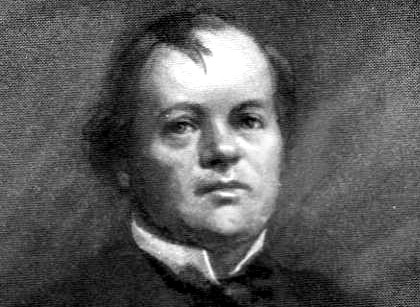
William Palmer
Serial killer Bruce Lee
Serial killer · United Kingdom · 1973
Bruce Lee was born Peter George Dinsdale in 1960. He later changed his name to…
26 victims
Bruce Lee
Serial killer · United Kingdom · 1973
Bruce Lee was born Peter George Dinsdale in 1960. He later changed his name to…
26 victims
 William Burke
Serial killer · United Kingdom · 1827
William Burke (1792 – 28 January 1829) was born in Urney, near Strabane, in the…
17 victims
William Burke
Serial killer · United Kingdom · 1827
William Burke (1792 – 28 January 1829) was born in Urney, near Strabane, in the…
17 victims
 William Hare
Serial killer · United Kingdom · 1827
William Hare and Brendan “Dynes” Burke committed serial murders in Edinburgh, S…
17 victims
William Hare
Serial killer · United Kingdom · 1827
William Hare and Brendan “Dynes” Burke committed serial murders in Edinburgh, S…
17 victims
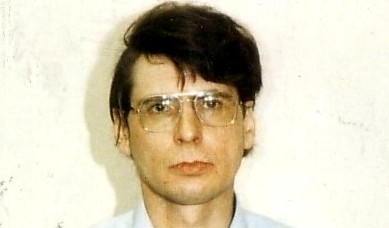 Dennis Nilsen
Serial killer · United Kingdom · 1978
Dennis Andrew Nilsen was born on November 23, 1945. He lived in London. He was…
16 victims
Dennis Nilsen
Serial killer · United Kingdom · 1978
Dennis Andrew Nilsen was born on November 23, 1945. He lived in London. He was…
16 victims
 Dr. Harold Shipman
Serial killer · United Kingdom · 1974
Harold Fredrick Shipman was an English doctor who was convicted as a serial kil…
15 victims
Dr. Harold Shipman
Serial killer · United Kingdom · 1974
Harold Fredrick Shipman was an English doctor who was convicted as a serial kil…
15 victims
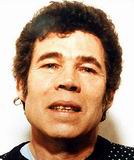 Frederick West
Serial killer · United Kingdom · 1967
Frederick West (29 September 1941 – 1 January 1995) was an English serial kille…
13 victims
Frederick West
Serial killer · United Kingdom · 1967
Frederick West (29 September 1941 – 1 January 1995) was an English serial kille…
13 victims
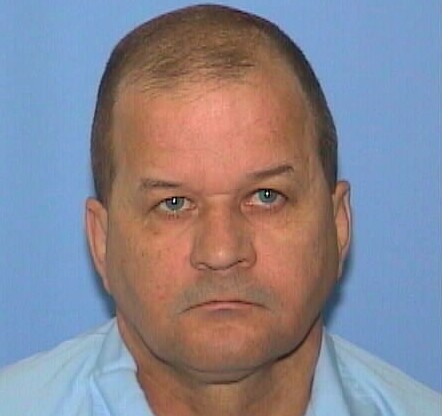 Luther Casteel
Murderer · USA · 2001
Luther Casteel was described by acquaintances as a divorced construction worker…
2 victims
Luther Casteel
Murderer · USA · 2001
Luther Casteel was described by acquaintances as a divorced construction worker…
2 victims
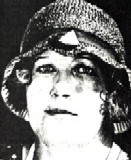 Eva Coo
Murderer · USA · 1934
Eva Coo was an American murderer who was executed by electric chair at Sing Sin…
1 victim
Eva Coo
Murderer · USA · 1934
Eva Coo was an American murderer who was executed by electric chair at Sing Sin…
1 victim
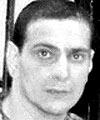 Silvio Mangion
Serial killer · 1984
Silvio Mangion, known as Kalang, was sentenced to life imprisonment for the mur…
3 victims
Silvio Mangion
Serial killer · 1984
Silvio Mangion, known as Kalang, was sentenced to life imprisonment for the mur…
3 victims
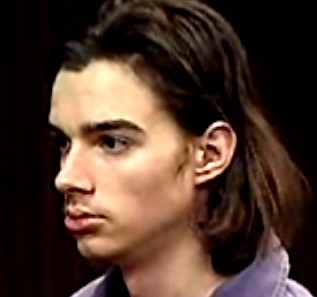 Bryan Kim
Murderer · USA · 2006
Bryan Kim was 19 years old at sentencing and was described as a former Mount Sp…
2 victims
Bryan Kim
Murderer · USA · 2006
Bryan Kim was 19 years old at sentencing and was described as a former Mount Sp…
2 victims
- Gender
- male
- Country
- United Kingdom
- Location
- Staffordshire, England, United Kingdom
- Date of birth
- August 6, 1824
- Age at first offence
- 22
- Characteristics
- poisoner, financial gain
- Victim profile
- Men, women and children (friends and relatives)
- Method of murder
- Poisoning (strychnine)
- Date(s) of murder
- 1846 - 1855
- Years active
- 1846–1855
- Date of arrest
- January 1856
- Status
-
Executed
Executed by hanging at Stafford prison on June 14, 1856
Overview
William Palmer (August 6, 1824 – June 14, 1856) was an English doctor who was convicted of murder.
Timeline
- October 7, 1847 — William Palmer married Ann Thornton (also known as Brookes) in St. Nicholas Church, Abbots Bromley.
- 18 January, 1849 — Ann Mary Thornton died while visiting her daughter at Palmer's house.
- May 10, 1850 — Leonard Bladen died.
- January 6, 1851 — Elizabeth Palmer died when she was about two months and a half old.
- January 6, 1852 — Henry Palmer died when he was about a month old.
- December 19, 1852 — Frank Palmer died only 7 hours following his birth.
- October 27, 1852 — Joseph Bentley died.
- January 27, 1854 — John Palmer died when he was three or four days old.
- September 29, 1854 — Ann Palmer died at age 27.
- June 26/June 27, 1855 — Eliza Tharme gave birth to Alfred, an illegitimate son of Palmer.
- November 13, 1855 — Palmer and John Parsons Cook bet on various horses.
- November 14, 1855 — Cook complained of feeling ill after drinking too much brandy was thought.
- November 15, 1855 — Cook and Palmer returned to Rugeley; Cook booked a room at the Talbot Arms.
- November 17, 1855 — Alfred Palmer and John Cook fell suddenly ill.
- November 18, 1855 — A chambermaid sampled broth prepared for Cook and fell ill.
- November 19, 1855 — Palmer went to London to collect Cook's earnings from the horse races.
- November 21, 1855 — Cook died at about 1:00 AM.
- November 23, 1855 — Mr. Stevens, Cook's stepfather, arrived to represent the family.
- November 26, 1855 — A post mortem examination of Cook's body took place.
- November 29, 1855 — An inquest on Cook opened.
- December 15, 1855 — The verdict was delivered at the inquest, deciding that the Cook case concerned "willful murder".
- June 14, 1856 — Palmer was executed by hanging at Stafford prison; around 30,000 people attended.
- May 1856 — Palmer was tried at the Old Bailey.
Background
William Palmer was born in Rugeley, Staffordshire, on August 6, 1824. He had an extravagant lifestyle. His medical training was constantly interrupted by allegations of stealing money, and he had a reputation as a ladies' man. Palmer enjoyed gambling and horses but his lack of success led him into serious debt.
Before qualifying, Palmer had been dismissed from one apprenticeship for embezzlement and fled from another after being discovered running his own abortion service. In 1846, Palmer qualified as a doctor from St Bartholomew’s Hospital. He settled down to working in a modest practice in Rugeley, Staffordshire.
While working at Stafford infirmary, Palmer was accused of poisoning an acquaintance during a drinking competition. Although nothing was proved, the hospital put tighter controls on the dispensary as a precaution.
The offence
Palmer was convicted of murder in connection with the death of John Parsons Cook after Cook became violently ill and died on November 21, 1855. The case was tied to similarities between Cook's death and that of known strychnine victims.
Investigation
After Cook became ill and died, Cook's stepfather, Mr. Stevens, demanded a post-mortem. A post mortem examination of Cook's body took place on November 26. An inquest on Cook opened on November 29, with a verdict delivered on December 15 that decided the Cook case concerned "willful murder".
Suspicions of foul play were heightened when Palmer tried to bribe several people involved with the coroner's inquest. Another factor described in the case was Palmer's purchase of strychnine shortly before Cook's death.
After Palmer was arrested for Cook's murder, the bodies of Ann and Walter Palmer were exhumed and re-examined, although not enough evidence was found to charge Palmer with their deaths.
An Act of Parliament was passed to allow the trial to be held at The Old Bailey in London because it was felt that a fair jury could not be found in Staffordshire.
Arrest
Palmer was arrested for Cook's murder.
Trial
Palmer was tried at the Old Bailey in May 1856.
Despite the evidence being circumstantial, the similarity between Cook's death and that of known strychnine victims was described as being enough for the jury to find Palmer guilty of murder.
The prosecution team was Alexander Cockburn and John Walter Huddleston. After the verdict, Palmer expressed his admiration for Cockburn's cross-examination after the verdict through a racing metaphor: "It was the riding that did it."
The judge was John Campbell, 1st Baron Campbell. Some scholars believed that the summing up of the judge was prejudicial, and also believed that the evidence should not have been enough to convict him. Palmer was found guilty of murder.
Sentencing
Palmer was executed by hanging.
On June 14, 1856, some 30,000 people were at Stafford prison to see Palmer's public execution by hanging. As he stepped onto the gallows, Palmer is said to have looked at the trapdoor and exclaimed, "Are you sure it's safe?"
Outcome
William Palmer was convicted of murder and was executed by hanging at Stafford prison on June 14, 1856.
Aftermath
The notoriety of the case alarmed many eminent men in Rugeley, who were worried that their town would forever be linked with "Palmer the Poisoner".
A persistent urban myth said they petitioned the Prime Minister to change the name of the town. The myth said the Prime Minister would accede to their request only if they named it after himself…Palmerston. This story was now generally thought to be untrue.
Other details
Family and deaths
Palmer returned to his home town of Rugeley to practice as a doctor. In St. Nicholas Church, Abbots Bromley, he married Ann Thornton, also known as Brookes (b. 1827) in 1847.
Their first son, William Brookes Palmer, was born either in 1848 or 1850. William Brookes Palmer died on 29 April 1926.
Palmer and Ann had four more children who all died in infancy:
- Elizabeth Palmer, who died on January 6, 1851, at about two months and a half old.
- Henry Palmer, who died on January 6, 1852, at about a month old.
- Frank Palmer, who died on December 19, 1852, only 7 hours following his birth.
- John Palmer, who died on January 27, 1854, when he was three or four days old.
The source also described that several other family members and people connected to Palmer died in the period including:
- Ann Mary Thornton, who died on January 18, 1849, at about 50 years old.
- Leonard Bladen, who died on May 10, 1850, at age 49, and was described as a 49-year-old house guest of the Palmers.
- Joseph Bentley, who died on October 27, 1852, at age 62, and whose death attracted no suspicion.
- Ann Palmer, who died on September 29, 1854, at age 27.
At about this time, Palmer was involved in an affair with Eliza Tharme, his housemaid. On June 26/27, 1855, Tharme gave birth to Alfred, described as Palmer's illegitimate son.
Insurance and blackmail
Palmer benefited financially from the death of his wife. He took out a £13,000 insurance policy on her life. Palmer then insured his brother Walter's life. Walter Palmer died on August 16, 1855, but the insurance company refused to pay up because Walter died too soon.
By this time, Palmer was heavily in debt, and he was described as being blackmailed by one of his former lovers, the daughter of a Staffordshire policeman.
Gambling episode at Shrewsbury and Rugeley
In November 1855, Palmer attended the Shrewsbury Handicap Stakes with a friend, John Parsons Cook. Both bet on various horses between 13 November and 15 November. Cook won a large amount of money by betting on "Polestar" while Palmer lost heavily by betting instead on "the Chicken".
Cook and Palmer had a celebration party at the Raven, a local drinking establishment. On November 14, Cook was complaining of feeling ill, but it was thought to be from drinking too much brandy.
On November 15, Cook and Palmer returned to Rugeley, and Cook booked a room at the Talbot Arms. On November 17, two people close to Palmer fell suddenly ill: young Alfred Palmer and John Cook. On November 18, a chambermaid sampled the broth prepared for Cook and also fell ill.
On November 19, Palmer went to London to collect Cook's earnings from the horse races. On November 21, Cook died at about 1:00 AM.
On November 23, Mr.
Cultural references
Arthur Conan Doyle's detective Sherlock Holmes remarks on Palmer in The Adventure of the Speckled Band.
Robert Graves's novel They Hanged My Saintly Billy re-examined the case.
The salutation "What's your poison?" was thought to be a reference to the events.
The fictional character of Inspector Bucket in Charles Dickens' Bleak House was reputed to be based on Charles Frederick Field, the policeman who investigated Walter Palmer's death for his insurers.
Bibliography
- Davenport-Hines, R. (2004) "Palmer, William [ the Rugeley Poisoner] (1824–1856)", Oxford Dictionary of National Biography, Oxford University Press, accessed 20 July 2007 (subscription required)
- Knott, G. H. (1912). The Trial of William Palmer, Notable English Trials, Edinburgh: William Hodge & Co.
Clarifications embedded in the case narrative
The source contained a repetition of the case overview including the statement that Palmer's extravagant lifestyle included allegations of stealing money, and repeated details about deaths and the conviction for murder related to Cook's death and strychnine.
Spotted an error, or have more information about this case?