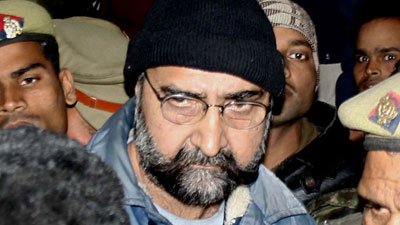
Moninder Singh Pandher
Serial killer ? John Bodkin Adams
Serial killer ? · United Kingdom · 1935
John Bodkin Adams was a British general practitioner and euthanasia enthusiast,…
163 victims
John Bodkin Adams
Serial killer ? · United Kingdom · 1935
John Bodkin Adams was a British general practitioner and euthanasia enthusiast,…
163 victims
 Sadashiv Sahu
Serial killer? · India · 2000
Sadashiv Sahu was identified as the suspect in a series of mystery killings of…
22 victims
Sadashiv Sahu
Serial killer? · India · 2000
Sadashiv Sahu was identified as the suspect in a series of mystery killings of…
22 victims
 Jaishankar
Serial killer · India · 2006
Jaishankar was also known as M Shankar and M Sankar. He was also described as a…
21 victims
Jaishankar
Serial killer · India · 2006
Jaishankar was also known as M Shankar and M Sankar. He was also described as a…
21 victims
 Devendra Sharma
Serial killer · India · 2002
Devendra Sharma was an Indian doctor of ayurvedic medicine practising in Aligar…
20 victims
Devendra Sharma
Serial killer · India · 2002
Devendra Sharma was an Indian doctor of ayurvedic medicine practising in Aligar…
20 victims
 Mohan Kumar
Serial killer · India · 2005
Mohan Kumar was a former primary school teacher who was convicted in a third ca…
20 victims
Mohan Kumar
Serial killer · India · 2005
Mohan Kumar was a former primary school teacher who was convicted in a third ca…
20 victims
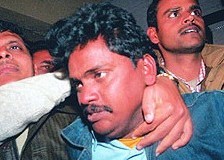 Surender Koli
Serial killer · India · 2005
Surender Koli was the domestic help of businessman Moninder Singh Pandher in th…
19 victims
Surender Koli
Serial killer · India · 2005
Surender Koli was the domestic help of businessman Moninder Singh Pandher in th…
19 victims
 Cherrylle Dell
Murderer · Canada · 1995
Cherrylle Dell poisoned her husband, Scott Dell, with antifreeze-laced wine. Sc…
2 victims
Cherrylle Dell
Murderer · Canada · 1995
Cherrylle Dell poisoned her husband, Scott Dell, with antifreeze-laced wine. Sc…
2 victims
 Susanna Cox
Murderer · USA · 1809
Susanna Cox (1785–1809) was a young domestic servant in Berks County, Pennsylva…
1 victim
Susanna Cox
Murderer · USA · 1809
Susanna Cox (1785–1809) was a young domestic servant in Berks County, Pennsylva…
1 victim
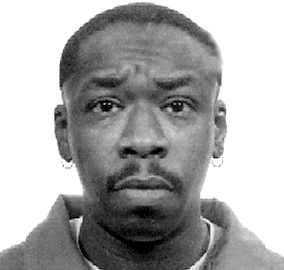 Greagree Davis
Murderer · USA · 1984
Greagree C. Davis told the roommate of his sexual interest in her. He had prior…
1 victim
Greagree Davis
Murderer · USA · 1984
Greagree C. Davis told the roommate of his sexual interest in her. He had prior…
1 victim
 Tia Skinner
Murderer · USA · 2010
Tia Skinner was convicted as the daughter of Paul Skinner and Mara Skinner and…
1 victim
Tia Skinner
Murderer · USA · 2010
Tia Skinner was convicted as the daughter of Paul Skinner and Mara Skinner and…
1 victim
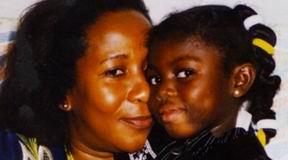 Marie-Thérèse Kouao
Murderer · United Kingdom · 2000
Marie-Thérèse Kouao Victoria Climbié was born on 2 November 1991 in a small Afr…
1 victim
Marie-Thérèse Kouao
Murderer · United Kingdom · 2000
Marie-Thérèse Kouao Victoria Climbié was born on 2 November 1991 in a small Afr…
1 victim
- Gender
- male
- Country
- India
- Location
- New Delhi, India
- Date of birth
- August 1, 1957
- Age at first offence
- 48
- Characteristics
- kidnapping, rape, necrophilia, cannibalism
- Victim profile
- Young girls
- Method of murder
- Strangulation
- Date(s) of murder
- 2005 - 2006
- Years active
- 2005–2006
- Date of arrest
- December 29, 2006
- Status
-
Sentenced to death on February 13, 2009; acquitted and overturned his death sentence on September 10, 2009
Background
Moninder Singh Pandher was a Punjabi businessman arrested in connection with the 2006 Noida serial murder investigation. The case involved the discovery of skeletal remains of missing children in the village of Nithari, India on the outskirts of Noida, Uttar Pradesh near New Delhi.
The offence
The investigation concerned the disappearance and killing of multiple children and one adult victim identified as Payal. Charges included rape, murder, kidnapping, and criminal conspiracy. The killings involved dismemberment, with bodies cut into three pieces before being disposed of. The investigation also involved suspicions relating to necrophilia and cannibalism, including allegations that Surender Koli confessed to consumption of victims’ livers and other body parts.
Investigation
Skeletal remains were discovered in the municipal water tank behind house D5. On December 29, 2006, two Nithari residents claimed they knew the location of remains belonging to children who had gone missing in the previous two years and that Surender Koli, domestic help at D5, had something to do with the disappearances. They claimed they had been repeatedly ignored by local authorities and sought help of former Resident Welfare Association (RWA) President S C Mishra.
Mishra and the two residents searched the tank drain and one resident claimed to have found a decomposed hand. By the time police arrived, residents claimed three partial skeletons were found in the drain. Parents of missing children arrived with photographs. Koli, under the alias Satish, later confessed to killing six children and a 20-year-old call girl known as “Payal” after sexually assaulting them.
Police claimed they discovered skulls, bones, and other body parts and said they were unable to give a figure for the number of victims, stating that victims’ identities and number could only be established with DNA tests. The police sealed the house and did not allow news media near the scene of crime. The Central government tried to ascertain the facts behind the discovery and whether there were “inter-state ramifications,” with the Home ministry asking for details about the magnitude of the crime.
The media later revealed that Pandher was picked up by the police on December 26 and Koli on December 27 in connection with the disappearance of “Payal”. After Koli’s confession, the police claimed to have started digging up nearby land and discovered the children’s bodies. Two policemen were suspended on December 31 in connection with the serial murders after angry residents charged the house of an alleged mastermind. The policemen were suspended for dereliction of duty based on allegations by locals that police refused to take action when they were informed about a number of children missing.
The situation at Nithari aggravated as an irate mob of villagers fought pitched battles with the police, pelting stones at each other just outside the residence of the accused. Police detained a maid named Maya whom they suspected had a hand in procuring women for the businessman.
As body parts were dug out from near the premises, hundreds of residents alleged an organ trade angle. A doctor living close to the Pandher residence, Navin Choudhary, had been under police suspicion a few years prior in connection with an alleged kidney racket at his hospital. Searches were conducted on the properties owned by him and investigators could not derive any information to support the claim.
On January 1, 2007, the remand magistrate granted police custody of the two until January 10, 2007 as investigators said further interrogation was required for recovery of victims’ remains. The court granted permission for Narco Analysis. Police conducted a raid on Pandher’s Chandigarh residence the same evening; his wife and son were interrogated and questions were asked about habits. Police sources disclosed that their relationship with him was “strained” but his behaviour was “normal”. A senior police inspector indicated a series of searches at Pandher’s Ludhiana farmhouse and nearby places and that child kidnapping cases in Chandigarh—Pandher’s hometown—were re-opened. On the next day, 15 of the 17 skeletons discovered in the village were identified. Ten were identified by Koli when confronted with photographs of missing children. Five others were identified by family members after being shown belongings recovered from the scene. The torsos were missing and investigators looked into possibilities of organ trade as motive.
Police stated there were at least 31 child victims. Chief Justice of India K. G. Balakrishnan asserted in a press statement that the investigation was at a preliminary level and that neither the courts nor the Central Bureau of Investigation (CBI) were involved at that point.
The inquiry committee report
The Central government constituted a high-level inquiry committee to go into police lapses during reporting and investigation. Chief Minister of Uttar Pradesh Mulayam Singh Yadav said he would await the report before deciding whether there should be a CBI probe. The committee was headed by Joint Secretary, Women and Child Development Ministry, Manjula Krishnan. The terms of reference included taking stock of efforts made by Noida police in locating missing children, assessing cooperation and assistance provided by the local administration, and examining the modus operandi and motives of the accused.
The panel met parents of victims to record their statements. The police determined that out of the 17 confirmed people killed, 10 were girls. Parents of eight sexually abused children were given compensation of Rs. 12 lakh. DNA samples from human remains were sent to a forensic laboratory in Hyderabad for identification of victims, while forensic samples were sent to a laboratory in Agra for determining age, cause of death, and other details. Payal was determined to be the only adult identified, with all other 11 victims below age 10. Seven of the eight families that were provided compensation of Rs. 2 lakh on January 3, 2007 returned their cheques in protest; cheques were later returned back to them. They demanded houses and jobs in compensation.
After sustained pressure and public outcry, the Uttar Pradesh government suspended two superintendents of police and dismissed six policemen for dereliction of duty following the report by the committee. On January 17, 2007 the inquiry committee submitted its report severely indicting Uttar Pradesh police for “gross negligence” in handling cases of missing persons. The committee said the local administration was negligent and irresponsible and did not rule out organ trade as possible motive behind the killings.
Call girl angle and FIR
The two accused were already in police custody while skeletal remains of young children were unearthed at the Pandher residence. An FIR had been filed on October 7, 2006. Investigations revealed that Payal’s cellphone was being used though the SIM card she owned remained inactive. Through digital surveillance, investigators tracked down people to reach the man who sold the phone. A rickshaw cart puller affirmed the phone belonged to someone from the Pandher residence. After the affirmation, Moninder Singh was called for interrogation, which subsequently revealed nothing. Surender Koli was picked up the next day and confessed to killing the woman and dumping her body behind the house.
Nand Lal, father of Deepika alias Payal, alleged police threatened and harassed him and stated this happened because of court intervention that police registered the FIR. Nand Lal said he was accused of being a blackmailer and his daughter was called a woman of easy virtue.
Suspicions of child pornography racket
Investigating teams seized erotic literature and a laptop computer connected to a webcam, raising apprehensions of an international child pornography racket. Police also recovered photographs of Pandher with nude children and foreigners during his four international visits. It was apprehended that Pandher supplied such pictures abroad and could link him to paedophilia.
Suspicions of organ trade and cannibalism
Police initially suspected an organ trade motive and raided the house of a doctor living in the neighbourhood of the prime accused. Officials were accompanied by forensic experts to pick up probable evidence. Police revealed that the doctor had been accused of similar crime in 1998 though the court had absolved him in the same year. They were cautious with news reports indicting accused of cannibalism before polygraph tests had begun. The police learned that one accused had confessed to consumption of victims’ livers and other body parts. The possibility was not completely ruled out by the investigating team given alleged brutality.
Brain mapping and narco analysis
The accused duo were brought to the Directorate of Forensic Sciences in Gandhinagar for medical tests. Brain mapping and polygraph tests were conducted on January 4, 2007 and narco analysis five days later. Police director told scribes that both accused were cooperative during tests and examinations. Directorate officials did not make revelations to public media. A senior director of the institute declared that no conclusion had been drawn. Police sources said during the first day of tests Moninder Singh revealed high-profile connections with ministers and others who frequented his residence in Noida.
The CBI investigation
After discourse and mounting pressure from the Centre, Uttar Pradesh government decided to hand over the inquiry to the CBI. The state issued a notification after the Department of Personnel and Training sent a letter to the state government asking for a proper request in line with prescribed norms. The two accused were taken away to an undisclosed location on the night of January 11, 2007, a day before transfer to the CBI.
The CBI discovered three more skulls and human remains at the serial killings site. Investigators searched drains and found three skulls believed to be of the children and several body parts including parts of legs, bones, and torso. Several objects believed to belong to victims were found and exhibits were sealed and forwarded to forensic labs. The central enquiry committee that investigated police lapses provided its published report to the CBI to aid the probe. The report proclaimed local police failed in duty to admit complaints over the past two years.
A discovery of gunny bags containing parts of human torsos led investigators to believe it was unlikely the accused had links to illegal organ trade. The CBI team discovered the bags in the drains outside the Pandher residence. After interrogating Surinder Koli, they reached a prima facie conclusion that “he is a psychopath who used to carry out the killings”. Interrogators also said it was possible Pandher had no role in the murders. Seized materials were sent for post-mortem, individualisation, and DNA extraction. Materials received from Uttar Pradesh police were forwarded for forensic examination.
Some liquor bottles, a double-barrel gun, cartridges, mobile phones, photographs, photo albums, and a blood-stained grill were handed over to the CBI for extensive examination. Preliminary investigations revealed bones were not more than two years old. The CBI revealed only fifteen skulls had been found thus far, not seventeen as claimed by state police.
A three-member CBI team questioned kin members of Surendra Koli in the Almora district. In November 2007, the Supreme Court issued notice to the CBI regarding allegation by a relative of a victim that the investigating agency was trying to shield Moninder Singh Pandher.
Victims and post-mortem pattern
The call girl was the only adult victim in the string of serial murders. Young girls constituted the majority of victims. Post-mortem reports of the 17 sets of skulls and bones recovered showed 11 killed were girls. The top doctors of Noida Government Hospital revealed “butcher-like precision” in the chopping of the bodies. Post-mortem reports revealed a pattern in the killings.
An AIIMS conclusion on February 06, 2007 stated there were 19 skulls in all, 16 complete and 3 damaged. The bodies had been cut into three pieces before being disposed off by the servant Surender Koli. CBI sources stated Surender Koli, after strangulating victims, severed their head and threw it in the drain behind the house of his employer. Sources also stated he kept the viscera in a polythene bag before disposing it off in a drain to prevent detection.
The skulls and other bio-material remains were forwarded to the Centre for DNA Fingerprinting and Diagnostics, Hyderabad for further profiling.
Arrest
On December 26, 2006, Moninder Singh Pandher and his servant Surender Koli were arrested by Delhi Police on suspicion of murdering a call girl named “Payal”. Koli later confessed to killing children and Payal after sexually assaulting them.
Trial
On 12 February 2009, both accused Moninder Singh Pandher and his domestic help Surender Koli were found guilty of the 8 February 2005 murder of Rimpa Haldar, 14, by a special sessions court in Gaziabad. The verdict left the CBI red faced because the CBI had earlier given a clean chit to Moninder Singh Pandher in all its chargesheets.
Both Pandher and Koli were given death sentence on 13 February 2009 as the case was classified as “rarest of rare”. The sentencing was imposed for rape and murder.
On 4 May 2010, Koli was found guilty of the 25 October 2006 murder of Arti Prasad, 7, and given a second death sentence eight days later. On 27 September 2010, Koli was found guilty of the 10 April 2006 murder of Rachna Lal, 8 or 9, and given a third death sentence the following day.
Sentencing remarks and judicial reasoning
Special judge Rama Jain held the crimes committed by 55-year-old Pandher and 38-year-old Koli to be “rarest of rare” deserving capital punishment.
The court noted:
“In the said case, a helpless, poor girl has been raped by the accused who resorted to extremely barbaric, inhuman and unkind act which has no precedence. The manner in which the horrendous act has been carried out even puts that era into shame when humanity wasn't civilised,”
The judge rejected calls for leniency and stated:
“This crime is against womanhood and a blot on society. The manner in which the crime has been done, death sentence can be the only justice because there was not an iota of indication that the convicts will mend their ways or reform their character in the future.”
The court reasoning for ascribing “criminal conspiracy” to Pandher was that his “hedonistic lifestyle” was responsible for bringing out “criminal tendencies” in Koli.
The judge noted circumstantial evidence and Koli’s confession. It was said that Koli had earlier worked with several other households but committed the crime because “Pandher brought call girls home and slept with more than two or three of them occasionally.” The judge also found that Koli used to cook for them while Pandher would drink alcohol and that this brought out “worst criminal tendencies and sexual depravity of Koli goading him to commit murders.”
The judge observed:
“before joining Pandher's house as a servant, Koli had earlier worked with several other households but he committed this gruesome crime because Pandher brought call girls home and slept with more than two or three of them occasionally. Koli used to cook for all of them while Pandher would drink alcohol, all this brought out worst criminal tendencies and sexual depravity of Koli goading him to commit murders.”
On the premise of knowledge and recovery evidence, the judge said:
“Bones and skulls were recovered in such a mass scale from near a house which wasn't less than a slaughterhouse. The odour would have spread within a kilometre's radius,”
The judge remarked on the CBI prosecutors’ role:
“The job of CBI prosecutors during this trial was to aid the working of criminal justice system not to go along with whatever the chargesheet said,”
Confessions and narco analysis context presented in court narrative
It was noted that results of narco-analysis, including truth drugs, polygraph tests, and brain mapping, were not admissible as evidence in court and were designed to help police with investigation. In the narrative of the investigation, Surender Koli was described as having told investigators he had sex with dead bodies and ate their organs, and that he carried out killings alone, while claiming Moninder Singh Pandher was unaware. Koli stated he would cut bodies into pieces and dispose of larger bodies in the back drain and smaller bodies in the main drain. He also stated “Moninder told him to dump the bodies” when asked whose idea it was.
The narrative included quotations attributed to Surender Koli during narco-analysis:
“Sahab (master) did not know,”
And it included Koli’s statements in another report:
Appeals
On September 10, 2009, the Allahabad high court acquitted Moninder Singh Pandher and overturned his death sentence. The same day, the Allahabad high court upheld the death sentence for Surender Koli.
The Allahabad high court observed there was no substantial evidence to prove Pandher’s criminal involvement in the case. It also stated Pandher was not named a main suspect by investigators initially but was summoned as co-accused during the trial. The narrative indicated Pandher faced trial in five cases out of the remaining 13 and could be re-sentenced to death if found guilty in any of those killings.
Outcome
Moninder Singh Pandher was sentenced to death on February 13, 2009. Surender Koli’s death sentence was upheld.
Aftermath
Following suspensions and dismissals, the Uttar Pradesh government took action against police personnel after the inquiry committee report. Angry residents made allegations regarding police corruption and involvement, and demanded independent probes. The Supreme Court later issued notice to the CBI in November 2007 on allegations by a relative of a victim that the investigating agency was trying to shield Moninder Singh Pandher.
Other details
Investigators reported that Panher’s schooling included Bishop Cotton School in Shimla and graduation from St. Stephen’s College, Delhi. The narrative also stated that he studied from 1963-73 at Bishop Cotton School. Pandher’s wife and son were interrogated at the Chandigarh residence raid and described their relationship with him as “strained” while behaviour was “normal”.
The record included multiple events about discovery and the number of remains and skulls uncovered, including claims of eight skeletal remains discovered on Dec 29, more skeletons found on Dec 30, and reports that skulls and human remains were later found bringing totals to 15, 17, and 19 in different statements. The record also described the presence of recovered items including liquor bottles, a double-barrel gun, cartridges, mobile phones, photographs, photo albums, and a blood-stained grill handed over to CBI for forensic examination.
The record included details about Narco analysis and medical tests conducted at Directorate of Forensic Sciences, Gandhinagar including brain mapping, polygraph tests, and narco analysis. It described that Moninder Singh revealed “a number of his high-profile connections with the ministers and others who frequented his residence in Noida” during the first day of tests, in the police sources account.
Spotted an error, or have more information about this case?