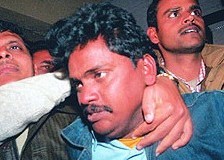
Surender Koli
Serial killer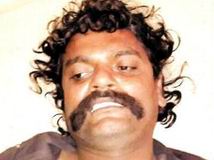 Jaishankar
Serial killer · India · 2006
Jaishankar was also known as M Shankar and M Sankar. He was also described as a…
21 victims
Jaishankar
Serial killer · India · 2006
Jaishankar was also known as M Shankar and M Sankar. He was also described as a…
21 victims
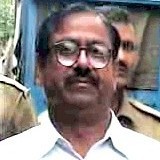 Devendra Sharma
Serial killer · India · 2002
Devendra Sharma was an Indian doctor of ayurvedic medicine practising in Aligar…
20 victims
Devendra Sharma
Serial killer · India · 2002
Devendra Sharma was an Indian doctor of ayurvedic medicine practising in Aligar…
20 victims
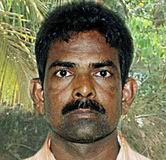 Mohan Kumar
Serial killer · India · 2005
Mohan Kumar was a former primary school teacher who was convicted in a third ca…
20 victims
Mohan Kumar
Serial killer · India · 2005
Mohan Kumar was a former primary school teacher who was convicted in a third ca…
20 victims
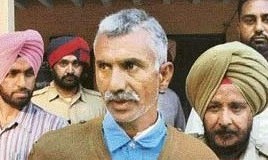 Darbara Singh
Serial killer · India · 2004
Darbara Singh was sentenced to death on January 7, 2008. His death sentence was…
17 victims
Darbara Singh
Serial killer · India · 2004
Darbara Singh was sentenced to death on January 7, 2008. His death sentence was…
17 victims
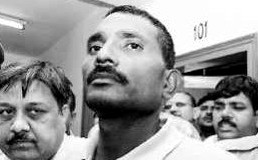 Chandrakant Jha
Serial killer · India · 1998
Chandrakant Jha functioned as a serial killer. He was said to help young men—us…
7 victims
Chandrakant Jha
Serial killer · India · 1998
Chandrakant Jha functioned as a serial killer. He was said to help young men—us…
7 victims
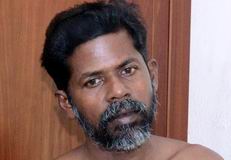 Jayanandan
Serial killer · India · 2003
Jayanandan, also known as “Ripper” Jayanandan, was a serial killer from Trichur…
7 victims
Jayanandan
Serial killer · India · 2003
Jayanandan, also known as “Ripper” Jayanandan, was a serial killer from Trichur…
7 victims
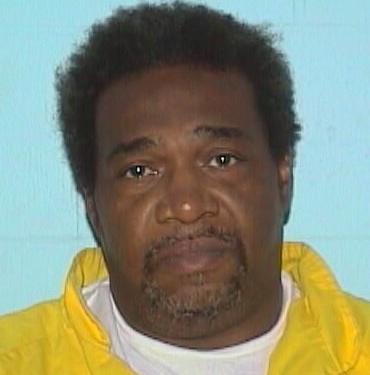 Milton Johnson
Serial killer · USA · 1983
Milton Johnson was an Illinois native born in 1951. He was convicted at age 19…
10 victims
Milton Johnson
Serial killer · USA · 1983
Milton Johnson was an Illinois native born in 1951. He was convicted at age 19…
10 victims
 Curtis Don Brown
Serial killer · USA · 1984
Curtis Don Brown was convicted and sentenced to life in prison in 1989. He late…
18 victims
Curtis Don Brown
Serial killer · USA · 1984
Curtis Don Brown was convicted and sentenced to life in prison in 1989. He late…
18 victims
 David Junior Ward
Murderer · USA · 1991
David Junior Ward was the defendant. He was tried in connection with the robber…
1 victim
David Junior Ward
Murderer · USA · 1991
David Junior Ward was the defendant. He was tried in connection with the robber…
1 victim
 Donald Dillbeck
Murderer · USA · 1979
Donald Dillbeck (May 24, 1963) was also known as “Dill Dillbeck” and “Robert La…
2 victims
Donald Dillbeck
Murderer · USA · 1979
Donald Dillbeck (May 24, 1963) was also known as “Dill Dillbeck” and “Robert La…
2 victims
- Gender
- male
- Country
- India
- Location
- New Delhi, India
- Date of birth
- 1972
- Age at first offence
- 33
- Characteristics
- kidnapping, rape, necrophilia, cannibalism
- Victim profile
- Young children and women
- Method of murder
- Strangulation
- Date(s) of murder
- 2005 - 2006
- Years active
- 2005–2006
- Date of arrest
- December 29, 2006
- Status
-
Sentenced to death
Sentenced to death on 13 Feb 2009; death sentence reserved as “rarest of rare” cases
Case record: Surender Koli (Nithari serial killings)
Background
Surender Koli was the domestic help of businessman Moninder Singh Pandher in the Nithari area on the outskirts of Noida in Uttar Pradesh near New Delhi. Koli later was associated with offences including kidnapping, rape, murder, and criminal conspiracy.
The 2006 Noida serial murder investigation began in December 2006 when skeletal remains of missing children were discovered in the village of Nithari.
Koli later was described as having been under an alias: “Satish”.
The offence
Koli was alleged to have sexually assaulted and killed multiple children and a call girl named “Payal”.
After being confronted with photographs of missing children, Koli later confessed to killing six children and a 20-year-old call girl known as “Payal” after sexually assaulting them.
Police and investigators recovered skeletal remains, skulls, bones and other body parts from drains and nearby premises around the Pandher residence and described the bodies as being chopped into pieces before disposal.
Verbatim remarks in sentencing context attributed to Judge Rama Jain included:
“In the said case, a helpless, poor girl has been raped by the accused who resorted to extremely barbaric, inhuman and unkind act which has no precedence. The manner in which the horrendous act has been carried out even puts that era into shame when humanity wasn't civilised,”
“This crime is against womanhood and a blot on society. The manner in which the crime has been done, death sentence can be the only justice because there was not an iota of indication that the convicts will mend their ways or reform their character in the future.”
The sentencing narrative also included a verbatim description attributed to the judge on Koli’s reasoning:
“before joining Pandher's house as a servant, Koli had earlier worked with several other households but he committed this gruesome crime because Pandher brought call girls home and slept with more than two or three of them occasionally. Koli used to cook for all of them while Pandher would drink alcohol, all this brought out worst criminal tendencies and sexual depravity of Koli goading him to commit murders.”
Investigation
Skeletal remains were discovered in the municipal water tank drain behind house D5 in Nithari. Residents searched the tank drain and claimed to have found a decomposed hand, after which they called the police. When police arrived, residents claimed three partial skeletons were found in the drain.
Police sealed the house and did not allow news media anywhere near the scene of crime.
The Central government sought details about whether the matter had “inter-state ramifications” and the Home ministry asked for details about the magnitude of the crime.
A high-level inquiry committee was constituted to go into police lapses during the period of reporting and investigation. The committee was headed by the Joint Secretary, Women and Child Development Ministry, Manjula Krishnan. The committee’s terms of reference were to:
- take stock of the efforts made by the Noida police in locating the children who went missing,
- assess the level of cooperation and assistance provided by the local administration,
- assess the modus operandi and the motives of the accused.
The inquiry committee submitted its report on 17 January 2007, severely indicting the Uttar Pradesh police for “gross negligence” in handling the cases of missing persons. The committee said the local administration was negligent and irresponsible while dealing with missing persons reports and did not rule out organ trade as a possible motive behind the killings.
Parents of sexually abused children were given compensation. Out of the eight families given compensation of Rs. 12 lakh on January 3, 2007, seven returned their cheques in protest, and later the cheques were returned back to them. The families demanded houses and jobs in compensation.
DNA samples from the human remains were sent to a forensic laboratory in Hyderabad for identification, and forensic samples were sent to a laboratory in Agra for determining age, cause of death and other details. It was determined that “Payal was the only victim identified as adult in this case, with all other 11 victims below the age of 10.”
Police seized erotic literature and a laptop computer connected to a webcam, raising apprehensions of an international child pornography racket. Police also recovered photographs of Pandher with nude children and foreigners during his four international visits.
Police initially suspected an organ trade angle as to the motive behind the murders and raided the house of a doctor living in the neighbourhood of the prime accused. The police were cautious about news reports indicting cannibalism before polygraph tests had begun. The investigating team learned of an accused’s confession about consumption of victims’ livers and other body parts, and this possibility was not completely ruled out.
Brain mapping and polygraph tests were conducted on 4 January 2007, with narco analysis five days later. Police stated that both accused had been cooperative during the tests and examinations and that the directorate officials did not make revelations to the public media.
After four days of discourse and mounting pressure from the Centre, the Uttar Pradesh government decided to hand over the inquiry to the Central Bureau of Investigation. The accused were taken away to an undisclosed location on the night of 11 January 2007.
The CBI continued investigation and discovered three more skulls and human remains at the site. Investigators searched drains and found skulls and several body parts, including parts of legs, bones and torso. Several objects believed to belong to the victims were found. Exhibits were sealed and forwarded to forensic labs.
A Central enquiry committee report was provided to the CBI to aid its probe, and the reports were described as incriminating and proclaiming that local police failed in their duty to admit complaints over the past two years.
The CBI investigators discovered gunny bags containing parts of human torsos in the drains outside the Pandher residence. After interrogating Koli, the CBI came to a prima facie conclusion that “he is a psychopath who used to carry out the killings”. Interrogators also said it was possible Pandher had no role in the murders.
Preliminary investigations revealed that bones were not more than two years old. The CBI revealed that only fifteen skulls had been found thus far and not seventeen as claimed by state police.
A three-member CBI team questioned kin members of Koli in the Almora district.
The CBI seized materials included liquor bottles, a double-barrel gun, cartridges, mobile phones, photographs, photo albums and a blood-stained grill for examination. Materials were sent for post-mortem, individualisation and DNA extraction, including materials forwarded from Uttar Pradesh police for forensic examination.
Arrest
On 26 December 2006, Moninder Singh Pandher and Surender Koli were arrested by Delhi Police on suspicion of murdering a call girl named “Payal”. Koli was arrested under suspicion of involvement in the murders and kidnappings associated with the remains discovered in Nithari.
Two residents on 29 December 2006 claimed they knew the location of remains belonging to children missing in the previous two years and suspected Koli, domestic help at D5, had something to do with the disappearances.
After Koli’s confession, police claimed they started digging up nearby land area and discovered children’s bodies.
Two policemen were suspended on 31 December 2006 in connection with the serial murders after angry residents alleged the police had refused to take action when informed about missing children.
Police also detained a maid named Maya whom they suspected had a hand in procuring women for the businessman.
Trial
On 12 Feb 2009, both accused Moninder Singh Pandher and domestic help Surender Koli were found guilty by a special sessions court in Gaziabad. The verdict resulted in death sentences being imposed on 13 Feb 2009 for both accused, with the case classified as “rarest of rare”.
A timeline entry stated that on 12 Feb 2009, a special judge pronounced Pandher and Koli guilty of rape and murder.
Additional verdicts for Koli were reported:
- On 4 May 2010, Koli was found guilty of the 25 October 2006 murder of Arti Prasad, 7, and given a second death sentence eight days later.
- On 27 September 2010, Koli was found guilty of the 10 April 2006 murder of Rachna Lal, 8 or 9, and given a third death sentence the following day.
Appeals
The record included a statement that Pandher’s wife and son would challenge the verdict before the Allahabad High Court.
Outcome
Pandher and Koli were sentenced to death on 13 Feb 2009.
Koli’s sentencing was framed within the “rarest of rare” classification.
Aftermath
Koli was described as maintaining that he was more at peace in Pandher’s absence as alleged tendencies remained at bay.
Police and investigations continued with further identification work and forensic processing, including DNA profiling and age/cause-of-death determination. The CBI continued investigation and conducted interrogations, forensic examinations, and charges related to multiple murders.
Timeline
- Dec 29, 2006 — Skeletal remains were discovered in the drain behind house D5 in Nithari; arrests of Moninder Singh Pandher and Surender Koli followed.
- Dec 31, 2006 — Two beat constables were suspended as political pressure built up.
- Jan 1, 2007 — The remand magistrate granted police custody of the two accused until 10 January 2007 and granted permission for Narco Analysis.
- Jan 4, 2007 — Brain mapping and polygraph tests were conducted.
- Jan 10, 2007 — The Central Bureau of Investigation took over investigations in the case.
- Jan 11, 2007 — A first CBI team visited Nithari to initiate the probe in the case.
- Jan 12, 2007 — Moninder Singh Pandher and Surender Koli were quizzed by CBI.
- Jan 15, 2007 — Investigators recovered three more skulls near the home of a businessman suspected of killing women and children.
- Jan 17, 2007 — The inquiry committee submitted reports indicting the Uttar Pradesh police for “gross negligence”.
- Feb 6, 2007 — An AIIMS discovery was mentioned regarding skull counts.
- Feb 12, 2009 — A special judge pronounced Pandher and Koli guilty of rape and murder.
- Feb 13, 2009 — Death sentences were imposed on Pandher and Koli.
- May 1, 2010 — Parents of three victims moved court against the CBI for letting off main accused Pandher in connection with kidnapping and murder.
- May 4, 2010 — Koli was found guilty of the 25 October 2006 murder of Arti Prasad, 7, and given a second death sentence eight days later.
- Sep 6, 2010 — Body of Jatin Sarkar, father of one of the victims in the Nithari serial killings, was recovered from a river in West Bengal’s Murshidabad district.
- Nov 1, 2007 — The Supreme Court issued notice to the CBI regarding allegations of shielding Moninder Singh Pandher.
- Feb 12, 2009 — Special judge pronounced Pandher and Koli guilty of rape and murder (listed in the chronology).
- Sep 27, 2010 — Koli was found guilty of the 10 April 2006 murder of Rachna Lal, 8 or 9, and given a third death sentence the following day.
Other details
Koli was described as a class VI dropout. He worked as a domestic help in Moninder Singh Pandher’s house in Noida.
Koli was alleged to have sexually assaulted and killed as many as 15 children and three women in Pandher’s sector-31 house within a span of one-and-a-half years.
Koli was described as luring children—both girls and boys—to Pandher’s house. The bodies were said to have been disposed of in nearby drains after chopped parts were placed in different bags.
Koli was described as having committed necrophilia and cannibalism allegations, including an account that he had sex with dead bodies and ate their organs.
Koli’s personal history included that he left home soon after marriage, worked in Noida after returning to his village to get married, and later worked for Pandher.
Family and personal details mentioned included Koli’s daughter Simran and that Koli became emotional when questioned about her.
Noida serial killer confesses to raping, strangling eight kids included a quoted Hindi statement by a woman: “Tumhari vajah se hamare bachche mare hain. Tum to report bhi darj nahin karte unke khone ki. Ab batao in haddiyon mein kaun sa mera beta hai . (Our children have died because of you. You didn't even file a report. Now tell me where is my son in these bones.).”
Koli was reported to have been subjected to truth serum or sodium penthanol during questioning.
A report about narco-analysis included a quotation: “Sahab (master) did not know,” quoted as telling investigators. Another statement attributed to Koli included: he told investigators he was necrophiliac and he would cut bodies into pieces and dispose of larger and smaller bodies into drains behind the house and main drain.

Spotted an error, or have more information about this case?