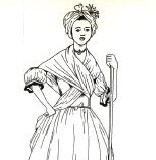
Susanna Cox
Murderer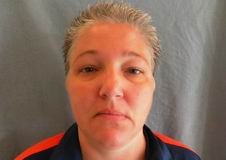 Diane Spencer
Murderer · USA
Diane Louise Spencer was sentenced to life in prison in Michigan on March 13, 1…
1990 victims
Diane Spencer
Murderer · USA
Diane Louise Spencer was sentenced to life in prison in Michigan on March 13, 1…
1990 victims
 Miranda Barbour
Murderer · USA · 2013
Miranda Barbour, 19, defendant. · Elytte Barbour, 22, defendant and husband of…
100 victims
Miranda Barbour
Murderer · USA · 2013
Miranda Barbour, 19, defendant. · Elytte Barbour, 22, defendant and husband of…
100 victims
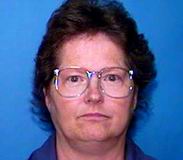 Bobbie Sue Terrell
Murderer · USA · 1984
Bobbie Sue Dudley Terrell was a Pinellas County nurse and worked as the night s…
12 victims
Bobbie Sue Terrell
Murderer · USA · 1984
Bobbie Sue Dudley Terrell was a Pinellas County nurse and worked as the night s…
12 victims
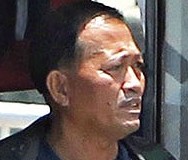 Rolando Mendoza
Murderer? · Philippines · 2010
Rolando Mendoza was a former police officer who hijacked a tourist bus carrying…
8 victims
Rolando Mendoza
Murderer? · Philippines · 2010
Rolando Mendoza was a former police officer who hijacked a tourist bus carrying…
8 victims
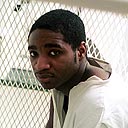 Anzel Keon Jones
Homicide · USA · 1995
Anzel Keon Jones was a 17-year-old at the time of his arrest for the May 1995 m…
1 victim
Anzel Keon Jones
Homicide · USA · 1995
Anzel Keon Jones was a 17-year-old at the time of his arrest for the May 1995 m…
1 victim
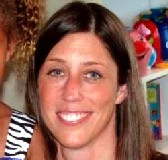 Christine Adewunmi
Murderer · USA · 2012
Christine Adewunmi killed herself by shooting herself the same day. Christine A…
3 victims
Christine Adewunmi
Murderer · USA · 2012
Christine Adewunmi killed herself by shooting herself the same day. Christine A…
3 victims
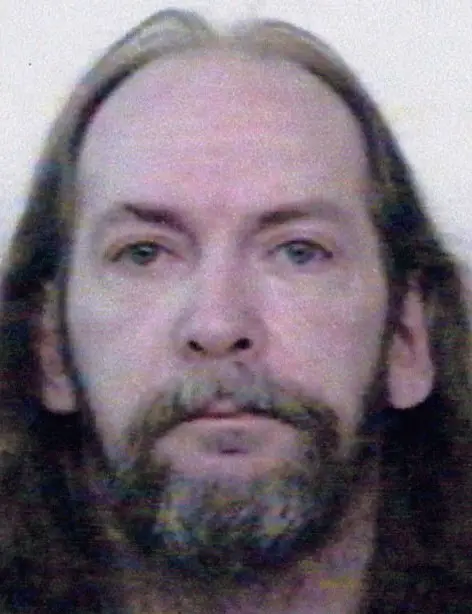 Donald Ray Wallace
Mass murderer · USA · 1980
Donald Ray Wallace Jr. was executed by lethal injection in Indiana on March 10,…
4 victims
Donald Ray Wallace
Mass murderer · USA · 1980
Donald Ray Wallace Jr. was executed by lethal injection in Indiana on March 10,…
4 victims
 Wade Frankum
Mass murderer · Australia · 1991
Wade Frankum Committed suicide by shooting himself the same day; in 1991 Wade F…
7 victims
Wade Frankum
Mass murderer · Australia · 1991
Wade Frankum Committed suicide by shooting himself the same day; in 1991 Wade F…
7 victims
 Martsay Bolder
Murderer · USA · 1973
Martsay Bolder was executed by lethal injection in Missouri on January 27, 1993…
2 victims
Martsay Bolder
Murderer · USA · 1973
Martsay Bolder was executed by lethal injection in Missouri on January 27, 1993…
2 victims
- Gender
- female
- Country
- USA
- Location
- Berks County, Pennsylvania, USA
- Date of birth
- 1785
- Age at first offence
- 24
- Characteristics
- infanticide
- Victim profile
- H er illegitimate infant son
- Method of murder
- Strangulation?
- Date(s) of murder
- February 14, 1809
- Years active
- 1809
- Date of arrest
- 3 days after
- Status
-
Executed
Executed by hanging in Reading, Pennsylvania on June 10, 1809
Case details
Susanna Cox (1785–1809) was a young domestic servant in Berks County, Pennsylvania. She was accused of murdering her illegitimate infant son and was convicted of willful murder. After her conviction, she received a death sentence and was executed by hanging.
The offence
Susanna became pregnant while working in domestic service. In the early morning of February 14, 1809, she secretly gave birth to a male child. On February 17, 1809, the child was found wrapped in an old coat, dead and frozen in a nearby outbuilding. A doctor determined the child had been murdered. Susanna claimed the child had been stillborn.
In the broader account of the case, an examination described the lower jaw as having been broken, the tongue torn loose and thrust back, and strangulation as having been produced by a wad of tow or flax forced into the throat.
Investigation and coroner inquiry
The discovery of the infant’s body occurred in an outbuilding and was communicated to the family, causing consternation. Suspicion was directed to Susanna, and when she was questioned by the female members of the family she admitted the child was hers and stated that it had been born dead. The child was replaced in the wall and a summons was sent to Reading to summon the Coroner.
Peter Nagle, Esq. (acting in the place of the coroner, who was sick), arrived late in the afternoon of the same day accompanied by a young medical practitioner, Dr. John B. Otto. A jury from the neighborhood was impaneled, and a surgical examination of the child’s body was made by the physician. The examination findings were that the lower jaw had been broken, the tongue torn loose and thrust back, and strangulation evidently produced by a wad of tow or flax forced into the throat.
When Susanna was questioned anew by the Justice in private, she adhered to her original story. The inquest finding was that the infant had been murdered and that the self-confessed mother was the perpetrator of the crime.
Arrest and commitment
After being informed of the inquest result, Susanna was conveyed to Reading and committed to prison for trial. She was conveyed to a prison for trial after the finding of murder and after being told she would have to accompany the Justice upon his return to the town.
In a detailed narrative account, an earlier arrest and transportation to Reading were described as occurring after neighbors converged on the Martin farm and she was placed under arrest by a constable and driven to Reading and turned over to the county Sheriff, Conrad Zahn. She was then placed in the charge of Mrs. Zahn and lodged in his house.
Trial
Susanna was arraigned at the April Term on April 7, 1809, before the Court then presided over by the Honorable John Spayd, and she pleaded not guilty. The indictment against her was for willful murder, and it was found by the grand jury at the April Term of the Oyer and Terminer following.
The Deputy Attorney-General, Samuel D. Franks, Esq., conducted the prosecution. Susanna was defended by three leading practitioners of the local bar: Marks John Biddle, Charles Evans, and Frederick Smith, Esqs.
Defense evidence included testimony from Dr. John C. Baum, the family physician of Mr. Geehr, who stated he had prescribed for Susanna the preceding autumn for some unusual aliment without discovering its cause. He also stated that Susanna had reiterated to him the day after her commitment to prison her previous assertion that the child had been born dead, giving as her reason for the concealment that she feared she would lose her place if the fact were discovered.
The defense counsel urged:
- the lack of positive proof of the commission of the offence charged
- the existence of a reasonable doubt of her guilt
- the hazard of conviction upon mere circumstantial evidence
A central point in the defense argument was that Susanna’s confession that the child was hers had been presented in evidence by the State, but that confession was to be received in its entirety together with her assertion that the child had been born dead. Her previous character was presented as good, and counsel argued that a person was not expected to sink into crime that shocked humanity.
The jury deliberated for about four hours and rendered a verdict of guilty of willful and premeditated murder.
Sentencing
After the verdict, Susanna was again brought to the bar of the Court the following morning and sentenced to pay the penalty of death which the law affixed to her crime. Judge Spayd pronounced the sentence.
Appeals and executive action
The popular sympathy for Susanna was described as enlisting an effort to secure commutation of the sentence from the Executive. A petition was made to Governor Simon Snyder to spare Susanna’s life.
An official record in the Executive department at Harrisburg stated that on May 9, 1809, the Governor took into consideration the case of Susanna Cox, now under sentence of death for murder in the first degree, confined in the jail of the County of Berks. The record further stated:
"The Governor this day took into consideration the case of Susanna Cox, now under sentence of death for murder in the first degree, confined in the jail of the County of Berks, of which crime she was convicted at the last Court of Oyer and Terminer and General Jail Delivery held in the said county - and thereupon a warrant under the Great Seal of the State, and signed by the Governor, was issued to the Sheriff of the County of Berks, George Marx, Esq., commanding him to execute the sentence of the said Court upon her, the said Susanna Cox, on Saturday, the tenth day of June next, between the hours of ten and two of the clock of the said day, at the usual place of execution. The said warrant was immediately transmitted to the said Sheriff of the said County of Berks, with instructions to communicate the same to the prisoner forthwith."
When the warrant’s purport was made known to Susanna, she was described as breaking down and confessing her guilt and beginning preparations for the fatal day.
A separate detailed narrative account stated that in early May 1807 letters and complaints reached the Governor and that the Governor had confirmed her sentence by May 19, 1807, with a planned hanging in Reading on Thursday, June 11.
Outcome
Susanna Cox was executed by hanging in Reading, Pennsylvania on June 10, 1809.
Her execution took place at the usual place of execution in Reading, at Gallows Hill at the foot of Mount Penn (now included within the territory acquired by the city and occupied as a public park). A procession moved from the gaol to the Commons where the scaffold was arranged.
Witness accounts described the execution method as involving a thick rope ending in a large noose dangling from the high crosspiece and a cart with a coffin beneath. Susanna was made to stand on her own coffin and then the cart was driven from beneath her feet, leaving her suspended.
After she was suspended for seventeen minutes, physicians bled her to assure death. She was then lowered, placed in the coffin, and delivered to relatives.
A detailed narrative account described a doctor’s examination for extinction of life and cut into Susanna’s wrist as a test.
A note appended to the official court docket, in the handwriting of Mr. Franks, recorded:
"On the 10th June A.D. 1809, the prisoner was executed, previous to which she confessed the murder and died penitent, Peace to her soul!"
Aftermath
After the execution, Susanna’s body was conveyed to the house of her sister, Barbara, who was married to one Peter Katzenmoyer. The body was buried in an open field on Katzenmoyer’s land at night of the following day, with a heap of stones piled above the turf to conceal the location.
The location of the grave was described as several hundred yards westward of the present Hampden reservoir and near where Thirteenth and Marion streets would join. For successive days and nights, the grave was watched to prevent the remains from being taken to a dissecting table, which Susanna had requested her relatives to guard against while in prison.
A pamphlet titled “The Last Words and Dying Confession of Susanna Cox” was offered for sale to the public immediately after the execution. The confession was prepared for Susanna, signed with her mark in the presence of Peter Nagle and Sheriff Marx on June 8, 1809, two days previously. A German “Traveler Lied,” or Sorrow Song, containing thirty-two verses describing the story, was published simultaneously with the confession and proved popular, with copies reprinted and sold to within a very recent period.
In a detailed narrative account, Susanna’s remains were described as being moved to the city’s then “Potter’s Field” and buried in an unmarked grave after the remains were unearthed by workmen digging a foundation near Penn’s Common in 1938. A paper in a bottle inside the coffin identified the skeleton as that of Susanna Cox, and the remains were moved and buried without a marker.
In the detailed narrative account, a hired executioner, Leroy Harst, was later beaten and chased out of town by irate citizens, and his silver hire money was taken by one of his attackers. The executioner did not return to Berks.
A separate account described Susanna’s hanging as so horrific and widely sympathetic that it was the last public execution of a woman in Berks County, one of only three.
Other details
Susanna was described as a girl who had been sold into domestic service and was treated with leniency during incarceration. She received spiritual support from Rev. Philip Reinhold Pauli, a pastor of the Reformed Church of Reading, who visited her frequently, found her extremely penitent, and administered communion. Accounts also described her receiving communion on the day before her execution and completing a white dress trimmed with wide black ribbons for her to wear.
Sheriff Marx, Esq. was named in connection with transmitting the execution warrant. The Honorable John Spayd presided over the trial and pronounced sentence.
The account included contextual legal history about punishment for infanticide and concealment of a child’s death, including mention of a law feature requiring proof by at least one witness that the child was born dead unless such a witness existed.
Her story was widely circulated in German and English through newspapers and broadsides for the remainder of the nineteenth and twentieth centuries. A ballad was described as being printed in over 88 editions in broadside form, and the story was described as being read annually at the summer Kutztown Folk Festival with an effigy reenactment.
The account mentioned other cases of executed women in Berks County for the crime of murdering illegitimate offspring, including Elizabeth Graul (convicted at the November Term of Oyer and Terminer of 1758; hanged at Reading on March 10, 1759) and Catharine Krebs (convicted at the November Term of 1767; hanged at Reading on December 19, 1767). It also mentioned Sarah Keating as acquitted in October 1804 and Catharine Miller as the only later execution in Pennsylvania in February 1881 for murder of an aged husband with her paramour.
A father of the infant was described as never investigated nor charged, though some versions of a ballad included initials or a partial name matching those of Peter Mertz.
In a detailed narrative account, Susanna was said to have been 24 years old at the time of the story, described as having limited education, and described with light colored hair and small slender stature. The narrative also described domestic service under the Jacob Martin family, a Martin farm near the settlement of Friedensburg in Berks County, and that the jail was in the basement of the Berks County courthouse in Reading.
Spotted an error, or have more information about this case?