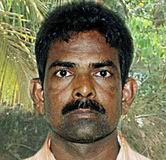
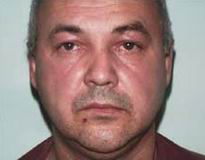
Mohan Kumar
Serial killer Jaishankar
Serial killer · India · 2006
Jaishankar was also known as M Shankar and M Sankar. He was also described as a…
21 victims
Jaishankar
Serial killer · India · 2006
Jaishankar was also known as M Shankar and M Sankar. He was also described as a…
21 victims
 Devendra Sharma
Serial killer · India · 2002
Devendra Sharma was an Indian doctor of ayurvedic medicine practising in Aligar…
20 victims
Devendra Sharma
Serial killer · India · 2002
Devendra Sharma was an Indian doctor of ayurvedic medicine practising in Aligar…
20 victims
 Surender Koli
Serial killer · India · 2005
Surender Koli was the domestic help of businessman Moninder Singh Pandher in th…
19 victims
Surender Koli
Serial killer · India · 2005
Surender Koli was the domestic help of businessman Moninder Singh Pandher in th…
19 victims
 Darbara Singh
Serial killer · India · 2004
Darbara Singh was sentenced to death on January 7, 2008. His death sentence was…
17 victims
Darbara Singh
Serial killer · India · 2004
Darbara Singh was sentenced to death on January 7, 2008. His death sentence was…
17 victims
 Chandrakant Jha
Serial killer · India · 1998
Chandrakant Jha functioned as a serial killer. He was said to help young men—us…
7 victims
Chandrakant Jha
Serial killer · India · 1998
Chandrakant Jha functioned as a serial killer. He was said to help young men—us…
7 victims
 Jayanandan
Serial killer · India · 2003
Jayanandan, also known as “Ripper” Jayanandan, was a serial killer from Trichur…
7 victims
Jayanandan
Serial killer · India · 2003
Jayanandan, also known as “Ripper” Jayanandan, was a serial killer from Trichur…
7 victims
 Keith Bryan Taylor
Murderer · USA · 1989
Keith Bryan Taylor was convicted by a jury and was sentenced to die for the mur…
1 victim
Keith Bryan Taylor
Murderer · USA · 1989
Keith Bryan Taylor was convicted by a jury and was sentenced to die for the mur…
1 victim
 Walter Barton
Murderer · USA · 1991
State of Missouri, Respondent, v. Walter Barton, Appellant. The case was styled…
1 victim
Walter Barton
Murderer · USA · 1991
State of Missouri, Respondent, v. Walter Barton, Appellant. The case was styled…
1 victim
 Michael Sonner
Murderer · USA · 1993
Michael Sonner was convicted of first-degree murder and other offenses and was…
3 victims
Michael Sonner
Murderer · USA · 1993
Michael Sonner was convicted of first-degree murder and other offenses and was…
3 victims
 Ronnie Lee Gardner
Murderer · USA · 1984
Ronnie Lee Gardner was executed by shooting in Utah on June 18, 2010. Ronnie Le…
2 victims
Ronnie Lee Gardner
Murderer · USA · 1984
Ronnie Lee Gardner was executed by shooting in Utah on June 18, 2010. Ronnie Le…
2 victims
 Serge Fortin
Mass murderer · France · 1999
October 2001 — His sentence was commuted to 30 years in prison. · October 2003…
4 victims
Serge Fortin
Mass murderer · France · 1999
October 2001 — His sentence was commuted to 30 years in prison. · October 2003…
4 victims
- Gender
- male
- Country
- India
- Location
- Karnataka, India
- Date of birth
- 1963
- Age at first offence
- 42
- Characteristics
- serial rapist, rape, rape?, convicted rapist, robbery, drugs
- Victim profile
- Young women aged 22-35-years
- Method of murder
- Poisoning (cyanide)
- Date(s) of murder
- 2005 - 2009
- Years active
- 2005–2009
- Date of arrest
- October 21, 2009
- Status
-
Convicted in three cases; convicted in the third case on Wednesday; sentences to be pronounced by the fourth additional and district sessions court in Mangalore on Thursday
Case record: Mohan Kumar
Mohan Kumar was a former primary school teacher who was convicted in a third case on Wednesday. He had previously been convicted in two cases on Tuesday. The fourth additional and district sessions court in Mangalore was scheduled to pronounce sentences in the cases on Thursday.
He was described as a serial killer who allegedly poisoned 20 young women to death using cyanide between 2003 and 2009. In the third case, he was convicted of murdering Sunanda, 32, of Sullia in the Mangalore region.
The offence
Murder of Sunanda
Sunanda disappeared on February 11, 2008 after she left home saying she was going to a temple nearby. That night she was found dead at the state bus stand in Mysore.
The police said Kumar lured Sunanda with the promise of marriage after befriending her through a series of meetings in Dakshina Kannada district using the fake identity Shashidhar. On February 11, 2008, he took her to a lodge in Mysore, poisoned her with cyanide at the bus stand in the evening, and then left with her gold ornaments.
Investigation
The police described the overall pattern as befriending girls in public places using the line “Do I know you? I have seen you somewhere.” If the girl responded positively, Kumar introduced himself and befriended her by posing as an eligible bachelor. After a couple of meetings, he proposed and persuaded the girl to elope with him to a nearby town. He would spend a night with the girl in a lodge, promising to marry her at a temple the next day.
Kumar then took the girl to a nearby bus stand and made her take two cyanide pills, claiming they were contraceptive pills. The investigation described him warning the girls that they were likely to vomit after consuming the pills and saying it would be better if they swallowed the pills in the washroom of the bus stand. The police said the women took the tablets and within minutes dropped dead, after which he fled from the scene taking gold valuables.
It was stated that ten of the murders took place at Mysore bus stand, three at Madikeri bus stand, two at Hassan bus stand, two at Bangalore bus stand and one at Kollur temple in Udupi district. It was also stated that local police recorded the deaths as suicide due to a love affair gone awry in most cases until further investigation.
The police said officers verified confessions and found dead bodies of women in different places such as Mysore, Bangalore and Madikeri.
The police investigation described a situation where many deaths had earlier been recorded as unnatural deaths or unsolved cases, and in some cases recorded as death due to epileptic seizures after missing persons reports were not registered.
Mobile phone and interrogation leading to identification
Special team investigation traced the mobile phone of Anitha (22) of Barimaru in Bantwal after she went missing on June 17. The calls from Anitha’s phone were made to another girl who was also reported missing. That enabled tracking of a person using the cell phone of a missing girl. Investigators used that to trace a person who led the police team headed by Puttur assistant superintendent of police Chandragupta to Mohan Kumar at his residence at Deralakatte.
It was also described that Kumar used mobile phones registered in other people’s names, which made tracing difficult. After killing a girl, he allegedly used the mobile recovered from the girl to deceive and fleece other girls.
Confessions and investigative details provided by Kumar
Kumar was brought to Kodagu by South Canara police and taken to Kushalnagar and Madikeri for investigation. He confessed to having committed about 20 murders and to killing five women in Kodagu. The confession included:
- killing four women at Madikeri bus stand and one at Kushalnagar
- killing Sharada from Puttur on January 23, 2009
- killing Baby Nayak of Bantwal on January 3, 2009
- killing Vinutha from Puttur on September 17, 2009
- details of the fourth death being yet to be ascertained
- killing Vijayalakshmi of Kasaragod on February 29, 2009 at Kushalnagar bus stand
In another development, Kumar confessed to killing 19 women by giving them cyanide and confessed to killing another woman in Bangalore in 2007. The additional confession involved Poornima (35), with police stating that her parents identified Kumar after visiting Bantwal following reports about the case. Superintendent of Police A.S. Rao told The Hindu that Poornima was a resident of Manjeshwar in Kerala. It was stated that when Kumar was presented to Poornima’s parents, they identified him as the person who had approached them seeking their permission to marry Poornima. Kumar was said to have confessed to the killing immediately. The investigators stated they were unable to locate the unnatural death report that would have been filed if Poornima’s body was found in Upparpet police station limits, and it was stated that Poornima’s family failed to register a missing person report.
Additional victim case: Shashikala
The investigation identified Shashikala (28), daughter of Narayan Madivala, resident of Kaniyoor in Balepuni village, near Mangalore. Shashikala was reported missing at Konaje police station on October 21, 2005. She left home on October 21, 2005 to attend a nursery assistants’ meeting and was missing since then. A case was registered and the dead body was found in Bangalore, where a case of suicide was registered at Upparapete police station. The postmortem report confirmed it was suicide by consuming cyanide, and it was said to match the modus operandi of the serial killer. Kumar confessed to killing Shashikala after being brought to the rural police station and after her parents identified their daughter from pictures in police records.
Police custody remand and incident during attempted suicide
On October 22, Kumar was produced before the court at B C Road and was remanded to police custody until October 27. During his time at court, it was gathered he behaved decently and responded to police questioning without hesitation, remorse or doubts.
It was also stated that Kumar attempted suicide in the toilet of the rural police station. At around 5.30 am on October 24, policemen waiting outside the toilet allowed him to go in to relieve himself. They heard sounds from inside. On opening the door, they found that Kumar was banging his head against the tiled wall of the toilet in an attempt to kill himself; his head was injured and blood was oozing. He was taken to Bantwal hospital where his wound was stitched and later admitted to Wenlock Hospital for advanced treatment. He was later taken to places where he had reportedly pledged ornaments of girls he had killed earlier. It was stated that on Sunday he was taken to Hassan to gather more details about the murders committed there.
Arrest
Kumar was arrested by Bantwal police on Wednesday October 21 from near Deralakatte near here. Inspector general of police (western range) Gopal Hosur informed about the arrest.
Kumar was identified as Mohan Kumar alias Ananda (46), a resident of Kanyana in Bantwal taluk. The police stated he had allegedly confessed to having killed 18 girls during the past five years and that all of his victims were girls.
He was described as having served as a teacher in a primary school near Angadi in Kanyana in Bantwal taluk on a temporary basis from 1980 and as quitting his job in 2003. It was stated that after quitting his job, he engaged in criminal offences since 2005 until 2009.
Kumar was also described as marrying thrice and divorcing his first wife, who was from Shiradi, while the second and third wives lived in separate houses—one at Deralakatte and the other at Uppala in Kasaragod district. It was stated that the offender was unable to recollect the names of some victims, and police believed more murder cases could emerge after investigation.
Local circle inspector Nanjunde Gowda and Puttur assistant superintendent of police Chandragupta opined that Kumar’s use of mobile phones registered in other people’s names had rendered tracing difficult.
Trial
Mangalore Fast Track Court and scheduling dilemma
A report described a dilemma when Cyanide Mohan Kumar’s case came up for hearing on Saturday. Fast Track Court judge Ninge Gowda Janthila invited suggestions from special public prosecutor Cheyabba Beary to prevent confusion. Two options were described:
- try all 13 cases at a stretch every month or hear a bunch of cases not exceeding more than four cases every month
- after trying the cases up to a certain stage, declare the verdict in all cases simultaneously
It was stated that Beary told Express the best option would be decided after consultations with legal experts, top brass in CID and police department. The judge was described as personally favouring a special court to try all 20 cases so the court could conduct hearings at a stretch and dispose of cases quickly.
It was stated that the High Court had rejected suggestions on a special court and had directed that the cases should be heard in a Fast Track Court. The court also turned down the request of an applicant who expressed a desire to take repossession of gold in police custody. The court was told that a person from Bajpe had borrowed gold jewellery worth Rs 1 lakh from the applicant on the pretext of wearing them to a marriage. The applicant was informed that the jewellery, which formed part of crucial evidence, was in safe custody and would be handed over after disposal of the case.
It was also stated that Kumar, who was presented in Mysore court in connection with a cyanide poisoning case on Friday, returned to the city on Saturday noon, resulting in his conspicuous absence during the hearing on Saturday.
Conviction in the third case
Kumar was convicted Wednesday of murdering Sunanda, 32, of Sullia in the Mangalore region. Sentencing for the cases was scheduled for Thursday by the fourth additional and district sessions court in Mangalore.
Sentencing
The fourth additional and district sessions court in Mangalore was to pronounce sentences on Thursday in the cases. No specific sentence length or other sentencing terms were stated in the provided material.
Outcome
Kumar was convicted in the third case Wednesday. He had been convicted in two cases Tuesday. The third conviction was for murdering Sunanda, found dead at the state bus stand in Mysore after disappearing on February 11, 2008.
Aftermath
The investigation described that investigators were looking at additional cases of missing women during interrogation, though involvement had not been established for some cases at that time.
Puttur ASP Dr Chandra Gupta was quoted saying: “The probe has revealed that 12 missing women are victims of serial killer Mohan,” and the investigation listed:
- Shantha of Kankanady
- Vinutha of Puttur
- Sharada of Kedila
- Shashikala of Kariyangala
- Baby Nayak of Peraje
- Anita of Barimar
- Hema of Mittoor
- Vijayalaxmi of Kasaragod
- Yashoda of Madantyar
- Pushpa of Mulleria
- Sunanda of Pervaje
- now Shashikala of Kaniyoor
In another account, a police official on condition of anonymity was quoted as saying: “there is no guarantee that Mohan Kumar could be implicated in the cases. There is hardly any evidence to show his involvement in the murders and he may just retract his earlier confessions.”
Eminent criminal lawyer Padma Prasad Hegde was quoted as saying:
“there is enough evidence to put him behind the bars or award a death penalty to him. The fact that he was the last to be seen with the victims is enough for the courts to implicate him. He has also confessed to his crimes leading to the recovery of many valuables and linking the deaths of other missing women. There is also practically no explanation from him on why the police charged him. As per the Supreme Court directives these evidences are enough to punish him in the court of law”.
Mangalore was described as having communal overtones in relation to the missing case of Anitha, where Hindu organizations exerted pressure on police suspecting her missing under mysterious circumstances to be the case of ‘love jehad’, leading to setting up a special squad under Puttur ASP Dr Chandragupta.
It was stated that Dr Subramaneyeshwar Rao said:
“we are focusing on strengthening the co-ordination between districts with regard to sharing information especially with regard to investigations into unidentified bodies and those cases of missing persons. A little effort on the part of the police in finding the common link of girls missing with cash and jewellery and their mysterious deaths in toilets, many of them in Mysore police limits would have pointed the needle of suspicion towards Mohan Kumar long back,”
It was also stated that when asked about police solving 18 murders, Dr Subramaneyeshwar Rao said:
“it is easy to assume that the police have failed when one comes to the nitty-gritty of such cases. One has to understand the difficulties involved in such cases especially when family members of victims do not come forward with adequate information and sometimes misinform the police that completely dilutes the investigation. In the case of the victims of Mohan Kumar many parents were oblivious that their daughter had an affair with him. Sometimes the information provided about their affairs created more problems than solving it”.
Dr Subrahmanyeshwar was quoted saying:
“from the point of view of the public parents have to have some idea about the people with whom their daughters are in contact with. Young girls should take their parents and siblings into confidence and give some information about the men they are in contact with. This is a wake up call for all of us, the public and the police. On our part we will focus on strengthening the inter-district co-ordination in solving unnatural deaths and suicides cases. This case has also strengthens the need to investigate thoroughly all suicide cases or in cases of unidentified bodies”.
He called upon the people to help the police by providing as much information as possible when a person was missing, and it was stated that sometimes parents give an old school photograph of girls which is difficult to match with decomposed bodies further complicating the case. It was stated that whenever people were found missing, the complaint had to be filed immediately to help police obtain vital clues.
Other details
Additional named victims and family identifiers
In the arrest-related account, the following victims were listed by name and age, with resident locations:
- Baby Nayak (25) resident of Peraje Near Sullia
- Sharada (24) Kedila in Puttur taluk
- Kaveri (30) Sampaje in Sullia
- Pushpa (26) Mulleria in Kasaragod
- Vinutha (24) Puttur
- Hema (24) Mittur in Bantwal
- Anitha (22) Barimar
- Yashoda (26) resident of Madanthyar in Belthangady
- Vijayalakshmi (26) Kasaragod
- Sarojini (27) Uppala
- Shashikala (28) Kariangala in Bantwal
- Sunanda (25) Peruvaje near Sullia
- Lelavathi (32) resident of Vamada Padav
- Shantha (35) resident of Kankanady
- Vanitha (22) Nelyady
- Sujatha (28) Mucchur near Bajpe
It was stated that the names of two more girls, both from Kasargod, were yet to be ascertained from the offender.
Specific details provided about Sunanda’s case and other early reports
In a custody and investigation description, Sunanda (20) from Vaipala near Bellare in Sullia taluk was described as starting vomiting on February 11, 2008 at Mysore bus stand and dying thereafter. Her family was traced with the help of the mobile found in her possession, and it was recorded as a death due to epileptic seizures. The family said Sunanda had taken gold ornaments and Rs 65,000 in cash. A post mortem report reportedly received after a gap of 20 months said her death was caused by cyanide consumption.
In the same account, it was described that in the case of Kaveri from Peraje in Sullia taluk, her family learned about her death only after media brought out the story of Mohan on Thursday, even though her body was recovered in Mysore earlier and policemen failed to find her identity. It stated that Kaveri had a mobile sim given by her brother, Sridhar. It was described that Mohan called Anita, and Anita’s family traced Sridhar’s address and beat up Sridhar thinking him the caller. Sridhar said the family denuded him, beat him up and laid him across railway tracks; he escaped, borrowed a lungi and shirt from kind people, and filed a complaint with Bantwal policemen. It stated that Kaveri left home on March 10 with a gold chain borrowed from neighbours, golden rings of her brothers and Rs 40,000 in cash.
Reported backgrounds and personal history described for Mohan Kumar
Kumar was described as a resident of Kanyana in Bantwal taluk, near Mangalore. He was described as a physical education teacher in Kanyana, joining service in 1980 on a temporary basis. It was stated he divorced his first wife while second and third wives lived in separate homes. After being sacked in 2003, it was alleged he lured young women, had sex with them, killed them and robbed them of their valuables for quick money.
A report described him being educated up to PUC, joining government service as a teacher in a primary school on temporary basis in 1980, being in and out of service and transferred for 23 years, and quitting his job in 2003.
It was stated that in 2003 he was offered a teaching job at Angri School but refused to work for reasons unknown, ending his teaching profession of 23 years.
Attempts and injuries during police custody
It was stated that Kumar’s head was bandaged when police were asked about injury, and police stated that he tried to bang his head against a wall in prison due to regret, injuring his forehead.
Neighbour and family reactions and statements attributed to relatives
A description of neighbourhood and family reactions said that Mohan Kumar alias Bhaskara alias Ananda was accused of being the murderer of 18 girls and that people associated with him, including his two wives, mother, mother-in-law and neighbours, maintained he lacked ruthlessness.
His third wife, who resided in a village near Deralakatte, was quoted saying:
“I have never seen any cyanide in his possession. I used to check his handbag which contains a small mirror and some papers. He had a small plastic bottle filled with talcum powder. Whenever it was empty, he filled it with talcum powder from the actual container” “I gave him money several times after borrowing from my ‘Swasahaya’ account. If he was connected to those killings, he would have earned a lot of money. Last year he bought me a golden chain. But now, the police have taken all the ornaments; mine as well as those which he gave me” “Police took all the records from our house including a telephone book which contains our relatives’ contact numbers. After the arrest, we were not able to contact anyone, not even a lawyer” “I met him at the office where I was working and friendship turned to love following which we got married”
The third wife was quoted as saying:
“He never smoked or drank alcohol. In my wedded life only once did I see him bring home a bottle of alcohol and drink it”
Mohan’s mother was quoted saying:
“If anything happens to him I will not live long and will end my life by committing suicide”
It was stated that Kumar’s name at birth was Bhaskara, that he was a Dalit, and that his mother wept and insisted he was innocent and had been framed. It was stated his father was lost in his childhood.
Comparison to another alleged cyanide murderer
The material described parallels with “Mallika aka Cyanide Mallika alias Kempamma alias Jayamma” who poisoned over 10 women and robbed them of their valuables. Mallika was described as starting her crime spree in October 1999, being caught by Bangalore police on Dec ember 30, 2007 while trying to sell stolen jewellery, and having a modus operandi involving trapping women in distress and taking them to temples and lacing their food with cyanide, then decamping with jewellery.
Attempted murder in earlier period and detention
It was described that Kumar’s criminal career began in 2000 when he tried to throw a girl who refused to marry him into the Nethravati river. A witness called police and he was detained on attempted murder charges. He was released on bail, and it was stated the criminal offence ended his school job.
Attempts to collect missing links and evidence control around gold
The report on the Fast Track Court turning down a request described that an applicant wanted repossession of gold in custody of police, and that the jewellery was part of crucial evidence to be handed over after disposal of the case.
Spotted an error, or have more information about this case?