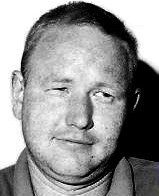
Jerome Brudos
Serial killer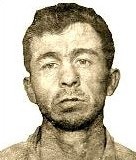 Donald Henry Gaskins
Serial killer · USA · 1969
Donald Henry Gaskins, also known as Donald “Pee Wee” Gaskins, was a serial kill…
200 victims
Donald Henry Gaskins
Serial killer · USA · 1969
Donald Henry Gaskins, also known as Donald “Pee Wee” Gaskins, was a serial kill…
200 victims
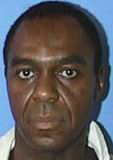 Carl Eugene Watts
Serial killer · USA · 1974
Carl Eugene Watts (born November 7, 1953; died September 21, 2007), also known…
100 victims
Carl Eugene Watts
Serial killer · USA · 1974
Carl Eugene Watts (born November 7, 1953; died September 21, 2007), also known…
100 victims
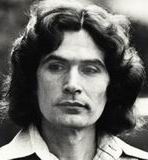 Rodney Alcala
Serial killer · USA · 1977
Rodney James Alcala (born August 23, 1943) was also known as Rodrigo Jacques Al…
100 victims
Rodney Alcala
Serial killer · USA · 1977
Rodney James Alcala (born August 23, 1943) was also known as Rodrigo Jacques Al…
100 victims
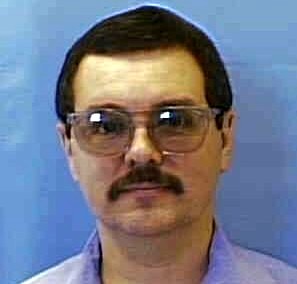 Donald Harvey
Serial killer · USA · 1970
Donald Harvey was known as an American serial killer and a self-professed “Ange…
87 victims
Donald Harvey
Serial killer · USA · 1970
Donald Harvey was known as an American serial killer and a self-professed “Ange…
87 victims
 Ottis Toole
Serial killer · USA · 1961
Ottis Elwood Toole (sometimes misspelled as “Otis”) was an American serial kill…
65 victims
Ottis Toole
Serial killer · USA · 1961
Ottis Elwood Toole (sometimes misspelled as “Otis”) was an American serial kill…
65 victims
 Donald Leroy Evans
Serial killer · USA · 1975
Donald Leroy Evans (born July 5, 1957) was an American serial killer who murder…
60 victims
Donald Leroy Evans
Serial killer · USA · 1975
Donald Leroy Evans (born July 5, 1957) was an American serial killer who murder…
60 victims
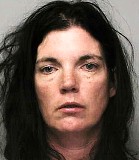 Fiona Donnison
Murderer · United Kingdom · 2010
Fiona Donnison was 45 years old at the time she showed up in front of local aut…
2 victims
Fiona Donnison
Murderer · United Kingdom · 2010
Fiona Donnison was 45 years old at the time she showed up in front of local aut…
2 victims
 John Albert Boltz
Murderer · USA · 1984
Name: John Albert Boltz · Status/Outcome: Executed by lethal injection in Oklah…
1 victim
John Albert Boltz
Murderer · USA · 1984
Name: John Albert Boltz · Status/Outcome: Executed by lethal injection in Oklah…
1 victim
 Michael Lee Wilson
Murderer · USA · 1995
Michael Lee Wilson was tried in Tulsa County District Court, Oklahoma, in Case…
1 victim
Michael Lee Wilson
Murderer · USA · 1995
Michael Lee Wilson was tried in Tulsa County District Court, Oklahoma, in Case…
1 victim
 Ivan Ray Murphy
Murderer · USA · 1989
January 9, 1989 — Ivan Ray Murphy and Douglas Stoff went to Lula Mae Denning’s…
1 victim
Ivan Ray Murphy
Murderer · USA · 1989
January 9, 1989 — Ivan Ray Murphy and Douglas Stoff went to Lula Mae Denning’s…
1 victim
 Manuel Marcus Sepulveda
Murderer · USA · 2001
Manuel Marcus Sepulveda Manuel Sepulveda lived with Daniel Heleva and Robyn Ott…
2 victims
Manuel Marcus Sepulveda
Murderer · USA · 2001
Manuel Marcus Sepulveda Manuel Sepulveda lived with Daniel Heleva and Robyn Ott…
2 victims
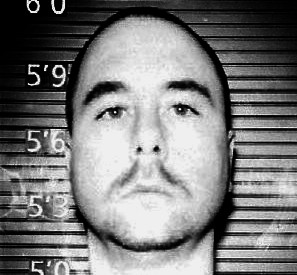 Herbert Underwood
Murderer · USA · 1984
Defendant Herbert Underwood was sentenced to death for murder and related crime…
1 victim
Herbert Underwood
Murderer · USA · 1984
Defendant Herbert Underwood was sentenced to death for murder and related crime…
1 victim
- Gender
- male
- Country
- USA
- Location
- Oregon, USA
- Date of birth
- January 31, 1939
- Age at first offence
- 29
- Characteristics
- —
- Victim profile
- Linda Kay Slawson, 19 / Jan Susan Whitney , 23 / Karen Elena Sprinker , 19 / Linda Dawn Salee, 19
- Method of murder
- Strangulation
- Date(s) of murder
- 1968 - 1969
- Years active
- 1968–1969
- Date of arrest
- May 25, 1969
- Status
-
Died in custody
Sentenced to three consecutive life sentences on June 27, 1969; died in prison on March 28, 2006
Case identity
Jerome Brudos (31 January 1939 – 28 March 2006) was a serial killer and a necrophiliac also known as “The Lust Killer” and “Shoe Fetish Slayer”.
Background
Brudos was born in Webster, South Dakota. His mother wanted a girl and often ignored and belittled him. He had a fetish for women’s shoes from the age of five. He spent his teen years in and out of psychotherapy and state hospitals.
Brudos began to stalk local women as a teenager, knocking down or choking them unconscious and fleeing with their shoes. At age 17, he dug a hole and kept girls as sex slaves. Shortly after he was found out, he was taken to a psychiatric ward of Oregon State Hospital for nine months. During this time, it was found that his sexual fantasies revolved around his hatred and revenge against his mother and women in general.
Brudos suppressed his obsessions long enough to graduate from high school and become an electronics technician. In 1961, he married and settled in a Portland, Oregon suburb.
Around that time, he began complaining of migraine headaches and “blackouts,” relieving his symptoms with night-prowling raids to steal shoes and lace undergarments. He carried piles of women’s shoe catalogues while incarcerated and claimed they were his substitute for pornography.
He later became an electrician, and after moving to Salem he was described as a devoted family man who neither drank nor smoked and rarely if ever used profanity.
The offence
Between 1968 and 1969, Brudos bludgeoned and strangled four young women. The only initial evidence was witness sightings of a large man dressed in women’s clothing. Brudos kept trophies from his victims, such as amputated breasts and a foot. After committing a murder, he would dress up in high heels and masturbate.
Police investigation and interviews of local coeds led them to Brudos, who confessed to the murders in detail.
Brudos abducted the women from public places and took them to his home near the Oregon State Hospital. Investigators determined that Brudos sexually attacked his victims and mutilated them before dumping their bodies into area rivers.
One victim choked to death after he used a contraption to lift her off the floor and left the room; investigators later found victims hanging from a pulley in the collection of photos at his home.
Brudos later confessed to the murders of Linda Slawson and Stephanie Vikko, but police did not have enough physical evidence to charge him in those cases.
Victims and locations described in the case
- Jan Susan Whitney, 23, of McMinnville: last seen in Eugene in November 1968; her car was later found abandoned at a rest area along Interstate 5 between Salem and Albany. Her body was found tied to a piece of railroad iron in the Willamette River near Independence.
- Karen Elena Sprinker, 19, of Salem: last seen alive in the Meier & Frank parking lot in downtown Salem; her body was found in the Long Tom River near Monroe, weighted down.
- Linda Dawn Salee, 22, of Beaverton: last seen alive at the Lloyd Center parking lot in Portland; her body was found in the Long Tom River near Monroe, weighted down.
- Linda Kay Slawson, 19, of Aloha: last was seen selling encyclopedias door-to-door in Portland, where Brudos and his family lived at the time; her body was never recovered; Brudos never was prosecuted for her death.
- Gloria Jean Smith, 15: nearly abducted while walking near Parrish Middle School; she identified Brudos as the man who attempted to kidnap her and take her to a green Volkswagen Karmann Ghia later identified as belonging to Brudos’ mother; before getting to the car, she spotted Phyllis Kerr working nearby and yelled, pulling away.
- Stephanie Vikko, 16: Brudos later confessed to her murder, but police did not have enough physical evidence to charge him.
Investigation
The investigation involved witness sightings of a large man dressed in women’s clothing and evidence that Brudos kept trophies from his victims, including amputated breasts and a foot. Police later conducted interviews of local coeds that led them to Brudos, who confessed to the murders in detail.
Sam Wallace discovered a human body while fishing along the Long Tom River on May 10, 1969. Benton County Sheriff’s deputies removed the victim and later discovered she was Linda Salee. The body had been tied by nylon cord and copper wire to a heavy automobile transmission and dumped into the river. Reserve sheriff’s divers later searched further and found the body of Karen Sprinker two days later near where Salee’s body had been found; Sprinker’s body was weighted down with the head of a 6-cylinder car engine and tied with nylon cord.
On April 22, the same day Linda Salee disappeared from Lloyd Center in Portland, a 15-year-old Salem girl was accosted by a man with a plastic gun who tried to force her into his car. She broke away and drove off.
The case included a report from an Oregon State coed who received a phone call from a man who identified himself as a Vietnam veteran and asked to meet about a new method of study while he was a patient at Walter Reed Medical Center; the coed consented, then became suspicious when he said he could not meet because he had to change the motor of his car and called Corvallis Police detectives. Detectives suggested she accept a date and meet him at her dorm, and detectives would be waiting when he arrived.
An affidavit authorizing a search of Brudos’ Salem home later stated that wire identical to the wire used to tie the victims to the car parts was found inside, along with photos of nude and clothed women, women’s clothes and lists of women’s names, addresses and phone numbers, and notes on all sororities and women’s living organizations at Oregon State. Some women on the list reportedly told police they received phone calls from a man claiming to be a Vietnam veteran and said he was lonely, and some said they even dated the man.
Arrest
Brudos was identified as a possible suspect after a tip from an Oregon State University student on May 18, 1969.
Police searched Brudos’ home in the 3100 block of Center Street NE on May 26, 1969 and found copper wire, rope, and pictures of female victims.
On May 29, 1969, Brudos was arrested on a charge of armed assault related to the April 22 incident with Gloria Smith.
On June 3, 1969, Brudos was arrested in Salem on three counts of murder in the deaths of Karen Sprinker, Linda Salee and Jan Whitney.
He was transferred to the Oregon State Penitentiary after sentencing.
Trial
Brudos pleaded innocent by reason of insanity and was charged with four counts of first-degree murder by the Marion County District Attorney Gary Gortmaker, later described as “announced” around a week before indictment.
The Grand Jury meeting June 4 indicted Brudos on only one count of first-degree murder, in the death of Karen Sprinker.
Three days before the scheduled trial start for the Sprinker murder, Brudos changed his plea to guilty to the three original murder charges in the deaths of Karen Sprinker, Jan Whitney and Linda Salee.
Brudos told Marion County Circuit Judge Val D. Sloper he strangled Sprinker with a rope and used a leather strap to strangle Whitney and Salee.
Sentencing
On June 27, 1969, three days before the scheduled start of a trial, Brudos pleaded guilty to three counts of murder in the deaths of Sprinker, Salee and Whitney. Judge Val Sloper handed down three consecutive life sentences.
Brudos was transferred to the Oregon State Penitentiary.
Appeals
Brudos lodged countless appeals, including one in which he alleged that a photograph taken of him with one of his victim’s corpses cannot prove his guilt, as it is not the body of a person he was convicted of killing.
Federal court rulings upheld the board’s handling of Brudos’ case.
Parole and post-prison supervision
In 1995, after repeated parole hearings, the Oregon Parole Board told Brudos he will never be paroled. Board chair Marva Fabien said:
“You will be in prison for the rest of your life, and there will be no further parole hearings,”
Brudos continued to be allowed to appear before parole board every two years for an informal interview.
On August 19, 2005, an Oregon serial killer described himself as getting more stable but said he would not be getting out of prison anytime soon, and that he had been in prison longer than any other person in Oregon. The board refused Brudos’ request for parole.
On August 20, 2005, Brudos told a parole board that he was recovering from colon cancer and pursuing his master’s degree in counseling at the Oregon State Penitentiary. He offered no new insight into his crimes and declined to answer when a board member asked why he committed the torture-murders that landed him behind bars for life. Brudos indicated that the public session was not a suitable forum to delve into the matter, and said:
“This is information I wanted to give to the board without it becoming public record or reading it in the newspaper,”
“I have no intention of baring my soul.”
No visitors attended the proceeding, which was deemed a “personal interview” between Brudos and the board, not a parole hearing.
The three-member panel rejected action that would have granted him a formal hearing. Board chairman Michael Washington told Brudos he would not receive a formal hearing in part because of his refusal to candidly discuss his crimes. Brudos said the board’s 1995 decision to ban him from parole consideration was “an act of vengeance.” He said:
“This is not over,”
and that: “They cannot remove my legal rights.”
Brudos said he underwent colon cancer surgery about a year before the August 20, 2005 interview, and he said:
“One day’s like another in here,”
Timeline
- Jan. 26, 1968 — Linda Slawson, 19, of Aloha is last seen selling encyclopedias in the Portland neighborhood where Brudos lived with his wife, Ralphene, and their two kids; her body was never recovered and Brudos never was prosecuted for her death.
- Nov. 25, 1968 — Jan Whitney, 23, of McMinnville is last seen in Eugene; her car is later found abandoned at a rest stop along Interstate 5 between Salem and Albany.
- March 27, 1969 — Karen Sprinker, 19, of Salem is last seen alive in the Meier & Frank parking lot in downtown Salem.
- April 22, 1969 — Gloria Jean Smith, 15, is nearly abducted while walking near Parrish Middle School and identifies Brudos as the man who attempted to kidnap her.
- April 23, 1969 — Linda Salee, 22, of Beaverton is last seen alive at the Lloyd Center parking lot in Portland.
- May 10, 1969 — The body of Linda Salee, 22, is found in the Long Tom River near Monroe, weighted down.
- May 12, 1969 — The body of Karen Elena Sprinker, 19, is found in the Long Tom River near Monroe, weighted down.
- May 18, 1969 — Jerome Brudos is identified as a possible suspect after a tip from an Oregon State University student.
- May 26, 1969 — Brudos’ home in the 3100 block of Center Street NE is searched by police and copper wire, rope and pictures of female victims are found.
- May 29, 1969 — Brudos is arrested on a charge of armed assault related to the April 22 incident with Gloria Smith.
- June 3, 1969 — Brudos is arrested in Salem on three counts of murder in the deaths of Karen Sprinker, Linda Salee and Jan Whitney.
- June 27, 1969 — Brudos pleads guilty to three counts of murder in the deaths of Sprinker, Salee and Whitney; Judge Val Sloper hands down three consecutive life sentences; Brudos is transferred to the Oregon State Penitentiary.
- July 27, 1969 — The body of Jan Whitney is found tied to a piece of railroad iron in the Willamette River near Independence.
- June 21, 1995 — After repeated parole hearings, the Oregon Parole Board tells Brudos he will never be paroled.
- August 19, 2005 — A board refuses Brudos’ request for parole.
- August 20, 2005 — Brudos tells a parole board he is recovering from colon cancer and is pursuing a master’s degree in counseling.
- March 28, 2006 — Jerome Brudos dies at 5:10 a.m. inside the Oregon State Penitentiary.
Other details
Brudos had piles of women’s shoe catalogues in his cell and wrote to major companies asking for them. He claimed they were his substitute for pornography.
Brudos was married and had two children. He had two college degrees behind bars in general sciences and counseling, and in the August 20, 2005 interview he said he was working on a third and pursuing a master’s degree in counseling.
The parole proceeding described him as 66 at the time.
His death was described as occurring in the prison infirmary at 5:10 a.m.; a relative of one of his victims said he suffered from liver cancer.
Names of people quoted in connection with parole proceedings and investigation
Cindi Elliott, Jan Whitney’s sister, described mixed emotions after learning of Brudos’ death; she said:
“Sad. Relieved,”
and added: “I hope he spends all eternity in hell.”
James Stovall, the Salem detective who tracked down Brudos, was quoted stating:
“He was one of the true monsters of the United States or the world perhaps,”
Marva Fabien, board chair, said:
Brudos said:
“I’m more stable now than I ever was out on the streets,”
“I’m trying to get on with my life,”
Outcome
Brudos was convicted by guilty plea to three counts of murder and sentenced to three consecutive life sentences. He died in prison on March 28, 2006.
Spotted an error, or have more information about this case?