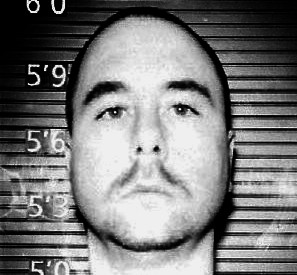
Herbert Underwood
Murderer Brian Kevin Rosenfeld
Murderer · USA · 1985
Brian Kevin Rosenfeld Brian Kevin Rosenfeld was sentenced to three concurrent l…
23 victims
Brian Kevin Rosenfeld
Murderer · USA · 1985
Brian Kevin Rosenfeld Brian Kevin Rosenfeld was sentenced to three concurrent l…
23 victims
 Marvin Gray
Murderer · USA · 1975
Marvin Gray was convicted killer who claimed responsibility for 23 slayings and…
23 victims
Marvin Gray
Murderer · USA · 1975
Marvin Gray was convicted killer who claimed responsibility for 23 slayings and…
23 victims
 Yahweh ben Yahweh
Murderer · USA · 1980
Yahweh ben Yahweh was born and legally named Hulon Mitchell Jr. (October 27, 19…
23 victims
Yahweh ben Yahweh
Murderer · USA · 1980
Yahweh ben Yahweh was born and legally named Hulon Mitchell Jr. (October 27, 19…
23 victims
 Russell Ellwood
Murderer · USA · 1991
Russell Ellwood was a former taxi driver. Authorities suspected him of killing…
20 victims
Russell Ellwood
Murderer · USA · 1991
Russell Ellwood was a former taxi driver. Authorities suspected him of killing…
20 victims
 Ramon Mercader
Murderer · Mexico · 1940
Ramon Mercader was a Spanish Communist who later worked as a Soviet agent. He m…
1 victim
Ramon Mercader
Murderer · Mexico · 1940
Ramon Mercader was a Spanish Communist who later worked as a Soviet agent. He m…
1 victim
 Suzanne Basso
Murderer · USA · 1998
Suzanne Basso was a white female who was described as having grey hair and blac…
1 victim
Suzanne Basso
Murderer · USA · 1998
Suzanne Basso was a white female who was described as having grey hair and blac…
1 victim
 William Shrubsall
Homicide · Canada · 1988
William Shrubsall (also known as Ian Thor Greene and now Simon Templar (Ethan S…
1 victim
William Shrubsall
Homicide · Canada · 1988
William Shrubsall (also known as Ian Thor Greene and now Simon Templar (Ethan S…
1 victim
- Gender
- male
- Country
- USA
- Location
- Marion County, Indiana, USA
- Date of birth
- J uly 11, 1960
- Age at first offence
- 24
- Characteristics
- robbery
- Victim profile
- Kerry Golden (male, 28)
- Method of murder
- Beating with tire iron - Stomping - Manual strangulation
- Date(s) of murder
- June 5, 1984
- Years active
- 1984
- Date of arrest
- —
- Status
-
Acquitted / overturned
Sentenced to death August 23, 1985; conviction affirmed on direct appeal January 31, 2000; granted a new trial; after retrial acquittal on some counts and hung jury on murder; at a second retrial convicted of Murder and Conspiracy to Commit Murder and sentenced to 60 years imprisonment for the murder of Golden on February 22, 1997
Case record: Herbert Underwood
Background
Defendant Herbert Underwood was sentenced to death for murder and related crimes but was granted a new trial. After a retrial resulted in acquittal on some counts and a hung jury on murder, he was convicted at a third trial and sentenced to 60 years. He appealed, claiming a speedy trial right violation and improper use of certain evidence; the appellate court affirmed, finding no speedy trial right violation and any error in admitting the evidence to be harmless.
The offence
On the evening of June 4, 1984, Defendant Herbert Underwood, Rick Asbury, Rick Huffman, and Kerry Golden were riding in Huffman’s car after a night at a local bar. Earlier that night, Golden was seen carrying a roll of money and marijuana.
The group had traveled for awhile when Huffman stopped the car and Defendant ordered everyone to get out. Huffman testified that Defendant said that he wanted to “slap [Golden] around a little bit and take his money and dope.” Defendant grabbed Golden’s leg and dragged him out of the car. After Defendant and Huffman severely kicked and bludgeoned Golden, Defendant told Golden to give up the “pot.”
Defendant then removed Golden’s clothes and took Golden’s marijuana and money roll from Golden’s pockets. Throughout the assault, Asbury and Huffman stood nearby. At one point, Defendant grabbed Golden’s penis and lifted him off the ground. Shortly thereafter, Huffman removed a tire iron from the trunk of his car, and Asbury watched as Defendant and Huffman beat Golden with the iron. Asbury also hit Golden with the iron, but he testified that Golden was already dead at that time.
The three got inside the car and drove away. Golden died from blunt-force injuries to the head, chest, and abdomen.
Investigation
Huffman and Asbury later testified about what occurred during the attack and after the killing. Asbury testified that Defendant said that the three of them had to kill Golden because Golden could identify them as the perpetrators who beat him. Asbury further testified that after they killed Golden, the three stopped at a gas station to fix the muffler on Huffman’s car and Defendant washed his bloody T-Shirt in the restroom. Huffman’s testimony included that “[Defendant] had picked [Golden] up by his penis and was trying to carry him [and] drag him back towards the car . . . .” (R. at 904.)
A gas station attendant testified that on the night of the murder, he observed a car with a loose muffler pull into the gas station. The attendant further testified that shortly after he and Defendant exchanged a few words, he went to the restroom and discovered bloody water and towels. The attendant made an in-court identification that Defendant was the person who he spoke to at the gas station.
Trial
First trial and first sentence
On July 17, 1985, Defendant was tried for the murder of Golden. The jury convicted Defendant of:
- Robbery,
- Conspiracy to Commit Robbery,
- Conspiracy to Commit Murder,
- Murder, and
- Felony Murder.
The trial court followed the jury’s recommendation and sentenced Defendant to death.
On March 10, 1989, the appellate court affirmed the trial court judgment as to Defendant’s convictions and sentence of death. The citation given was Underwood v. State, 535 N.E.2d 507 (Ind.), cert. denied., 493 U.S. 900 (1989).
Post-conviction proceedings and retrials
On April 21, 1995, a post-conviction court granted Defendant’s motion for summary judgment for post-conviction relief, vacated Defendant’s convictions, and ordered a new trial.
On June 20, 1995, Defendant, acting pro se, filed a “motion for a fast and speedy trial.” On July 5, 1995, the trial court appointed new counsel to represent Defendant and set a retrial date for August 14, 1995 (within the prescribed 70 days of Ind. Crim. Rule 4(B)).
On July 28, 1995, defense counsel explained at a pre-hearing conference, over what Defendant claimed was his objection, that he would not be adequately prepared for trial on August 14, 1995. The court stated that Defendant’s right to counsel was more fundamental than the right to a speedy trial and rescheduled Defendant’s retrial for March 18, 1996.
On February 23, 1996, Defendant, again acting pro se but still represented by counsel, filed a “motion to dismiss all charges” on grounds that his right to speedy trial had been violated.
On February 28, 1996, defense counsel filed a motion for continuance on grounds that he had to prepare and try other capital cases. The court granted counsel’s request.
On March 1, 1996, Defendant submitted a written letter to the court, reiterating his right to a speedy trial.
On April 19, 1996, defense counsel filed a memorandum of law requesting a continuance of retrial on grounds that it was necessary for effective assistance of counsel.
On April 26, 1996, the court denied Defendant’s February 23 motion to dismiss.
On June 13, 1996, Defendant, by defense counsel, filed another motion to continue retrial, or in the alternative, a motion to exclude the testimony of Huffman, the co-defendant in Defendant’s first trial.
On June 14, 1996, the court rescheduled the trial for a second time, setting the retrial date for August 19, 1996.
On August 19, 1996, Defendant was retried and acquitted on the charges of Robbery, Conspiracy to Commit Robbery, and Felony Murder. However, the jury was unable to reach a verdict on the Murder and Conspiracy to Commit Murder charges. After the end of the first retrial, the State withdrew the death penalty charge.
On February 7, 1997, a second retrial began and a jury found Defendant guilty of Murder and Conspiracy to Commit Murder.
On February 22, 1997, at Defendant’s sentencing hearing, the trial court vacated Defendant’s Conspiracy to Commit Murder conviction. The trial court sentenced Defendant to 60 years in prison for the murder of Golden, and it is stated that conspiracy to murder was vacated.
Direct appeal
The appellate decision described Defendant’s claims and concluded that:
- there was no speedy trial right violation; and
- any error in admitting the evidence was harmless.
Sentencing
On August 23, 1985, Defendant was sentenced to death for murder and related crimes.
At a later sentencing on February 22, 1997, after retrials, the trial court sentenced Defendant to 60 years in prison for the murder of Golden.
Appeals
Defendant Herbert Underwood appealed in the Indiana Supreme Court, listed as:
- IN THE INDIANA SUPREME COURT
- Herbert A. Underwood, Appellant
- v.
- State of Indiana, Appellee
- Supreme Court No. 49S00-9707-CR-419
- Appeal from the Marion Superior Court
- The Honorable Paula E. Lopossa, Special Judge
- Cause No. CR-84-106C
The direct appeal was decided on January 31, 2000, with the court statement by SULLIVAN, Justice, that Defendant was sentenced to death for murder and related crimes but granted a new trial; after retrial acquittal on some counts and hung jury on murder, he was convicted at a third trial and sentenced to 60 years; and the appellate court affirmed, finding no speedy trial right violation and any error harmless.
Two issues were addressed:
I. Speedy trial right
Defendant contended that the trial court violated his statutory right to a speedy trial under Indiana Criminal Rule 4(B) by failing to retry him within 70 days of June 20, 1995, the date Defendant filed a pro se motion for a speedy trial.
Indiana Criminal Rule 4(B) was quoted: “If any defendant held in jail on an indictment or an affidavit shall move for an early trial, he shall be discharged if not brought to trial within seventy (70) calendar days from the date of such motion . . . .” Ind. Crim. Rule 4(B) contains two exceptions:
- the court’s calendar is too congested to adjudicate during that time; or
- the defendant causes the delay.
The appellate court held that Crim. R. 4(B)(1) applied to retrials so long as the defendant asserted a speedy trial request after the retrial had been ordered. It described cases cited including James v. State, 716 N.E.2d 935 (Ind. 1999), citing Poore v. State, 685 N.E.2d 36 (Ind. 1997), and Young v. State, 482 N.E.2d 246 (Ind. 1995).
The appellate decision stated that neither the parties nor the record indicated that the “court congestion” exception explained the delay.
It then addressed whether Defendant caused the delay. Defendant conceded counsel moved for a continuance that rescheduled the retrial from August 14, 1995, to March 18, 1996. Defendant maintained that because defense counsel moved for continuance “despite [his] objection,” he was still entitled to discharge under Crim. R. 4(B). The appellate court stated that Defendant moved for several continuances resulting in delays and therefore he was not entitled to discharge.
The appellate decision also stated:
- the trial court was required to appoint new counsel after post-conviction relief;
- it might have been that Defendant sought speedy trial on a pro se basis prior to counsel’s appointment and objected to counsel’s request for a continuance; but once counsel was appointed, Defendant spoke through counsel;
- the trial court was not required to respond to Defendant’s request or objection, citing Broome v. State, 687 N.E.2d 590 (Ind. Ct. App. 1997) and related cases; and
- to require the trial court to respond to both Defendant and counsel would create a hybrid representation to which Defendant was not entitled.
The appellate court concluded there was no error in the exercise of discretion to extend trial because newly-assigned counsel explained he needed more time to prepare adequately for a murder trial in which the State sought the death penalty, citing Ind. Crim. Rule 24(B). It cited Roseborough v. State, 625 N.E.2d 1223 (Ind. 1993), and McGowan v. State, 599 N.E.2d 589 (Ind. 1992).
II. Evidence and collateral estoppel
Defendant claimed the trial court erroneously denied his motion in limine to exclude evidence of the robbery of which Defendant had been acquitted.
The appellate decision described that at the first retrial, the State offered evidence that Defendant led Golden into a secluded area, forcibly robbed him of his money and marijuana, and then shared the proceeds with Asbury and Huffman. Based on those facts, the State charged Defendant with Robbery and Conspiracy to Commit Robbery. The jury trial resulted in acquittal of both robbery charges; however, a mistrial was declared for Murder and Conspiracy to Commit Murder charges.
Before the second retrial, defense counsel filed a motion in limine to suppress evidence relating to the alleged robbery, and the court denied the motion. At the second retrial, the jury found Defendant guilty of Murder and Conspiracy to Commit Murder.
The appellate decision adopted the doctrine of collateral estoppel as the basis for determining admissibility of evidence of former offenses for which a defendant had been acquitted, citing Little v. State, 501 N.E.2d 412 (Ind. 1986). It quoted the definition: collateral estoppel “means simply that when an issue of material fact has once been determined by a valid and final judgment, that issue cannot again be litigated between the same parties in any future lawsuit.” It described the two-step test requiring examination of what facts were necessarily decided in the first trial and whether the government attempted to relitigate facts necessarily established against it in the first trial.
The appellate court held that if use of facts presented in the first retrial where Defendant was acquitted was error, the error was harmless. It referenced constitutional harmless error standards, stating that when a constitutional right is claimed, the court must be sufficiently confident to declare the error harmless beyond a reasonable doubt, citing Harden v. State, 576 N.E.2d 590 (Ind. 1991) and Williams v. State, 715 N.E.2d 843 (Ind. 1999) and quoting Chapman v. California, 386 U.S. 18 (1967).
In discussing harmlessness, the appellate decision stated that without considering references made regarding the robbery of Golden, evidence presented was overwhelming. It cited testimony that:
- Huffman and Asbury testified that they saw Defendant severely kick and beat the victim to death with an iron tool;
- Huffman testified “[Defendant] had picked [Golden] up by his penis and was trying to carry him [and] drag him back towards the car . . . .” (R. at 904.);
- Asbury testified Defendant said they had to kill Golden because Golden could identify them;
- Asbury testified that after they killed Golden they stopped at a gas station and Defendant washed his bloody T-Shirt in the restroom;
- the gas station attendant testified about the car with a loose muffler, bloody water and towels, and made an in-court identification.
The appellate court concluded it was confident that any claimed error was harmless beyond a reasonable doubt.
Other details
Charges, verdicts, and procedural outcomes mentioned
The case summary included these charge/vote and sentencing details for the first trial:
- Conviction: Murder, Felony-Murder, Conspiracy to Commit Murder (A Felony), Robbery (A Felony), Conspiracy to Commit Robbery (A Felony)
- Sentencing: August 23, 1985 (Death Sentence, 50 years, 50 years, 50 years; Murder and Felony-Murder merged)
- Aggravating Circumstances: b (1) Robbery
- Mitigating Circumstances: intoxication
It also included that at retrial on 08-30-96:
- Huffman (co-defendant) was found Not Guilty of Felony-Murder, Robbery, and Conspiracy to Robbery, and the jury hung on charges of Murder and Conspiracy to Commit Murder;
- due to the Not Guilty verdict for Robbery supporting the death sentence, the State withdrew its request for a death sentence;
- at a second retrial, Huffman was convicted of Robbery and Conspiracy to Robbery and on 02-21-97 Marion Superior Court Special Judge Paula E. Lopossa sentenced Huffman to 60 years imprisonment for Murder (Conspiracy to Murder vacated).
The direct appeal portion noted for Defendant:
- the convictions affirmed in 1989 included death sentence; and
- on second retrial Defendant was convicted of Murder and Conspiracy to Commit Murder, with conspiracy to murder vacated at sentencing and a 60-year sentence imposed for murder.
Footnotes and quotations
Footnote 1 listed: Ind. Code § 35-42-5-1 (Supp. 1984). Footnote 2 listed: Id. §§ 35-42-5-1 (1983) and 35-41-5-2. Footnote 3 listed: Id. §§ 35-42-1-1(1) and 35-41-5-2. Footnote 4 listed: Id. § 35-42-1-1(1). Footnote 5 listed: Id. § 35-42-1-1(2).
Footnote 6 stated: Defendant states in his brief that defense counsel moved for continuance “despite [Defendant's] objection.” Appellant Br. at 13. However, Defendant directs us to the record which does not appear to contain any such objection.
Footnote 7 stated: The pre-trial hearing regarding the extension of Defendant's trial was not included in the record.
Footnote 8 stated: Defendant made no proper request to defend himself pro se in this case.
Footnote 9 quoted Ind. Crim. Rule 24(B)(3) (Workload of Appointed Counsel): (B)(3) Workload of Appointed Counsel. In the appointment of counsel, the nature and volume of the workload of appointed counsel must be considered to assure that counsel can direct sufficient attention to the defense of a capital case. (a) Attorneys accepting appointments pursuant to this rule shall provide each client with quality representation in accordance with constitutional and professional standards. Appointed counsel shall not accept workloads which, by reason of their excessive size, interfere with the rendering of quality representation or lead to the breach of professional obligations. (emphasis added).
Timeline
- June 4, 1984 — Underwood, Rick Asbury, Rick Huffman, and Kerry Golden traveled in Huffman’s car after a night at a local bar; Golden had been seen carrying a roll of money and marijuana; Huffman stopped the car and Underwood ordered everyone to get out; Golden was dragged out, severely kicked and bludgeoned, and later died from blunt-force injuries to the head, chest, and abdomen.
- July 17, 1985 — Underwood was tried for the murder of Golden; the jury convicted him of Robbery, Conspiracy to Commit Robbery, Conspiracy to Commit Murder, Murder, and Felony Murder; he was sentenced to death.
- March 10, 1989 — The appellate court affirmed Underwood’s convictions and death sentence.
- April 21, 1995 — A post-conviction court granted summary judgment for post-conviction relief, vacated Underwood’s convictions, and ordered a new trial.
- June 20, 1995 — Underwood, acting pro se, filed a “motion for a fast and speedy trial.”
- July 5, 1995 — New counsel was appointed and the retrial was set for August 14, 1995.
- July 28, 1995 — The court rescheduled the retrial from August 14, 1995 to March 18, 1996.
- February 23, 1996 — Underwood, acting pro se, filed a “motion to dismiss all charges” on speedy trial grounds.
- February 28, 1996 — Defense counsel filed a motion for continuance on grounds of needing time to prepare and try other capital cases; the court granted the request.
- March 1, 1996 — Underwood submitted a written letter reiterating his right to a speedy trial.
- April 19, 1996 — Defense counsel filed a memorandum requesting a continuance of retrial on grounds of effective assistance of counsel.
- April 26, 1996 — The court denied Underwood’s February 23 motion to dismiss.
- June 13, 1996 — Underwood filed another motion to continue retrial, or in the alternative, a motion to exclude Huffman’s testimony.
- June 14, 1996 — The court rescheduled the retrial to August 19, 1996.
- August 19, 1996 — Retrial occurred; Underwood was acquitted of Robbery, Conspiracy to Commit Robbery, and Felony Murder; the jury was unable to reach a verdict on Murder and Conspiracy to Commit Murder.
- February 7, 1997 — A second retrial began; a jury found Underwood guilty of Murder and Conspiracy to Commit Murder.
- February 22, 1997 — At sentencing, the trial court vacated the Conspiracy to Commit Murder conviction; Underwood was sentenced to 60 years in prison for the murder of Golden.
- January 31, 2000 — The Indiana Supreme Court affirmed the trial court’s judgment.
Spotted an error, or have more information about this case?