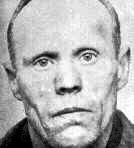
Albert Edward Matheson
Murderer Harry Maurice Roberts
Murderer · United Kingdom · 1966
Name: Harry Maurice Roberts Birth year: 1936 Birthplace: Kennington, London, En…
3 victims
Harry Maurice Roberts
Murderer · United Kingdom · 1966
Name: Harry Maurice Roberts Birth year: 1936 Birthplace: Kennington, London, En…
3 victims
 Albert Goozee
Murderer · United Kingdom · 1956
Albert William Goozee was a British murderer and paedophile. His crimes inspire…
2 victims
Albert Goozee
Murderer · United Kingdom · 1956
Albert William Goozee was a British murderer and paedophile. His crimes inspire…
2 victims
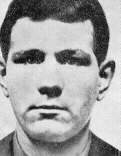 Alfred Charles Whiteway
Murderer · United Kingdom · 1953
Alfred Charles Whiteway was a serial rapist. Both girls had very deep stab woun…
2 victims
Alfred Charles Whiteway
Murderer · United Kingdom · 1953
Alfred Charles Whiteway was a serial rapist. Both girls had very deep stab woun…
2 victims
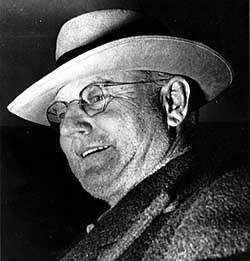 Alfred Cline
Serial killer? · USA · 1930
Alfred Cline was an American “Bluebeard” who was linked with at least nine homi…
9 victims
Alfred Cline
Serial killer? · USA · 1930
Alfred Cline was an American “Bluebeard” who was linked with at least nine homi…
9 victims
 John Justin Bunting
Serial killer · Australia · 1992
John Justin Bunting (born 4 September 1966 in Inala, Queensland) was an Austral…
11 victims
John Justin Bunting
Serial killer · Australia · 1992
John Justin Bunting (born 4 September 1966 in Inala, Queensland) was an Austral…
11 victims
 Dominique Cottrez
Infanticide · France · 1989
Dominique Cottrez was a French woman aged 45. She was described as a nursing as…
8 victims
Dominique Cottrez
Infanticide · France · 1989
Dominique Cottrez was a French woman aged 45. She was described as a nursing as…
8 victims
 Patrick Burris
Spree killer · USA · 2009
Patrick Tracy Burris (August 8, 1967 – July 6, 2009) was an American spree kill…
5 victims
Patrick Burris
Spree killer · USA · 2009
Patrick Tracy Burris (August 8, 1967 – July 6, 2009) was an American spree kill…
5 victims
 John Maden
Murderer · United Kingdom · 2010
John Maden was convicted after pleading guilty to the rape and murder of his si…
1 victim
John Maden
Murderer · United Kingdom · 2010
John Maden was convicted after pleading guilty to the rape and murder of his si…
1 victim
- Gender
- male
- Country
- United Kingdom
- Location
- Newcastle, Tyne and Wear, England, United Kingdom
- Date of birth
- 1905
- Age at first offence
- 52
- Characteristics
- rape, mutilation
- Victim profile
- Gordon Lockhart, 15
- Method of murder
- Beating with a bottle and a hammer
- Date(s) of murder
- November 18, 1957
- Years active
- 1957
- Date of arrest
- 5 days after (surrenders)
- Status
-
Life imprisonment
Sentenced to death on January 30, 1958; commuted to life imprisonment (diminished responsibility defence Manchester Guardian January 31, 1958)
Case record: Albert Edward Matheson
Background
Albert Edward Matheson was employed as a handyman at a hall in Newcastle, where the mutilated body of a boy was found.
The boy was Gordon Lockhart, aged 15. His mutilated body was found in a sump under the boxing ring of the hall in Newcastle.
Matheson had formed an unnatural association with Gordon Lockhart. He was described as a sexual pervert.
The offence
On January 30, Matheson was found guilty of the capital murder of Gordon Lockhart, aged 15.
The charge was capital murder on the basis that it was committed in furtherance of theft.
Matheson told the police that he had taken £35 in a registered envelope out of the boy's pocket and that was why he had killed him.
Investigation
The police were told by Matheson that he had taken £35 in a registered envelope from the boy’s pocket and that it was why he had killed him.
Trial
Matheson was tried after being charged with capital murder.
Defence
The defence argued that although Matheson was not insane in the normal sense—he knew right from wrong—he suffered from abnormality of mind such as to diminish his responsibility for what he had done. The defence therefore argued that he ought to have been convicted of manslaughter rather than murder.
The central question was whether Matheson’s mentality was so abnormal, due to arrested or retarded development or disease, that he was not mentally responsible for what he had done.
Medical evidence
Dr. Ian Pickering, senior medical officer of Durham Prison, gave evidence that Matheson was diagnosed as a psychopathic personality in 1943. Dr. Pickering also gave evidence that between 1935 and 1943 Matheson had been much given to self-injury, and that he had been a voluntary patient in a mental hospital in September, 1957.
Dr. Pickering testified that Matheson’s mental age was less than that of a boy of 10. In Dr. Pickering’s view, Matheson’s mental abnormality was at the time of the act to an extent which substantially interfered with his responsibility, and that his idea of right and wrong was very elementary.
Dr. Robert Orton, consultant psychiatrist at the Royal Victoria Infirmary, Newcastle, agreed with Dr. Pickering’s view.
Dr. Thomas Cuthbert, consultant psychiatrist to the Newcastle Hospitals Board, added that Matheson had no feeling of remorse or of having done wrong, and that the question of right or wrong hardly ever entered his mind.
Judge’s direction
In summing up, the judge, after dealing with the background of the case, directed the jury that if they were satisfied that Matheson was suffering from abnormality of the mind which substantially impaired his mental responsibility, the only verdict open to them was manslaughter.
The judge stated that sexual perversion was not an abnormality of the mind, but an abnormality of morals.
Verdict
After an absence of 65 minutes, the jury returned a verdict of capital murder.
Sentencing
Following the verdict of capital murder, the judge sentenced Matheson to death.
Appeals
The diminished responsibility defence was linked with a Manchester Guardian report dated January 31, 1958, in which the outcome of the case was described as diminished responsibility.
Outcome
Matheson’s death sentence was commuted to life imprisonment.
Aftermath
The commutation to life imprisonment was associated with the diminished responsability defence in the Manchester Guardian report dated January 31, 1958.


Spotted an error, or have more information about this case?