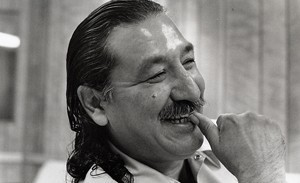
Leonard Peltier
Murderer Ervil LeBaron
Murderer · USA · 1972
Ervil Morrell LeBaron (1925 to August 16, 1981) was the leader of a polygamous…
35 victims
Ervil LeBaron
Murderer · USA · 1972
Ervil Morrell LeBaron (1925 to August 16, 1981) was the leader of a polygamous…
35 victims
 Brian Kevin Rosenfeld
Murderer · USA · 1985
Brian Kevin Rosenfeld Brian Kevin Rosenfeld was sentenced to three concurrent l…
23 victims
Brian Kevin Rosenfeld
Murderer · USA · 1985
Brian Kevin Rosenfeld Brian Kevin Rosenfeld was sentenced to three concurrent l…
23 victims
 Marvin Gray
Murderer · USA · 1975
Marvin Gray was convicted killer who claimed responsibility for 23 slayings and…
23 victims
Marvin Gray
Murderer · USA · 1975
Marvin Gray was convicted killer who claimed responsibility for 23 slayings and…
23 victims
 Yahweh ben Yahweh
Murderer · USA · 1980
Yahweh ben Yahweh was born and legally named Hulon Mitchell Jr. (October 27, 19…
23 victims
Yahweh ben Yahweh
Murderer · USA · 1980
Yahweh ben Yahweh was born and legally named Hulon Mitchell Jr. (October 27, 19…
23 victims
 Jeffrey Dillingham
Murderer · USA · 1992
Jeffrey Dillingham was executed by lethal injection in Texas on November 1, 200…
1 victim
Jeffrey Dillingham
Murderer · USA · 1992
Jeffrey Dillingham was executed by lethal injection in Texas on November 1, 200…
1 victim
 Maurice Boucher
Murderer · Canada · 1997
Maurice "Mom" Boucher (born June 21, 1953) was a convicted murderer, a reputed…
2 victims
Maurice Boucher
Murderer · Canada · 1997
Maurice "Mom" Boucher (born June 21, 1953) was a convicted murderer, a reputed…
2 victims
 Jess James Gillies
Murderer · USA · 1981
Defendant: Jess James Gillies (38) · Co-defendant/friend: Mike Logan · Victim:…
1 victim
Jess James Gillies
Murderer · USA · 1981
Defendant: Jess James Gillies (38) · Co-defendant/friend: Mike Logan · Victim:…
1 victim
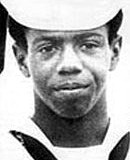 Mark Essex
Spree killer · USA · 1973
Mark James Robert Essex was a Navy veteran who engaged in a shooting and arson…
9 victims
Mark Essex
Spree killer · USA · 1973
Mark James Robert Essex was a Navy veteran who engaged in a shooting and arson…
9 victims
- Gender
- male
- Country
- USA
- Location
- Pine Ridge, South Dakota, USA
- Date of birth
- September 12, 1944
- Age at first offence
- 31
- Characteristics
- armed robbery, fugitive
- Victim profile
- Ronald A. Williams, and Jack R. Coler ( FBI Special Agents )
- Method of murder
- Shooting
- Date(s) of murder
- June 26, 1975
- Years active
- 1975
- Date of arrest
- February 6, 1976
- Status
-
Life imprisonment
Sentenced to two consecutive terms of life imprisonment on June 2, 1977
Case overview
Leonard Peltier was born September 12, 1944. He was a Native American activist and a member of the American Indian Movement (AIM). In 1977, he was convicted of the murders of FBI Special Agents Ronald A. Williams and Jack R. Coler, who died during a 1975 shoot-out on the Pine Ridge Indian Reservation. He was sentenced to two consecutive terms of life imprisonment on June 2, 1977.
Peltier was incarcerated at the United States Penitentiary, Lewisburg, Pennsylvania. His projected release date was October 11, 2040.
Timeline
- June 26, 1975 — FBI Special Agents Williams and Coler were allegedly searching for a young Pine Ridge man named Jimmy Eagle, wanted for questioning in connection with the recent assault and robbery of two local ranch hands; Peltier was a fugitive at the time and came under high-powered rifle fire during the incident at Jumping Bull Ranch.
- September 5, 1975 — Agent Williams' handgun, and shells from both Agents' handguns, were found in a vehicle near a residence where Dino Butler was arrested.
- September 9, 1975 — Peltier purchased a Plymouth station wagon in Denver, Colorado.
- September 10, 1975 — A station wagon blew up on the Kansas Turnpike near Wichita; a burned-up AR-15 was recovered, along with Agent Coler's .308 rifle.
- September 10, 1975 — After a vehicle stopped based on FBI descriptions, Peltier escaped on foot following a brief exchange of gunfire; authorities later identified the driver as Peltier.
- December 22, 1975 — Peltier became the 335th person named by the FBI to the Ten Most Wanted Fugitives list.
- February 6, 1976 — Peltier was apprehended by the Royal Canadian Mounted Police (RCMP) in Hinton, Alberta, Canada; he was not armed at the time of his arrest.
- April 16, 1977 — A jury returned verdicts finding Peltier guilty of first degree murder as to Count 1 (Ronald A. Williams) and Count 2 (Jack R. Coler).
- June 2, 1977 — The court sentenced Peltier to two consecutive terms of life imprisonment.
- July 1993 — The 8th Circuit Court of Appeals reaffirmed Peltier's conviction.
- January 13, 2009 — Peltier was severely beaten by fellow inmates following his transfer from USP Lewisburg to the United States Penitentiary, Canaan; he was sent back to Lewisburg after the assault.
- July 28, 2009 — Peltier was granted a full hearing before the United States Parole Commission.
- August 21, 2009 — US Attorney Drew Wrigley announced that Peltier’s parole request had been denied.
- February 27, 2006 — A U.S. District Judge ruled that the FBI did not have to hand over five of 812 documents relating to Peltier held at the FBI’s Buffalo field office, exempting them on the grounds of “national security and FBI agent/informant protection.”
Background
Early life and family
Peltier was the eleventh of thirteen children to Leo Peltier and Alvina Robideau. His father was three-fourths Chippewa and one-quarter French, and his mother had a Dakota Sioux mother and a Chippewa father. His parents divorced when he was four years old. At this time, Leonard and his sister Betty Ann went to live with his paternal grandparents Alex and Mary Dubois-Peltier in the Turtle Mountain Indian Reservation near Belcourt, North Dakota.
In September 1953, he was enrolled at the Wahpeton Indian School in Wahpeton, North Dakota, a boarding school run by the Bureau of Indian Affairs (BIA). He graduated in May 1957 and attended the Flandreau Indian School in Flandreau, South Dakota. However, he dropped out in the ninth grade and returned to the Turtle Mountain Reservation to live with his father.
Work and activism
In 1965, Peltier relocated to Seattle, Washington. He worked for several years as the owner of an auto body station. He became involved in causes championing Native American rights and eventually joined AIM. As a member of AIM, he became involved in factional difficulties on the Pine Ridge Indian Reservation in South Dakota between tribal chairman Dick Wilson and his supporters and traditionalist members.
Wilson had created a private militia called Guardians of the Oglala Nation (GOON), which was reputed to have been involved in violence on the reservation. The actions of Wilson and the GOONs were partly responsible for the takeover at Wounded Knee in 1973, in which AIM and others demanded the resignation of Wilson. The takeover did not end Wilson's leadership, the actions of the GOONs, or the violence; there were at least 60 murders reported on Pine Ridge between 1973 and 1975. Peltier's journey to Pine Ridge as a member of AIM was in response to the continued violence on the reservation.
The offence
Shoot-out at Jumping Bull Ranch and deaths of agents
On June 26, 1975, Special Agents Williams and Coler were allegedly searching for a young Pine Ridge man named Jimmy Eagle, wanted for questioning in connection with the recent assault and robbery of two local ranch hands, where it was believed that he had stolen a pair of cowboy boots. Williams and Coler observed and approached a vehicle matching the description of a truck Eagle was said to have been in several days earlier.
At the time, Peltier was a fugitive, with a warrant issued in Milwaukee charging unlawful flight to avoid prosecution for the attempted murder of an off-duty Milwaukee police officer; he was later acquitted. Williams radioed that he and Coler had come under high-powered rifle fire from the occupants of the vehicle and were unable to return fire to any effect with their .38 pistols and shotguns.
FBI Special Agent Gary Adams was the first to respond to Williams' call for assistance and also came under intense gun fire from Jumping Bull Ranch. Much of the afternoon was spent pinned down on Highway 18 while the FBI, the Bureau of Indian Affairs (BIA), and local police waited for other law enforcement officers to launch a flanking attack.
At 2:30 p.m., a BIA rifleman in the flanking group got a bead on one of the shooters, Joe Stuntz, and killed him. At 4:30 p.m., authorities recovered the bodies of Williams and Coler at their vehicle. At 6 p.m., authorities laid down a cloud of tear gas and stormed the Jumping Bull houses, finding Stuntz's corpse clad in Coler's green FBI field jacket.
The others, authorities later reported, had slipped away from the compound after Stuntz's death, to cross White Clay Creek and hide in a culvert beneath a dirt road. With police focused on the storming of Jumping Bull, the group made a break for the southern hills. In the following days, they split into smaller groups and scattered across the country, setting off a nationwide manhunt lasting eight months.
The FBI reported that Williams had received a defensive wound from a bullet which passed through his right hand into his head, killing him instantly. Coler, incapacitated from earlier bullet wounds, had been shot twice in the head execution style. In total 125 bullet holes were found in the agents' vehicles, many from a .223 (5.56 mm) rifle. The FBI investigation concluded the agents were killed at close range by the same .223 caliber rifle.
Investigation and arrest
Manhunt and evidence
On September 5, 1975, Agent Williams' handgun and shells from both Agents' handguns were found in a vehicle near a residence where Dino Butler was arrested.
On September 9, 1975, Peltier purchased a Plymouth station wagon in Denver, Colorado. The FBI sent out descriptions of a Plymouth station wagon and a recreational vehicle (RV) in which Peltier and associates were believed to be traveling.
An Oregon State Trooper stopped the vehicles based on the descriptions and ordered the driver of the RV to exit, but after a brief exchange of gunfire, Peltier escaped on foot. Authorities later identified the driver as Peltier. Agent Coler's handgun was found in a bag under the front seat of the RV, where authorities reported also finding Peltier's thumbprint.
On September 10, 1975, a station wagon blew up on the Kansas Turnpike near Wichita. A burned-up AR-15 was recovered, along with Agent Coler's .308 rifle. The car was loaded with weapons and explosives which were apparently accidentally ignited when placed too close to a hole in the exhaust pipe. Present in the car among others were Robert Robideau, Norman Charles, and Michael Anderson, said to be associates of Peltier.
On December 22, 1975, Peltier became the 335th person named by the FBI to the Ten Most Wanted Fugitives list.
Canada and apprehension
Peltier fled to Hinton, Alberta, Canada, where he hid out at a friend's cabin. He was eventually apprehended by the Royal Canadian Mounted Police (RCMP) on February 6, 1976. Peltier fought extradition to the United States. He arrived too late to be tried with Robideau and Butler and was tried separately.
Peltier was not armed at the time of his arrest.
Trial
Separate trials of other AIM members
Bob Robideau and Darelle “Dino” Butler were AIM members present on the Jumping Bull compound at the time of the shootings. They were originally charged with the FBI agents' murder and were tried separately in 1976. They were acquitted on the grounds of self-defense by a federal jury in Cedar Rapids, Iowa. They admitted being present during the gunfight.
Jury verdict
Peltier’s trial was held in the United States District Court for the District of North Dakota in Fargo, North Dakota. A jury convicted Peltier of the murders of Coler and Williams. The jury verdict proceedings included verbatim statements and polling of jurors.
The jury returned verdicts after receiving a written note signed by Mr. Dallas Rossow, Foreman, which read:
The jury has reached a verdict and is ready to deliver it.
Mr. Nelson, will you take the verdict?
The clerk read the verdicts:
As to Count 1, Ronald A. Williams, the jury finds the Defendant guilty of first degree murder.
As to the killing of Jack R. Coler, Count 2, the jury finds the Defendant guilty of first degree murder.
The jury foreman signed the verdict:
Dated this 18th day of April, 1977.
Signed, Dallas Rossow, Foreman.
The clerk then polled the jury. Each named juror confirmed the verdict:
- Dallas Rossow
- Mrs. Peter Reiland
- Mrs. Clayton Hokanson
- Arlene Josal
- Ida Mickelson
- June Kopp
- Gerald P. Bommersbach
- Victoria Haaland
- Shirley Klocke
- Ralph McKay
- Mrs. Irene Hoggarth
- Mrs. Beverly Nielsen
The clerk stated the verdict was unanimous.
Alleged trial irregularities (disputed by the FBI)
There was debate over Peltier’s guilt and the fairness of his trial. Several allegations were made by Peltier’s supporters which were disputed by the FBI, including the following:
- An FBI agent who testified that the agents followed a pickup truck onto the scene is alleged to have later changed his account to describe a red and white van, a vehicle type which Peltier did drive.
- As the FBI did not record radio communications in 1975, an unresolved discrepancy existed between Agents as to whether Williams said he was pursuing a “red and white truck” or “pickup truck.”
- Several teenaged Native American witnesses testified they saw Peltier approach the slain officers' vehicle, but they later alleged the FBI had threatened and forced them to testify. The FBI answered that witness testimony was not necessary for conviction.
- An FBI ballistics expert testified that a shell casing found near the dead agents' bodies matched the gun tied to Peltier. Critics argued that an FBI teletype stating the firing pin of the recovered weapon did not match the shell casings proved that Peltier’s weapon was not the murder weapon.
- It was counter-argued in testimony by the FBI that although firing pin marks did not match those on the casing, the firing pin had probably been replaced after the murders, and marks made by the rifle’s extractor were an exact match to the recovered weapon.
Verdict and convictions
Peltier was convicted of the offense of first degree murder as charged in Count 1 and Count 2 of the indictment in violation of Title 18, United States Code, Section 2 — Section 1111 and Section 1114. The court adjudged Peltier committed to the custody of the Attorney General of the United States for imprisonment for life on Count 1 and for life on Count 2 with the sentence on Count 2 to run consecutively to the sentence on Count 1.
Sentencing
Court statement and Peltier’s remarks
Peltier was sentenced on June 2, 1977 in proceedings identified as: C77-3003, United States of America versus Leonard Peltier.
Verbatim exchange included in the sentencing statement:
THE COURT: C77-3003, United States of America versus Leonard Peltier. Defendant and counsel, please come forward. Mr. Peltier, do you know of any reason why sentence should not be passed in your case at this time?
DEFENDANT PELTIER: No legal reason, no.
THE COURT: Mr. Taikeff, do you know of any reason why sentence should not be passed in this case at this time?
MR. TAIKEFF: No, your Honor, I do not.
THE COURT: Mr. Peltier, do you desire to make a statement in your own behalf or present any information to the Court which the Court might consider in mitigation of punishment in your case?
DEFENDANT PELTIER: Yes I do. Judge Benson, there is no doubt in my mind or my people's you are going to sentence me to two consecutive life terms. You are and have always been prejudiced against me and any native Americans who have stood before you. You have openly favored the Government all through this trial, and you are happy to do whatever the FBI would want you to do in this case. I did not always believe this to be so. When I first {3} saw you in the courtroom in Sioux Falls, your dignified appearance misled me into thinking that you were a fair minded person who knew something of the law and who would act in accordance with the law which meant that you would be impartial and not favor one side or the other in this lawsuit. That has not been the case, and I now firmly believe you will impose consecutive life terms solely because that's what you think will waive the displeasures of the FBI. Yet my people nor myself do not know why you would be so concerned about an organization that has brought so much shame to the American people, but you are. Your conduct during this trial leaves no doubt, that you will do the bidding of the FBI without any hesitation. You are about to perform an act which will close one more chapter in the history of the failure of the United States Courts and the failure of the people of the United States to do justice in the case of a native American. After centuries of murder, of murder of millions of my people, brothers and sisters, by the white race of America could I have been wise in thinking that you would break that tradition and, commit an act of Justice? Obviously not, because I should have realized that what I detected was only a very thin layer of dignity and surely of not fine character. {4} If you think my accusations have been harsh and, unfounded, I will explain why I have reached this conclusion and why I think my criticism has not been harsh enough. First, each time my defense team tried to expose FBI misconduct in their investigation of this lawsuit and tried to prevent evidence of this, you claimed it was irrelevant to this trial, but the prosecution was allowed to present their case with evidence that was in no way relevant to this lawsuit. For an example, an automobile blown up on a freeway in Wichita, Kansas; an attempted murder in Milwaukee, Wisconsin, which I have not been found guilty or innocent of; a van loaded with legally sold firearms; and a policeman who claimed someone fired at him in Oregon state. The Supreme Court of the United States tried to prevent convictions of this sort by passing into law that only past convictions may be presented as evidence if it is not prejudicial to the lawsuit and only evidence of the said case may be used. This Court was very wrong. I have no prior convictions nor am I even charged with some of these alleged, crimes. Therefore, they cannot be used as evidence in order to receive a conviction in this farce called a trial. This is why I strongly believe you will impose two {5} life terms running consecutive on me. Second, you could not make a reasonable decision about my sentence because you suffer from at least one of three defects that prevent a rational conclusion. You plainly demonstrated this in your decision about the Jimmy Eagle, and Myrtle Poorbear aspects of this case. In Jimmy's case, for some unfounded reason that only a Judge who constantly and openly ignores the law, would call it irrelevant to my trial. In the mental torture of Myrtle Poorbear you said the testimony would shock the conscience of the jury and the American people if believed, but you decided what was to be believed and what was not to be believed, not the jury. Your conduct shocks the conscience of what the American legal system stands for -- the search for the truth by a jury of citizens. What was it that made you afraid to let that testimony in -- your own guilt of being part of a corrupted pre-planned trial to get a conviction, no matter how your reputation would be tarnished? For these reasons I strongly believe you will do the the bidding of the FBI and give me two consecutive life terms. Third, in my opinion anyone who failed to see the relationship between the undisputed facts of these events surrounding the investigation used by the FBI in their {6} interrogation of the Navajo youths -- Wilfred Draper who was tied to a chair for three hours and denied access to his attorney or the outright threats to Norman Brown's life, the bodily harm threatened to Mike Anderson, and finally the murder of Anna Mae Aquash -- must be blind, stupid or without human feeling, so there is no doubt or little chance that you have the ability to avoid doing today what the FBI wants you to do which is to sentence me to two life terms running consecutively. Fourth, you do not have the ability to see that the conviction of an AIM activist helps to cover up what the Government's own evidence showed, that large numbers of Indian people engaged in that fire fight on June 26th, 1975. You do not have the ability to see that the Government must suppress the fact that there is a growing anger amongst Indian people and that native Americans will resist any further encroachment by the military forces of the capitalist Americans which is evidenced by the large number of Pine Ridge residents who took up arms on June 26th, 1975, to defend themselves. Therefore, you do not have the ability to carry out your responsibilities towards me in an impartial way and will run my two life terms consecutively. Fifth, I stand before you as a proud man. I feel no guilt. I have done nothing to feel guilty about. I have {7} no regrets of being a native American activist. Thousands of people in the United states, Canada and around the world, have and will continue to support me to expose the injustice that occurred in this courtroom. I do feel pity for your people that they must live under such a ugly system. Under your system you are taught greed, racism and corruption, and the most serious of all, the destruction of our mother earth. Under the native American system we are taught all people are brothers and sisters, to share the wealth with the poor and needy; but the most important of all is to respect and preserve the earth, to me considered to be our mother. We feed from her breast. Our mother gives us life at birth; and when it is time to leave this world, she again takes us back into her womb; but the main thing we are taught is to preserve her for our children and grandchildren because they are next who will live upon her. No, I am not the guilty one here and should be called a criminal. The white race of America is the criminal for the destruction of our lands and my people. To hide your guilt from the decent human beings in America and around the world, you will sentence me to two consecutive life terms without any hesitation. Sixth, there are less than four hundred Federal Judge for a population of over two hundred million Americans. {8} Therefore, you have a very powerful and important responsibility which should be carried out impartially, but you never have been impartial where I was concerned. You have the responsibility of protecting constitutional rights and laws; but where I was concerned you neglected to even consider my or native American's constitutional rights; but the most important of all you have neglected our human rights. If you were impartial, you would have had an open mind on all the factual disputes in this case; but you were unwilling to allow for even the slightest possibility that a law enforcement officer could lie on the stand. Then how could you possibly be impartial enough to let my lawyers prove how important it is to the FBI to convict a native American activist in this case? You do not have the ability to see that such a conviction is an important part of the efforts to discredit those who are trying to alert their brothers and sisters to a new trick from the white man, an attempt to destroy what little Indian land remains in the process of extracting our uranium, oil and other minerals. Again, to cover up your part in this, you will call me a heartless, cold-blooded murderer who deserves two life sentences consecutively. Seven, I cannot expect a Judge who has openly tolerated the conditions I have been jailed under to make an {9} impartial decision on whether I should be sentenced to concurrent or consecutive life terms. You have been made aware of the following conditions which I had to endure at the Grand Forks county jail since the time of the verdict. One, I was denied access to a phone to call my attorneys concerning my appeal. Two, I was locked in solitary confinement without shower facilities, soap, towels, sheets or pillow. Three, the food was uneatable, what little there was. Four, my family, brothers, sisters, mother and father who traveled long distance from the reservation were denied visitations. No human being should be subject to such treatment while you parade around and pretend to be a decent, impartial and law-abiding. You knowingly allowed your fascist Chief Deputy Marshal to play storm trooper. Again, the only conclusion that comes to my mind is you have, and always knew, you would sentence me to two consecutive life terms. Finally, I honestly believe that you made up your mind long ago that I was guilty and that you were going to sentence me to the maximum sentence permitted under the law, but this does not surprise me because you are a high-ranking member of the white racist American {10} establishment which has consistently said "In God we trust" while they went about the business of murdering my people and attempting to destroy our culture. The only thing I am guilty of and which I was convicted for was of being Chippewa and sioux blood and for believing our sacred religion. THE COURT: Mr. Taikeff, do you have any statement to make in the Defendant's behalf or any information to present to the Court? MR. TAIKEFF: I have nothing to add, your Honor. THE COURT: Mr. Peltier, you have seen the pre-sentence report in this case? DEFENDANT PELTIER: I have just glanced through it. THE COURT: Do you have any comments or questions regarding it? DEFENDANT PELTIER: I haven't read it. MR. TAIKEFF: Counsel did read it in advance, your Honor — THE COURT: (Interrupting) I beg your pardon? MR. TAIKEFF: Counsel did read it in advance of showing it to the Defendant. Counsel did not find anything seriously inaccurate about it.
THE COURT then stated the adjudication:
THE COURT: On the verdict of the jury, it is adjudged that the Defendant, Leonard Peltier, has been convicted of the offense of first degree murder as charged in Count 1 and Count 2 of the indictment in violation of Title 18, United states Code, Section 2 -- Section 1111 and Section 1114. It is further adjudged that the Defendant be committed to the custody of the Attorney General of the United States for imprisonment for life on Count 1. It is further adjudged that the Defendant, Leonard Peltier, be committed to the custody of the Attorney General of the United states for imprisonment for life on Count 2, the sentence on Count 2 to run consecutively to the sentence on Count 1.
The proceedings included statements made by the prosecutor about the penalty and an interruption by Peltier:
DEFENDANT PELTIER: (Interrupting) Who is going to pay for Anna Mae's death? It sure stinks. What do you want? Give me your best name. Who is going to pay for their deaths? You help me —
Appeals
After a series of appeals, the 8th Circuit Court of Appeals reaffirmed Peltier's conviction in July 1993.
Outcome
Peltier’s murder conviction survived appeals in various courts, and his conviction was described as having remained in effect after rulings that were not made in his favor.
Aftermath and later legal and parole developments
Parole
Peltier’s case was denied parole in 1994 following a parole hearing in 1993. A full hearing before the United States Parole Commission occurred on July 28, 2009. On August 21, 2009, US Attorney Drew Wrigley announced that Peltier’s parole request had been denied. His next scheduled hearing was to be in July 2024.
Civil rights lawsuit and dismissal
Peltier filed a civil rights lawsuit in the U.S. District Court for the District of Columbia against the FBI, Louis Freeh, and a long list of FBI agents alleging they “engaged in a systematic and officially sanctioned campaign of misinformation and disinformation.” On March 22, 2004, the suit was dismissed.
FBI documents litigation
On February 27, 2006, U.S. District Judge William Skretny ruled that the FBI did not have to hand over five of 812 documents relating to Peltier held at their Buffalo field office. He ruled those documents were exempted on the grounds of “national security and FBI agent/informant protection.” In the opinion, the judge wrote:
Plaintiff has not established the existence of bad faith or provided any evidence contradicting (the FBI's) claim that the release of these documents would endanger national security or would impair this country's relationship with a foreign government.
Michael Kuzma, a Buffalo lawyer and a member of Peltier's defense team, said:
We're appealing. It's incredible that it took him 254 days to render a decision.
Kuzma further stated:
The pages we were most intrigued about revolved around a teletype from Buffalo ... a three-page document that seems to indicate that a confidential source was being advised by the FBI not to engage in conduct that would compromise attorney-client privilege.
Legal action was taken by Peltier’s supporters in an attempt to secure more than 100,000 pages of documents from FBI field offices located throughout the United States.
Beating and transfer
On January 13, 2009, Peltier was severely beaten by fellow inmates following his transfer from USP Lewisburg to the United States Penitentiary, Canaan. He was sent back to Lewisburg after the assault.
Medical condition
Peltier suffered from a congenital problem with his jaw that had deteriorated during imprisonment. His jaw was reportedly frozen open at 13 millimetres and he had difficulty in eating, along with pain and discomfort. In 1996, he had two operations on his jaw at the US Medical Center for Federal Prisoners in Springfield, Missouri, which were not successful and his condition was alleged to have worsened.
His attorneys asked the federal Bureau of Prisons to allow further diagnostic tests so that an oral surgeon from the Mayo Clinic in Minnesota could review his medical history and decide if he was able to provide further treatment. Amnesty International wrote to the federal prison authorities in March 1999 asking for the records requested, and attorneys continued to pursue medical concerns.
Support, criticism, and related statements
Amnesty International statement
Amnesty International was concerned about the fairness of the proceedings leading to Peltier’s conviction and believed that political factors may have influenced the way the case was prosecuted. Amnesty International issued this statement:
Although he has not been adopted as a prisoner of conscience, there is concern about the fairness of the proceedings leading to his conviction and it is believed that political factors may have influenced the way the case was prosecuted.
Peltier was described as being in his twenty-second year of imprisonment at the time Amnesty International made its appeal for release.
Supporters
Support came from individuals and groups including Nelson Mandela, Rigoberta Menchú, Amnesty International, the U.N. High Commissioner on Human Rights, Tenzin Gyatso (the 14th Dalai Lama), the European Parliament, the Belgian Parliament, the Italian Parliament, the Kennedy Memorial Center for Human Rights, Archbishop Desmond Tutu, Coretta Scott King, and the Rev. Jesse Jackson. Peltier for President was described as a Peace and Freedom Party candidate in the 2004 Presidential race. His candidacy received 27,607 votes in California, about 0.2% of the vote in that state and about 0.02% of the nationwide vote.
Clemency petition and Presidential pardon discussion
Peltier’s lawyers filed a petition for a presidential pardon several years earlier, urging President Clinton to use his powers of pardon to commute the sentence. Amnesty International noted receiving replies since 1995 from the office of the Pardon Attorney stating that the petition for commutation of sentence or clemency was still under review.
Clinton did not grant Peltier clemency, despite rumors circulating near the end of President Bill Clinton’s presidency in 2000. A campaign against the possibility of clemency culminated in a protest outside the White House by about five hundred FBI agents and their families, and a letter opposing clemency from then FBI director Louis Freeh.
2007 political controversy involving David Geffen
In 2007, billionaire David Geffen, a Peltier supporter, detached his financial support for Hillary Clinton's presidential campaign and funded Barack Obama's campaign instead. Geffen admitted he switched his support because he became disillusioned by Bill Clinton’s refusal to pardon Peltier in circumstances where he pardoned Marc Rich, a billionaire felon and criminal. This caused an immense furor in the Clinton camp.
Related allegations and linked proceedings
The record included several allegations and linked events involving other AIM members and other cases around Anna Mae Pictou Aquash.
Aquash-related statements and witnesses
In the Looking Cloud trial, the prosecution argued that AIM's suspicion of Aquash stemmed from her having heard Peltier admit to the murders. The prosecution called Darlene “Kamook” Nichols, former wife of AIM leader Dennis Banks. Nichols testified that in late 1975 Peltier confessed to shooting the FBI agents to a group of AIM activists who were at that time on the run from law enforcement. Nichols alleged that Peltier said:
“The mother fucker was begging for his life, but I shot him anyway.”
Bernie Nichols-Lafferty also gave the same account of Peltier’s statement.
Other witnesses testified that once Aquash came under suspicion of being an informant, Peltier interrogated her while holding a gun to her head. The trio then planted bombs at two power plants on the Pine Ridge reservation after participating in bomb-making so that Aquash’s fingerprints would be on the bombs.
Peltier issued a statement on February 10, 2004:
“Kamook's testimony was like being stabbed in the heart while simultaneously being told your sister just died.”
Peltier denounced Kamook Nichols's courtroom accusations as false, saying:
“I loved Kamook as my own family. I can't believe the $43,000 the FBI gave her was a determining factor for her to perjure herself on the witness stand. There must have been some extreme threat the FBI or their cronies put upon her.”
Legal actions and settlements involving DeMain
Paul DeMain, described as a “News from Indian Country” publisher, wrote in 2003 that an “unnamed delegation” told him:
“Peltier was responsible for the close range execution of the agents...”
DeMain described the delegation as “grandfathers and grandmothers, AIM activists, Pipe Carriers and others who have carried a heavy unhealthy burden within them that has taken its toll.”
DeMain wrote in an early 2003 editorial that the motive for the execution-style murder of Anna Mae Pictou Aquash “allegedly was her knowledge that Leonard Peltier had shot the two agents, as he was convicted.” DeMain did not accuse Peltier of participation in the murder. In 2002, two other AIM members were indicted for the murder.
Peltier launched a libel lawsuit on May 1, 2003, against DeMain. On May 25, 2004, Peltier withdrew the suit after reaching a settlement in which DeMain issued a statement:
“…I do not believe that Leonard Peltier received a fair trial in connection with the murders of which he was convicted. Certainly he is entitled to one. Nor do I believe, according to the evidence and testimony I now have, that Mr. Peltier had any involvement in the death of Anna Mae Aquash.’’
DeMain did not retract his central allegation, and it remained that the murderers' motive for killing Aquash was the fear that she might inform on Peltier.
Aquash trial and extradition
In February 2004, Fritz Arlo Looking Cloud was tried for the murder of Anna Mae Pictou Aquash and found guilty. On June 26, 2007, the Supreme Court of British Columbia ordered the extradition of John Graham to the United States to stand trial for his alleged role in the murder of Annie Mae Aquash.
Witness payments and other participants
During Looking Cloud's trial, Nichols acknowledged receiving $42,000 dollars from the FBI related to her cooperation, which she explained was compensation for expenses traveling to collect evidence by wearing a wire while visiting her ex-husband, Dennis Banks, and that some money was for moving expenses due to fear of Banks.
Bruce Ellison, described as Leonard Peltier’s lawyer since the 1970s, pled the fifth amendment against self-incrimination and refused to testify at grand jury hearings leading up to the Looking Cloud trial in 2003 or in the trial itself. During the trial, the federal prosecutor named Ellison as a co-conspirator in the Aquash case.
Witnesses stated Ellison participated in interrogating Annie Mae Aquash on Dec. 11, 1975, shortly before her murder.
After the Looking Cloud trial, Darlene Nichols married Robert Ecoffey, Director of the Bureau of Indian Affairs Office of Law Enforcement Services, who was described as instrumental in the investigation leading to Looking Cloud's conviction.
Other details
Parole scheduling and earlier parole hearing
The parole commission decided in 1993 that Peltier’s case would not be formally reviewed again for a further 15 years, setting the next parole hearing for December 2008. Interim hearings after that refused to reconsider parole denial on grounds that Peltier did not accept criminal responsibility for the murders of the two FBI agents. After one such hearing, the Commission acknowledged that:
“the prosecution has conceded the lack of any direct evidence that you personally participated in the executions of the two FBI agents ...”
Extradition and associated acquittals
Peltier fought extradition to the United States, which backfired when Robideau and Butler were found not guilty on grounds of self-defense in Cedar Rapids, Iowa. Because Peltier arrived too late to be tried with them, he was tried separately.
References to “attempted murder” warrant
At the time of the 1975 shoot-out, Peltier was described as having a warrant issued in Milwaukee charging unlawful flight to avoid prosecution for the attempted murder of an off-duty Milwaukee police officer, from which he was later acquitted.
Defense counsel and appeal logistics at sentencing
The sentencing proceedings included a technical matter raised by Mr. Taikeff about a notice of appeal form and application for appeal in forma pauperis. The judge advised Peltier that he had the right of appeal and that if he were financially unable to pay the cost of the appeal, he could make application for appeal in forma pauperis.
Audience and additional interruptions during sentencing
The sentencing proceedings included additional voice interruptions:
- A voice from audience: “Same to you.”
- A voice from audience questioned: “What about the Gestapo tactics being used on the Pine Ridge residents? What do you call that?”
- A voice from audience: “What about Joe?“
These remarks were part of the verbatim sentencing proceedings.
“Beaten in Canaan” transfer context
Peltier’s transfer from USP Lewisburg to the United States Penitentiary, Canaan preceded the January 13, 2009 assault by fellow inmates, after which he was sent back to Lewisburg.
Prosecution described offenses at sentencing
The court stated that Peltier was convicted “as charged in the indictments of two counts of premeditated murder,” and that he was convicted and found guilty on each of those counts.
Spotted an error, or have more information about this case?