Valentino Pesenti
Homicide - Murderer Carl Brandt
Homicide - Murderer · USA · 1971
Carl “Charlie” Brandt · Jan. 3, 1971 — Carl Brandt killed his pregnant mother a…
6 victims
Carl Brandt
Homicide - Murderer · USA · 1971
Carl “Charlie” Brandt · Jan. 3, 1971 — Carl Brandt killed his pregnant mother a…
6 victims
 Richard Grissom
Homicide - Murderer · USA · 1966
Richard Grissom Jr. was sentenced to life in prison on November 20, 1990. In th…
4 victims
Richard Grissom
Homicide - Murderer · USA · 1966
Richard Grissom Jr. was sentenced to life in prison on November 20, 1990. In th…
4 victims
 Henry Brisbon
Homicide - Murderer · USA · 1973
Henry Brisbon was a juvenile (17) when he was convicted for double murder. The…
3 victims
Henry Brisbon
Homicide - Murderer · USA · 1973
Henry Brisbon was a juvenile (17) when he was convicted for double murder. The…
3 victims
 Abdullah Hameen
Homicide - Murderer · USA · 1980
Abdullah Hameen was executed by lethal injection in Delaware on May 25, 2001. H…
2 victims
Abdullah Hameen
Homicide - Murderer · USA · 1980
Abdullah Hameen was executed by lethal injection in Delaware on May 25, 2001. H…
2 victims
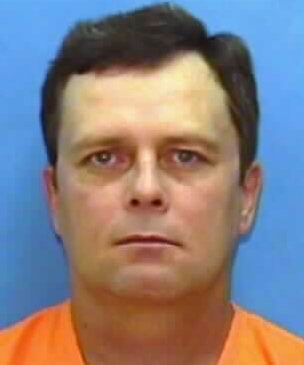 Dana Williamson
Homicide - Murderer · USA · 1975
Dana Williamson (born 09/18/59) was convicted and sentenced to death for the 11…
2 victims
Dana Williamson
Homicide - Murderer · USA · 1975
Dana Williamson (born 09/18/59) was convicted and sentenced to death for the 11…
2 victims
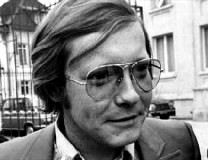 Patrick Henry
Murderer · France · 1976
Patrick Henry was born on March 31, 1953 in Troyes (France). He was described a…
1 victim
Patrick Henry
Murderer · France · 1976
Patrick Henry was born on March 31, 1953 in Troyes (France). He was described a…
1 victim
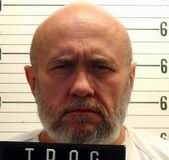 Edmund Zagorski
Murderer · USA · 1983
Edmund George Zagorski was convicted in 1984 of the first degree premeditated m…
2 victims
Edmund Zagorski
Murderer · USA · 1983
Edmund George Zagorski was convicted in 1984 of the first degree premeditated m…
2 victims
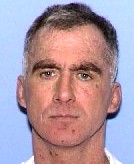 Tracy Lane Beatty
Murderer · USA · 2003
Tracy Lane Beatty was a White male born on 01/23/1961. He was 43 when he was re…
1 victim
Tracy Lane Beatty
Murderer · USA · 2003
Tracy Lane Beatty was a White male born on 01/23/1961. He was 43 when he was re…
1 victim
 Henry Eugene Hodges
Murderer · USA · 1989
Defendant: Henry Eugene Hodges (appellant) · Victim: Ronald A. Bassett (Nashvil…
3 victims
Henry Eugene Hodges
Murderer · USA · 1989
Defendant: Henry Eugene Hodges (appellant) · Victim: Ronald A. Bassett (Nashvil…
3 victims
- Gender
- male
- Country
- Italy
- Location
- Genoa, Italy
- Date of birth
- 1962
- Age at first offence
- 14
- Characteristics
- juvenile (14), rape, robbery
- Victim profile
- Giovanna Grattarola, 89 / Kuo Yuen Suo, 50 / Anna Maria Carrozzino, 67, and her daughter Maria Grazia Villa, 35
- Method of murder
- St abbing with knife - Beating with various objets - Shooting
- Date(s) of murder
- 1976 / 1991
- Years active
- 1976–1991
- Date of arrest
- —
- Status
-
Imprisoned
Sentenced to 30 years in prison on May 21, 1992
Case overview
Valentino Pesenti was a juvenile at the time of the 25 March 1976 killing of Giovanna Grattarola, the woman of companionship of the contessa Elisabetta Thellung. Between 1976 and 1991, he was linked to four killings and was arrested after the killings of a mother and daughter at their home in Bavari near Genova. He used a claw hammer and inflicted further injuries on the corpses with a razor.
Timeline
- 25 March 1976 — Valentino Pesenti, still a minor, killed Giovanna Grattarola, 89, the woman of companionship of the contessa Elisabetta Thellung.
- 26 March 1976 — A photograph showing the walls of the contessa’s home in Carignano, filled with blood stains, appeared in national newspapers.
- 31 August 1976 — Vera Doro reported to the carabinieri that her husband, Kuo Yuen Suo, had not returned home at the usual time.
- 1989 — Valentino Pesenti stayed for six months in an apartment owned by Anna Maria Carrozzino and Maria Grazia Villa.
- 17–18 January 1991 — Rosa called 113, reporting screams and gunshots from the apartment below; two women were killed in the following incident.
- 18 January 1991 — Two carabinieri found Valentino Pesenti on the road, his Fiat 500 had left the road with the two right wheels in a canaletto; he was taken as the suspect.
- 21 May 1992 — Valentino Pesenti was sentenced to 30 years in prison after a subsequent trial.
- June 2007 — The prison interview and commentary about Pesenti’s request for reforms promoting alternative rehabilitation measures was included.
Background
Valentino Pesenti was born in Genova in 1962 and had a troubled childhood, especially due to a poor relationship with his father.
The offence
Killing of Giovanna Grattarola (Carignano)
On 25 March 1976, Valentino Pesenti killed Giovanna Grattarola, 89, the woman of companionship of the contessa Elisabetta Thellung. The killing occurred in the contessa’s home in the Carignano neighborhood. Grattarola was killed with knives, sticks, and improvised tools found in the kitchen.
Killing of Kuo Yuen Suo (via Lomellini)
On 31 August 1976, Vera Doro called the carabinieri because her husband, Kuo Yuen Suo, did not return home at the usual time of 12:35. The delay occurred after he had closed his leather goods shop on via Lomellini. Carabinieri searched the rear workshop; Kuo Yuen Suo was found there covered with a plastic sheet with two 7.65 caliber bullets in his back. It was initially thought to be a robbery, even though the cash register and wallet were intact, or possibly a dispute connected with extortion rackets, but those lines were not confirmed.
The investigation included the possibility that a scippo involved the collana (necklace) and that a shop robbery or other motive might be involved. A person identified as Patrizio Saluzzi was initially accused of the homicide but was later cleared. The investigations did not find evidence of a “double life” or any supporting findings for an extortion racket, and the case later ended up in the police archive.
Killing of Anna Maria Carrozzino and Maria Grazia Villa (Bavari, via Villa)
In the night between 17 and 18 January 1991, Rosa called 113 and reported that she heard screams and gunshots from the apartment on the floor below while she was too frightened to intervene. She stated she heard incomprehensible voices, then silence, and footsteps of a man moving through the garden.
The victims were two women:
- Maria Grazia Villa, 35
- Anna Maria Carrozzino, 67
Anna Maria Carrozzino was surprised in bed, tied with an electric cable, and struck with a claw hammer and with numerous stab wounds. In the living room, Maria Grazia Villa was killed by stabbing and blows. The killing involved extensive blood at the scene.
The offender fled after killing the two women and took a handful of jewels and other small items from the home. Two carabinieri found Valentino Pesenti shortly afterward on the road in a Fiat 500, with the right wheels lodged in a canaletto, preventing the vehicle from moving.
Investigation
Call to 113 and scene description
Rosa reported that she heard shouts and gunshots coming from the apartment below and described being frightened. She said the man’s voice was incomprehensible and later she heard footsteps leaving through the garden. While the police inspected the scene, she told them she saw the man wearing a large striped scarf.
Evidence leading to Pesenti
When the two carabinieri stopped to help the man whose vehicle could not move, he was described as making a show of it and saying: “Aiutatemi! Non fa parte del vostro lavoro aiutare i cittadini in difficoltà ?”. The carabinieri decided he was likely intoxicated and attempted a search. The man wore the striped scarf described by Rosa, his trousers had large blood stains, and the jewels stolen from the Carrozzino home were behind the passenger seat.
Valentino Pesenti did not try to deny the situation and confessed immediately.
Confession and claimed motive
The confession included that Valentino Pesenti had stayed in the apartment of Anna Maria Carrozzino and Maria Grazia Villa for six months in 1989. He said Anna Maria Carrozzino had expelled him after discovering his relationship with her daughter. He then claimed that he stole a white Fiat 500 and returned to the home to take revenge, wearing his face covered. He said Anna Maria recognized him and that a murderous “raptus” began, adding: “Ho visto tutto rosso”.
The trial court and magistrates did not accept the “tutto rosso” account as credible. It emerged that there had never been a relationship between Pesenti and Villa. It was also stated that he confessed other killings beyond the Bavari case—two other cases that had remained unresolved and were in the prosecutor’s office in Genoa in a file archived for about fifteen years.
Additional alleged prior murders
In connection with his confession, Pesenti claimed involvement in other killings, including that of Giovanna Grattarola and that of Kuo Yuen Suo. The narrative included specific details about the Forensic and investigative interest in those earlier cases, including the earlier blood-stained photograph in 1976 and later re-opening of the cases together after his confession at age 14.
Arrest
Valentino Pesenti was found shortly after the Bavari killings. Two carabinieri found him on the road because his Fiat 500 had left the road and the two right wheels had ended up in a canaletto, immobilizing it. He shouted to the carabinieri: “Aiutatemi! The carabinieri searched him after noticing the striped scarf matching Rosa’s description, the blood-stained trousers, and the stolen jewels behind the passenger seat.
Valentino Pesenti was described as being around thirty years old at the time of arrest, and his criminal record was described as long, including furto, scippo, ricettazione, and omicidio, as well as mention of a tentato omicidio.
Trial
At trial for the Bavari double homicide, the court found Valentino Pesenti capable of understanding and willing the acts (capace di intendere e di volere). The court rejected his “tutto rosso” account as not credible.
Sentencing
On 21 May 1992, Valentino Pesenti was definitively convicted and sentenced to 30 years in prison. The prison sentence was described as “trenta anni di carcare.”
Appeals
No appeal information was included in the provided text.
Outcome
Valentino Pesenti was convicted and remained incarcerated.
Aftermath
Valentino Pesenti was incarcerated at Porto Azzurro prison and collaborated with the prison newspaper “La Grande Promessa,” run by inmates.
A request for reforms was mentioned: Pesenti asked for the introduction of reforms promoting rehabilitation measures alternative to the cell.
Other details
Valentino Pesenti was also referred to as “il mostro di Genova” (the “monster of Genova”). The text said four people were killed between 1976 and 1991 (due nel 1976 e due nel 1991), and it was suspected that he could have committed other murders as well.
A narrative thread described that in 1976 the photograph showing blood-stained walls in the home of the contessa Elisabetta Thellung, in the Carignano neighborhood, “ended up on all national newspapers” the day after the killing.
The account included the statement that the killing of Giovanna Grattarola for a gold chain and a clock involved violence with knives and sticks and improvised tools, and that investigators believed the massacre could not have been carried out by a single man.
It also described that after the 1976 killings, suspicions were directed toward clochards and others in the area, and that a figure described as an “impossible” suspect and later cleared was mentioned in relation to an alibi or suspected involvement.
The 1991 killing narrative described specific items stolen from the Carrozzino home and tied them to Pesenti at the time of arrest, including that he fled leaving blood and a trail along the path as the mother attempted a defensive attempt before reaching another room.

Spotted an error, or have more information about this case?