Bernard Pesquet
Serial killer Marcel Petiot
Serial killer · France · 1942
Marcel André Henri Félix Petiot was a French doctor. He was convicted of multip…
27 victims
Marcel Petiot
Serial killer · France · 1942
Marcel André Henri Félix Petiot was a French doctor. He was convicted of multip…
27 victims
 Eugen Weidmann
Serial killer · France · 1937
Eugen Weidmann was executed by guillotine in Versailles, outside the prison Sai…
6 victims
Eugen Weidmann
Serial killer · France · 1937
Eugen Weidmann was executed by guillotine in Versailles, outside the prison Sai…
6 victims
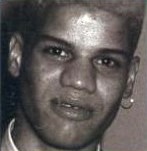 Thierry Paulin
Serial killer · France · 1984
Thierry Paulin was born in Fort-de-France, Martinique on November 28, 1963. His…
21 victims
Thierry Paulin
Serial killer · France · 1984
Thierry Paulin was born in Fort-de-France, Martinique on November 28, 1963. His…
21 victims
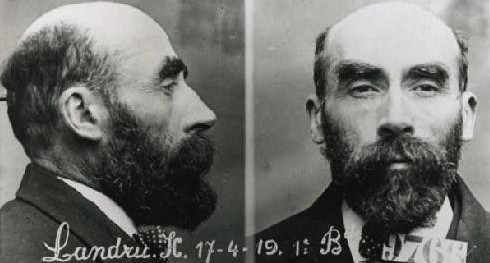 Henri Landru
Serial killer · France · 1915
Henri Désiré Landru (born April 12, 1869; died February 25, 1922) was a French…
11 victims
Henri Landru
Serial killer · France · 1915
Henri Désiré Landru (born April 12, 1869; died February 25, 1922) was a French…
11 victims
 Joseph Vacher
Serial killer · France · 1894
Joseph Vacher (November 16, 1869 – December 31, 1898) was a French serial kille…
11 victims
Joseph Vacher
Serial killer · France · 1894
Joseph Vacher (November 16, 1869 – December 31, 1898) was a French serial kille…
11 victims
 Francis Heaulme
Serial killer · France · 1984
Francis Heaulme was sentenced to several life sentences in different trials, 19…
9 victims
Francis Heaulme
Serial killer · France · 1984
Francis Heaulme was sentenced to several life sentences in different trials, 19…
9 victims
 Randy Garcia
Murderer · USA · 1993
Randy Garcia was a 37-year-old man. He wrote poetry while on death row. On May…
1 victim
Randy Garcia
Murderer · USA · 1993
Randy Garcia was a 37-year-old man. He wrote poetry while on death row. On May…
1 victim
 Rodney Gray
Murderer · USA · 1994
Rodney Gray was convicted of capital murder for killing Grace Blackwell, a 79-y…
1 victim
Rodney Gray
Murderer · USA · 1994
Rodney Gray was convicted of capital murder for killing Grace Blackwell, a 79-y…
1 victim
 Jason Oric Williams
Spree killer · USA · 1992
Jason Oric Williams was executed by lethal injection in Alabama on May 19, 2011…
4 victims
Jason Oric Williams
Spree killer · USA · 1992
Jason Oric Williams was executed by lethal injection in Alabama on May 19, 2011…
4 victims
 Awilda Lopez
Murderer · USA · 1995
Awilda Lopez was born on April 28, 1966. She was sentenced in relation to the b…
1 victim
Awilda Lopez
Murderer · USA · 1995
Awilda Lopez was born on April 28, 1966. She was sentenced in relation to the b…
1 victim
- Gender
- male
- Country
- France
- Location
- Rouen/Paris, France
- Date of birth
- 1922
- Age at first offence
- 19
- Characteristics
- robbery
- Victim profile
- Julien Quivel (his best friend) / Christiane Ruaux (his wife) / Henri Francqui, 68 / Emile, 73, and Elizia Bergaud, 63, and their maid, Alfia Borgioni Método de matar: Hitting with an iron bar / Shooting ( .38 calibre revolver)
- Method of murder
- —
- Date(s) of murder
- 1941 / 1974-1976
- Years active
- 1941–1976
- Date of arrest
- —
- Status
-
Life imprisonment
Sentenced to life imprisonment on October 8, 1982
Overview
Bernard Pesquet was a 19-year-old man in 1941 who was convicted of murdering his best friend, Julien Quivel, in German-occupied France. He later committed further killings involving Christiane Pesquet, Henri Francqui, and the Bergauds and their maid in multiple incidents between 1974 and 1976.
Timeline
- 1941 — Bernard Pesquet was convicted of murdering his best friend, Julien Quivel.
- 1961 — Bernard Pesquet was paroled.
- 1968 — Bernard Pesquet met and wed Christiane Ruaux.
- Nov. 24, 1974 — Christiane Pesquet disappeared with everything of value in the Pesquet home.
- April 30, 1976 — Henri Francqui vanished off the face of the earth.
- Two months later — A triple murder occurred in Neuilly-sur-Seine involving Emile and Elizia Bergaud and their maid Alfia Borgioni.
- Oct. 8, 1982 — Bernard Pesquet was found guilty of five counts of murder and sentenced to life imprisonment.
Background
Authorities were not buying Bernard Pesquet’s story. France was occupied by Germany in 1941 when Bernard Pesquet was convicted of murdering his best friend, Julien Quivel. Bernard admitted hitting Julien over the head with an iron bar but claimed that Julien was a German informant and that he had killed him to protect his country. The court did not accept that defence and preferred to believe that robbery was the motive. Bernard was found guilty and sentenced to life imprisonment.
Bernard served 21 years and was released from prison. He settled in the Paris suburb of Pierrelaye and was considered something of a celebrity by locals. Within a year, he built up a thriving painting and decorating business and earned respect of the townsfolk. He was also a valued member of the local chamber of commerce.
In 1968, Bernard met and wed Christiane Ruaux. The marriage appeared to be a happy one until Nov. 24, 1974, when Christiane disappeared with everything of value in the Pesquet home. She took several of Bernard’s suits, which gave people a chuckle because Bernard had the undersized body of a jockey.
After Christiane disappeared, life went on in Pierrelaye. On April 30, 1976, another incident occurred in the suburb when a local real estate agent, Henri Francqui, 68, vanished off the face of the earth. Nothing had been taken from his office or home. Francqui, who had lived alone, simply did not show up at his office and was never seen again.
The offence
1941 murder of Julien Quivel
Bernard Pesquet admitted hitting Julien Quivel over the head with an iron bar but claimed that Julien was a German informant and that he had killed him to protect his country. The court preferred to believe that robbery was the motive.
1974 disappearance of Christiane Pesquet
On Nov. 24, 1974, Christiane disappeared with everything of value in the Pesquet home. She took several of Bernard’s suits.
1976 disappearance of Henri Francqui
On April 30, 1976, Henri Francqui, 68, vanished off the face of the earth. He was never seen again.
Triple murder in Neuilly-sur-Seine
Two months later, in Neuilly-sur-Seine, a triple murder occurred. Emile and Elizia Bergaud were a wealthy couple who failed to keep a dinner engagement with their son-in-law. Emile was 73 years old and Elizia was 63. Together with their maid, Alfia Borgioni, they were found shot to death in their apartment.
Detectives found a sheet of plastic in the dining room that was caked with dried blood. The killer had found a hidden safe in the bathroom, opened it, and removed its contents. A lady’s purse lay open on the bedroom floor, and all cash had been removed.
While robbery appeared to be the logical motive, police figured the killer was an amateur. Police reasoned that a professional thief rarely kills and often does not carry a weapon.
An autopsy revealed that Mrs. Bergaud had been shot once in the head and twice in the back. Mr. Bergaud had been shot in the head and in the arm. The maid, Alfia Borgioni, had been strangled and then shot through the head while unconscious.
Ballistic testing indicated that all the shots had been fired from the same weapon, a .38 calibre revolver. Police figured that the blood bath had taken place to prevent the victims from identifying the robber.
Investigation
After analysing the scene of the crime and studying the trajectory of the bullets, it was ascertained that the man who fired the .38 was small in stature. The bullets had travelled at an upward angle. The safe, which had been well hidden in a bathroom closet, would probably not have been found by someone unless they knew where to look. The safe was described as a well constructed, complicated affair and could only be opened by someone who had knowledge of safes and was handy with tools.
It did not take long for the name Bernard Pesquet to surface. Men with a criminal record were checked first. Bernard was said to have been small and to have recently papered and painted the Bergauds’ apartment. It was therefore suggested he would know the location of the safe and what tools were required to open it.
Bernard was questioned. Initially, he denied all charges, claiming police persecution because of his criminal record dating back over 20 years. Search of his home uncovered Swiss, English and Belgian coins, as well as an American Express card made out to Emile Bergaud. Bernard attempted to bluff by claiming the money was his own savings. Regarding the American Express card, he said he had left a book of wallpaper samples with the Bergauds, that they must have dropped the card in the book, that he had found the card, and that he intended to return it.
Bernard’s story was within the realm of possibility, but he did not come up with a comparable explanation for a large quantity of evidence in his barn. Detectives found gold bars, Mrs. Bergaud’s jewellery, and the key to the Bergauds’ apartment. They also uncovered Christiane Pesquet’s driver’s license and an identification card belonging to Henri Francqui.
Bernard told interrogators that Christiane and Francqui had been lovers and had run off together, but no one believed the tale. Instead of questioning him further, police dug up his yard while Bernard was forced to watch. He did not flinch. When diggers discontinued their efforts, Bernard broke into a wide grin.
Police then concentrated their efforts on the basement of his house. Resigned to the consequences, Bernard stated matter of factly, “You may run across two bodies there.” The bodies were found.
Arrest
Bernard Pesquet was questioned during the investigation. After Bernard’s story was not accepted and evidence was found, police proceeded with searches including digging up his yard and concentrating efforts on the basement of his house while Bernard was present.
Trial
On Oct. 8, 1982, Bernard Pesquet was found guilty of five counts of murder.
In a later account of the investigation’s findings, Bernard told a different story about the killings. He claimed that he and Christiane had argued over her affair with Francqui and that she wanted money so she could take off with her lover. When he refused, she pulled out the .38, and during the ensuing struggle she was shot.
Regarding Francqui, Bernard claimed he had argued with him over Christiane and that Francqui pulled a gun on him. Bernard claimed he had no choice but to fire in self defense.
When informed of an inconsistency in his story—that both victims had been shot in the back—Bernard could only stare at the floor. He was not smiling any more.
Sentencing
On Oct. 8, 1982, Bernard Pesquet was sentenced to life imprisonment.
Regarding his earlier sentence, Bernard had been sentenced to life imprisonment in 1941 and served 21 years before parole in 1961. His status is also described as a life term, 1956 (paroled 1961), and then a life term, 1984.
Outcome
Bernard Pesquet was found guilty of five counts of murder on Oct. 8, 1982 and received a life imprisonment sentence.
The bodies uncovered included Christiane Pesquet and Henri Francqui. Autopsies and ballistics tests proved that both had been shot with the same weapon that had taken the lives of Emile and Elizia Bergaud and their maid, Alfia Borgioni.
Aftermath
After Christiane Pesquet disappeared on Nov. 24, 1974, local life continued in Pierrelaye, and people discussed later disappearances and murders. Bernard Pesquet later settled in Pierrelaye after his release and became involved in a painting and decorating business and the local chamber of commerce before the later murders linked to the same weapon.
Other details
- Bernard Pesquet was described as having the undersized body of a jockey.
- Detectives found a hidden safe in the bathroom of the Bergauds’ apartment; it was opened and its contents removed.
- Police found a sheet of plastic in the dining room that was caked with dried blood.
- Ballistic testing indicated that all shots were fired from the same weapon: a .38 calibre revolver.
- Police reasoned that the blood bath had taken place to prevent the victims from identifying the robber.
- Bernard Pesquet’s home search uncovered Swiss, English and Belgian coins and an American Express card made out to Emile Bergaud.
- Bernard told officers he had left a book of wallpaper samples with the Bergauds and that the American Express card must have been dropped into the book.
- Bergaud’s jewellery, and the key to the Bergauds’ apartment in Bernard Pesquet’s barn.
- Christiane Pesquet’s driver’s license and an identification card belonging to Henri Francqui were uncovered.
- Bernard’s quote to police before the basement bodies were found was: “You may run across two bodies there.”
Spotted an error, or have more information about this case?