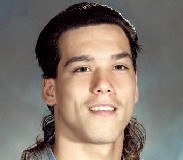
Michael Lee Perry
Homicide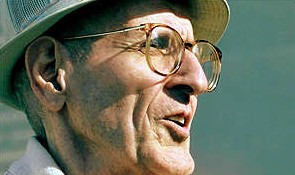 Jack Kevorkian
Homicide · USA · 1990
Jack Kevorkian (born May 26, 1928) was a controversial American pathologist. He…
130 victims
Jack Kevorkian
Homicide · USA · 1990
Jack Kevorkian (born May 26, 1928) was a controversial American pathologist. He…
130 victims
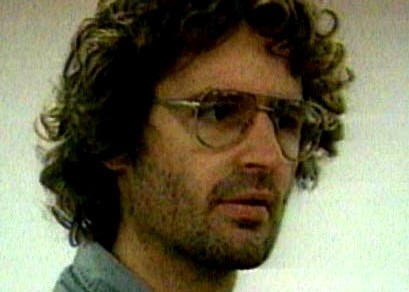 David Koresh
Homicide · USA · 1993
David Koresh (born Vernon Wayne Howell; August 17, 1959 – April 19, 1993) led t…
79 victims
David Koresh
Homicide · USA · 1993
David Koresh (born Vernon Wayne Howell; August 17, 1959 – April 19, 1993) led t…
79 victims
 Todd Hall
Homicide · USA · 1996
Todd Hall was described by neighbors as "mentally slow" and was said to have su…
9 victims
Todd Hall
Homicide · USA · 1996
Todd Hall was described by neighbors as "mentally slow" and was said to have su…
9 victims
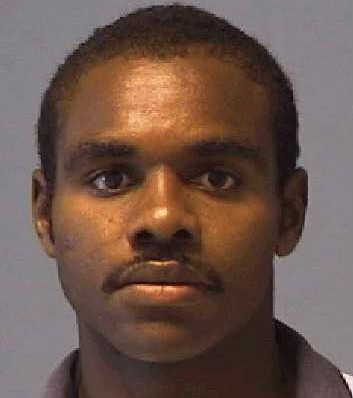 Clinton Bankston
Homicide · USA · 1987
15 August 1987 — Ann Morris (63), her sister Sally Nicholson (59), and Sally’s…
5 victims
Clinton Bankston
Homicide · USA · 1987
15 August 1987 — Ann Morris (63), her sister Sally Nicholson (59), and Sally’s…
5 victims
 Joshua Jenkins
Homicide · USA · 1996
Joshua Jenkins was a 15-year-old American killer who killed five members of his…
5 victims
Joshua Jenkins
Homicide · USA · 1996
Joshua Jenkins was a 15-year-old American killer who killed five members of his…
5 victims
 Odell Barnes
Murderer · USA · 1989
Defendant: Odell Barnes (also referred to as Odell Barnes Jr.) · Date of birth:…
1 victim
Odell Barnes
Murderer · USA · 1989
Defendant: Odell Barnes (also referred to as Odell Barnes Jr.) · Date of birth:…
1 victim
 Jeong Nan-Kyu
Serial killer · South Korea · 2004
January 2004 — Jeong Nam-gyu began a period of killings and assaults that would…
13 victims
Jeong Nan-Kyu
Serial killer · South Korea · 2004
January 2004 — Jeong Nam-gyu began a period of killings and assaults that would…
13 victims
 Arnfinn Nessett
Serial killer · Norway · 1980
Arnfinn Nesset was born October 25, 1936, in Norway. He was a Norwegian nurse a…
22 victims
Arnfinn Nessett
Serial killer · Norway · 1980
Arnfinn Nesset was born October 25, 1936, in Norway. He was a Norwegian nurse a…
22 victims
 Glenn Barker
Murderer · USA · 1982
Glenn Haslam Barker was a basketball coach for the South Brunswick Family YMCA.…
3 victims
Glenn Barker
Murderer · USA · 1982
Glenn Haslam Barker was a basketball coach for the South Brunswick Family YMCA.…
3 victims
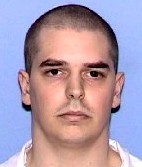 Sheldon Ward
Murderer · USA · 2002
Name: Sheldon Ward · TDCJ Number: 999454 · Date of birth: 09/20/1979 · Race: Wh…
1 victim
Sheldon Ward
Murderer · USA · 2002
Name: Sheldon Ward · TDCJ Number: 999454 · Date of birth: 09/20/1979 · Race: Wh…
1 victim
- Gender
- male
- Country
- USA
- Location
- Saginaw, Michigan, USA
- Date of birth
- October 4, 1973
- Age at first offence
- 17
- Characteristics
- juvenile (16), arson
- Victim profile
- Nicole Rollie, 11, LaRhonda Rollie, 9, and Isaak Rollie. 7
- Method of murder
- Smoke inhalation ( Molotov cocktail firebombs)
- Date(s) of murder
- June 14, 1990
- Years active
- 1990
- Date of arrest
- —
- Status
-
Life imprisonment
Sentenced to life in prison without the possibility of parole on June 27, 1991
Case identification
Michael Lee Perry
Timeline
- June 13-14, 1990 — Michael L. Perry and Jacinto (Jason) Ricco gathered at the Ricco home during underage drinking; Perry and Ricco left the house before the fire.
- June 14, 1990 — Molotov cocktails were thrown through living room windows of the Rollie family home at 1723 Jordan in Saginaw; three children died of smoke inhalation while parents and brother escaped by jumping from a second-floor window; Perry and Ricco returned and were heard arguing and disposing of evidence.
- August 1989 — Jacinto (Jason) Ricco stood outside the Rollie house yelling invective that included specific mention of a firebomb.
- February 1991 — Perry was tried again following a mistrial.
- On or about April 30, 1991 — Juvenile sentencing hearings included testimony from experts.
- June 20, 1991 — Additional juvenile sentencing hearings included testimony from experts.
- June 27, 1991 — The circuit court sentenced Perry as an adult to life in prison without the possibility of parole for the murder convictions and ten- to twenty-year sentences for attempted murder.
- 1992 — Perry obtained a General Education Development certificate.
- 2003 — Perry sent a letter to Saginaw County Circuit Judge Leopold Borrello that included a letter of apology he asked the judge to forward to the Rollie family; he later received only a brief response stating the judge could not locate the Rollie family.
- May (year referenced as “last year”) — Perry applied for a commutation; he was rejected 13 months later.
- May 2012 — Perry could reapply in May 2012.
Background
Michael L. Perry was sixteen years old when the Rollie murders and attempted murders were committed in June 1990.
Jacinto (Jason) Ricco was involved in starting the fire at the Rollie family home. Ricco had a history of taunting and threatening members of the Rollie family and, in August 1989, stood outside their house yelling invective that included specific mention of a firebomb. Ricco had an interest in such devices and acknowledged being in the vicinity of the Rollie house with the two Molotov cocktails at the time of the fire. There was tension between Ricco and the Rollie family for a number of years; Ricco lived in Saginaw, Michigan, with his mother and two sisters, Yolanda and Miriam Amanda Ricco. Jason Ricco threatened to kill some members of the Rollie household.
Perry and Ricco gathered at the Ricco home through the night of June 13-14 with adolescent friends and acquaintances of Ricco, including Perry. They engaged in recreational activities, including underage drinking, and were left overnight unsupervised by any adult.
Perry later stated he had been drinking the night of June 13 and into the morning of June 14 when he found himself at Rico’s home, and he said he “never communicated” with him despite having seen Rico one other time.
The offence
Fire at the Rollie home
Shortly before dawn on June 14, 1990, two Molotov cocktails were thrown through the living room windows of the Saginaw home of a family named Rollie at 1723 Jordan in Saginaw. Flames and smoke engulfed the house, and three young children died in the fire. The parents and one child survived by jumping from a second-floor window.
Michael L. Perry and Jacinto (Jason) Ricco left the Ricco house together after stating they were going out to “cause trouble.” When they ran back into the house a few minutes later, they stated they had set the Rollie house on fire by throwing a firebomb that Jason had lit and Perry had held and thrown.
Afterward, Perry and Ricco were arguing about the fire and were later heard arguing in a bathroom of the Ricco house; the toilet flushed several times. A swab taken inside the toilet bowl later revealed traces of the same type of fuel as the accelerant used to start the fire. There was discussion concerning disposal of the container in which the fuel had been stored.
Perry and Ricco were later seen near the burning house, watching the fire.
Victims
The three children who died were Nicole Rollie, 11; LaRhonda Rollie, 9; and Isaak Rollie, 7. The parents were Willie Rollie and Cynthia Rollie, and their older brother was Ryan Rollie. The three surviving family members (Willie and Cynthia Rollie and brother Ryan Rollie) survived by jumping from a second-floor window. A 13-year-old boy co-defendant, Jacinto (Jason) Ricco, was involved in starting the fire and had a history of threatening the victims’ 12-year-old brother Ryan.
Cause and contested participation
Perry and Ricco argued over whether the matches dropped by Ricco near the Rollie house should be retrieved, and they blamed each other for setting the fire. There was testimony that Perry said he threw the firebomb because Jason told him to throw it and that Jason said he did not think Perry would actually do it.
Ricco testified that Perry threw the devices into the Rollie home, using a towel to keep fingerprints off the bottles. Another witness told police that Perry made an admission after Perry and Ricco returned, but at trial the witness’ testimony was inconsistent about whether the witness heard an admission from Perry or an accusation from Ricco. Inspector Joseph Dziuban, an arson investigator for the Saginaw Fire Department working with the Saginaw Police, opined based on burn patterns, traces of accelerants, and the location of glass fragments that two firebombs had been thrown through two different living room windows, causing the conflagration. Ricco was tried in juvenile court and acquitted of murder but was found guilty only of arson.
Investigation
Prior threats and police involvement
Willie Rollie had reported threats to police four times. The threats included Ricco threatening to kill some members of the Rollie household and Ricco having yelled invective that included specific mention of a firebomb.
Evidence after the fire
After the fire, Perry and Ricco argued in a bathroom, where the toilet flushed several times. Traces of the type of fuel that had started the Rollie house fire were found in the toilet. There was also testimony and later investigation showing residue from a flammable substance in the toilet bowl.
Interview and admission quotations
Perry stated: “I don’t know,” he says to a reporter during a meeting in a parole board interview room inside the Saginaw Correctional Facility — a room where he never will have the chance to plead for freedom. “Truthfully, I don’t know.”
Perry also said: “We were out there with some bottles we had. One went in the house. It was both of us (who threw the bottles), but at first it was just me.”
Ricco turned and ran toward his home, and Perry heard “two wooshes or something, like you could tell something was exploding, kind of lighting on fire like something like that.”
Arrest and custody
Perry made it back to Rico’s house before Rico did, and Perry said he went back to his mother’s house, where he was arrested later.
He later stated he first realized prosecutors would attempt to charge him as an adult while he was listening to a radio broadcast in a Bay City juvenile detention center.
Perry was later serving life in prison without parole.
Trial
Charges
Perry was charged as an adult with:
- three counts of first-degree (felony) murder for killing three children in the Rollie family
- one count of burning a dwelling house (arson)
- three counts of attempting to murder the three surviving members of the Rollie family
Procedural history
Following a mistrial, Perry was tried again in February 1991. The Court of Appeals later affirmed the judgments, and leave to appeal was granted in the Michigan Supreme Court limited to whether the circuit court erred in denying the defense request for an instruction on accessory after the fact as a cognate lesser offense of murder.
Trial testimony and instructions
At the second trial, Perry did not testify or offer any proofs. His attorney argued Perry was not guilty, including: “We're denying any involvement in it period, paragraph.”
The court instructed the jury on the elements of the charged offenses, and on lesser offenses of second-degree murder and involuntary (gross negligence) manslaughter. The court told the jury it could find Perry guilty if he aided another in the commission of the crime, but the court refused defense counsel’s request for an instruction on the common-law offense of being an accessory after the fact.
Accomplice-instruction dispute
Perry argued on appeal that the trial court erred in failing to give the proper instruction concerning testimony of an undisputed accomplice. The trial court instructed the jury on a disputed accomplice rather than an undisputed accomplice and gave the following instructions concerning Jacinto [Jason] Ricco: “Before you may consider what Jacinto [Jason] Ricco said in court, you must decide whether he took part in the crime the defendant is charged with committing. Jacinto Ricco has not admitted taking part in the crime, but there is evidence to lead you to think that he did. A person who knowingly and willingly accepts or cooperates with someone else in committing the crime is called an accomplice. When you think about Jacinto Ricco's testimony, first decide if he was an accomplice. If, after thinking about all the evidence, you decide that he did not take part in this crime, Judge his testimony as you Judge that of any other witness. But if you decide that Jacinto Ricco was an accomplice, then you must consider his testimony in the following way:” The prosecutor later placed on the record an unsuccessful objection to these instructions.
Jury verdict
After deliberating for about 3.5 hours, a jury found Perry guilty of three counts each of first-degree murder and attempted murder and a single count of arson.
Sentencing
Adult sentencing after juvenile amenability hearing
Perry was sentenced as an adult. The circuit court held a statutory hearing and decided against juvenile disposition. The difference was described as whether Perry could be released within a range if sentenced as a juvenile, versus mandatory life without parole for first-degree murder.
The circuit court sentenced Perry as an adult, imposing life terms for murder and ten- to twenty-year sentences for attempted murder.
Court comments and considerations
Saginaw County Circuit Judge Leopold P. Borrello presided over both trials and sentenced Perry. Borrello later stated: “The thing was, I didn’t think he was the major perpetrator,” and that Perry “happened to be at the wrong place at the wrong time. He went along with this little kid, who was really the brains behind it.”
Borrello also said: “The kid was guilty, there’s no question about that,” and “If it would have been second-degree murder or something like that, I would have had a lot of leeway.”
Perry cried when he received the sentence.
A recommendation was included that future Governors consider Perry for commutation after he had served twenty years.
Sentencing experts and statutory criteria
At the April 30 and June 20, 1991 hearings, numerous experts testified regarding whether Perry should be sentenced as an adult:
- Department of Social Services delinquency services worker Martha Stimson and clinical psychologist Carol Holden advised that Perry should be sentenced as an adult because of limited time available to rehabilitate him within the juvenile system.
- Psychologist Laura Morris advised that Perry should be sentenced as a juvenile, but opined that he should be “re-evaluated” for possible “further follow up” following his twenty-first birthday.
- Social worker Rhoda Ann Lindeman advised that Perry be sentenced as a juvenile, admitting her conclusion might have been influenced by her belief Perry was not guilty.
The circuit court expressed discomfort with the sentencing options and ultimately ruled Perry should be sentenced as an adult and imposed mandatory life without possibility of parole for each murder conviction.
Perry was born October 4, 1973, was sixteen at the time of the Rollie murders and attempted murders in June 1990, and was seventeen when sentenced on June 27, 1991.
Appeals
Michigan Supreme Court decision (People v Perry)
The case reached the Supreme Court of Michigan as People v. Perry, with docket number 107621 and calendar number 1.
The Supreme Court opinion stated: “The common-law offense of accessory after the fact is not a cognate offense of murder, and we likewise affirm.”
The Supreme Court held that the circuit court did not err in refusing to give a cognate instruction on accessory after the fact.
The opinion also described the trial court proceedings, including that the circuit court refused the defense request for a common-law accessory after the fact instruction, and the Court of Appeals affirmed the refusal.
Appellate arguments about jury instructions
Multiple issues were discussed in the appellate record, including:
- whether instructions on accomplice testimony were adequate
- whether the requested accessory after the fact instruction was required as a cognate lesser offense
- whether prosecutor comments during closing and rebuttal improperly referred to Perry’s silence by describing testimony as undisputed
- whether sentencing as an adult was an abuse of discretion
Appellate sentencing issue
Perry argued that sentencing should have focused on juvenile amenability to treatment and that disproportional weight was given to the seriousness of the crimes. The appellate reasoning stated that the circuit court followed statutory factors and did not abuse its discretion.
Prosecutor comment and mistrial context
During closing and rebuttal arguments, the prosecutor referenced that Inspector Dziuban’s expert testimony regarding the purpose of a Molotov cocktail was uncontradicted. Perry moved for a mistrial based on repeated references to his failure to testify, and the trial court denied it.
The appellate discussion addressed the rule that a prosecutor may not comment upon a defendant’s failure to testify, while also stating that a prosecutor’s statement that certain inculpatory evidence is undisputed does not necessarily constitute a comment about failure to testify when someone else could provide contrary testimony.
Outcome
The judgments of the circuit court and the Court of Appeals were affirmed. Perry was sentenced to life in prison without the possibility of parole on June 27, 1991.
Aftermath
Prison rehabilitation and education
Perry stated he had gone 11 years without a “major ticket,” describing such a violation as fighting. Before that, he said he had difficulty adjusting and tended to get into trouble because he felt he had to prove himself.
He said he found God and developed a different perspective, and that he began working at 6:30 a.m. in prison, sweeping, mopping, dusting, and picking up trash.
Perry obtained a General Education Development certificate in 1992 and later obtained certifications in custodial maintenance and business education. He spent some time reading and studying the Bible and other books regarding biblical history or religious theology. As a church leader, he helped conduct services.
He also taught GED test preparation and anger management from a biblical perspective.
Perry said: “I’ve always tried to keep a job or some type of educational programming going for myself.”
Letters and contact with victims’ family
Perry said he sent a letter in 2003 to Judge Leopold Borrello that included a letter of apology he asked the judge to forward to the Rollie family. He said he received only a brief response from Borrello in which the judge said he could not locate the Rollie family.
Perry said: “I don’t want to try to get a hold of them directly,” and “I wouldn’t want them to be scared of me, like, ‘How did this guy contact us?’ But I have wanted to establish some contact with them.”
Perry also said he was a member of Juveniles Against Incarceration for Life, which tries to help bring awareness to legislative and court attempts to allow juvenile lifers an opportunity for parole.
Family visits and Maria Chavira’s statements
Perry’s mother Maria Chavira visited him in prison. Maria Chavira’s husband was Ramiro Chavira. Perry’s younger brother also visited but died in a car crash.
Maria Chavira said: “Michael does deserve to be out,” and she said she felt for the people who lost their kids and added, “We lost our son in an accident. We more or less forgave (the driver), because we know it was something where he knew what he was doing, yes, but it was an accident.”
She also said she thought Rico was more involved and that prosecutors “had to punish someone, so they got Michael.”
Perry said his religious beliefs made him a much different man than the “kid who was lost, scared, seeking acceptance” in 1990.
Commutation application and parole hopes
Perry applied for a commutation in May of the referenced “last year,” and he was rejected 13 months later. He could reapply in May 2012.
Perry said: “My hope right now is that one day I do get out,” and “It’s the one thing that keeps me moving forward. I don’t ever see myself giving up, but if I end up doing life here, I’ll be all right with Jesus Christ regardless.”
He said: “I can never express how sorry I am for all that’s happened,” and “I just hope that one day that I could get out prison and be able to change somebody’s life in a positive way.”
He also said:
Perry said: “Should he have been convicted of more? Yeah, probably,” and “Do I wish I was in his shoes and him in mine? I don’t compare it like that. I’m accountable for what I’ve done.”
Perry said the judge stated: “The guy who started it all went free, but I had no right to consider that necessarily” when deciding whether to sentence Perry as an adult, and the judge added: “I had no choice,” and “I did what I could, making statements (on the record), but that doesn’t help. Someday it might.”
Perry said: “If I put myself in (the Rollie family’s) shoes, what would you think? Anyone would feel that they were robbed or deprived of justice,” and “At the time same time, how do you do a juvenile like that? Do you just treat them as an outcast and just give up on them? “I think we do deserve an opportunity to have a second chance. I think everybody does."
Spotted an error, or have more information about this case?