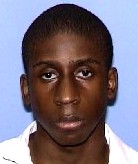
Mario Swain
Murderer Robert Martines Perez
Murderer · USA · 1994
Name: Robert Martines Perez · Other name used in proceedings: Robert Martinez P…
15 victims
Robert Martines Perez
Murderer · USA · 1994
Name: Robert Martines Perez · Other name used in proceedings: Robert Martinez P…
15 victims
 Billy Frank Vickers
Murderer · USA · 1993
Billy Frank Vickers Vickers was executed by lethal injection in Texas on Januar…
14 victims
Billy Frank Vickers
Murderer · USA · 1993
Billy Frank Vickers Vickers was executed by lethal injection in Texas on Januar…
14 victims
 Evan David Smyth
Spree killer · USA · 2003
Evan David Smyth was 41 years old at the time of sentencing. He was described a…
4 victims
Evan David Smyth
Spree killer · USA · 2003
Evan David Smyth was 41 years old at the time of sentencing. He was described a…
4 victims
 Walburga Oesterreich
Murderer? · USA · 1922
Walburga “Dolly” Oesterreich was an American homemaker and the wife of a wealth…
1 victim
Walburga Oesterreich
Murderer? · USA · 1922
Walburga “Dolly” Oesterreich was an American homemaker and the wife of a wealth…
1 victim
 William Lipham
Murderer · USA · 1985
Name: William Anthony Lipham Age: 33 Lipham was sentenced to death on February…
1 victim
William Lipham
Murderer · USA · 1985
Name: William Anthony Lipham Age: 33 Lipham was sentenced to death on February…
1 victim
 Derek Jermaine Guillen
Homicide · USA · 1998
Name: Derek Jermaine Guillen · TDCJ Number: 999310 · Date of Birth: 10/20/1980…
1 victim
Derek Jermaine Guillen
Homicide · USA · 1998
Name: Derek Jermaine Guillen · TDCJ Number: 999310 · Date of Birth: 10/20/1980…
1 victim
 Willie Simmons
Murderer · USA · 1987
Willie Simmons was involved in a case in which the Missouri Supreme Court later…
2 victims
Willie Simmons
Murderer · USA · 1987
Willie Simmons was involved in a case in which the Missouri Supreme Court later…
2 victims
- Gender
- male
- Country
- USA
- Location
- Gregg County, Texas, USA
- Date of birth
- February 28, 1979
- Age at first offence
- 23
- Characteristics
- burglary
- Victim profile
- Lola Nixon, 44
- Method of murder
- Beating with a tire tool
- Date(s) of murder
- December 27, 2002
- Years active
- 2002
- Date of arrest
- Two days after
- Status
-
Executed
Sentenced to death on April 8, 2004; executed by lethal injection in Texas on November 8, 2012
Case details
Mario Swain was a Black male. He had black hair and brown eyes. He was 5'7" tall and weighed 135. He was a laborer.
Swain had no prior prison record.
The offence
On December 27, 2002, in Gregg County, Texas, Swain broke into a residence with the intent to steal money. The victim was a forty-four-year-old white female, Lola Nixon, who returned home while the burglary was in progress. After a struggle, Swain struck the victim in the head with a tire tool. Swain placed her body in the trunk of his car and transported her body to an abandoned car where he left her in the trunk.
Swain returned to the home and stole money, jewelry, and credit/debit cards.
Nixon later received dinner plans with friends that she never fulfilled. Her friends contacted police when they could not locate her.
According to the trial evidence, Nixon had been beaten over the head and stabbed in the chest. The medical examiner later testified that the cause of death was “homicidal violence, including sharp force injuries, blunt force injuries, and probable strangulation.”
Investigation
Police went to Nixon’s house on Iris Circle in Longview, Texas, and discovered evidence of forced entry and blood throughout the house. The police focused their investigation on a truck reported by Nixon’s neighbor as parked in front of a vacant house on Nixon’s block the night before.
The truck was registered to Swain’s grandfather. When police spoke with Swain’s grandfather, he told them that Swain had been using the truck. Detective Terry Davis spoke with Swain by phone. Swain told Davis that he could come speak with him where he worked, at a residential treatment home.
Detective Davis and Detective Jim Nelson drove to the address Swain gave, where Swain’s grandfather’s truck was parked in the driveway. Swain met them in front of the open garage door. The detectives asked why the truck had been seen parked on Iris Circle the night before. Swain said he had been riding with a friend and ended up parking on Iris Circle.
When a detective told Swain this was his opportunity to come clean, Swain gave an account that he and a man named Casey Porter broke into a house on Iris Circle, Porter attacked the homeowner when she returned home, and they put the woman, who was alive but unconscious, in the trunk of her car and drove to a remote location near the airport where they left her.
Swain agreed to take the detectives to where he said he and Porter left the woman. Swain rode in the back of the detectives’ car and directed them to a field where they discovered blood, a black trash bag, and a piece of a tire jack, but they did not find Nixon.
Detective testimony differed on whether Swain had been handcuffed during this time. Detective Davis testified that he did not recall handcuffing Swain at any point while they were at Swain’s workplace or while Swain rode in their car, and that he administered Miranda warnings when Swain got into the detectives’ car. Detective Nelson testified that he handcuffed Swain at some point “when we were in the garage talking” and that “[a]t that point, we told him we were going to detain him.”
The detectives brought Swain to the Longview Police Department, where he was read his Miranda rights again and gave written statements.
In Swain’s first written statement, he acknowledged the “right to remain silent and not make any statement at all and . . . the right to [have] a lawyer present.” Swain admitted participation in burglarizing Nixon’s house but accused Porter alone of assaulting her. Police arrested Porter and soon discovered he had an alibi. Detectives confronted Swain with this information and informed him of his rights again. Swain provided a second written statement acknowledging “that I have the right to remain silent” and “to have a lawyer present.” Swain again admitted burglary participation, but this time claimed a man named Brian Mason Woods was his accomplice and that Woods had assaulted the victim. Police questioned Woods and discovered he had an alibi.
Several hours later, Swain was charged with burglary of a habitation and was brought before a magistrate who read him rights under Texas law. Swain was then brought to the district attorney’s office, where he was questioned by a detective and an investigator with the District Attorney’s Office. He agreed to lead them to Nixon’s body and directed them to a vehicle containing Nixon’s corpse that was close to where he had first led Detectives Davis and Nelson. Nixon had been beaten over the head and stabbed in the chest. The medical examiner testified that “homicidal violence, including sharp force injuries, blunt force injuries, and probable strangulation.”
After disclosure of the location of Nixon’s body, Swain was brought back to the Longview Police Department. Detective Davis read him his rights again and Swain gave a third written statement. In the third statement, Swain acknowledged “the right to remain silent” and “the right to have a lawyer present.” Swain admitted he committed the burglary on his own, described the struggle when Nixon returned home, stated he bludgeoned her with a tire tool and placed her semi-conscious body into the trunk of his car, and stated he drove her to a field and left her there while she was breathing but barely conscious. He also stated he returned to the victim’s house, attempted to clean up in the bathroom, and left on foot.
Police later found the tire tool that Swain had used and conducted searches of Swain’s truck and items associated with the stolen property.
Miranda acknowledgments (verbatim)
Swain’s statements included the following verbatim acknowledgments of rights:
- “right to remain silent and not make any statement at all and . . . the right to [have] a lawyer present”
- “that I have the right to remain silent”
- “to have a lawyer present”
- “the right to remain silent”
Arrest and detention
Swain called Detective Terry Davis about thirty minutes after police first attempted to contact him. Davis told Swain he wanted to talk to him, and Swain gave Davis the address of the residential treatment home where he was working as an after-hours house sitter.
Detective Davis and Detective Jim Nelson went to Swain’s workplace. During questioning, Detective Nelson testified that he handcuffed Swain at some point “when we were in the garage talking” and said “[a]t that point, we told him we were going to detain him.”
A warrant to arrest Swain for burglary of a habitation was obtained at around 3:00 or 4:00 a.m. after the initial investigation and discovery of physical evidence.
Swain requested the appointment of counsel during proceedings before a magistrate.
Trial
Swain was indicted in Gregg County, Texas, for the December 27, 2002, capital murder of Lola Nixon while in the course of burglarizing her home.
On November 19, 2003, a Gregg County jury found Swain guilty of capital murder.
On November 20, 2003, after the jury recommended capital punishment, the trial judge sentenced Swain to death by lethal injection.
On direct appeal, the Texas Court of Criminal Appeals affirmed Swain’s capital murder conviction and death sentence on November 5, 2005. The court denied rehearing on January 26, 2006. The Supreme Court of the United States rejected Swain’s direct appeal on October 2, 2006 when it denied his petition for certiorari.
Sentencing
During jury sentencing, jurors heard information including:
- an incident while Swain was younger involving sexual cruelty involving a cow belonging to Swain’s uncle, with the animal requiring veterinary care as a result of its injuries;
- his fascination with forensic television programs;
- his extensive history of predatory and abusive behavior toward women;
- his experimentation with new methods of subduing victims;
- evidence of an escalating pattern of violence.
Swain’s future dangerousness was addressed as a special issue. The jury was presented with evidence that Swain attacked several other women in the years before he committed the instant offense. The evidence included incidents described below.
Evidence presented regarding future dangerousness (as set out in the opinion)
Betty McDonald Clark testified that in August of 1999, a man hid in the back seat of her car and attacked her from behind with a stun gun. After she escaped and ran inside a convenience store, the man stayed in her car for about five minutes, then exited and walked away. Police later found that the dome light inside Clark’s car had been removed. A police officer testified that Swain’s fingerprints matched fingerprints on the dome light cover and door of Clark’s car.
Judith Harper testified that in October 1999, a man hid in the back seat of her car and attacked her from behind with a stun gun after she left a grocery store. A store employee, Michael Maiden, opened the passenger door when Harper ran inside to call police. The man exited the vehicle, asked Maiden “what [his] problem was,” and walked away. Harper testified that she later noticed the dome light inside her car had been removed. Maiden identified Swain as the man involved.
Crystal Hargett testified that in 2000, Swain asked her to knock on a woman’s door and tell the woman her car had broken down so he could go inside when no one was there. Hargett pretended to do so and told Swain the woman did not have a phone. Hargett also testified that Swain later told her to take a woman’s car and knock the woman out if she came back to the pump, but she refused.
In January 2001, Ashley Russell and Olivia Torres decided to confront Swain together about dating. Swain drove off at a high rate of speed. After Torres asked him to let her out, she jumped out and began running down the road. Swain got out, chased Torres, shoved her, knocked her down, and repeatedly kicked and hit her while she was on the ground. When Torres ran toward a nearby house for help, Swain ran back to his car and drove away. Russell continued to date Swain and lived with him from February to November 2001. Russell testified Swain kept items in his car including a wrench and a brown glass bottle containing a substance that he said would “put people to sleep.” Russell testified Swain spoke about “knocking older women out at car washes and taking their money,” and about following women home and watching them to determine when they left and came home.
Russell also testified that Swain kept a spiral notebook recording descriptions of women, automobiles, and license plate numbers.
Teresa McMene testified that in October 2002 someone struck her in the head from behind as she left a salon where she worked. She fell and saw a man standing over her; she began kicking and screaming. The man yanked on her purse and broke its strap and fled on foot. Police found a beer bottle and a wrench at the scene. McMene testified that in November 2002 her phone and cosmetology license were taken from the salon.
Kristie Anderson testified that in November 2002 she was living with Swain at the time, and that Swain brought home a phone similar to the one stolen from McMene.
Nicole Anderson testified that in December 2002 Swain attacked her. About a month prior, she had seen Swain and asked to borrow his phone. On December 5, 2002, Nicole was alone in her apartment with her newborn baby when she woke at 3:00 or 4:00 a.m. and saw Swain standing in her room. Nicole testified that Swain jumped on her, choked her, demanded her money and credit cards, threatened to kill her, and held a knife to her. She testified he stayed in her apartment for several hours wearing black gloves, left through her bedroom window at 8:00 or 9:00 a.m., but returned with a brown glass bottle and said he would “put [her] to sleep and make [her] forget everything that happened.” Nicole testified he poured the substance on a cloth and held it to her face, causing her to pass out. Nicole testified that when she awoke around 10:00 a.m. and tried to leave with her baby, Swain was standing outside her front door. She testified he asked where she was going and if she told anyone, and she said she was going to visit a friend; she testified Swain responded that “[she] could go, and he wouldn't hold [her],” and then left.
Kristie Anderson testified she lived with Swain from February 2002 until his arrest.
Kristie Anderson testified that on December 27, 2002, she found a piece of paper in their apartment with the name “Lola Nixon,” the phrase “Sitel girl” in parentheses, an address, and a license plate number written on it. She testified that other pieces of paper had names, addresses, phone numbers, license plate numbers, and vehicle descriptions.
She testified Swain kept a bottle containing a substance that “you could knock somebody out with.” She testified Swain told her he would “take [her] down with [him]” and that he would have her children taken away if she testified against him at trial.
The court concluded the combination of the instant offense and other evidence supported the jury’s affirmative future dangerousness finding.
Appeals
Swain pursued direct and post-conviction proceedings.
- The Texas Court of Criminal Appeals affirmed on November 5, 2005 and denied rehearing on January 26, 2006.
- The Supreme Court of the United States rejected Swain’s direct appeal when it denied his petition for certiorari on October 2, 2006.
- After exhausting direct appeals, Swain filed an application for a state writ of habeas corpus. On September 20, 2006, the Texas Court of Criminal Appeals denied the application.
- Swain attempted to appeal in federal district court for the Eastern District of Texas. The district court denied the petition for a federal writ of habeas corpus on March 31, 2010.
- On April 18, 2012, the United States Court of Appeals for the Fifth Circuit rejected Swain’s appeal when it affirmed the district court’s order denying Swain a federal writ of habeas corpus.
- On October 15, 2012, the United States Supreme Court rejected Swain’s appeal when it denied his petition for certiorari.
Outcome
Swain was scheduled for execution after 6 p.m. on November 8, 2012 pursuant to an order entered by the 124th District Court in Gregg County.
Aftermath
On November 8, 2012, Swain was executed in Texas by lethal injection.
He was pronounced dead at 6:39 p.m. local time in Huntsville, Texas, according to the state criminal justice department.

Spotted an error, or have more information about this case?