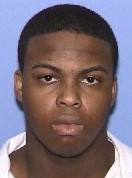
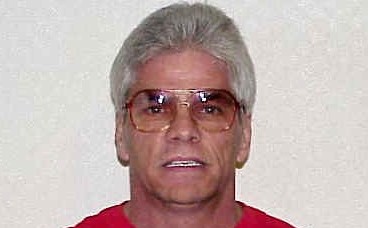
Damon Matthews
Murderer Robert Martines Perez
Murderer · USA · 1994
Name: Robert Martines Perez · Other name used in proceedings: Robert Martinez P…
15 victims
Robert Martines Perez
Murderer · USA · 1994
Name: Robert Martines Perez · Other name used in proceedings: Robert Martinez P…
15 victims
 Billy Frank Vickers
Murderer · USA · 1993
Billy Frank Vickers Vickers was executed by lethal injection in Texas on Januar…
14 victims
Billy Frank Vickers
Murderer · USA · 1993
Billy Frank Vickers Vickers was executed by lethal injection in Texas on Januar…
14 victims
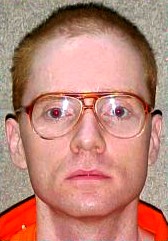 Robert Glen Jones
Murderer · USA · 1996
Defendant: Robert Glenn Jones (ADC#070566) · Co-defendant: Scott Nordstrom (ADC…
7 victims
Robert Glen Jones
Murderer · USA · 1996
Defendant: Robert Glenn Jones (ADC#070566) · Co-defendant: Scott Nordstrom (ADC…
7 victims
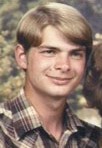 Robert Bryant
Mass murderer · USA · 2002
Robert Bryant lived in California before moving to Oregon. He was described as…
5 victims
Robert Bryant
Mass murderer · USA · 2002
Robert Bryant lived in California before moving to Oregon. He was described as…
5 victims
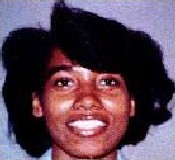 Antoinette Frank
Murderer · USA · 1995
Defendant: Antoinette Frank (born April 30, 1971) Role: New Orleans police offi…
3 victims
Antoinette Frank
Murderer · USA · 1995
Defendant: Antoinette Frank (born April 30, 1971) Role: New Orleans police offi…
3 victims
 Robert South
Murderer · USA · 1983
Robert South was executed in South Carolina on May 31, 1996. He was aged 51 at…
1 victim
Robert South
Murderer · USA · 1983
Robert South was executed in South Carolina on May 31, 1996. He was aged 51 at…
1 victim
 Jerome Brudos
Serial killer · USA · 1968
Jerome Brudos (31 January 1939 – 28 March 2006) was a serial killer and a necro…
4 victims
Jerome Brudos
Serial killer · USA · 1968
Jerome Brudos (31 January 1939 – 28 March 2006) was a serial killer and a necro…
4 victims
 Billy Wayne White
Murderer · USA · 1976
Billy Wayne White was sentenced to death for the capital murder of Martha Laura…
1 victim
Billy Wayne White
Murderer · USA · 1976
Billy Wayne White was sentenced to death for the capital murder of Martha Laura…
1 victim
 Sibusiso Madubela
Mass murderer · South Africa · 1999
Sibusiso Madubela was a black army lieutenant serving with the 1st South Africa…
8 victims
Sibusiso Madubela
Mass murderer · South Africa · 1999
Sibusiso Madubela was a black army lieutenant serving with the 1st South Africa…
8 victims
- Gender
- male
- Country
- USA
- Location
- Harris County, Texas, USA
- Date of birth
- December 24, 1984
- Age at first offence
- 19
- Characteristics
- robbery
- Victim profile
- Esfandiar Gonzalez
- Method of murder
- Shooting
- Date(s) of murder
- March 6, 2003
- Years active
- 2003
- Date of arrest
- Next day
- Status
-
Sentenced to death
Sentenced to death on April 20, 2004
Case identification
Damon Matthews (TDCJ Number 999476) was convicted of capital murder in Harris County, Texas, and sentenced to death. Damon Matthews was born 12/24/1984.
Timeline
- 03/06/2003 — Damon Matthews approached Esfandiar Gonzalez in Harris County, Texas, demanded that he turn over his car keys, and shot him, killing him.
- 03/07/2003 — Dr. Ana Lopez performed an autopsy of Gonzalez’s body.
- 04/20/2004 — Damon Matthews was sentenced to death.
- 06/28/2006 — The Court of Criminal Appeals of Texas delivered its opinion affirming the trial court’s judgment.
Background
Damon Matthews and Esfandiar Gonzalez grew up together and had known each other since elementary school. Gonzalez lived with his parents, worked full-time at a Kroger grocery store, and had no criminal history.
At the time of the offense, Matthews was 18 years old. Matthews had prior occupation “Fast Food & Laborer.” Matthews had no prior prison record.
The offence
On March 6, 2003, Gonzalez drove his Oldsmobile to Kroger and picked up and cashed his paycheck for $211.61. Around 7:00 p.m., Gonzalez talked to Matthews on the phone. About twenty minutes later, Gonzalez called his mother and told her that he was going with a friend to look at some speakers for his car.
Gonzalez drove to a Super 8 motel in Sharpstown and, around 9 p.m., picked up Damon Matthews, who was staying in room number 243. They drove to a parking lot at 12400 Sharpview. While they were parked, Gonzalez sat in the driver’s seat of the car. Damon Matthews got out of the car and stood outside the front passenger side door, pointed a gun at Gonzalez through the half-opened passenger window, and shot him in the head seven times, killing him.
Blood spatter evidence on Gonzalez’s clothes and body indicated that Gonzalez had been sitting in an upright position when he was shot and that Gonzalez’s body had been pulled out of the car and dumped at the scene. Blood stains on Matthews’s shorts and spatterings on the side of his tennis shoes were consistent with Matthews shooting Gonzalez while he sat in the driver’s seat, pulling his body out of the car, and tipping the body, causing blood to run from his head. Blood stains on the shoulder seat strap of the driver’s seat of the Oldsmobile and high velocity specks on the overhead liner were consistent with someone being shot at close range while sitting in the driver’s seat. The stains on the passenger’s seat were consistent with the passenger’s door being closed and the shooter leaning down and shooting through the passenger’s window.
Around 10 p.m., Matthews drove Gonzalez’s car to his motel room. Weirleis Flax, who was staying in the same room, was there when Matthews came inside and changed his clothes and shoes. Matthews placed his clothes and shoes in a pile and then left the motel.
Investigation
Kalen Hutchenson, who lived in a house at 12400 Sharpview, heard a cell phone ringing at around 9:30 p.m. and stepped outside to see where the cell phone was. He discovered Gonzalez’s body in the parking lot. Hutchenson took Gonzalez’s cell phone and called 911, waiting for police to arrive.
Officer Andrew Taravella and Sergeant Hub Mayer arrived at the scene. They found no firearms evidence—no shell casings or bullet strikes—in the surroundings of nearby buildings. In Gonzalez’s pocket they found a piece of paper with the number 243 on it and a dollar in change. While they were investigating the scene, Gonzalez’s cell phone rang; the officers answered it. It was Caesar, Gonzalez’s brother. Upon talking to Caesar, the officers realized that Gonzalez’s car was missing, and they dispatched a description of Gonzalez’s Oldsmobile over the radio.
Around 1:00 a.m., Deputy David Mash was patrolling the area when a young male, Javier Sasedo, approached him and told him that his friend had been murdered a few hours earlier and that he had just seen someone driving his friend’s car into a do-it-yourself carwash on Dashwood, about a block away. Mash notified dispatch and requested assistance from back-up units. Mash drove to the carwash and saw Damon Matthews in one of the carwash stalls washing blood out of Gonzalez’s car. Mash apprehended Matthews and put him in the back seat of the patrol car.
When back-up units arrived, the officers took photographs of Gonzalez’s car and looked into the driver’s side of the car. They saw blood that started from the driver’s side and ran to the passenger’s side. The officers recovered a gun, a Davis .380, from the floorboard of the driver’s side of Gonzalez’s car, and they recovered a fired .380 shell casing in the back of the car. The gun was later determined to be the murder weapon.
Around 2:00 a.m. at the scene, Sergeant Hub Mayer interviewed Matthews and taped the interview. Around 5:00 a.m., Police Officer Norman Ruland interviewed Matthews on video.
Dr. Ana Lopez, assistant medical examiner at the Harris County Medical Examiner’s Office, performed an autopsy on Gonzalez’s body on March 7, 2003. She determined that he had six gunshot wounds on the right side of his head, another gunshot wound on the top of his head, a contusion on his shoulder, and abrasions on his back. She concluded that two of the gunshot wounds were surrounded by multiple stippling marks and no soot, indicating a proximity of the gun to Gonzalez of approximately one to three feet. Five of the bullets were recovered from the neck, suggesting that the bullets traveled from the right side of his face to the left and downward, consistent with an individual standing and shooting downward to someone who was sitting. Six of the seven gunshot wounds were characterized as fatal.
A fingerprint lifted on the outside of the driver’s door had insufficient characteristics to be identifiable. No fingerprints were lifted from the .380 or the bullets.
Dr. Eric Sappenfield, a trace section supervisor for the Harris County Medical Examiner’s Office, analyzed samples submitted from Matthews’s hands on March 6, 2003, for gunpowder residue under a scanning electron microscope. The results were “inconclusive,” meaning gunpowder residue was either not present or it could not be determined whether it was present.
Lawrence Renner, a blood stain expert, determined that the blood stain on Matthews’s sweatshirt was a transfer pattern stain, caused by something with blood on it touching the surface of the sweatshirt. There was no blood spatter on the sweatshirt, though there should have been if Matthews was wearing the sweatshirt while shooting Gonzalez from one to three feet away.
A postmortem toxicology examination revealed that there was no cocaine or any other type of drug or alcohol in Gonzalez’s blood.
Arrest and custody
Damon Matthews was apprehended at around 1:00 a.m. by Deputy David Mash at the carwash where Matthews was washing blood out of Gonzalez’s car. Matthews was put in the back seat of the patrol car while back-up units arrived.
Statements
In his oral statement to Sergeant Hub Mayer, Matthews denied any involvement in Gonzalez’s murder. He said that a short Hispanic male, with a bald head and gold in his mouth, named “Creeper” came over to the motel in Gonzalez’s car and asked him if he wanted to “pimp the car for a little bit.” At first, Matthews claimed that he did not know that the car belonged to Gonzalez. He said that he drove the car for a few minutes, before he noticed the blood on his hands and on the car. He then took the car to the carwash to wash out the blood. When the police arrived, he denied any knowledge of the gun on the floorboard. He stated that he never fired a weapon that night. When asked about the identity of “Grumpy,” a nickname of Gonzalez, Matthews said he did not know who Grumpy was.
He later admitted that Grumpy had called him earlier that day and that he had known Grumpy since they were in school together.
After the interview, Mayer went to the motel room at the Super 8. Weirleis Flax opened the door and consented to the entry and search of the room. Flax indicated that Matthews had come over, changed his clothes and shoes, and left again. Matthews’s clothes and shoes were recovered from the room. Testing revealed that the clothes and shoes recovered from the motel room and the clothes Matthews wore at the time of his arrest had Gonzalez’s DNA on them.
In his videotaped statement, Matthews changed his story multiple times. At first, Matthews told Police Officer Norman Ruland that, around 7:00 p.m., Grumpy picked up Matthews and asked him where to get cocaine. Matthews then took Gonzalez to see Creeper and a guy named “T-Man.” Matthews stayed in the car while Gonzalez talked to Creeper and T-Man. According to Matthews, before Gonzalez returned to Creeper, he took Matthews to the motel room that Matthews shared with Flax.
Creeper then drove to the motel in Gonzalez’s car and asked Matthews if he wanted a ride. Matthews took the car for a ride. When he noticed the blood on his hands and clothing, he took the car to the carwash. After further questioning, Matthews claimed that he heard gunfire when Gonzalez, Creeper and T-Man were talking and he was sitting in the car. According to Matthews, Creeper shot at Gonzalez, and Gonzalez shot at Creeper, and then Gonzalez went to the car, shouted to Matthews that he had set him up, and shot two or three times at Matthews. Everyone was outside the car at this time, and Matthews shot his gun, “a little .25,” once in self-defense, before he threw down his gun and ran back to the motel. He claimed that he did not know that Gonzalez was dead or who shot Gonzalez. He also claimed that he did not know that the car was full of blood or who owned the gun on the floorboard, although he speculated that the gun belonged to Creeper.
Matthews later said that Gonzalez and Creeper were members of the La Primera gang and therefore friends. He admitted that it did not make sense that Creeper would kill Gonzalez and take his car to Matthews, a non-member of the gang. He then recalled that it was an unknown black man, not Creeper, who brought Gonzalez’s car, full of blood, to him and asked him if he wanted a ride. He then drove Gonzalez’s car to the carwash.
After Matthews used the names “Creeper” and “Creepy” interchangeably in his statements, Mayer interviewed “Creeper,” named Froylan Bettencourt, described as a tall Hispanic male without gold in his mouth. Bettencourt stated that he was not present on the night of March 6, 2003, and he was not the shooter. Mayer eliminated Bettencourt as a suspect.
Ruland read Matthews his statutory rights, and Matthews voluntarily waived those rights and gave a videotaped statement. The tape was admitted at trial.
Mayer read Matthews his statutory rights before the tape-recorded oral statement. Matthews stated that he understood them and that he knowingly and voluntarily waived them. A redacted recording was admitted at trial without objection.
Court proceedings
Trial and conviction
In the Court of Criminal Appeals of Texas, No. 74,936, Damon Roshun Matthews was the appellant in a direct appeal from Harris County. The opinion was delivered by Keller, P.J., of the unanimous Court.
Appellant was convicted in April 2004 of capital murder. Pursuant to the jury’s answers to the special issues under Texas Code of Criminal Procedure Article 37.071, §§ 2(b) and 2(e), the trial judge sentenced appellant to death.
Direct appeal arguments and rulings
The Court of Criminal Appeals considered ten points of error and found no merit, affirming the trial court’s judgment.
Sufficiency of the evidence (Points one and two)
Appellant contended that the evidence was legally and factually insufficient to sustain the conviction for capital murder.
The Court found legal sufficiency, addressing appellant’s arguments:
- no direct evidence that appellant personally shot Gonzalez;
- appellant denied killing Gonzalez in statements to police;
- the defense theory that appellant merely moved Gonzalez’s car or body and that evidence might implicate appellant as a party or support a conviction for theft or unauthorized use of a motor vehicle.
The Court concluded that, viewing evidence in the light most favorable to the verdict, the cumulative effect supported conviction for capital murder. It cited evidence including that appellant and Gonzalez talked on the phone; Gonzalez called his mother about going with a friend to look at speakers; appellant confessed that Gonzalez picked him up from a Super 8 motel in Sharpstown; Gonzalez was later found dead at a parking lot on Sharpview with the number 243 in his pocket; appellant confessed he drove Gonzalez’s car to change out of bloody clothes and shoes with DNA testing showing Gonzalez’s DNA on those items; appellant drove the car to a car wash and attempted to wash blood out when he was apprehended; the murder weapon was recovered on the floorboard; and appellant gave two statements, changing his story multiple times, ultimately stating he was present at the scene and fired a shot and left in Gonzalez’s car.
The Court overruled point of error one.
Regarding factual sufficiency, appellant argued:
- denial in statements;
- an alternative theory that Gonzalez was involved in drugs and the La Primera gang and was killed by Creeper or another unknown gang member;
- defense expert Larry Renner’s testimony contradicting the State’s blood-spatter expert.
The Court held the jury was the sole judge of witness credibility and could accept or reject appellant’s statements, concluding that the jury was rationally justified in finding guilt beyond a reasonable doubt. Point of error two was overruled.
Lesser-included offenses (Points three through five)
Appellant contended that the trial court erred by refusing requested instructions on lesser-included offenses of theft and unauthorized use of a vehicle.
The trial court granted an instruction on murder but denied instructions on theft and unauthorized use of a motor vehicle.
The Court addressed the lesser-included-offense standard: a lesser-included offense must be included in the jury charge if it is a lesser-included offense of the charged offense and there is some evidence that, if the defendant is guilty, he is guilty only of the lesser offense. The Court concluded unauthorized use of a motor vehicle was not a lesser-included offense of the capital murder charged because it was not included in proof necessary to establish intentional murder while committing or attempting to commit robbery.
The Court concluded there was no evidence that appellant was guilty only of theft. It found the evidence showed appellant admitted shooting at Gonzalez and taking Gonzalez’s car, with no evidence from which a jury could rationally acquit murder in the course of robbery while convicting him of theft. Therefore, the trial court did not violate state law in refusing theft instruction. Point of error three was overruled.
Appellant also alleged constitutional violations regarding due process and cruel and unusual punishment. The Court held appellant had not shown the trial court’s refusal violated due process rights or the prohibition against cruel and unusual punishment. Points of error four and five were overruled.
Punishment (Point six)
Appellant contended that the assessment of the death penalty violated the Eighth Amendment because of youth and because jury answers may have been based on conduct occurring when he was seventeen or younger.
Appellant filed a pretrial motion to quash the indictment and preclude the death penalty on the ground that § 8.07(c) of the Texas Penal Code violated the Eighth and Fourteenth Amendments. After the State rested in the guilt phase, appellant argued the motion and specifically argued that Roper v. Simmons was before the United States Supreme Court and that the Court would decide whether to uphold imposition of the death penalty on persons seventeen years old or under. Because appellant was eighteen at the time of the offense, the trial court denied the motion.
The Court cited Simmons: the Eighth and Fourteenth Amendments forbid imposition of the death penalty on offenders under 18 when their crimes were committed. Because appellant was eighteen when the offense occurred, Simmons did not apply. The Court overruled point of error six.
Appellant also asserted that admission of prior bad acts and prior offenses committed while he was under 18 was unconstitutional, but appellant had not objected on that basis at trial. The Court held that failure to make a timely, specific objection forfeited many claims. The Court concluded appellant forfeited the Eighth Amendment complaint about admission of juvenile prior bad acts and prior offenses. The Court also held the complaint was without merit, referencing Article 37.071 permitting admission at punishment phase of any matter relevant to sentence including evidence of the defendant’s background or character. It held youth was not a mitigating or aggravating factor as a matter of law, and that admission of prior juvenile offenses did not violate the Eighth Amendment when death penalty was assessed for a charged offense committed when at least eighteen. The Court noted appellant was assessed the death penalty for capital murder committed when he was eighteen. Point of error six was overruled.
Mitigation instruction and jury burden (Points seven through ten)
Points of error seven and eight alleged the trial court erred by failing to instruct the jury that the State had the burden of proof beyond a reasonable doubt on the mitigation issue, based on Apprendi and its progeny and the Texas due course of law guarantee. Appellant submitted a proposed jury charge on the mitigation issue, and the trial court denied the request. The opinion said the Apprendi and Blakely claims had been raised and rejected and that Booker was relied upon; the Court reaffirmed that it had held Article 37.071 satisfied requirements. Points of error seven and eight were overruled.
Appellant’s point of error nine claimed the mitigation instruction gave “mixed signals” due to unclear burden of proof, relying on Penry v. Johnson and arguing for an Eighth Amendment flaw. The Court stated it had rejected arguments that mitigation sends “mixed signals” and rejected argument that failure to assign burden of proof violated the Eighth Amendment. Point of error nine was overruled.
Point of error ten contended the punishment charge misinformed the jury by failing to disclose that each juror could prevent a death sentence by disagreeing with other jurors, in violation of the heightened reliability requirement of the Eighth Amendment and the Due Process Clause of the Fourteenth Amendment. The Court stated it had decided these claims adversely to that position and overruled point of error ten.
The judgment of the trial court was affirmed.
Quoted mitigation instruction proposed by appellant
Regarding the comparison of mitigating evidence and aggravating evidence, the State has the ultimate burden of proof to convince you, beyond a reasonable doubt, that any mitigating considerations are not sufficient to justify a sentence of life imprisonment rather than the death penalty. This does not mean that the State must negate any possible mitigating consideration, whether or not it is raised by evidence. Rather, the special issue asks you to make a comparative judgment between factors on either side of the question which actually have been raised by some evidence. If, after a thorough review of the evidence on both sides of the question, you believe that there are sufficient mitigating considerations, or you have a reasonable doubt as to how to resolve the comparison which you must make under the special issue, then you should answer this special issue affirmatively.
Outcome
The trial court’s judgment was affirmed by the Court of Criminal Appeals of Texas. Appellant’s conviction for capital murder stood, and the trial judge’s death sentence of April 20, 2004 remained the sentence.
Other details
Victim information and details
The victim was Esfandiar Gonzalez, Hispanic/Male. His death followed seven head shots and additional wounds described in the autopsy.
Gonzalez was found at a parking lot on Sharpview. Officers found a piece of paper with the number 243 in his pocket and a dollar in change.
Motel and location details
Matthews was staying in a Super 8 motel room number 243, and they later drove to a parking lot at 12400 Sharpview. The carwash was on Dashwood, about a block away from the area described.
Gang-related testimony
The defense suggested Gonzalez’s death was tied to his membership in the La Primera gang. Dwight Stewart, a training specialist for the Texas School Safety Center and instructor of gang awareness, testified that Gonzalez had tattoos signifying membership in La Primera. Officer Ruland testified for the State that tattoos found on Gonzalez’s body did not signify membership in La Primera. Caesar Gonzalez testified that his brother was not in a gang. Kim Whitehead, assistant principal and gang education awareness representative at Gonzalez’s school, testified that after counseling Gonzalez she determined he wore white and had friends in the gang, and he may have been associated with La Primera at a prior time, but his tattoos did not indicate he was in a gang.
Named individuals connected to events
- Co-defendants: None
- Weirleis Flax: present when Matthews came inside the motel room and changed clothes and shoes; consented to entry and search of the room.
- Kalen Hutchenson: discovered Gonzalez’s body; called 911.
- Officer Andrew Taravella and Sergeant Hub Mayer: arrived at the scene and investigated.
- Caesar (Gonzalez’s brother): spoke with officers on Gonzalez’s cell phone; officers realized Gonzalez’s car was missing.
- Deputy David Mash and Javier Sasedo: Sasedo told Mash where the car was taken; Mash apprehended Matthews at the carwash.
- Police Officer Norman Ruland: interviewed Matthews on video.
- Dr. Ana Lopez: performed autopsy.
- Dr. Eric Sappenfield: analyzed gunpowder residue samples.
- Lawrence Renner: blood stain expert.
- Froylan Bettencourt (“Creeper”): Matthews’s statements led Mayer to interview Bettencourt; Bettencourt denied being present and denied being the shooter; eliminated as a suspect by Mayer.
- Dwight Stewart: defense gang awareness testimony.
- Officer Ruland: State gang/tattoo testimony.
- Kim Whitehead: gang education awareness testimony.
Case capacity and legal citations included in the appellate opinion
The appellate opinion addressed standards for legal and factual sufficiency and discussed points of error relating to lesser-included offenses and Eighth and Fourteenth Amendment claims. It also discussed pretrial motion practice, including reference to Simmons, Apprendi, Blakely, Booker, Penry v. Johnson and related decisions, and it cited Article 37.071 regarding special issues.

Spotted an error, or have more information about this case?