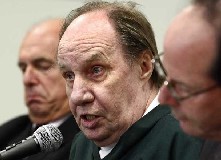
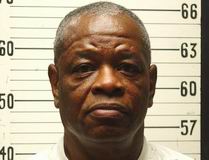
Norman Porter
Murderer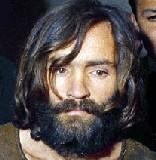 Charles Manson
Murderer · USA · 1969
Charles Milles Manson (born November 12, 1934) was an American criminal and mus…
9 victims
Charles Manson
Murderer · USA · 1969
Charles Milles Manson (born November 12, 1934) was an American criminal and mus…
9 victims
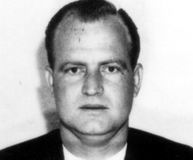 Gary Gene Tison
Murderer · USA · 1967
Gary Gene Tison was serving life sentences at the Arizona state prison. He had…
7 victims
Gary Gene Tison
Murderer · USA · 1967
Gary Gene Tison was serving life sentences at the Arizona state prison. He had…
7 victims
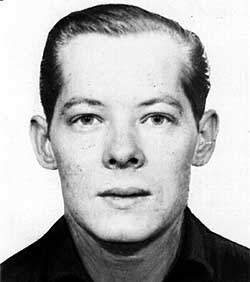 Richard Lee Tingle
Murderer · USA · 1968
Richard Lee Tingle was born out of wedlock in December 1940. He was raised by a…
6 victims
Richard Lee Tingle
Murderer · USA · 1968
Richard Lee Tingle was born out of wedlock in December 1940. He was raised by a…
6 victims
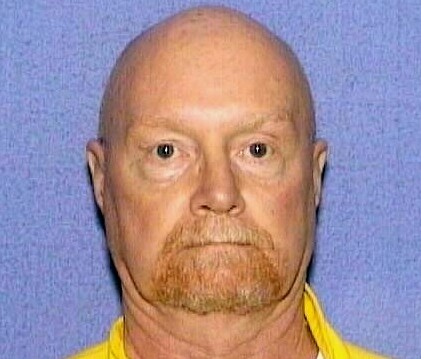 Gary Duane Rardon
Murderer · USA · 1962
Gary Duane Rardon killed a man in 1962 and later served 4 years for manslaughte…
4 victims
Gary Duane Rardon
Murderer · USA · 1962
Gary Duane Rardon killed a man in 1962 and later served 4 years for manslaughte…
4 victims
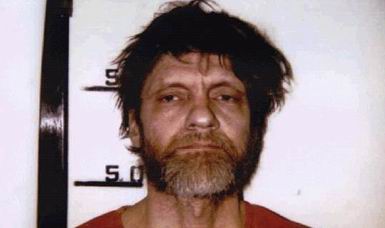 Theodore Kaczynski
Murderer · USA · 1985
Theodore John “Ted” Kaczynski (born May 22, 1942), also known as the Unabomber…
3 victims
Theodore Kaczynski
Murderer · USA · 1985
Theodore John “Ted” Kaczynski (born May 22, 1942), also known as the Unabomber…
3 victims
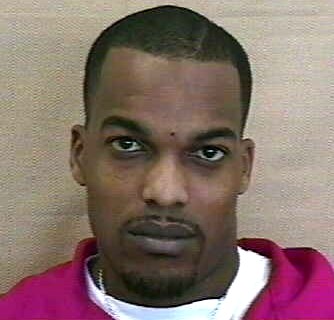 Earl Richmond
Murderer · USA · 1991
Earl Richmond was convicted of first-degree rape and three counts of first-degr…
4 victims
Earl Richmond
Murderer · USA · 1991
Earl Richmond was convicted of first-degree rape and three counts of first-degr…
4 victims
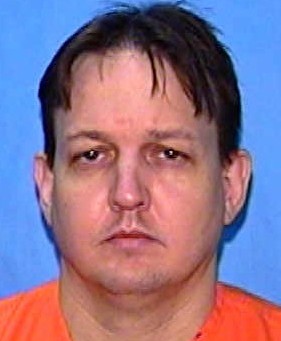 Ronald Wayne Clark
Murderer · 1990
Ronald Wayne Clark was sentenced to death on February 22, 1991. · 01/12/90 — Ro…
2 victims
Ronald Wayne Clark
Murderer · 1990
Ronald Wayne Clark was sentenced to death on February 22, 1991. · 01/12/90 — Ro…
2 victims
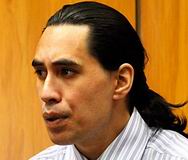 Gavin Gosnell
Murderer · New Zealand · 2011
Gavin Gosnell was 28 at the time of sentencing and was accused of murdering Chr…
1 victim
Gavin Gosnell
Murderer · New Zealand · 2011
Gavin Gosnell was 28 at the time of sentencing and was accused of murdering Chr…
1 victim
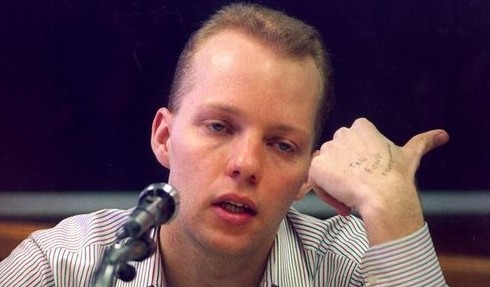 Eric Christopher Houston
Spree killer · USA · 1992
Eric Christopher Houston was a 20-year-old former student at Lindhurst High Sch…
4 victims
Eric Christopher Houston
Spree killer · USA · 1992
Eric Christopher Houston was a 20-year-old former student at Lindhurst High Sch…
4 victims
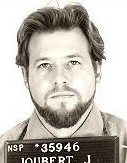 John Joubert
Serial killer · USA · 1982
John Joubert John Joubert entered guilty pleas to two counts of first-degree mu…
3 victims
John Joubert
Serial killer · USA · 1982
John Joubert John Joubert entered guilty pleas to two counts of first-degree mu…
3 victims
- Gender
- male
- Country
- USA
- Location
- Massachusetts, USA
- Date of birth
- 1939
- Age at first offence
- 21
- Characteristics
- escape, robbery, armed robbery, murder for hire, to avoid arrest
- Victim profile
- John Pigott, 22 ( clothing store clerk ) / David S. Robinson ( jailer )
- Method of murder
- Shooting
- Date(s) of murder
- 1960 / 1961
- Years active
- 1960–1961
- Date of arrest
- March 22, 2005
- Status
-
Imprisoned
Sentenced to two consecutive terms of life imprisonment; conviction commuted in 1975; escaped in December 1985; sentenced to three years in prison for escape on October 14, 2005; parole denied on January 12, 2010
Case details
Norman Porter was also known as J. J. Jameson and Norman A. Porter, Jr. He presented as a poet and activist in Chicago, Illinois from the mid-1980s until March 2005. His work had an ironic and humorous cast, and he performed live as a poet and MC at local poetry jams and open mike nights. He sometimes worked as a handyman at the Third Unitarian Church in Chicago, where he was a member of the congregation and where he later was arrested.
Timeline
- September 29, 1960 — Porter robbed a Robert Hall Clothing Store in Saugus and shot and killed John Pigott.
- May 14, 1961 — While awaiting trial, Porter and Edgar Cook escaped from Middlesex County jail in Cambridge during a trial period; Porter and Cook physically assaulted the master and keeper of the Middlesex Jail and shot him to death with a smuggled gun.
- 1993 — Porter was arrested, fingerprinted, and charged with theft after he allegedly wrote a check to a handyman that bounced; a case later was dismissed.
- December 1985 — Porter escaped from the Norfolk Prerelease Center.
- March 22, 2005 — Porter was arrested in Chicago at the Third Unitarian Church by the Massachusetts State Police, Illinois State Police, and the Massachusetts Department of Correction and was transferred under armed guard to Massachusetts to face escape-from-a-penal-institution charges.
- October 14, 2005 — Porter was sentenced to three years in prison for escape.
- January 12, 2010 — The Massachusetts Parole Board denied Porter parole.
- 2010 — Porter was eligible for parole for his murder charge.
Background
Porter’s criminal history in Massachusetts began with a string of robberies. While in prison, Porter earned an undergraduate degree from Boston University, started a prison newspaper, published poetry, and founded a prison radio station. He also attended and worked within prison settings including starting a prison newspaper and radio station. In 1975, Governor Michael S. Dukakis commuted one of Porter’s life sentences.
Porter also worked as a maintenance cadre/trustee on the prison grounds after being transferred to the Norfolk Pre-Release Center. After his transfer, on December 21, 1985, he escaped by signing himself out for a walk and never returned to the facility until he was caught on March 22. Since his escape, he had been Massachusetts’ most wanted fugitive, ahead of mobster boss James “Whitey” Bulger.
In Chicago, friends and acquaintances planned to celebrate the twentieth anniversary of his arrival in Chicago with a roast and poetry reading later in 2005. In March 2005, Porter was named Poet of the Month by C. J. Laity of ChicagoPoetry.com. Porter also published poetry, including a September 1999 poetry chapbook, Lady Rutherford’s Cauliflower, published by Puddin’head Press, and later published a second book, “Lord Rutherfurd’s Rutabaga.” He also had a poem listed on e-poets.net called “Thoreau’s Grave.”
Porter had been known to be suffering from head tumors in early 2005. He used the alias Jacob Jameson and was described as “extremely dangerous and manipulative” on the Massachusetts State Police “MOST WANTED” list.
The offence
Robbery and killing of John Pigott (1960)
On September 29, 1960, Porter robbed a Robert Hall Clothing Store in Saugus. The Massachusetts Department of Correction described that Porter and Theodore F. Mayor entered the store with Porter brandishing a sawed-off shotgun and Mayor a revolver. They herded customers and employees into a back room. While Mayor was trying to get the manager to open the safe after taking cash from the registers, Porter ordered other victims to place their wallets and other valuables in a coat being circulated.
A part-time clerk reached into his pocket for his cash. Porter placed the shotgun’s muzzle against the back of the clerk’s head and pulled the trigger, killing him “execution style.”
The victim in the 1960 killing was John Pigott, described as a 22-year-old part-time clothing store clerk and a store clerk at the Robert Hall clothing store in Saugus, Massachusetts.
Porter subsequently absconded to New York and was apprehended there a short time after the murder.
Escape-related killing of David S. Robinson (1961)
While awaiting trial for the 1960 murder and robbery at Middlesex County jail in Cambridge, on May 14, 1961, Porter and Edgar Cook escaped from the jail. During the escape, Porter and Cook physically assaulted the master and keeper of the Middlesex Jail and shot him to death with a gun smuggled into the facility.
The master and keeper killed in the 1961 escape was David S. Robinson (also described as the head jailer, and as “Sheriff” in the rap sheet section). Porter and Cook escaped; Cook committed suicide two days after the escape in the Back Bay Section of Boston. Porter was apprehended a week after the escape in Keene, NH while he was robbing a grocery store.
The source described that Porter assaulted the master and keeper and shot him to death with a gun smuggled into the facility.
Investigation and linkage of identities
In March 22, 2005, Porter was arrested after fingerprints taken during a 1993 arrest matched Porter’s fingerprints in an FBI database after a police officer saw his picture as Poet of the Month on ChicagoPoetry.com. FBI investigators running Porter’s fingerprints through a database came up with a match to the 1993 theft arrest. Investigators then notified the Massachusetts Department of Correction and the Massachusetts State Police, and the hunt for Porter began anew.
After running Porter’s alias, Jameson, through internet searches, investigators discovered the fugitive was an established poet who had ties to a progressive Unitarian church on Chicago’s West Side. The arrest attempt culminated in going to the Third Unitarian Church, where Porter “just walked in.”
Porter told investigators and police: “I had a good 20 years,” and later acknowledged his real identity when police arrested him, saying he was expecting the day to come.
Arrest (March 22, 2005)
On March 22, 2005, at 11:00 (and described as 11:30 a.m. in one account), Porter was arrested by the Massachusetts State Police, Illinois State Police, and the Massachusetts Department of Correction in Chicago at the Third Unitarian Church. He was transferred under armed guard to Massachusetts.
The apprehension was described as without incident. The Massachusetts State Police and Illinois authorities arrested Porter at the Third Unitarian Church. Porter was held at the Cook County Jail pending arraignment at the Cook County Circuit Court.
Detective Lieutenant Kevin Horton, Massachusetts investigator, said:
“He told us the same thing he told the Illinois State Police, that 'I had a good 20 years,' ”
Horton also said Porter acknowledged who he is and:
“said he was expecting this day to come.”
Illinois State Police Lt. Lincoln Hampton said:
“Our guys told me he was very cooperative,” and described Porter’s cooperation: “He sounded a little relieved, actually,”
Trial and guilty pleas (1960 and 1961)
Porter pleaded guilty to charges of second-degree murder in the 1960 fatal shooting of 22-year-old part-time clothing store clerk John Pigott at the Robert Hall clothing store in Saugus, Massachusetts, with a sawed-off shotgun.
Porter also pleaded guilty to second-degree murder in the 1961 killing of the head jailer David S. Robinson at Middlesex County jail in Cambridge, Massachusetts, during the escape period.
Porter pleaded guilty to both murders and was sentenced to two consecutive life sentences. The rap sheet also stated that Porter received two concurrent life sentences (second-degree) for armed robberies.
The rap sheet stated Porter “PLED GUILTY” to both the shotgun slaying of the Robert Hall clothing clerk and the sheriff’s murder and was sentenced to two consecutive life sentences.
Sentencing
Murder sentences and commutation
Porter was sentenced to two consecutive life sentences for the two second-degree murder cases in 1960 and 1961. Governor Michael S. Dukakis commuted one of the life sentences in 1975, and Porter began serving the second sentence after that commutation.
The Boston Globe account described that Dukakis tried twice in 1978 to commute the remaining sentence, but was unsuccessful.
Escape sentence and prison term
Porter’s escape from the Norfolk Prerelease Center occurred in December 1985. After his arrest and transfer to Massachusetts, he faced charges of escape from a penal institution.
On October 14, 2005, Porter was sentenced to three years in prison for his escape. In Massachusetts, conviction on charges of escape from a penal institution carries a sentence of up to ten years imprisonment.
The convicted escape sentence was described as being in addition to remaining life sentences.
Appeals and parole
Parole eligibility and denial
Porter was eligible for parole for his murder charge in 2010. The Massachusetts Parole Board denied Porter’s request on January 12, 2010.
The parole denial reasoning included that Porter showed:
- “limited remorse”
- and “continues to minimize his criminal activity”
Outcome
Porter was apprehended in Chicago at the Third Unitarian Church on March 22, 2005, after a fingerprint match to the 1993 theft arrest and after investigators identified him as the fugitive using internet searches for the Jameson alias.
After his apprehension, he was scheduled to be returned to Massachusetts after an extradition hearing. He was also held pending arraignment in Cook County.
Other details
People connected to the offences and arrest
- Theodore F. Mayor — was present in the Robert Hall Clothing Store robbery on September 29, 1960, and was armed with a revolver in the account describing the robbery.
- John Pigott — victim, Robert Hall Clothing Store clerk, 22 years old; shot and killed on September 29, 1960.
- Edgar Cook — accomplice in the May 14, 1961 jail escape; committed suicide two days after the escape in the Back Bay Section of Boston.
- David S. Robinson — killed in the Middlesex County jail escape; head jailer/master and keeper; described in different parts as a “Sheriff” in the rap sheet section.
- James “Whitey” Bulger — was referenced as a benchmark for Massachusetts’ most wanted fugitive ranking, with Porter being ahead.
- C. J. Laity — named Porter Poet of the Month.
- Susan Gray — described as the director-producer of the 2008 film Killer Poet.
- Leslie Brokaw — journalist credited in the narrative about the film.
- Donovan Slack and Eric Ferkenhoff — journalists credited in the narrative about Porter’s arrest.
- Detective Lieutenant Kevin Horton — Massachusetts State Police investigator who described Porter’s cooperation and statements.
- Illinois State Police Lt. Lincoln Hampton — described Porter’s cooperation and arrest circumstances.
- State Police Commissioner Kathleen M. Dennehy — quoted applauding the apprehension.
- Colonel Thomas G. Robbins — quoted about partnership with public safety agencies.
- Charles Paidock — said he met Porter, did not know the criminal past, and described Porter as active in the community.
- Marc Kelly Smith — described Porter through his poetry readings.
- Rev. Donald Wheat — minister emeritus of the Third Unitarian Church who was referenced as connected to Porter’s church involvement.
- Debra Selby — a neighbor who described Porter’s helpfulness and said she was shocked.
Specific quoted materials about Porter’s words and film/interviews
Porter read a poem titled “Thoreau’s Grave,” with lines shown in the narrative:
“His grave is outside a walled prison. His grave, his grave, wrapped around a prison. A quiet desperation he would not have understood,”
Porter also said in a quote related to the film:
“you stand or fall on who you are at that moment”
A Chicago friend was quoted:
“when Norman Porter's life caught up with JJ Jameson's, Norman Porter's had to win”
Susan Gray was quoted:
“I'd had one visit with him, and then one year later a second interview, and then we were at the end of making the movie but had never heard from the main character,”
Susan Gray also was quoted:
“At the second visit, I think he felt a little betrayed when he heard that I had talked to the victims' families and the cops,”
Susan Gray was quoted describing the Dedham hearing:
“That hearing became a judgment on his life,” and: “Both sides were weighing in and the judge was in the role of playing God, deciding whether [Porter] would be let out or would die in prison.”
Susan Gray was quoted about why she looked at Porter:
“People ask me, 'Why Norman Porter? Why look at an escaped convict? Why not look at someone who was falsely convicted?' ”
Susan Gray was quoted describing the idea that Porter seemed representative:
“he was a punk kid from Woburn who was stealing cars and robbing.”
Susan Gray was quoted about evidence of rehabilitation:
“he was out for 20 years and you could see the evidence: It appears he didn't commit any violent crimes, it seems he was rehabilitated, it seems he did a lot of good. And it raises the question: Should he still be in prison?”
Susan Gray was quoted about maximum-security life:
“I asked him about what life is like there but he wouldn't talk about [it],” and: “He's very proud. He talks about the books he reads.”
Condition and incarceration details described
Porter was described as “a sick old man who hasn't eaten a good meal in about 10 years.” He was described as living in a “tiny second-floor apartment” across from the church, with “dog feces on the floor and clothes strewn about.” He was described as spending “23 hours a day” in his cell in a maximum-security facility. Friends also described him as helping run a food pantry and helping out with the homeless at the church and serving as church historian, and helping arrange a memorial for Debra Selby’s 15-year-old son who died in 2002 of a seizure disorder.
Filmmaking and documentary
A 2008 film titled Killer Poet was described as documenting Norman Porter’s story. The narrative also mentioned the film had extensive footage of Porter’s capture in Chicago and his court appearance in Dedham in September 2005, where friends and families of the victims made their cases about his future. Another film mentioned was The Singing Revolution, and a film mentioned was The Dhamma Brothers.
Spotted an error, or have more information about this case?