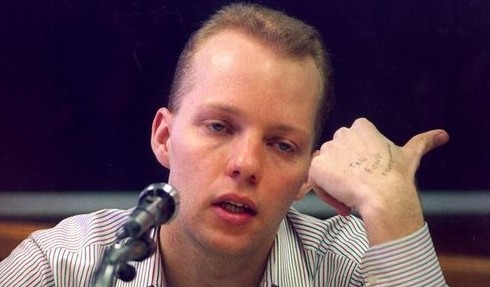
Eric Christopher Houston
Spree killer Mark Barton
Spree killer · USA · 1999
Mark Orrin Barton (1955 – July 29, 1999) committed a spree killing in Stockbrid…
12 victims
Mark Barton
Spree killer · USA · 1999
Mark Orrin Barton (1955 – July 29, 1999) committed a spree killing in Stockbrid…
12 victims
 John Allen Muhammad
Spree killer · USA · 2002
John Allen Muhammad carried out the 2002 D.C. sniper attacks with his 17-year-o…
10 victims
John Allen Muhammad
Spree killer · USA · 2002
John Allen Muhammad carried out the 2002 D.C. sniper attacks with his 17-year-o…
10 victims
 Manuel Pardo
Spree killer · USA · 1986
Manuel Pardo, Jr. was a former police officer who was convicted of nine counts…
9 victims
Manuel Pardo
Spree killer · USA · 1986
Manuel Pardo, Jr. was a former police officer who was convicted of nine counts…
9 victims
 Michael Alan Silka
Spree killer · USA · 1984
Michael Alan Silka was killed during a shoot-out with the police on May 19, 198…
9 victims
Michael Alan Silka
Spree killer · USA · 1984
Michael Alan Silka was killed during a shoot-out with the police on May 19, 198…
9 victims
 Virginia Sims
Murderer · USA · 2011
Virginia Sims was a 47-year-old South Georgia woman who pleaded guilty in conne…
1 victim
Virginia Sims
Murderer · USA · 2011
Virginia Sims was a 47-year-old South Georgia woman who pleaded guilty in conne…
1 victim
 Kelly Ryan
Murderer · USA · 2005
Kelly Ryan (born July 10, 1972 in Minneapolis, Minnesota) was a former Internat…
1 victim
Kelly Ryan
Murderer · USA · 2005
Kelly Ryan (born July 10, 1972 in Minneapolis, Minnesota) was a former Internat…
1 victim
 Raffi Kodikian
Murderer · USA · 1999
Raffi Kodikian Raffi Kodikian and David Coughlin were best friends since colleg…
1 victim
Raffi Kodikian
Murderer · USA · 1999
Raffi Kodikian Raffi Kodikian and David Coughlin were best friends since colleg…
1 victim
 Mahanand Naik
Serial killer · India · 1994
Mahanand Naik was a three-wheel rickshaw driver from Ponda in the Indian state…
18 victims
Mahanand Naik
Serial killer · India · 1994
Mahanand Naik was a three-wheel rickshaw driver from Ponda in the Indian state…
18 victims
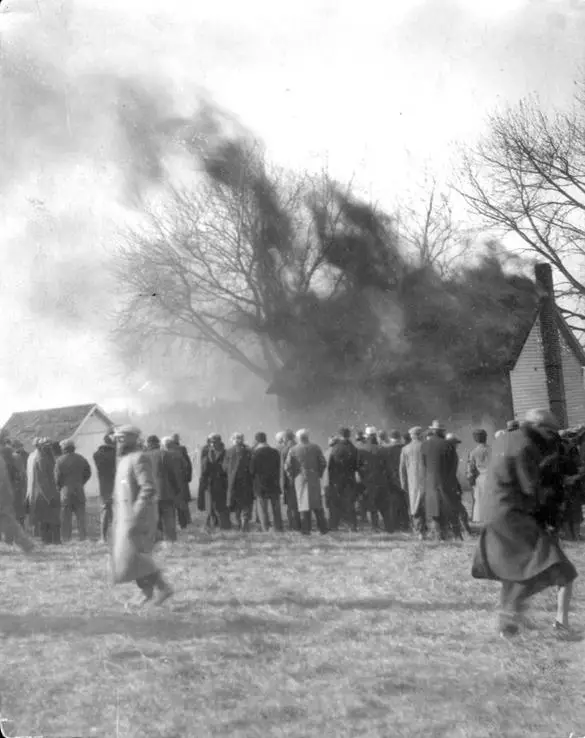 Raymond Gunn
Murderer · USA · 1930
January 11, 1904 — Raymond Gunn was born in Maryville. · September 1925 — Gunn…
1 victim
Raymond Gunn
Murderer · USA · 1930
January 11, 1904 — Raymond Gunn was born in Maryville. · September 1925 — Gunn…
1 victim
- Gender
- male
- Country
- USA
- Location
- Olivehurst, California, USA
- Date of birth
- 1972
- Age at first offence
- 20
- Characteristics
- school shooting, torture, escape attempt
- Victim profile
- Teacher Robert Brens, 28, and students Beamon A. Hill, 16, Judy Davis, 17, and Jason Edward White, 19
- Method of murder
- Shooting ( 12-gauge pump-action shotgun and a sawed off .22 caliber rifle)
- Date(s) of murder
- May 1, 1992
- Years active
- 1992
- Date of arrest
- Same day
- Status
-
Sentenced to death
Sentenced to death on September 17, 1993
Case record: Eric Christopher Houston
Background
Eric Christopher Houston was a 20-year-old former student at Lindhurst High School. He last attended Lindhurst High School in 1989 and did not graduate. During the trial, Houston testified that Robert Brens had sexually molested him at the school. The prosecution argued that the allegation was a lie and uncorroborated, although some medical experts testified they did not believe Houston was lying.
The offence
On May 1, 1992, Eric Houston killed four people and wounded 10 in an armed siege at his former high school in Olivehurst, California. Prosecutors said the attack was in retribution for a failing grade. The Lindhurst High School shooting occurred on May 1, 1992 at Lindhurst High School in Olivehurst, California, United States.
Houston carried out the attack armed with a 12-gauge pump-action shotgun and a sawed off .22 caliber rifle.
Houston killed teacher Robert Brens and students Judy Davis and Jason Edward White during an armed assault on the school campus. Houston also injured additional people during the siege. Beamon A. Hill was shot when Houston pointed his shotgun at a female student and another student pushed the female student aside and took the shotgun blast to the side of his head.
During the attack, Houston held more than 80 students hostage in a school building for an extended period, with an eight-hour standoff with police before surrendering to authorities.
Investigation
On April 30, 1992, Eric Houston phoned the principal of Lindhurst High School, threatening to “shoot up a school rally” to be held on the following day. The pep rally was cancelled.
Authorities later described the gunman as generally rational but given to emotional swings during telephone contact. Captain Dennis Moore said: “He’s riding a crest up and down. Sometimes he’s calm. Sometimes he’s more assertive.”
According to Moore, the gunman expressed unhappiness with the treatment he had received when he attended the school, and deputies complied with his demands for pizza and soft drinks.
Arrest / surrender
Houston surrendered to authorities after an extended siege. Houston surrendered to sheriff's deputies at 10:28 p.m. after a 10-hour ordeal.
Trial
On July 22, 1993, a jury found Houston guilty of murdering four people and attempting to murder 10 others at Lindhurst High School in Olivehurst. The same jury also found him guilty of holding 85 students hostage during his eight-hour siege on May 1, 1992.
During sentencing-related reporting on August 17, 1993, it was stated that Houston’s sentencing would take place on September 17, 1993 and that Superior Court Judge W. Scott Snowden would decide whether to uphold the jury’s recommendation or reduce Houston’s sentence to life in prison without possibility of parole.
On August 17, 1993, a jury recommended death for convicted killer Eric Houston. The seven men and five women on the jury spent about nine hours deliberating Houston’s penalty.
Sentencing
Superior Court Judge W. Scott Snowden set sentencing for Sept. 17, when he would decide whether to uphold the jury’s recommendation or reduce Houston’s sentence to life in prison without possibility of parole.
Houston was sentenced to death on September 17, 1993.
He was held at San Quentin State Prison awaiting his sentence.
Outcome
On September 21, 1993, Houston was found guilty on all charges against him and was sentenced to death.
Aftermath
A memorial park was erected on McGowan Parkway in Olivehurst, California in remembrance of those who died on May 1, 1992.
During the period after the shooting, multiple injured victims were reported as being admitted to Rideout Memorial Hospital in nearby Marysville. A nursing supervisor reported that one 16-year-old boy was in critical condition with wounds to his head, chest and abdomen. The supervisor also said one girl suffered a serious arm injury, and another girl was shot in both knees. Other people suffered lesser wounds.
Most of the 1,200 students were taken to Yuba Gardens School, where they were counseled and reunited with relieved parents.
Victims
The dead were Robert Brens, Beamon A. Hill, Judy Davis, and Jason E. White.
Robert Brens was a teacher who had been described as Houston’s Civics teacher during his senior year and as having flunked Houston in Civics in 1989. Beamon Hill was described as 16. Judy Davis was described as 17. Jason White was described as 19.
Quotes and statements
Sheriff Gary Tindel said: “There was mass hysteria when the shooting started,”
Amy Shumate, 16, said: “He came in, he smiled, and he shot. Then he walked away,”
Chris Ray, 17, said: “He looked like he just got out of Desert Storm.”
Chris Ray, 17, added: “His face was painted camouflage, like green and black,”
Jennifer Thompson, a sophomore, said: “Bang, bang, bang. Silence, then again,” and added: “she said, adding that her teacher first thought it was firecrackers.”
Eddie Hicks, 16, said: “He alternated between being friendly and hostile. First, he was talking and laughing, then he said he was going to shoot us.”
Deputy reporting on denial of racial motivation included a statement that Principal Ronald Ward and other officials emphatically denied that the shootings had a racial motivation or any connection to protests about the Rodney King verdict.
Houston’s motivations during the siege were characterized in statements by authorities, including Captain Dennis Moore: “He wants the opportunity to express how badly he was treated as a student.”
About the jury’s recommendation and the reaction of families:
- A juror said: “This has been very emotional.” and added: “We need our privacy.”
- Another juror said the panel agreed on the first day of deliberations that no one would discuss the trial with the media once it was over.
- Kelly Brens, the sister of the slain teacher, had mixed feelings and said: “Houston ‘deserved’ the death verdict,” and also said: “the killer’s penalty won’t bring her brother back.”
- Mitchell Brens said: “The agony, the blood, the grief - it has been like a never-ending nightmare,” and also said: “They tried to put our son on trial,” and added: “dignify” was the reason he did not want to respond to the charges during the trial.
- Mary Stickle said: “(Houston) did not give our kids a chance to do any living,”
- Mary Stickle also said she planned to be at San Quentin “when, and if, Houston is executed.”
- Joe Ann Hill said: “My children, my mother and all my family believe he should die,”
Other details
The reporting included that principal Ronald Ward and other officials denied racial motivation and any connection to protests about the Rodney King verdict.
The reporting also included that local radio and television stations were asked to curtail live broadcasts of the hostage drama because the gunman had access to cable television and radio inside the building in which he had pulled drapes, preventing officers surrounding him from seeing in. It was also stated that broadcasters sought to cover up an instance at 6 p.m. in which 16 students and a teacher ran to safety while hiding in the building.
The reporting listed “School Gunman Surrenders -- 4 Killed in 10-Hour Ordeal” and referenced the San Francisco Chronicle and its writers.
Spotted an error, or have more information about this case?