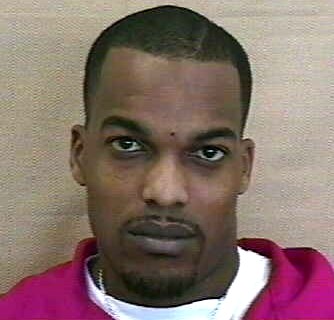
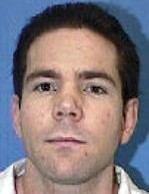
Earl Richmond
Murderer Brian Kevin Rosenfeld
Murderer · USA · 1985
Brian Kevin Rosenfeld Brian Kevin Rosenfeld was sentenced to three concurrent l…
23 victims
Brian Kevin Rosenfeld
Murderer · USA · 1985
Brian Kevin Rosenfeld Brian Kevin Rosenfeld was sentenced to three concurrent l…
23 victims
 Russell Ellwood
Murderer · USA · 1991
Russell Ellwood was a former taxi driver. Authorities suspected him of killing…
20 victims
Russell Ellwood
Murderer · USA · 1991
Russell Ellwood was a former taxi driver. Authorities suspected him of killing…
20 victims
 Robert Martines Perez
Murderer · USA · 1994
Name: Robert Martines Perez · Other name used in proceedings: Robert Martinez P…
15 victims
Robert Martines Perez
Murderer · USA · 1994
Name: Robert Martines Perez · Other name used in proceedings: Robert Martinez P…
15 victims
 Billy Frank Vickers
Murderer · USA · 1993
Billy Frank Vickers Vickers was executed by lethal injection in Texas on Januar…
14 victims
Billy Frank Vickers
Murderer · USA · 1993
Billy Frank Vickers Vickers was executed by lethal injection in Texas on Januar…
14 victims
 Nicola Sacco
Murderer? · USA · 1920
Nicola Sacco Nicola Sacco and Bartolomeo Vanzetti were convicted of murdering t…
2 victims
Nicola Sacco
Murderer? · USA · 1920
Nicola Sacco Nicola Sacco and Bartolomeo Vanzetti were convicted of murdering t…
2 victims
 Theodore Washington
Murderer · USA · 1987
Theodore “Teddy” Washington was tried jointly with Fred Robinson and Jimmy Lee…
1 victim
Theodore Washington
Murderer · USA · 1987
Theodore “Teddy” Washington was tried jointly with Fred Robinson and Jimmy Lee…
1 victim
 John Albert Boltz
Murderer · USA · 1984
Name: John Albert Boltz · Status/Outcome: Executed by lethal injection in Oklah…
1 victim
John Albert Boltz
Murderer · USA · 1984
Name: John Albert Boltz · Status/Outcome: Executed by lethal injection in Oklah…
1 victim
 Zhao Zhihong
Serial killer · China · 1996
Zhao Zhihong received a death sentence in February 2015 for crimes including ra…
10 victims
Zhao Zhihong
Serial killer · China · 1996
Zhao Zhihong received a death sentence in February 2015 for crimes including ra…
10 victims
 Debra Gindorf
Murderer · USA · 1985
Debra Lynn Gindorf was charged by indictment with six counts of murder for inte…
2 victims
Debra Gindorf
Murderer · USA · 1985
Debra Lynn Gindorf was charged by indictment with six counts of murder for inte…
2 victims
- Gender
- male
- Country
- USA
- Location
- New Jersey/North Carolina, USA
- Date of birth
- November 6, 1961
- Age at first offence
- 30
- Characteristics
- rape, torture, serial rapist
- Victim profile
- Army Spc. Lisa Ann Nadeau, 24 / Helisa Stewart Hayes, 27, and her two children, Philip, 8, and Darien, 7
- Method of murder
- Strangulation
- Date(s) of murder
- April /November 1991
- Years active
- 1991
- Date of arrest
- April 3, 1992
- Status
-
Executed
Executed by lethal injection in North carolina on May 6, 2005
Case overview
Earl Richmond was convicted of first-degree rape and three counts of first-degree murder of Helisa Hayes and her two children, Phillip and Darien Hayes, committed during the early morning hours of 2 November 1991 in Cumberland County. He was sentenced to death for each of the three murders and received a consecutive term of life imprisonment for the first-degree rape. He was executed by lethal injection in North Carolina on May 6, 2005.
Timeline
- April 4, 1991 — While awaiting trial on other charges, Earl Richmond was charged in the murder of Lisa Ann Nadeau, an army dispersing clerk at the Fort Dix military base.
- April 5, 1991 — Earl Richmond confirmed his confession in a subsequent interview.
- November 2, 1991 — Earl Richmond went to the home of Helisa Hayes, the ex-wife of his best friend Wayne Hayes, and allegedly engaged in consensual intercourse; an argument followed and then Helisa Hayes was attacked and later killed. Phillip and Darien Hayes were also killed.
- November 4, 1991 — Helisa Hayes’ father discovered the bodies of Helisa Hayes and her two children after breaking into the home.
- July 6, 1992 — Based on his April 3 and April 5 confessions, Earl Richmond was indicted for the first-degree rape and the first-degree murders of Helisa Hayes, Phillip Hayes, and Darien Hayes.
- February 28, 2005 — The U.S. Supreme Court denied Powell's petition for a writ of certiorari.
- March 17, 2005 — Correction Secretary Theodis Beck set an execution date of May 6, 2005.
- May 5, 2005 — Gov. Michael Easley denied clemency.
- May 5, 2005 — The U.S. Supreme Court denied an application for a stay of execution and petition for a writ of certiorari.
- May 6, 2005 — Earl Richmond was executed by lethal injection in North Carolina at 2:19 a.m.
The offence
Earl Richmond’s convictions involved the early morning hours of 2 November 1991, when he went to the home of Helisa Hayes, who lived with her two children, Phillip and Darien.
Attack and killings of Helisa Hayes, Phillip Hayes, and Darien Hayes
The evidence tended to show that Earl Richmond had “forceful” sex with Helisa Hayes, beat her, and strangled her to death. He then took her son Phillip into the bathroom, strangled him with the electrical cord of a curling iron, and stabbed him numerous times with a pair of scissors. After killing Phillip, he entered Darien’s bedroom, sat her up on her bed, and strangled her to death with a curling-iron cord.
Accounts also described details including:
- Helisa Hayes was beaten and strangled.
- Phillip Hayes was stabbed 40 times with a pair of scissors, and an electrical cord was wrapped around his neck five times.
- Darien was strangled with the cord from a curling iron.
A further description stated that Richmond poured rubbing alcohol over Helisa Hayes’ vaginal area.
Investigation and evidence
Earl Richmond was interviewed soon after the bodies of Helisa Hayes and her two children were discovered. During the initial interview, he told police that he had not been to the family’s home during the weekend of the murders and sought to shift attention by telling police that he believed his friend Wayne had visited Helisa’s home during that weekend.
Police initially focused on Helisa’s ex-husband Wayne Hayes, another man known as her boyfriend at the time of the murders, and Helisa’s father.
Approximately three months after the murders, Earl Richmond became a suspect after his sister informed police that she had dropped him off near Helisa Hayes’ home on the early morning of November 2 after they and others attended an all night house party. Police then requested a suspect rape kit, and DNA evidence revealed that the semen found inside Helisa Hayes’ body belonged to Earl Richmond.
Based on the DNA evidence, police brought him in for an interview on April 3, 1992, during which he confessed after initially denying involvement. During a subsequent interview on April 5, Richmond confirmed his confession, although altering his recollection.
April 3, 1992 confession — summary of described events
Earl Richmond told police that at approximately 3:45 a.m. on the morning of November 2, he went to Helisa Hayes’ home after leaving an all night house party. He said he and Helisa got into an argument about her “messing” around on Wayne Hayes, then got into an argument after “forceful” sex. He said that during the argument Helisa struck him with an object and called her son Phillip into the room; he said he knocked Helisa to the ground by striking her in the face with his fist, grabbed Phillip, took him into the bathroom, and stabbed him to death with scissors. He said that after killing Phillip he strangled Darien to death with the cord from a curling iron, then went back into Helisa’s bedroom, strangled Helisa to death with his hands, and poured rubbing alcohol on her vaginal area.
April 5 confession — confirmation with altered recollection
During the April 5 interview, Earl Richmond said that upon arriving at Helisa’s home at approximately 3:45 a.m. he engaged in consensual intercourse with Helisa. He described an argument about Helisa flaunting her relationships with other men in front of Wayne Hayes, and said Helisa struck him with an object and called Phillip into the room. He said he carried Helisa into her bedroom, struck her in the face with his fist, engaged in “forceful” sex with her, strangled her to death with his hands, and poured rubbing alcohol on her vaginal area. He then described stabbing Phillip to death with scissors and strangling Darien to death with the cord from a curling iron.
Charges and convictions
Charges and verdicts related to the Hayes killings and rape
On 6 July 1992, Earl Richmond was indicted for:
- three counts of first-degree murder, each occurring during the early morning hours of 2 November 1991
- one count of first-degree rape
At trial, the jury returned verdicts finding him guilty of:
- first-degree rape and the first-degree murder of Helisa Hayes
- first-degree murder of Phillip Hayes
- first-degree murder of Darien Hayes
He was convicted in Cumberland County Superior Court of three counts of first-degree murder and one count of first-degree rape, and the jury found him guilty based on malice, premeditation, and deliberation and under the felony murder rule for the murder of Helisa Hayes, and based on malice, premeditation, and deliberation for the murders of Phillip Hayes and Darien Hayes.
Trial
Earl Richmond was tried capitally, and the jury recommended that he be sentenced to death for each of the three murders following a capital sentencing proceeding pursuant to N.C.G.S. § 15A-2000. The trial court sentenced him accordingly.
The trial lasted two days.
During the trial, the court ruled that the State would be allowed to introduce evidence about Earl Richmond’s federal conviction for the murder of Lisa Ann Nadeau as an aggravating factor during the penalty phase. His attorneys requested permission to ask potential jurors during voir dire whether jurors could still consider mitigating circumstances in determining their ultimate recommendation as to life or death knowing of his previous first-degree murder conviction; the court denied the request, describing it as a “stakeout” question and stating that his attorneys could get the information needed to empanel an impartial jury through broader and more appropriate questions.
Sentencing
Sentence for the Hayes convictions
The jury recommended that Earl Richmond be sentenced to death for each of the three murders, and the trial court sentenced him to death for each of the three murders. The trial court also imposed a consecutive term of life imprisonment for the first-degree rape.
The jury found four statutory aggravating circumstances sufficient to sustain the death sentences, including:
- the (e)(3) and (e)(11) circumstances with regard to all three murders
- the (e)(5) circumstance with regard to the murder of the adult victim
- the (e)(9) circumstance with regard to the murder of one of the child victims
Related conviction: Lisa Ann Nadeau
While awaiting trial on the Hayes charges, Earl Richmond was charged in the April 4, 1991 murder of Lisa Ann Nadeau, an army dispersing clerk at Fort Dix, New Jersey. On May 28, 1993, Richmond was convicted of Lisa Nadeau’s murder and sentenced to life in prison without parole.
Earl Richmond was tried in New Jersey before being returned to North Carolina, and the conviction was described as a federal murder charge. The record described him as not eligible for parole on this conviction due to the Sentencing Reform Act of 1984 abolishing parole for federal offenses committed after November 1, 1987.
Appeals and post-conviction proceedings
State direct appeal
In 1998, the North Carolina Supreme Court affirmed Earl Richmond’s conviction and sentence of death in State v. Richmond, 347 N.C. 412, 495 S.E.2d 677 (N.C. 1998) (Direct Appeal). The court held:
- trial court’s decisions on challenges for cause based on prospective jurors’ beliefs regarding death penalty were not abuse of discretion
- evidence that defendant attended a funeral of victims was admissible
- a serious personal injury element of first-degree rape could include injury that results in death
- defendant was not entitled to a jury instruction on second-degree murder as to child victims
- defendant was not entitled to instruction on voluntary intoxication
- prosecutor’s arguments in guilt/innocence and sentencing phases did not require trial court to intervene ex mero motu
- depraved-heart malice could support first-degree murder conviction
- proposed nonstatutory mitigating circumstances were subsumed by submitted circumstances
- defendant was not entitled to proposed peremptory instructions
- polling of jury satisfied statutory requirements that each juror agree with each recommendation of death
- the sentence of death was not disproportionate
The decision found “NO ERROR,” and Frye, J., filed a dissenting opinion. Webb, J., also filed a dissenting opinion in which Frye, J., joined.
Federal habeas
After direct appeal, Earl Richmond filed a petition for a writ of habeas corpus under 28 U.S.C. § 2254 in the United States District Court for the Eastern District of North Carolina, raising sixteen separate claims. The district court denied relief, and he appealed.
The appellate court held that:
- a North Carolina statute requiring accompanying affidavits in support of post-conviction motion was an adequate and independent state ground for procedural default on ineffective assistance claims
- he did not show cause to excuse procedural default
- he did not show that he was actually prejudiced as a result of default
- state court rejection of a Morgan claim regarding voir dire was neither contrary to nor unreasonable application of Supreme Court precedent
- the state court unreasonably applied Simmons rule regarding instruction on parole ineligibility
- nevertheless, he was not entitled to habeas relief due to inability to show Simmons error was not harmless under the Brecht standard
The habeas decision affirmed the district court’s denial.
U.S. Supreme Court and clemency
The U.S. Supreme Court denied an application for a stay of execution and petition for a writ of certiorari on May 5, 2005.
Governor Michael Easley denied clemency on May 5, 2005.
Correction Secretary Theodis Beck set the execution date of May 6, 2005.
Execution
Scheduling and setting
Earl Richmond’s execution was scheduled for 2 a.m. at Central Prison in Raleigh, North Carolina. He was executed by lethal injection in North Carolina on May 6, 2005, and he was pronounced dead at 2:19 a.m.
Earl Richmond was described as moving to the death watch area at 3:30 p.m. Wednesday. He learned that the U.S. Supreme Court rejected his request to stay the execution at 4:05 p.m. Thursday.
Final meal and final statement
Earl Richmond did not request a last meal, and he forwent the traditional final meal. In a transcript of his final statement, he said:
"At this time, I'd like to extend my deepest apologies to all the victims' families and their loved ones," he said. "I'd like to say that I'm not a man that shies away from his responsibilities. I'd like to say that I hope that now, through my death, that y'all can move forward with your lives. Thank you and God bless you."
He also stated to other inmates:
"I don't believe in the death penalty under any circumstances, but I was born to die, and now I'll die to live," he said.
He stated:
"My victims got no last meal,"
and he said he had asked Gov. Mike Easley not to consider clemency for him.
Governor’s clemency denial — quoted statement
Gov. Mike Easley said in a written statement:
“Given the facts and circumstances of this case, I find no compelling reason to invalidate the sentence recommended by the jury and affirmed by the courts,” said Easley.
Witnesses and execution procedure — quoted statement
At 1:57, Central Prison Warden Marvin Polk entered the viewing room and said:
"Ladies and gentlemen, I've been in contact with the secretary of correction," he said. "If there are no further instructions, the execution will proceed as scheduled."
After the execution, Polk announced:
"Ladies and gentlemen, the sentence of the court has been carried out," Polk announced. "He was pronounced dead at 2:19 a.m."
Other details
Victims, family members, and other identified individuals
Helisa Hayes was 27 years old. Phillip Hayes was 8 years old. Darien Hayes was 7 years old.
Lisa Ann Nadeau was 24 years old. Earl Richmond was described as 43 years old at the time of execution.
Wayne Hayes was identified as Helisa Hayes’ ex-husband and father of the children. Wayne Hayes was described as scheduled to be among the witnesses to Richmond’s death.
Theresa Collins was identified as the sister of Lisa Nadeau. Tara Clark and Trenda Boston were identified as sisters of Helisa Hayes. Erica Woods and Lavonne Melvin were identified as Richmond’s sisters.
Jonathan Broun and Ann Groninger were identified as Richmond’s lawyers. Ed Grannis was identified as the Cumberland County district attorney.
Theodis Beck was identified as Correction Secretary. Marvin Polk was identified as Central Prison Warden.
Statements and actions before execution
Relatives of Hayes, Nadeau, and Richmond declined to be interviewed afterward. Grannis gave a written statement in which he said his office was grateful that the state executed Richmond, and he wrote:
"We trust that Earl Richmond Jr.'s execution has provided some measure of justice for his victims and for the citizens of the State of North Carolina," he wrote.
In his final statements, Earl Richmond apologized in a letter to the Hayes, Stewart and Nadeau families, writing:
"My actions have crushed the dreams and hearts of many families,"
and he wrote in a letter to the Hayes, Stewart and Nadeau families.
Earl Richmond refused news interviews and had told his lawyers not to talk publicly about his case, remorse, or other things beforehand, to avoid it being thought of as a ploy or an attempt to get clemency.
Broun and Groninger requested clemency on behalf of Richmond and his family, even though Richmond did not feel he deserved clemency.
Events described as part of the case narrative
Earl Richmond was described as a former Army drill sergeant. He had been removed as a drill sergeant at Fort Dix for misconduct.
Earl Richmond was described as having been on North Carolina’s death row since June 1995 and as having been moved at 3:30 p.m. Wednesday to the death watch area, which had four cells and a day room away from death row.
Earl Richmond was described as having been a family friend to Helisa Stewart Hayes and having dated one of her sisters, and as having served as a pallbearer at the funerals for Hayes, Phillip, and Darien.
Earl Richmond was described as having been scheduled for execution at 2 a.m. on May 6, 2005.
Earl Richmond appeared to mouth “I love you” to his sisters and then mouthed something else, perhaps to Wayne Hayes, on the second row, during the execution process.
Earl Richmond winked and flashed smiles to his sisters through a double-pane glass window before the execution began. Everyone in the witness room remained silent during the execution.
Additional allegation included in narrative
Earl Richmond was described as also being a suspect in the killing of 64-year-old Ann Shanholtz of Fayetteville in December 1990, but investigators were almost certain he killed her and “never could prove it.”
Spotted an error, or have more information about this case?