Kavin Lincecum
Murderer Brian Kevin Rosenfeld
Murderer · USA · 1985
Brian Kevin Rosenfeld Brian Kevin Rosenfeld was sentenced to three concurrent l…
23 victims
Brian Kevin Rosenfeld
Murderer · USA · 1985
Brian Kevin Rosenfeld Brian Kevin Rosenfeld was sentenced to three concurrent l…
23 victims
 Marvin Gray
Murderer · USA · 1975
Marvin Gray was convicted killer who claimed responsibility for 23 slayings and…
23 victims
Marvin Gray
Murderer · USA · 1975
Marvin Gray was convicted killer who claimed responsibility for 23 slayings and…
23 victims
 Yahweh ben Yahweh
Murderer · USA · 1980
Yahweh ben Yahweh was born and legally named Hulon Mitchell Jr. (October 27, 19…
23 victims
Yahweh ben Yahweh
Murderer · USA · 1980
Yahweh ben Yahweh was born and legally named Hulon Mitchell Jr. (October 27, 19…
23 victims
 Russell Ellwood
Murderer · USA · 1991
Russell Ellwood was a former taxi driver. Authorities suspected him of killing…
20 victims
Russell Ellwood
Murderer · USA · 1991
Russell Ellwood was a former taxi driver. Authorities suspected him of killing…
20 victims
 Bartolomeo Gagliano
Serial killer · Italy · 1981
Bartolomeo Gagliano was mentally ill and was serving time for multiple murders…
3 victims
Bartolomeo Gagliano
Serial killer · Italy · 1981
Bartolomeo Gagliano was mentally ill and was serving time for multiple murders…
3 victims
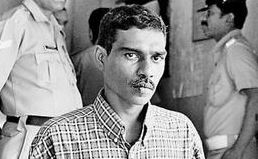 Motta Navas
Serial killer · India · 1996
Motta Navas was currently in custody awaiting trial. Motta Navas was born in 19…
7 victims
Motta Navas
Serial killer · India · 1996
Motta Navas was currently in custody awaiting trial. Motta Navas was born in 19…
7 victims
 Sylvia Seegrist
Murderer · USA · 1985
Sylvia Wynanda Seegrist (born July 31, 1960) was an American woman diagnosed wi…
3 victims
Sylvia Seegrist
Murderer · USA · 1985
Sylvia Wynanda Seegrist (born July 31, 1960) was an American woman diagnosed wi…
3 victims
 Richard Michael Rossi
Murderer · USA · 1983
Richard Michael Rossi was convicted in Superior Court (Maricopa) of first-degre…
1 victim
Richard Michael Rossi
Murderer · USA · 1983
Richard Michael Rossi was convicted in Superior Court (Maricopa) of first-degre…
1 victim
- Gender
- male
- Country
- USA
- Location
- Brazoria County, Texas, USA
- Date of birth
- 1963
- Age at first offence
- 22
- Characteristics
- rape
- Victim profile
- Kathy Coppedge, 35, and her son Casey, 11
- Method of murder
- Strangulation / Suffocation
- Date(s) of murder
- August 11, 1985
- Years active
- 1985
- Date of arrest
- —
- Status
-
Executed
Executed by lethal injection in Texas on December 10, 1992
Case information
- Name: Kavin Lincecum
- Full name: Kavin Wayne Lincecum
- Prisoner status: Texas prisoner under a sentence of death
- Execution: Kavin Wayne Lincecum was executed by lethal injection in Texas on December 10, 1992.
Background
Kavin Wayne Lincecum was convicted of capital murder in a Texas court for killing Kathy Ann Coppedge during the course of a kidnapping, robbery and attempted sexual assault. The jury answered the three special issues in the affirmative and sentenced Lincecum to death. The conviction and sentence were affirmed on appeal.
The offence
Underlying events
On August 11, 1985, Lincecum encountered Kathy Ann Coppedge and her son, Casey, at a parking lot across the street from a church in Brenham. As Kathy and Casey entered Kathy’s car, Lincecum forced his way in and drove off toward the town of Burton. After driving a few miles, he turned off on a gravel road and stopped.
Lincecum went through Kathy’s purse and took her money. He told Casey to get in the back seat. When Casey asked him not to hurt his mother, Lincecum replied that he would not. Lincecum ordered Kathy out of the car and told her to take off her clothes. They got back in the car, and Kathy picked up Lincecum’s knife and stabbed him in the left side. Lincecum retrieved the knife, folded it up, and proceeded to choke her.
He then bound Casey’s hands with the strap from Kathy’s purse and placed Casey in the trunk. He eventually bound Kathy’s hands and placed her in the trunk as well. Lincecum drove the car to another location and abandoned it, taking Kathy’s rings and watch.
Medical and evidentiary details
The evidence showed that the temperature that day exceeded 100 degrees. Kathy and Casey Coppedge were found dead in the trunk of the car later that night.
The evidence showed that Kathy most likely died as a result of strangulation rather than being placed in the trunk, while Casey probably was still alive when placed in the trunk.
Aurelio Espinola, the chief deputy medical examiner for Harris County, testified that the ligature marks around Kathy’s neck indicated that she probably was strangled for a long period of time. He estimated that she would have lost consciousness after about three minutes, but that the ligature probably was held around her neck for approximately three more minutes.
Two persons testified at trial that they saw a black man drive off from the parking lot in a blue car with a woman, and both testified that they heard cries for help.
There also was testimony from a state forensic serologist that Kathy Coppedge’s dress had male semen stains all over the inside of the skirt part of the dress. Testing disclosed that a person having Lincecum’s blood type could have deposited the semen on the dress.
When Kathy was found, her dress and bra were ripped, and her panties were found beneath her legs.
Sexual assault and strangling
The authorities said Lincecum had tried to rape Kathy Coppedge, then strangled her with her own panty hose and stuffed her body in an automobile trunk. The boy was stuffed in the trunk alive but suffocated with his mother’s body on top of him, according to the authorities.
Aurelio Espinola, the chief deputy medical examiner who testified regarding the post mortem examination conducted on Kathy Coppedge, disputed that panty hose was the ligature used to strangle her. He contended that it was more likely that Lincecum used the strap from her purse or a length of twine found underneath the bodies.
Whether Lincecum was tried for the boy’s death
The defendant was not tried in the boy’s death.
Investigation
The narrative of the crime relied largely on Lincecum’s confession. During the guilt phase, Lincecum’s confession was introduced at trial.
Trial
Conviction and sentencing framework
Lincecum was convicted of capital murder in a Texas court for killing Kathy Ann Coppedge during the course of a kidnapping, robbery and attempted sexual assault.
The legal discussion identified the relevant Texas statute:
- Texas capital murder statute, Tex. Penal Code Ann. § 19.03 Capital Murder
- (a) A person commits an offense if he commits murder as defined under Section 19.02(a)(1) of this code and:
- (2) the person intentionally commits the murder in the course of committing or attempting to commit kidnapping, burglary, robbery, aggravated sexual assault, or arson.
It also identified the murder statute, Tex. Penal Code Ann. § 19.02 Murder, including:
- (a)(1) intentionally or knowingly causes the death of an individual
- (a)(2) intends to cause serious bodily injury and commits an act clearly dangerous to human life that causes the death of an individual
- (a)(3) commits or attempts to commit a felony, other than voluntary or involuntary manslaughter, and in the course of and in furtherance of the commission or attempt, or in immediate flight from the commission or attempt, he commits or attempts to commit an act clearly dangerous to human life that causes the death of an individual
Lesser included offense instructions
At trial, Lincecum requested instructions on the lesser included offenses of murder and voluntary manslaughter. The trial judge refused, instructing the jury only on the offense of capital murder.
Defense and evidence at punishment phase
Lincecum did not offer any evidence at the punishment phase of the trial.
During the guilt phase, Lincecum’s aunt, Eula Belle Moore, testified. In June of 1985 she discussed Lincecum’s state of mind with Lincecum’s parole officer, Mary Kathryn Hebert. Moore had been concerned that Lincecum was not talking much and asked Hebert whether she could encourage Lincecum to see a psychiatrist. Moore told Hebert that she thought Lincecum “was disturbed ... he was down under and I could see he was very quiet. I felt he needed to talk to somebody.” She later testified that she thought Lincecum “felt that his momma didn’t care for him.”
Hebert confirmed the discussions with Moore about Lincecum’s welfare. Reading from her notes, Hebert stated that Moore had told her that Lincecum did not want to talk and that Lincecum’s problems may have stemmed from feeling unloved by his mother.
Jury findings on special issues
The jury answered the three special issues in the affirmative, which resulted in a death sentence.
Sentencing
Special issues under Texas capital sentencing statute
At the time of Lincecum’s trial, the Texas capital sentencing statute required the jury, after finding a defendant guilty of capital murder, to answer up to three “special issues” to determine whether the punishment should be death or life imprisonment (Tex. Code Crim. Proc. Ann. art. 37.071). The issues were:
- (b)(1): whether the defendant acted deliberately
- (b)(2): whether there is a probability the defendant would commit acts of violence in the future that would constitute a continuing threat to society
- (b)(3): in appropriate cases, whether the conduct of the defendant was unreasonable in response to provocation by the victim
If the jury answered “yes” to all three special issues, punishment was assessed at death.
Appeals
Direct appeal and affirmance
Lincecum’s conviction and sentence were affirmed on appeal:
- Lincecum v. State, 736 S.W.2d 673 (Tex. Crim. App. 1987)
- cert. denied, 486 U.S. 1061, 108 S. Ct. 2835, 100 L. Ed. 2d 936 (1988)
Federal habeas proceedings
Lincecum then sought state post-conviction relief in the 23rd Judicial District of Brazoria County, Texas, raising many of the same claims he later raised in his federal petition.
- The state court denied the petition on December 9, 1988.
- The Texas Court of Criminal Appeals affirmed.
On January 12, 1989, six days before his scheduled execution, Lincecum filed a petition for habeas corpus relief in the district court. The district court granted a stay of execution. On December 6, 1989, the district court denied relief on all claims and vacated the stay of execution. After Lincecum’s request for a certificate of probable cause was granted, the court reinstated the stay of execution pending final disposition of the appeal.
The case reached the United States Court of Appeals for the Fifth Circuit:
- 958 F.2d 1271
- Kavin Wayne Lincecum, Petitioner-appellant, v. James A. Collins, Director, Texas Department of Criminal Justice, Institutional Division, Respondent-appellee
- Appeal from the United States District Court for the Southern District of Texas
- Before KING, JOLLY, and JONES, Circuit Judges
- The decision date identified was April 7, 1992.
After considering issues on appeal, the Fifth Circuit:
- affirmed the denial of habeas relief
- affirmed the denial of habeas relief as the district court had denied relief on all claims
- vacated the stay of execution previously entered by the Fifth Circuit
Habeas issues raised and addressed
Lincecum raised 18 claims in the district court, but his appeal involved only three issues:
- Whether the state trial court erred by refusing to give his requested instruction on the lesser included offenses of murder and voluntary manslaughter.
- Whether the district court erred by denying his motion for an evidentiary hearing on claims that:
- his trial counsel rendered constitutionally ineffective assistance, and
- the Texas death penalty statute was unconstitutional because no rational jury could answer the second special issue relating to future dangerousness.
- Whether the Texas capital sentencing statute was unconstitutionally applied because the jury had no vehicle through which to consider his mitigating evidence of a troubled childhood and emotional difficulties around the time of the crime.
Ruling on lesser included offense instruction
The court held that Lincecum was not entitled to an instruction on murder and was also not entitled to an instruction on voluntary manslaughter. The opinion concluded that no constitutional error occurred in the trial judge’s failure to instruct on those offenses under the facts presented to the jury.
Ruling on evidentiary hearing requests
The court held that the district court did not err in denying an evidentiary hearing without holding one.
- On ineffective assistance: the court explained that, in state collateral proceedings, the state court found the assertions in Robert J. Kuhn’s affidavit to be true and concluded effective assistance was provided regarding mitigating evidence. The Fifth Circuit held that the state court findings were entitled to a presumption of correctness and that no genuine factual dispute required an evidentiary hearing.
- On future dangerousness unconstitutionality: the court held that the claim would fail as a matter of law, and therefore Lincecum was not entitled to an evidentiary hearing.
Ruling on mitigating evidence instructions
The court addressed Lincecum’s claim that his mitigating evidence could not be properly considered without a special instruction. It analyzed his mitigating evidence as primarily tied to the testimony of Eula Belle Moore and concluded the mitigating evidence did not require a special instruction under the court’s interpretation of Penry and Graham.
Outcome
The district court’s denial of habeas relief was affirmed. The stay of execution previously entered by the Fifth Circuit was vacated.
Aftermath
Kavin Wayne Lincecum was executed by lethal injection in Texas on December 10, 1992.
Other details
Persons named in relation to the case
- **James A.
- Robert J. Kuhn: appointed trial counsel referenced in the ineffective assistance discussion
- Eula Belle Moore: aunt of Lincecum; testified at trial during the guilt phase
- Mary Kathryn Hebert: Lincecum’s parole officer; corroborated discussions with Moore
- Aurelio Espinola: chief deputy medical examiner for Harris County; testified about post mortem examination
- Casey Coppedge: son of Kathy Ann Coppedge; died in the attack
Victims and counts stated in the narrative
- Kathy Ann Coppedge: killed
- Casey: died in the attack; the defendant was not tried in the boy’s death
Mental health and mitigating evidence details included in the proceedings
Moore testified about Lincecum being “disturbed,” “down under,” “very quiet,” and needing to talk to someone, and about her view that he “felt that his momma didn’t care for him.” Hebert corroborated these discussions with Moore.
Spotted an error, or have more information about this case?