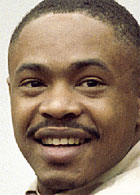
Cleophus Prince
Serial killer Glen Edward Rogers
Serial killer · USA · 1993
Glen Edward Rogers was a spree killer whose cross-country rampage in 1994-95 le…
70 victims
Glen Edward Rogers
Serial killer · USA · 1993
Glen Edward Rogers was a spree killer whose cross-country rampage in 1994-95 le…
70 victims
 Michael Swango
Serial killer · USA · 1981
Michael Swango (Joseph Michael Swango) was a physician and American serial kill…
60 victims
Michael Swango
Serial killer · USA · 1981
Michael Swango (Joseph Michael Swango) was a physician and American serial kill…
60 victims
 Efren Saldivar
Serial killer · USA · 1989
Efren Saldivar (born 30 September 1969) was an American serial killer who murde…
50 victims
Efren Saldivar
Serial killer · USA · 1989
Efren Saldivar (born 30 September 1969) was an American serial killer who murde…
50 victims
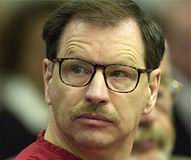 Gary Ridgway
Serial killer · USA · 1982
Gary Leon Ridgway Ridgway was born 18-February-1949 in Salt Lake City, UT. He w…
49 victims
Gary Ridgway
Serial killer · USA · 1982
Gary Leon Ridgway Ridgway was born 18-February-1949 in Salt Lake City, UT. He w…
49 victims
 Charles Cullen
Serial killer · USA · 1984
Charles Cullen (born February 22, 1960) was a former nurse and the most prolifi…
45 victims
Charles Cullen
Serial killer · USA · 1984
Charles Cullen (born February 22, 1960) was a former nurse and the most prolifi…
45 victims
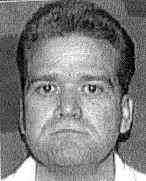 Ricky Eugene Kerr
Murderer · USA · 1994
Name: Ricky Eugene Kerr Court: Court of Criminal Appeals of Texas Docket / Case…
2 victims
Ricky Eugene Kerr
Murderer · USA · 1994
Name: Ricky Eugene Kerr Court: Court of Criminal Appeals of Texas Docket / Case…
2 victims
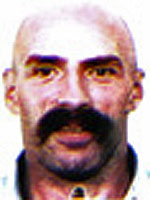 Billy Ray Hamilton
Murderer · USA · 1980
Billy Ray Hamilton died on October 22, 2007. He was convicted of murder in thre…
3 victims
Billy Ray Hamilton
Murderer · USA · 1980
Billy Ray Hamilton died on October 22, 2007. He was convicted of murder in thre…
3 victims
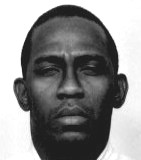 Gerald Cornelius Eldridge
Murderer · USA · 1993
Gerald Cornelius Eldridge (defendant) · Cynthia Bogany (former girlfriend; vict…
2 victims
Gerald Cornelius Eldridge
Murderer · USA · 1993
Gerald Cornelius Eldridge (defendant) · Cynthia Bogany (former girlfriend; vict…
2 victims
- Gender
- male
- Country
- USA
- Location
- San Diego County, California, USA
- Date of birth
- July 24, 1967
- Age at first offence
- 23
- Characteristics
- rape, robbery, burglary
- Victim profile
- Tiffany Schultz, 20 / Janene Weinhold, 21 / Holly Tarr, 18 / Elissa Keller , 38 / Pamela Clark, 42, and her daughter Amber, 18
- Method of murder
- St abbing with knife
- Date(s) of murder
- January -September 1990
- Years active
- 1990
- Date of arrest
- March 1, 1991
- Status
-
Sentenced to death
Sentenced to death in 1993
Overview
Cleophus Prince Jr. (also known as "The Clairemont" Killer) was an American serial killer who was convicted and sentenced to death in 1993. He was convicted of rapes and murders of six women in San Diego County, California during 1990, and was convicted of burglaries occurring at the same time.
Timeline
- December 1989 — Cleophus Prince Jr. and his girlfriend Charla Lewis moved into an apartment in the Buena Vista Gardens apartment complex in the Clairemont area of San Diego.
- January 10, 1990 — Prince was employed by Expo Builder Supplies, usually working from 3:00 p.m. until midnight.
- January 12, 1990 — Tiffany Schultz was murdered.
- January 1990 — Tiffany Schultz was stabbed to death.
- February 16, 1990 — Janene Weinhold was murdered.
- February 1991 — Prince tried to break into the house of a Scripps Ranch woman whom he had followed home from a health club.
- April 3, 1990 — Holly Tarr was murdered.
- May 21, 1990 — Elissa Keller was murdered.
- August 2, 1990 — Prince committed another burglary of an apartment located in the Top of the Hill apartment complex.
- September 13, 1990 — Pamela Clark and her daughter Amber Clark were murdered.
- September 1990 — Prince was working at the Nacomm Cable Television Company.
- December 7, 1991 — A search of Prince’s jail cell produced a toothbrush with a razor attached (a makeshift shank) hidden between mattresses on Prince’s bed.
- March 1991 — Prince was arrested in Birmingham, Alabama.
- April 25, 1990 — Prince attempted to burglarize the residence shared by Stephanie Squires and Sarah Canfield.
- July 13, 1993 — Prince was found guilty of all six murders.
- November 22, 1991 — Deputy Samuel Sheppard testified that Prince told him he would kick [his] sweet ass and assaulted him in the county jail recreation area.
- April 30, 2007 — The California Supreme Court filed its decision in People v. Cleophus Prince, Jr. (S036105), affirming the judgment in its entirety.
Background
Prince and his girlfriend Charla Lewis moved into an apartment in the Buena Vista Gardens apartment complex in the Clairemont area of San Diego in December 1989. Prince was employed by Expo Builder Supplies starting on January 10, 1990, usually working from 3:00 p.m. until midnight. Later in the year he was employed at Nacomm Communications.
The charged offenses occurred between January 1990 and February 1991. Prince was apprehended in March 1991. The preliminary examination commenced on February 24, 1992. Prince filed a motion for change of venue on September 14, 1992.
The offence
Prince was convicted of multiple murders and sexual violence, along with numerous burglaries and attempted burglaries.
Charges and verdict findings
Prince appealed from a judgment of the San Diego County Superior Court imposing a sentence of death following his conviction of:
- Six counts of first degree murder (Pen. Code, 187, subd. (a)).
- Five counts of burglary (459).
- One count of rape (261).
The jury found true:
- One rape-murder special-circumstance allegation.
- One multiple-murder special-circumstance allegation.
- That defendant used a knife in committing each of the murders (12022, subd. (b)).
The jury fixed the punishment at death. The court imposed a judgment of death and also sentenced defendant for the noncapital convictions.
In addition, Prince was convicted of:
- Six attempted burglaries (459, 664).
- Nine completed burglaries of homes belonging to persons other than the murder victims (459).
- Perjury (119).
The prosecution also described that Prince was convicted of murdering six women:
- Tiffany Schultz, 20
- Janene Weinhold, 21 (also raped)
- Holly Tarr, 18
- Elissa Keller, 38
- Pamela Clark, 42
- Amber Clark, 18
The women were killed between January and September 1990.
Method, pattern, and modus operandi (as described at trial and on appeal)
The murders were presented as similar in multiple respects, including that the victims were young White women and that the attacks involved stabbing, with some victims found partially undressed or nude and positioned on their backs. The crimes were described as occurring in a geographically small area in San Diego, and in residences where victims were found, with the first three murders occurring in adjacent apartment complexes. There was no mark of forced entry described in the expert linkage discussion.
An FBI crime scene expert testified that all the crimes were committed by a single person based on common marks among the six charged homicides.
Prince was described as a burglar who followed young women from places such as a Family Fitness Center on Miramar Drive in San Diego to the women’s homes, attempting to enter residences while occupants showered or prepared to shower.
Murder and related charges: Tiffany Schultz (Count 1)
On January 12, 1990, Tiffany Schultz, a White woman who was 21 years of age, was seen sunbathing in the doorway of her second-floor Canyon Ridge apartment about 10:00 a.m. She spoke to a friend on the telephone from 10:00 to 10:30 a.m., but telephone calls placed to her near noon or 12:30 p.m. went unanswered.
Dorothy Curtiss, the manager of the Canyon Ridge apartment complex, was relatively certain that a stranger who approached her in front of her office at approximately 10:30 a.m. on January 12, 1990, was defendant. The stranger requested a hanger to unlock his automobile, indicating the vehicle was parked on the street. Curtiss testified that when she supplied the hanger, the stranger walked toward the apartments rather than the street. Curtiss also testified she saw Schultz sunbathing in a bikini within approximately half an hour of encountering defendant.
Persons occupying the apartment located below Schultz reported that between 11:00 a.m. and 1:00 p.m. they heard loud sounds coming from Schultz’s apartment, sounding as if someone was being beaten, and they also heard running water.
Schultz’s roommate discovered her body in one of the bedrooms in the apartment. It appeared there had been a struggle. Schultz was clad only in bikini briefs. She lay on her back with her left leg extended under the bed and her right leg at a 60- to 70-degree angle. One leg was smeared with blood, and there was blood on her crotch. There were at least 47 stab wounds, including a cluster of 20 stab wounds in the right breast and chest area. Wounds were deep, some extending through to the back. There was another cluster of stab wounds in the left chest area, deep wounds including some passing all the way through the body. There were wounds on the neck and upper-right thigh and defensive wounds. Her mouth was bruised and her face had blunt trauma. The bathtub was wet, and a damp towel was nearby.
There was no evidence of a sexual assault and no sign of forced entry.
The interior and exterior doorknobs of the door leading to the room where Schultz’s body was discovered bore bloody marks in a honeycomb or cross-hatch pattern. It appeared the assailant departed by way of the patio, dropping from the second-floor balcony to the ground. Schultz’s live-in boyfriend was arrested for the murder but was released after a few days.
Murder and rape: Janene Weinhold (Counts 2, 3, and 4)
On February 16, 1990, Janene Weinhold, a White woman who was 21 years of age, shared a second-story apartment in the Buena Vista Gardens complex with a roommate and was a student at the University of California, San Diego.
Weinhold drove her roommate to work at 9:00 a.m., telling her she planned to return home to do laundry and homework. Weinhold was expected to return at 2:00 p.m. to pick up her roommate, but failed to do so.
Marsha Nelson occupied an apartment below Weinhold’s. Nelson testified she observed defendant sitting on the stairs leading to Weinhold’s second-story apartment between 11:30 a.m. and noon on February 16, 1990, appearing sad, for a period of about 15 minutes. Nelson subsequently heard her dog barking and then loud sounds coming from Weinhold’s apartment.
When summoned to a live lineup in June 1991, Nelson identified defendant on a card but then crossed out the identification, stating the incident had occurred too long ago for her to make an identification. At trial, Nelson testified she crossed out the identification because she did not want to become involved.
On February 16, 1990, telephone calls placed to Weinhold’s apartment from 2:30 p.m. went unanswered. Weinhold’s body was discovered when her roommate returned home around 8:00 p.m. The front door was locked and there was no sign of forced entry.
A knife belonging to the occupants was found in the sink, with a bent tip and blood. Weinhold’s body was found in her bedroom: one leg up against the bedroom door and the other leg spread. A blouse, trousers, and underpants were nearby; the trousers and underwear were inside out as if just taken off. The body was clad only in a bra.
There were at least 22 stab wounds, all in the upper chest area, with eight clustered in the upper-right breast. Most were deep, some penetrating breastbone and ribs, potentially bending the knife. Wounds included defensive wounds. There was a bloodstain in a honeycomb or cross-hatch pattern on a doorjamb.
Seminal fluid in Weinhold’s vagina was tested, and a genotype match with defendant’s blood sample was established such that the match would occur in approximately 7 to 8 percent of the general population (and a lower percentage of the White population). Seminal fluid was also discovered on a jogging suit, a bedspread, and the carpet next to the body. Enzyme testing found defendant, who was African-American, was within the 19 to 21 percent of that population that could have deposited the fluid. DNA testing of the jogging suit and bedspread disclosed a match with defendant’s blood sample, occurring in approximately one in 120,000 persons.
The trial described additional statements linking defendant to Weinhold’s killing. Defendant told friends Robin and Tony Romo in April 1990 that he had gone on a date with a woman, that when they arrived home he forced himself on her, that the victim was weeping, and that he went back and did her again. David Holden testified defendant mentioned a girl named Janene and described working out with her at an athletic club and going to her home for sexual encounters on one or two occasions; Holden also testified that defendant commented that the police never would capture the Clairemont murderer. A jailhouse informant, Raymond Huntley, reported conversations including defendant saying he didnt have nothing for no White bitches, and discussing how he could check the name on the mailbox to determine whether a woman lived alone. Huntley testified that defendant enjoyed stalking women, selecting one and playing with victims, letting them believe they would escape, and then doing them; Huntley also testified defendant enjoyed watching blood drip from a knife onto victims’ pubic area.
March 25, 1990: The Cotalessa-Ritchie incident (identity evidence)
Anna Cotalessa-Ritchie testified she was a young White woman who walked from her second-story apartment in the Buena Vista Gardens complex to a local store during the noon hour on March 25, 1990. She observed defendant at a bus stop on her way to the store, but he was not there when she returned. As she neared her apartment building, she saw defendant coming toward her and he stared at her as they crossed paths.
At her apartment door, she tried to insert her key into the lock when she observed defendant at the bottom of the stairs again staring at her. She testified he bent as if to tie his shoes, though they were tied already. She entered her apartment, locked the door, and reported feeling nervous. After defendant’s arrest, Cotalessa-Ritchie identified him at a video lineup and at trial, and she also identified him after previously seeing his image briefly on television before the lineup.
Murder and related: Holly Tarr (Counts 5 and 6)
Holly Tarr was 18 years of age and a White resident of Michigan. In April 1990, she visited her brother Richard at the Buena Vista Gardens complex during her high school spring break, accompanied by friend Tammy Ho. On April 3, 1990, Ho and Tarr played tennis and then entered the pool area at 11 a.m. Ho observed a well-built African-American man working out in an adjacent athletic area. About five or 10 minutes before noon, Tarr returned alone intending to shower.
Ho later approached the apartment and thought she heard a scream. To Ho’s surprise, the door was locked. Ho heard the telephone ring but no one answered. Ho knocked repeatedly and called out Tarr’s name. A neighbor called the apartment maintenance crew, and approximately 10 minutes later maintenance worker Richard Williams arrived. Williams broke the chain and entered, as the door was chained shut.
Ho ran into the apartment and saw a man emerge from a bedroom and run toward her with his face covered with a white cloth. The man held a long knife up to his ear. Ho testified the man wore a red T-shirt and had dark skin. The man ran past Ho through the front door; Ho then discovered Tarr gasping for breath. Tarr’s opal ring was gone.
A complex weight room daily log for the day indicated Richard Tarr, Holly Tarr, Tammy Ho, and C. Prince. A bystander heard screaming from the direction of the Tarr apartment between noon and 1:00 p.m. and saw an African-American man wearing a red shirt and black pants running full speed across the alley not far from Tarr’s apartment. Another maintenance worker, Juan Rivera Rojas, described the direction of flight. Rojas testified he saw an African-American man approximately 28 to 30 years of age, about five feet six inches tall, wearing a red shirt and black pants. Rojas picked out defendant in a video lineup conducted in July 1991, but testified he had not seen the man’s face and could not identify him.
Tarr’s body lay on the floor of a bedroom with legs spread approximately 45 degrees. She wore a bra and underpants, and a towel was on her chest. There was no sign of forced entry other than the chain broken by Williams. Blood was on the stairwell and in numerous places in the apartment. A shoe print at the threshold matched the size and design of defendant’s Nike Air Jordan athletic shoes. An impression of a knife in blood was observed on the apartment doorjamb. A bloody knife and a T-shirt were found near the sidewalk and parking area; the blood was identified as Tarr’s, and the knife came from the Tarr apartment.
Tarr died of a single stab wound seven inches deep that penetrated her heart. There was blood on her bra and on her underwear in the pubic area.
On the day of the Tarr murder, defendant’s acquaintances Robert Romo and Timothy Buckingham observed defendant wearing a red T-shirt driving his automobile in an alley within the Buena Vista Gardens complex between noon and 1:00 p.m. Robert later learned from his wife Robin Romo that another murder had occurred, and he observed defendant drive by again. Robert had seen defendant wear a red T-shirt prior to but not subsequent to the Tarr murder. When interviewed the day after the murder, defendant told police he had been at the pool until noon and remained in his apartment until his departure for work at 1:50 p.m. He declined a request to go to the station for fingerprinting. A few days after the murder, Robin Romo told defendant about the other murder; defendant responded: "Yes I remember. I was at the pool. I saw her leaving."
When police searched the home of defendant’s girlfriend Charla Lewis, they discovered Tarr’s opal ring. The ring was one of 63 manufactured, none having been distributed for sale further west than Michigan or Wisconsin. Lewis testified defendant gave her the ring in December 1990.
Attempted burglaries: Squires/Canfield (Counts 7 and 8)
On April 25, 1990, Stephanie Squires observed defendant follow her to the pool in her Torrey Pines Village apartment complex. She recognized him, perhaps from her recent prior residence at Buena Vista Gardens. Squires returned to her apartment around noon to shower. A neighbor saw an African-American man walk up stairs toward Squires’s apartment and telephoned the apartment manager, Jean Smith. Smith testified the neighbor told her the man climbed the stairs and tried the door handle. At trial, the neighbor testified she had merely seen the man ascend the stairs and sit down and did not wish to be involved.
On April 28, 1990, Sarah Canfield, in her bathing suit in the apartment she shared with Squires, heard a knock and observed the door handle moving. She saw defendant at the door and telephoned the apartment manager and the police. During the video lineup in July 1991, Canfield was almost positive the man was defendant; at trial she was certain. Around 3:30 p.m. that day, Jean Smith saw an unfamiliar African-American man walk past her office and asked her husband Glen to follow. Glen Smith testified he observed an African-American man driving an old, dirty or gray two-door Chevrolet or Oldsmobile exit from the parking lot with a noisy muffler. Glen saw the same vehicle driven by the same man a few days later, and he relayed the license number to police, who found the vehicle registered to defendant. Glen identified a photograph of defendant’s automobile as the vehicle he had seen on both occasions.
Burglary: Leslie Hughes-Webb (Count 9)
On May 2, 1990, between 1:30 p.m. and approximately 2:50 p.m., Leslie Hughes-Webb, a young White woman, was sunbathing near a La Jolla Shores beach house. After she walked back to the house and climbed stairs to the back door, she found defendant standing in front. He said he had rented the home in the past and walked away. Hughes-Webb entered the house and saw through the glass door that defendant was returning. She tried to secure the door but defendant forced it open and attacked her, covering her mouth, then grabbing her face and shoulders. They struggled until she pushed him over into a nightstand. She fled screaming and he followed outside, then ran out the gate. He was scheduled to work at 3:00 p.m. but arrived 15 minutes late. At a lineup and at trial, Hughes-Webb identified defendant as her attacker.
Murder and burglary: Elissa Keller (Counts 10 and 11)
Elissa Keller was 38 years of age and a White woman living with her 18-year-old daughter. Keller’s home was close to defendant’s new residence at the Top of the Hill apartment complex, where he moved in early May 1990.
Late in the evening of May 20, 1990, Keller spoke on the telephone to her daughter (away for the weekend). On May 21, 1990, Keller failed to appear at work at 9:00 a.m., unusual behavior. She did not appear later that day and did not answer the telephone.
Keller’s daughter arrived home at approximately 11:30 p.m. on May 21, 1990. The deadbolt on the front door was not locked and the chain was off the hook. She went to the bedroom and discovered her mother’s body lying on the floor with a blanket covering her torso. Keller lay on carpet with legs out and slightly separated. Keller wore only a tank top; bloody underwear lay inside out close to the body.
There were nine tightly clustered, deep stab wounds in her chest, plus defensive wounds. Blood smeared on arms and legs. The physician who examined the body at approximately 3:00 a.m. on May 22, 1990 testified Keller had been dead between six and 12 hours and possibly longer.
Entry likely occurred through a partially open window. Shoe prints on the sill and nearby stereo could have been made by defendant’s Nike Air Jordan athletic shoes; they were similar to those found at Tarr’s murder. Gloves with a distinctive honeycomb or cross-hatch pattern (used by defendant at his place of employment between January and August 1990 and found in the trunk of his vehicle) left bloody marks on a bathroom counter. A pair of such gloves was also found in the closet of defendant’s girlfriend Charla Lewis.
Keller’s gold nugget ring was missing. Defendant was later seen wearing it; the ring was stolen from defendant and traced to him during the murder investigation.
Michael Bari was acquainted with defendant when both men resided at Top of the Hill. Bari testified defendant possessed a large quantity of jewelry and told him he obtained it off girls he had slept with, adding "They would not be needing them anymore." Bari also testified defendant demonstrated how to break into an apartment using a Blockbuster video store card, remarking: "as long as it doesnt have a deadbolt, I can get into the apartment."
Bari testified in the context of discussing Keller’s murder. Another occupant, John Rollins, was acquainted with defendant and heard defendant claim responsibility for Keller’s murder during preparation for a party; Rollins testified everyone present interpreted it as a joke.
Burglary: Anna McComber, Maria Saatin, and Nadia Gatti (Count 12)
Anna McComber resided in the Top of the Hill apartment complex. Two friends from Italy, Maria Saatin and Nadia Gatti, were visiting. On August 2, 1990, the three young women sunbathed by the pool, went shopping, and sunbathed again. When they returned, they discovered that a large amount of cash in $50 and $100 bills had been stolen, along with some Italian lire belonging to the Italian visitors.
On August 3, 1990, a person who identified himself as Cleophus Prince exchanged 94,000 Italian lire for $74.73 at the San Diego Thomas Cook Foreign Exchange office. Defendant also deposited $1,100 in two $50 and ten $100 bills into his bank account, which the court described as far greater than any he previously had deposited.
Murder and burglary: Pamela Clark and Amber Clark (Counts 13, 14, and 15)
In July 1990, defendant’s girlfriend Charla Lewis joined the Family Fitness Center on Miramar Road. Her membership was cancelled 10 days later.
On September 13, 1990, Pamela Clark left her home in the University City area of San Diego at approximately 8:00 a.m. en route to the Family Fitness Center. She wore a full body glove and a bathing suit. She was White, 42 years of age, and very fit. Her husband left their home at approximately 8:30 a.m. Their 18-year-old daughter Amber was still asleep and was also a member.
At approximately 10:00 a.m., neighbors heard Amber speaking or arguing with someone inside the house. One neighbor heard Amber call out as if afraid and heard a male voice, but believed nothing serious was occurring. The neighbor believed Pamela Clark’s automobile had left earlier in the morning but had returned by 11:00 a.m. Pamela, a massage therapist, did not appear at work for her 11:00 a.m. appointment. No one answered the telephone at the Clarks home.
A colleague discovered Pamela’s body in the entryway. Pamela was nude, lying on her back with arms spread at 90 degrees to her body and legs together. She suffered 11 deep, clustered stab wounds to the upper left chest in an area measuring four and one-half by three and one-half inches, and there was evidence she had been dragged to that location. A knife that could have inflicted the wounds lay near her head.
Amber’s body lay on the floor partly in a hallway and partly in a bedroom. She was clothed, but her garments had been pulled down to expose her breasts. Her legs were spread apart. Amber suffered 11 deep, closely clustered stab wounds to her upper chest. Blood was smeared on her body. A knife blade lay on the floor in the bathroom.
Pamela’s purse was found on her bed but, uncharacteristically, contained no money. Pamela’s wedding ring was missing. Possible points of entry included a partially opened dining room window from which a screen had been removed and a living room sliding glass door.
The door handle bore marks consistent with gypsum used by defendant in employment. Shoe prints outside led back and forth under the dining room window, and defendant’s Eastland-brand shoes matched shoe prints found under the window and in the dining room. Defendant had called in sick to his employer on the day of the Clark murders.
Two people who resided with defendant after the murders testified he had been in possession of Pamela’s wedding ring. The record also described additional statements made by defendant to coworkers and supervisors about dating and about “do a mother and a daughter.”
Additional accounts of jewelry, attempted burglaries, and later burglaries (Counts 16 through 27)
Prince was also convicted of multiple burglaries and attempted burglaries, including:
- Count 16: Burglary of Michelle Tait’s residence (Collwood Pines apartments) on October 6, 1990 involving stolen television and VCR.
- Count 17: Burglary of Michael Gromme’s residence (Top of the Hill) on October 15, 1990, involving theft of liquor and $100 in cash.
- Count 18: Burglary of Bruno Gherardis residence in Encinitas on November 18, 1990, involving missing camcorder and knife.
- Count 19: Attempted burglary of Patricia Van’s residence on December 19, 1990, where she and her neighbor encountered defendant.
- Count 20: Burglary of Melinda Pinkerton’s residence on approximately January 8, 1991, involving missing camera, lingerie, rings, and gold chain; and pawn transactions using the name Rodney Higgs.
- Count 21: Perjury related to using false identification and signing a false name when pawning Pinkerton property.
- Count 22: Attempted burglary of Karyl Oldenburg’s residence on January 22, 1991.
- Count 23: Burglary of Patricia Van’s residence on January 21-23, 1991, involving broken patio door and stolen jewelry.
- Count 24: Attempted burglary of Angela and Renata Yates’ residence on January 24, 1991 involving a noisy vehicle, flight, and evidence of attempted entry while Angela showered.
- Count 25: Burglary of Louis Depamphillis’s residence on February 1, 1991 involving removed screen and stolen camera bag and jewelry boxes; defendant was later wearing a stolen ring.
- Count 26: Burglary of Judy Kinney’s residence on February 3, 1991, involving removed screen, stolen emerald ring and gold chain, with transfer of those items to Brittan Lewis and Charla Lewis.
- Count 27: Attempted burglary of Geralyn Peters Venvertloh’s residence on February 3, 1991, including an attempted entry while she showered and subsequent investigation; defendant was arrested in Birmingham, Alabama on March 1, 1991.
The record also described an escape attempt: Prince pulled his shirt over his head and ran, escaping unidentified during the Holly Tarr murder while also knocking over a maintenance worker during his escape.
Investigation and Arrest
A woman who was getting ready to shower heard someone picking her door lock. She escaped from a rear window and found a friend who confronted Prince. Prince excused himself, but the description led to his arrest. The woman said he may have followed her from a local gym.
Prince was arrested in Alabama in March 1991. The record included that Cleophus Prince Jr. was arrested by an officer with the Birmingham Police Department after he was 'talked into' the East Precinct and was transferred to San Diego, California, by detectives from the San Diego Police Department.
In February 1991, after Prince tried to break into the house of a Scripps Ranch woman whom he had followed home from a health club, Prince was arrested and agreed to give blood and saliva samples for emerging DNA testing. The results linked him to Weinhold’s killing, and prosecutors described that the pattern tied him to the others.
Trial
Guilt phase evidence (overview)
The California Supreme Court described evidence including:
- Prince’s move into Buena Vista Gardens in December 1989.
- Employment dates including January 10, 1990 with Expo Builder Supplies and later employment at Nacomm Communications.
- Victim identity details and the described similarities in the murders.
- Circumstantial evidence tying Prince to the crimes.
- DNA and other evidence connecting Prince to Weinhold’s murder, and additional evidence described as linking him to Tarr’s and other murders (including an opal ring found in Charla Lewis’s possession).
The court also described testimony about identification and alleged attempts by the defense at mistaken identification and alibi. It noted that the defense asserted mistaken identification and alibi.
Eyewitness identification and defense theory
The record described that some witnesses made identifications and others crossed out or failed to identify:
- Marsha Nelson identified defendant in a live lineup then crossed out the identification in June 1991, citing the time elapsed; at trial she testified she crossed out because she did not want to become involved.
- Karyl Oldenburg told police she might not identify the perpetrator in a lineup; her identification of defendant was later after she had seen his picture in the newspaper; she identified him at video lineup and at trial but testified the man she saw did not have facial hair unlike defendant.
- Dorothy Curtiss did not make an identification at the live lineup even though she identified defendant at trial.
- A maintenance worker described the perpetrator as probably Hispanic and selected someone other than defendant at the lineup.
- A witness, Carol Dhillon, testified she saw a similar encounter but that the perpetrator was not defendant.
An expert in eyewitness identification testified about flaws in identification and factors undermining accuracy, including fear, lapse of time, reinforcement across proceedings, and effects of a threat with a weapon on accuracy. The expert also testified that confidence is not indicative of reliability.
Penalty phase evidence
In the penalty phase, the prosecution presented evidence including:
- On December 7, 1991, a search of Prince’s jail cell produced a toothbrush with a razor attached, a makeshift shank, hidden between mattresses on the bed.
- Deputy Samuel Sheppard testified that on November 22, 1991, Prince told the deputy he would kick [his] sweet ass, directing threatening gestures, continued to taunt or threaten, and then struck Sheppard in the ribs with his elbow and tried to trip him. Sheppard forced Prince to the ground and other deputy sheriffs assisted in subduing him.
The prosecution presented testimony from parents of murder victims Schultz, Weinhold, and Tarr, and from Keller’s daughter describing the victims and impact on the families. The prosecution also played an approximately 25-minute videotape of a television interview with Tarr prepared in her hometown a few months prior to her murder in Okemos, Michigan, describing her interests, activities, plans for college, and a potential career as an actress.
The defense presented testimony about Prince’s childhood, including that at age two his father was convicted of murder and served 11 years in prison. The defense described Prince’s formative years spent in a rundown, crime-ridden housing project in Alabama, and that he was extremely short in stature as a child. Defense witnesses described good character including a close relationship with his paternal grandmother, visits to his father in prison, industriousness, protective attitude toward relatives, compassion, generosity, love for defendant, and pleas to spare his life.
A sociologist testified about negative attributes of the housing project, including family violence, inadequate housing conditions, poor education, drug and alcohol abuse, and gang activity as harmful to a child’s development. A high school counselor testified about Prince’s development into a responsible person. A pastor testified about Prince’s church activities. A former employee of the Department of Corrections described prison conditions for those sentenced to life imprisonment without possibility of parole. A fellow inmate suggested that Prince had not been the instigator of the conflict with Deputy Sheppard.
Appeals
After guilty verdicts and the sentence of death, Prince pursued appeals challenging the judgment, including issues related to:
- Denial of a motion for change of venue based on extensive pretrial publicity.
- Admission of expert testimony by FBI Special Agent Larry Ankrom regarding linkage of the six murders by common marks.
- Discovery requests regarding the FBI VICAP database.
- Admission of statements to Robin and Robert Romo and Ernest Tuua recounting incriminating statements.
- Exclusion of Tiffany Schultz statements regarding conflict with boyfriend Christopher Burns.
- Closing the courtroom during a portion of FBI Special Agent Ankrom’s testimony and closing arguments related to details of an unsolved murder committed while Prince was in custody.
- Various penalty-phase issues, including claims about victim-impact evidence and jury instructions.
The California Supreme Court affirmed the judgment in its entirety and held that the state supreme court’s unanimous ruling dismissed the defense’s attacks on trial and conviction and was the first appeal of his death sentence.
The appellate court described People v. Prince as an appeal from a judgment imposing a sentence of death. It stated it would “affirm the judgment in its entirety.”
Outcome
The jury found true:
- One rape-murder special-circumstance allegation and one multiple-murder special-circumstance allegation.
- Knife-use allegations in each murder.
The jury fixed punishment at death, and the court imposed a judgment of death. On appeal, the California Supreme Court affirmed the judgment in its entirety.
Aftermath
Prince remained on San Quentin’s death row at the time of writing described in the case record. The record also described that:
- Since then, 24 more people from San Diego County had been sentenced to die; none had been executed.
- The state had executed 13 people since the death penalty was reinstated in 1978.
- The average length of time they spent on death row was 17 ½ years according to the state prison system.
- No executions were on the horizon at the time described, with a federal judge halting executions in December after determining the state’s method of administering lethal injections was faulty and had to be fixed. A court hearing on the state’s plan for fixing the problems was slated for that month.
Other details
Employment and residence links
The record described that Prince and Charla Lewis moved into Buena Vista Gardens in December 1989 and that:
- Prince was employed by Expo Builder Supplies beginning on January 10, 1990.
- Later he was employed at Nacomm Communications.
- Defendant exchanged Italian lire at the San Diego Thomas Cook Foreign Exchange office.
- Some of the victims lived in apartments close to Prince.
Neighborhood and publicity
The media described the case as “The Clairemont Killer.” Prince argued his trial should have been moved because pretrial publicity biased the jury. His appeals lawyer, Mark E. Cutler, said the crime spree “impacted the life of every resident in San Diego” and affected jurors, describing conversations about residents reacting by getting a big dog and never going outside without it. State Supreme Court Chief Justice Ronald George acknowledged publicity but said Prince had not shown it damaged his chance at a fair trial because the “great bulk of the articles and reports was framed in neutral terms.”
Deputy District Attorney Dan Lamborn said, “It's amazing how long it takes.”
Quotes and verbatim statements in the record
- Robin Romo testified defendant told her: "Yes, I remember. I was at the pool. I saw her leaving."
- In the same context, the Romo testimony described defendant’s statements as: “Yes, I remember. I was at the pool. I saw her leaving.”
- Bari testified defendant remarked while demonstrating entry into an apartment: "as long as it doesnt have a deadbolt, I can get into the apartment."
- The Supreme Court record included the defense counsel statement on the record regarding second-degree murder instruction: "I do not want second degree at all. Ill use the courts words, all or nothing. ... I do not want second degree. Because I feel that second degree is telling the jury that I [did] something. I do not want that at all."
- Deputy Samuel Sheppard testified about Prince’s threatening words: Prince told him he would "kick [his] sweet ass," with threatening gestures.
Expert and forensic testimony
FBI Special Agent Larry Ankrom testified as an expert that he believed all six murders were committed by the same person. The court excluded portions of proposed testimony about psychological state of mind but allowed crime scene analysis and signature crimes linkage.
Victim-impact evidence and related rulings
The court described the videotape of Tarr’s interview in its analysis as part of victim-impact evidence. The trial court excluded portions depicting Tarr’s musical performances as cumulative. The appellate court reviewed and described the videotape setting as calm and neutral, noting the trial court monitored the jury for emotional distress and did not find emotion running roughshod over judgment.
Public trial closure
During portions of FBI Special Agent Ankrom’s testimony and corresponding parts of closing argument that dealt with crime scene details and autopsy photographs in an unsolved murder, the courtroom was closed to spectators. The court ordered closure only if the examination dealt with crime scene facts, autopsy photographs showing nature of wounds, or live photographs of the victim, and directed other matters to be done in open court.
Spotted an error, or have more information about this case?