Mark Anthony Profit
Murderer Russell Ellwood
Murderer · USA · 1991
Russell Ellwood was a former taxi driver. Authorities suspected him of killing…
20 victims
Russell Ellwood
Murderer · USA · 1991
Russell Ellwood was a former taxi driver. Authorities suspected him of killing…
20 victims
 Robert Martines Perez
Murderer · USA · 1994
Name: Robert Martines Perez · Other name used in proceedings: Robert Martinez P…
15 victims
Robert Martines Perez
Murderer · USA · 1994
Name: Robert Martines Perez · Other name used in proceedings: Robert Martinez P…
15 victims
 Billy Frank Vickers
Murderer · USA · 1993
Billy Frank Vickers Vickers was executed by lethal injection in Texas on Januar…
14 victims
Billy Frank Vickers
Murderer · USA · 1993
Billy Frank Vickers Vickers was executed by lethal injection in Texas on Januar…
14 victims
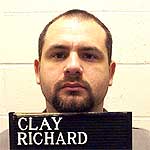 Richard Clay
Murderer · USA · 1994
Richard D. Clay’s close friend, Charles Sanders, had an affair with Stacy Marti…
1 victim
Richard Clay
Murderer · USA · 1994
Richard D. Clay’s close friend, Charles Sanders, had an affair with Stacy Marti…
1 victim
 Terry Jess Dennis
Murderer · USA · 1999
Terry Jess Dennis was a male white/Caucasian death row inmate named DENNIS, TER…
1 victim
Terry Jess Dennis
Murderer · USA · 1999
Terry Jess Dennis was a male white/Caucasian death row inmate named DENNIS, TER…
1 victim
 Anthony Allen Shore
Serial killer · USA · 1986
Name: Anthony Allen Shore · TDCJ Number: 999488 · Date of birth: 06/25/1962 · A…
5 victims
Anthony Allen Shore
Serial killer · USA · 1986
Name: Anthony Allen Shore · TDCJ Number: 999488 · Date of birth: 06/25/1962 · A…
5 victims
 Greagree Davis
Murderer · USA · 1984
Greagree C. Davis told the roommate of his sexual interest in her. He had prior…
1 victim
Greagree Davis
Murderer · USA · 1984
Greagree C. Davis told the roommate of his sexual interest in her. He had prior…
1 victim
 Clarence Gardner
Homicide · USA · 1993
October 28, 1993 — Joseph Waites was shot dead after a street scuffle involving…
1 victim
Clarence Gardner
Homicide · USA · 1993
October 28, 1993 — Joseph Waites was shot dead after a street scuffle involving…
1 victim
 Janet Redmond-Mercereau
Murderer · USA · 2007
Janet Redmond-Mercereau was convicted of second-degree murder for killing her h…
1 victim
Janet Redmond-Mercereau
Murderer · USA · 2007
Janet Redmond-Mercereau was convicted of second-degree murder for killing her h…
1 victim
- Gender
- male
- Country
- USA
- Location
- Minneapolis, Minnesota, USA
- Date of birth
- 1964
- Age at first offence
- 32
- Characteristics
- rape
- Victim profile
- Renee Bell, 30 / Deborah LaVoie, 43 / Avis Warfield, 36 / Keooudorn Photisane, 21
- Method of murder
- Ligature strangulation
- Date(s) of murder
- May-July 1996
- Years active
- 1996
- Date of arrest
- October 3, 1996
- Status
-
Died in custody
Sentenced to two consecutive life terms in 1997; died in prison in 2001
Timeline
- May 23, 1996 — The nude body of Renee Bell, a 30-year-old African-American woman, was found floating in Basset Creek in Theodore Wirth Park in Golden Valley, Minnesota.
- May 6, 1996 — Mark Profit was in a halfway house until this date, when he was released and moved in with his wife and her mother in Minneapolis.
- May 21, 1996 — The Bell murder indictment date was amended to “on or about May 21, 1996.”
- June 3, 1996 — The body of Deborah Lavoie was found approximately one and one-half blocks from where Bell’s body had been discovered.
- June 19, 1996 — The body of Avis Warfield was found approximately one-half mile from Theodore Wirth Park.
- July 13, 1996 — Officer David Born found a wallet on the bank of Basset Creek a few feet from where Bell’s body had been discovered.
- July 20, 1996 — The body of Keooudorn Phothisane was discovered in Theodore Wirth Park within one and one-half blocks of where Bell’s body had been found.
- August 2, 1996 — While being monitored by the task force, Kelly contacted Profit by telephone and asked if Profit still had the clothes that he had borrowed on July 20, 1996.
- August 31, 1996 — Phynnice Johnson was assaulted near Theodore Wirth Park.
- October 1996 — Profit was arrested for the murder of Bell.
- October 29, 1996 — Profit was indicted for two counts of first-degree murder and one count of second-degree murder in connection with the killing of Bell; a separate indictment charged attempted first-degree criminal sexual conduct and second-degree criminal sexual conduct in connection with the assault of Johnson.
- January 1996 — Profit was released in January 1996 after serving approximately 14 years in prison.
- April 16, 1997 — The district court issued a Certificate for Out-of-State Summons for Paul Kelly, who had moved to Texas.
- May 8, 1997 — The jury returned a verdict convicting Profit on all counts.
- June 2, 1997 — Judge Peter Lindberg sentenced Profit to two consecutive life terms.
- March 18, 1999 — The Minnesota Supreme Court filed the decision in State of Minnesota, Respondent, vs. Mark Antonio Profit, Appellant (C4-97-1600).
- August 2001 — Profit was charged with attempted murder on a prison guard and was facing an additional 20+ years to his four life sentences.
- September or October 2001 — Profit was found dead in his cell at the Minnesota Correctional Facility in Oak Park Heights.
- 1997 — Profit was sentenced to two consecutive life terms.
- 2001 — Profit died in prison.
Background
Mark Antonio Profit was an African-American man who was known as the “Wirth Park Killer.” Police believed Renee Bell was the first of four victims in a four-month serial killing spree. Profit had spent nearly one-half of his life in prison for violence and sexual assaults and had been out of prison for only a year since he was 15 years old. By 15, he had 30 felony arrests or charges on his record.
In 1981, Profit was released from prison at the age of eighteen. After pleading guilty to reduced charges, he served approximately 14 years in prison and was released in January 1996. He was in a halfway house until May 6, 1996, when he was released and moved in with his wife and her mother in Minneapolis.
Profit also had interactions with the legal system as a teenager. After being convicted in 1997, he was not eligible for parole until he was 93.
The offence
May 1996 murder of Renee Bell
Renee Bell was a 30-year-old African-American woman. Her nude body was found floating in Basset Creek in Theodore Wirth Park in Golden Valley, Minnesota.
What appeared to be an elastic waistband from an article of clothing was wrapped around Bell’s neck and secured in a knot. One end of this ligature was looped through Bell’s mouth and under her tongue in a gag-like manner.
Dr. Mitchell Morey, an Assistant Hennepin County Medical Examiner, performed an autopsy and concluded Bell had been strangled with the ligature and that her death was a homicide. Dr. Morey concluded that Bell had been dead from one day to one week. Bell’s body had ingested cocaine within a few hours before her death. Police observed Bell’s upper torso and vaginal areas were covered with mud, and Police Sergeant Robert Krebs testified that the mud “appear[ed] to be packed, not just a matter of something [sic] had flowed over the body.” Dr. Morey discovered mud inside Bell’s vaginal vault as well, but found no other evidence of vaginal injury nor any indication of sperm or seminal fluid inside Bell’s vaginal vault. Dr. Morey declined to rule out sexual assault, stating that decomposition and submersion in water could have masked evidence of such an assault.
Profit’s wallet was found within several feet of where Bell’s body had been discovered. Profit drove the Grand Am in which police discovered threads and fibers that experts concluded were chemically and physically indistinguishable from threads and fibers found on the ligature used to strangle Bell.
A dissenting view described the murder as occurring “on or about May 21, 1996” and as part of murders in or near Theodore Wirth Park during the summer of 1996.
August 31, 1996 assault on Phynnice Johnson
On August 31, 1996, Phynnice Johnson was assaulted near Theodore Wirth Park. Johnson was an admitted crack cocaine user and, on August 31, had been working as a prostitute on Broadway Avenue in northeast Minneapolis.
At about 11:00 p.m., a man in a car stopped to ask Johnson where to get some crack cocaine. Johnson asked if he wanted her to ride with him to help him find some cocaine. The man agreed and Johnson got into the car. The man asked Johnson if she wanted to “party.” She said yes, and the man drove to an abandoned parking lot. After smoking some crack cocaine with Johnson, the man unzipped his pants and asked her for oral sex. Johnson refused, stating that she might do so later, but wanted to party first.
The man offered to take her to a park in south Minneapolis, but instead drove toward Theodore Wirth Park. Johnson became frightened and attempted to jump from the car. The man grabbed Johnson, and in the struggle, ripped off her T-shirt as she exited the car. The man followed Johnson and demanded she return the crack cocaine stem he had given her. He repeatedly told Johnson, “Bitch I'll kill you.” The man grabbed Johnson by her pants and tried to drag her across the street.
At that same time, Joan DeMeules and her husband, George Barrett, were driving home through Theodore Wirth Park and saw Johnson struggling with a man. DeMeules testified that she heard Johnson begging the man to let her go. The couple yelled at the man to leave Johnson alone. When that proved ineffective, DeMeules exited the van and began hitting the man with an ice scraper. Barrett, armed with a bag of tomatoes, also exited the van and began hitting Johnson’s assailant with the bag.
Eventually Johnson, stripped of all her clothes, freed herself from the man and went to Barrett’s van. The assailant went to his own car. Barrett tried to salvage smashed tomatoes, picked up Johnson’s pants, and returned to the van. Barrett gave the partially-clothed Johnson his shirt to wear. DeMeules and Barrett asked Johnson what she wanted them to do. Because Johnson said she did not want to report the incident, DeMeules and Barrett drove her to the home of a friend.
Johnson later saw a picture of Profit on the news, recognized him as her assailant, and called police. DeMeules and Barrett recognized Profit as Johnson’s assailant after seeing his picture in the newspaper and hearing on public radio that police were looking for them. In separate photographic lineups, DeMeules and Barrett identified Profit as Johnson’s assailant. At trial, Johnson, DeMeules, and Barrett identified Profit as the man who had assaulted Johnson.
Investigation
Investigators investigated deaths connected to Theodore Wirth Park as possible serial killings and formed a multijurisdictional police task force. Police investigated Bell, Deborah Lavoie, Avis Warfield, and Keooudorn Phothisane under the premise that the deaths might be the work of a serial killer. Police considered these as “signature crimes” and believed the assailant may have attempted to destroy evidence of sexual assault.
- Deborah Lavoie: Her body was found June 3, 1996, approximately one and one-half blocks from where Bell’s body had been discovered.
- Avis Warfield: Her body was found June 19, 1996, approximately one-half mile from Theodore Wirth Park; both Lavoie and Warfield’s bodies had been burned with gasoline.
- Keooudorn Phothisane: His body was discovered July 20, 1996, in Theodore Wirth Park within one and one-half blocks of where Bell’s body had been found; his body was also burned and police determined he had been bludgeoned to death.
Several juveniles claimed to have seen an African-American man running from the scene where Phothisane’s body was found. The juvenile witnesses provided a composite sketch of the man to police. Profit was African-American.
After discovery of Phothisane’s body, the task force learned that Paul Kelly had spoken to his employer about a letter allegedly concerning Phothisane’s killing, suggesting Kelly told the employer that someone else had written the letter. The record did not indicate exactly what the employer told police or what Kelly said to his employer, except to suggest the employer learned that someone else had written the letter.
Shortly after, the task force contacted and interrogated Kelly. Kelly told police that Profit, his girlfriend’s brother, had asked to borrow a gas can from him on July 20, 1996. Kelly said Profit returned to Kelly’s home one and one-half to two hours later and that Profit immediately proceeded to wash clothes he had been wearing. Kelly stated that Profit then borrowed some clothes from Kelly and asked Kelly to help him wipe out the car Profit had been driving. Kelly also told investigators he saw Profit write a letter confessing to the Phothisane murder. Kelly provided handwriting and blood samples.
Police later learned that KARE 11 TV had received a letter similar to the one described by Kelly. This “KARE letter” was unsigned, and a handwriting analysis showed Kelly was the most likely author. Kelly admitted writing the KARE letter but said he wrote it only after Profit showed him an original draft and ordered Kelly to rewrite the letter in his own handwriting to throw off authorities investigating the killing.
On August 2, 1996, while being monitored by the task force, Kelly contacted Profit by telephone and asked whether Profit still had the clothes Kelly had borrowed on July 20, 1996. Profit told Kelly he did and returned clothes matching Kelly’s description.
That same day, police executed search warrants for Profit’s home and various vehicles driven by Profit or his family. In a 1990 Pontiac Grand Am known to be driven by Profit, investigators found threads and fibers similar to threads and fibers found on the ligature used to strangle Bell. Tests by a micro-analyst from the Bureau of Criminal Apprehension and a private analytic forensic microscopist revealed the trunk threads and fibers were chemically and physically indistinguishable from those from the ligature.
Arrest
In early October, Profit was arrested for the murder of Bell.
Trial
Charges and joinder
Profit was indicted on October 29, 1996, for two counts of first-degree murder and one count of second-degree murder in connection with the killing of Bell, and, in a separate indictment, for one count of attempted first-degree criminal sexual conduct and one count of second-degree criminal sexual conduct in connection with the assault of Johnson. The district court joined the two sets of charges for trial pursuant to a state motion.
Before trial, the state moved to exclude evidence of the Lavoie, Warfield, and Phothisane killings and “all testimony from/about Paul Kelly.” The district court partially granted the motion, prohibiting any mention of purported serial killings or of the KARE 11 letter. The court stated:
“[i]f, in fact, Mr. Kelly has information relevant to the specific cases before us, * * * Mr. Kelly will obviously be allowed to testify. And relevance is the relevance to the facts that are going to be submitted, the issues before the Court on those two separate charges; not unrelated, uncharged offenses.”
The defense ceased efforts to bring Kelly to Minnesota after the court’s ruling.
Evidence and prior crimes
To support claims that Profit killed Bell after sexually assaulting her and attempted to sexually assault Johnson, the state presented evidence of prior crimes committed by Profit after his release in 1981:
- September 2, 1981 — Profit convinced a 15-year-old northeast Minneapolis girl to follow him to his apartment where he produced a knife, ordered her to get undressed, tied and blindfolded her, and raped her.
- September 10, 1981 — Profit assaulted a woman at a north Minneapolis day care center where she worked, threatened her with a knife, tore off her clothes and tried to tie her with them, got on top of her and tried to kiss her, and was in the process of taking her out of the building when he was confronted by a parent and fled.
- September 11, 1981 — At a bus stop near Theodore Wirth Park, Profit forced a 16-year-old girl into his car, drove to an apartment on the north side of Minneapolis, told the girl to undress, and raped her.
The state also presented testimony from:
- A man incarcerated in 1994 with Profit who said Profit spoke to him about the importance of leaving no sperm or other DNA evidence behind after a rape.
- A man in a sexual offender treatment program with Profit in early 1996 who testified about a conversation in which Profit said it was better to solicit rape victims of low socio-economic stature because the police would be less likely to believe such victims, and that Profit would go to “extreme measures” to destroy evidence to avoid another rape conviction.
Amendment of the Bell indictment date
After the close of testimony, the state moved to amend the date of the offense on the Bell indictment from “on or between May 21, 1996 and May 23, 1996” to “on or about May 21, 1996.” The court granted the motion and instructed the jury using the amended date. Profit argued on appeal that this was an impermissible response to defense tactics.
Verdict and sentencing
On May 8, 1997, the jury returned a verdict convicting Profit on all counts. The court sentenced Profit to two consecutive life terms.
The Minnesota Supreme Court described the jury’s verdict as finding Profit guilty of two counts of first-degree murder and one count of intentional second-degree murder for the May 1996 killing of Renee Bell, and also finding Profit guilty of second-degree criminal sexual conduct and attempted first-degree criminal sexual conduct for an August 31, 1996 assault on Phynnice Johnson.
Sentencing
Judge Peter Lindberg sentenced Profit on June 2, 1997 to two consecutive life terms for the murder of Bell and the rape of another woman. Profit was sentenced to one life term on murder charges and to a consecutive life term on the criminal sexual conduct charge.
Appeals
Profit appealed to the Minnesota Supreme Court, C4-97-1600 (State of Minnesota, Respondent, vs. Mark Antonio Profit, Appellant). The Supreme Court filed its decision on March 18, 1999.
Joinder
Profit argued reversible error based on joining the Bell and Johnson charges for trial. The Supreme Court held that joinder of the Bell and Johnson charges was improper under Minn. R. Crim. P. 17.03. It concluded the joined offenses were improperly joined, but were not prejudicially erroneous because evidence of each offense would have been admissible as Spreigl evidence in the trial of the other.
Exclusion of serial-killing evidence and Paul Kelly testimony
Profit argued the district court abused its discretion by excluding evidence of purported serial killings and of Paul Kelly’s possible involvement in Phothisane’s killing. The Supreme Court rejected these arguments and held the district court did not abuse its discretion in excluding evidence of the purported serial killings.
In the course of the decision, the Supreme Court stated that the KARE letter was hearsay and that Kelly was not brought to Minnesota to testify, and that police affidavits indicated Kelly did not actually tell anyone he committed the Phothisane killing. The decision also reproduced the handwritten KARE letter content in a footnote.
The Supreme Court quoted the handwritten KARE letter as:
“I am writing about the the he she I kill Saturday I kill it because it was bad. I broke its neck and burned it I saw it on the TV and you thank I kill all them people but I did not I keep its clothes and purse for memories I have aids and I will die soon but until I do I will half got ride of all the bad people I want you to tell everybody that I am not bad God Bles you ”
Amendment of indictment date
Profit asserted it was prejudicial error to amend the date of the offense on the Bell murder indictment after the close of testimony. The Supreme Court concluded Profit suffered no prejudice because the amended date was consistent with the case presented at trial.
Sufficiency of evidence
Profit challenged the sufficiency of the circumstantial evidence supporting the jury’s verdict finding him guilty of Bell’s murder. The Supreme Court affirmed, concluding the evidence supported first-degree murder and that the jury could reasonably find beyond a reasonable doubt that Profit killed Bell while committing or attempting to commit criminal sexual conduct.
The Supreme Court described evidence supporting intent and premeditation, including the manner of strangulation and testimony that Profit would go to “extreme measures” to destroy evidence of his rapes.
The Supreme Court also concluded the jury could infer forced sexual contact despite no seminal fluid or vaginal injuries being found, and linked the inference to Bell being a reputed prostitute, found naked, with mud packed onto her vaginal area and upper torso, and evidence presented about Profit’s pattern of abducting, stripping, binding, and raping victims.
Outcome in Supreme Court
The Supreme Court affirmed Profit’s convictions.
Outcome
Profit was found guilty of:
- Two counts of first-degree murder and one count of intentional second-degree murder for the May 1996 killing of Renee Bell.
- Second-degree criminal sexual conduct and attempted first-degree criminal sexual conduct for the August 31, 1996 assault on Phynnice Johnson.
The district court sentenced him to two consecutive life terms.
A dissent argued that Profit should have been allowed to present evidence of Paul Kelly’s handwritten confession letter to KARE 11 TV involving Phothisane, and that error might have contributed to the conviction for murder of Renee Bell. The dissent would have remanded for a new trial for the Bell murder case while affirming the Johnson assault conviction.
Other details
Multiple additional suspected victims were discussed, along with evidence related to them:
- Avis Warfield’s death was linked to Profit through “new DNA tests on a cigarette butt.”
- It was undisputed Profit was in jail when Warfield’s stabbed and burned body was discovered on June 19, 1996, in front of a house where he once lived.
- It was disputed whether Profit was locked up on a parole violation when Warfield was stabbed; Profit insisted he was in the Hennepin County jail, while authorities said he had not yet been arrested.
- Profit claimed he wanted to be charged with Warfield’s murder.
The case also discussed alleged frame-ups and defense theories:
- During the 1997 trial, Profit and one of his attorneys, Charles Amdahl, argued unsuccessfully that Profit’s wallet was planted at the Bell murder scene, and they blamed Paul Kelly.
- Profit contended Kelly planted the cigarette butt near Warfield’s body.
- Profit offered no reason why Kelly would frame him other than that there was trouble between the two because Kelly was dating Profit’s sister.
After sentencing, an attempted murder charge was filed:
- On August 2001, Profit was charged with attempted murder on a prison guard and was facing an additional 20+ years to his four life sentences.
Profit died in custody:
- In September or October 2001, Profit was found dead in his cell at the Minnesota Correctional Facility in Oak Park Heights.
Spotted an error, or have more information about this case?