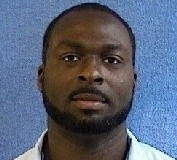
Clarence Gardner
Homicide Jack Kevorkian
Homicide · USA · 1990
Jack Kevorkian (born May 26, 1928) was a controversial American pathologist. He…
130 victims
Jack Kevorkian
Homicide · USA · 1990
Jack Kevorkian (born May 26, 1928) was a controversial American pathologist. He…
130 victims
 David Koresh
Homicide · USA · 1993
David Koresh (born Vernon Wayne Howell; August 17, 1959 – April 19, 1993) led t…
79 victims
David Koresh
Homicide · USA · 1993
David Koresh (born Vernon Wayne Howell; August 17, 1959 – April 19, 1993) led t…
79 victims
 Todd Hall
Homicide · USA · 1996
Todd Hall was described by neighbors as "mentally slow" and was said to have su…
9 victims
Todd Hall
Homicide · USA · 1996
Todd Hall was described by neighbors as "mentally slow" and was said to have su…
9 victims
 Clinton Bankston
Homicide · USA · 1987
15 August 1987 — Ann Morris (63), her sister Sally Nicholson (59), and Sally’s…
5 victims
Clinton Bankston
Homicide · USA · 1987
15 August 1987 — Ann Morris (63), her sister Sally Nicholson (59), and Sally’s…
5 victims
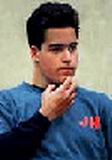 Joshua Jenkins
Homicide · USA · 1996
Joshua Jenkins was a 15-year-old American killer who killed five members of his…
5 victims
Joshua Jenkins
Homicide · USA · 1996
Joshua Jenkins was a 15-year-old American killer who killed five members of his…
5 victims
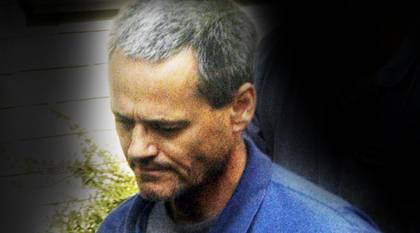 Ulf Olsson
Murderer · Sweden · 1989
Ulf Olsson (1951–), also known as Helénmannen (“the Helén man”) in Sweden, was…
2 victims
Ulf Olsson
Murderer · Sweden · 1989
Ulf Olsson (1951–), also known as Helénmannen (“the Helén man”) in Sweden, was…
2 victims
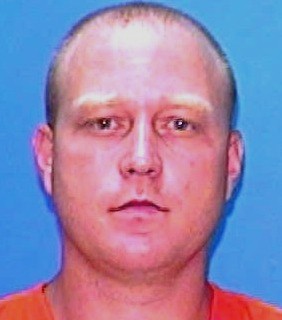 Eric Simmons
Murderer · USA · 2001
Name: Eric Simmons · Date of birth: 11/23/74 · Supreme Court of Florida opinion…
1 victim
Eric Simmons
Murderer · USA · 2001
Name: Eric Simmons · Date of birth: 11/23/74 · Supreme Court of Florida opinion…
1 victim
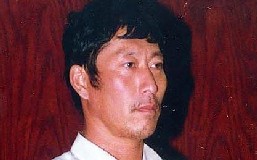 Bai Baoshan
Serial killer · China · 1996
Bai Baoshan was executed by shot in the head on May 6, 1998. · October 16, 1997…
14 victims
Bai Baoshan
Serial killer · China · 1996
Bai Baoshan was executed by shot in the head on May 6, 1998. · October 16, 1997…
14 victims
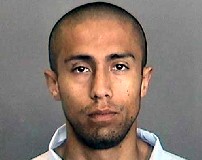 Itzcoatl Ocampo
Serial killer · USA · 2011
Itzcoatl Ocampo was a former Marine accused in Orange County of brutally murder…
6 victims
Itzcoatl Ocampo
Serial killer · USA · 2011
Itzcoatl Ocampo was a former Marine accused in Orange County of brutally murder…
6 victims
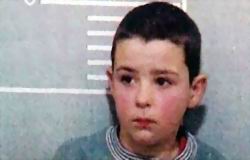 Robert Thompson
Homicide · United Kingdom · 1993
Robert Thompson (born 23 August 1982) abducted, tortured and murdered James Bul…
1 victim
Robert Thompson
Homicide · United Kingdom · 1993
Robert Thompson (born 23 August 1982) abducted, tortured and murdered James Bul…
1 victim
- Gender
- male
- Country
- USA
- Location
- Chicago, Illinois, USA
- Date of birth
- December 30, 1976
- Age at first offence
- 17
- Characteristics
- juvenile, gang
- Victim profile
- Joseph Waites (High-School student)
- Method of murder
- Shooting
- Date(s) of murder
- October 28, 1993
- Years active
- 1993
- Date of arrest
- —
- Status
-
Imprisoned
Sentenced to 35 years in prison (1995); conviction affirmed by Illinois appellate court and Illinois Supreme Court denied leave to appeal; federal habeas corpus relief was reversed by the Seventh Circuit and a writ was directed to issue unless the State afforded Clarence Gardner a new trial within 120 days
Timeline
- October 28, 1993 — Joseph Waites was shot dead after a street scuffle involving members of the Calumet High School football team and local gang members.
- October 23, 1993 — Several members of the Calumet High School football team were involved in an altercation with a larger group comprising members of two allied gangs, the Gangster Disciples and the Black Disciples.
- February 15, 1995 — The trial commenced.
- February 17, 1995 — The prosecution rested.
- February 21, 1995 — The next court day contemplated for a continuance.
- January 12, 1999 — The case was argued in the United States Court of Appeals for the Seventh Circuit.
- May 4, 1999 — The case was decided in a panel decision directing that a writ of habeas corpus shall issue unless the State afforded Gardner a new trial within 120 days.
- September 22, 1999 — The matter was reargued en banc.
- December 10, 1999 — The en banc court affirmed the District Court’s denial of habeas corpus relief.
Background
Clarence Gardner was a sixteen-year-old juvenile and a member of the Gangster Disciples. Joseph Waites was the student-manager of the Calumet High School football team in Chicago. The area around 79th Street and Carpenter was described as Gangster Disciples and Black Disciples territory, with the Vice Lords and the Blackstones as rival gangs, and a neutral area in between. The incident leading to Waites’s death involved a street fight between local gang members and members of the Calumet High School football team.
The incident was tied to alleged territorial boundaries near Calumet High School. Members of the high school football team were involved in an altercation with a larger group comprising members of two allied gangs, the Gangster Disciples and the Black Disciples. Several individuals were described as present at or near the location, including Clarence Gardner and other gang members and members of the football team.
The offence
Joseph Waites was shot and killed when he and other members of the football team got into a street fight with local gang members.
Clarence Gardner was charged with first degree murder under a theory of accountability. The accountability theory stated that where two or more people engage in a common criminal design or agreement, any acts in furtherance of the criminal act by one party are considered to be the acts of all parties to the common design and all are equally responsible for the consequences.
At trial, the jury was told that Gardner’s involvement included punching and kicking Joseph Waites and exhorting other gang members to “bust him,” a colloquialism for “shoot him.” Clarence Gardner was described as having admitted participating in the beating and acknowledging that he said “bust him” to Tony as Tony stood over Waites with a cocked gun before Tony fired four shots.
The record included testimony that a phrase was shouted during the melee. The witnesses testified to Gardner’s involvement in shouting “bust them folks” or similar phrases at different points, and testimony also included Gardner’s admission in a court-reported statement and in a statement given to police. Tony shot Joseph Waites four times, killing him.
Other individuals were described as participating in the altercation and as connected to the car and the shooting, including “Tony,” “Meechie,” and Andre Bridges. Richard Taylor and Demitrius Smith were described in connection with a blue car earlier in the afternoon in one presentation of the facts, and Buck Eye Lee was described as telling the shooter to “take care of his business.”
Investigation
Clarence Gardner was arrested and charged with first degree murder under a theory of accountability.
Gardner gave a court-reported statement during a police interview. In one presentation, Gardner admitted that he participated in the beating by punching Waites three times in the chest, and later stated that he said “bust him” in the final stage of the altercation before the fatal shots. The record also reflected that the timing and attribution of the “bust him” statements were a defining issue at trial.
The record discussed discrepancies between early police statements and later trial testimony from football players concerning who said the “bust” statements at the initial stage of the altercation.
The record included discussion of a witness, Luther Donald, who had promised to testify but went to school instead on the day his testimony was expected.
Arrest
Clarence Gardner was later arrested and charged with first degree murder under a theory of accountability.
Trial
The trial began on Wednesday, February 15, 1995 and proceeded through February 17, 1995 when the prosecution rested.
Clarence Gardner did not testify in his own defense.
Continuance
The defense sought a continuance after running out of witnesses. Defense counsel stated the witness Luther Donald was expected to testify. The defense moved for a continuance to the next court day (Tuesday) to allow Donald to testify.
Defense counsel described what Donald was expected to say:
- “We expect him to say that he was present with other football players and that he saw this car come up with two people in it. And that he heard the words at that point bust him or shoot him. That it came from one of the people in the car neither of whom were seen. When he first talked to the police he did give them the name Ceno. He did not assign to that person those statements. Tr. at 145.”
The trial judge denied the continuance and stated:
- “Let the record reflect that it is now 3:35. It appears to me on Friday--Monday is a court holiday. Tuesday we are 4 judges short. We have five jury trials, 2 judges to do it, myself and Judge Erickson. That's what is scheduled for Tuesday. It seems to me that this witness's testimony is cumulative with everything else you have said he will say, including that somebody in the car said bust him. One of the witnesses--all the witnesses have said this person got out of the car, said he wanted to bust him or something to that effect. It's already been said. And it's also opinion. It's also in the defendant's statement. It seems to me leaving aside the fact I think given the current posture of the case, if it was just for one day tomorrow, that wouldn't be so bad. I don't want the jury out on this case for three days and coming in on the 4th especially in view of the Court's schedule and in view of the fact that this is cumulative. Tr. at 145-46.”
Voir dire and gang bias
Clarence Gardner argued that the trial court abused its discretion by refusing to allow sufficient questioning to uncover potential gang bias during voir dire.
Gardner proposed five questions designed to elicit gang bias:
- “Have you or any member of your immediate family ever had any direct involvement with a street gang?”
- “Do you think that someone who is in a gang is necessarily a criminal?”
- “Do you understand that it is not a crime just to join a gang?”
- “Do you understand that one member of a gang is not legally responsible for the actions of other gang members just because they are in the same gang?”
- “Would you be able to put aside any feelings you may have about gangs, and give the defendant a fair trial based on the evidence?”
The trial court agreed to pose the first question and offered follow-up if jurors responded affirmatively. During voir dire, the court asked about indirect involvement as well, and the court refused to pose the remaining proposed questions or to allow the defense to pose them.
The record also contained closing argument language attributed to the prosecution:
- “This case is about the stupidity of street gangs in Chicago. You have seen first hand why this country looks at Chicago with such disgust and disdain. It's because of GDs, because of folks just like this seated right here. Some people have asked what can we do about this senseless violence, about these innocent victims that will die. There was an innocent victim in this case. He did nothing, nothing, nothing deserving to die. My God, we have to do something about that. Well today as jurors you have the rare privilege of being in a position to actually do something about gang violence in Chicago. Tr. at 181.”
A separate closing-argument passage was quoted in the record:
- “A man by the name of Hitler never murdered anybody, never touched anybody, never placed anybody inside of one of those ovens but yet he was the one that set this into motion. He's the one who gave that order.... That's what this case is about today.” Tr. at 176.
The jury convicted Clarence Gardner of first degree murder and the jury returned a sentence of 35 years in prison.
Sentencing
Clarence Gardner was convicted of first degree murder and sentenced to 35 years in prison.
Appeals
Clarence Gardner appealed his conviction to the Illinois Appellate Court, which affirmed his conviction.
The Illinois Supreme Court denied Gardner’s petition for leave to appeal.
Gardner then petitioned for habeas corpus under 28 U.S.C. § 2254. The district court denied relief.
In one panel decision, the United States Court of Appeals for the Seventh Circuit reversed and directed that a writ of habeas corpus shall issue unless the State afforded Gardner a new trial within 120 days.
In the en banc proceedings, the Seventh Circuit affirmed the District Court’s denial of habeas corpus relief.
Seventh Circuit panel reversal (directed new trial)
The Seventh Circuit found the trial court acted unreasonably in denying the continuance and in limiting voir dire. The appellate court reversed the district court’s decision and directed issuance of the writ unless a new trial was afforded within 120 days.
Seventh Circuit en banc affirmance
The Seventh Circuit en banc affirmed the district court’s denial of Gardner’s petition for habeas corpus relief.
Outcome
After federal habeas review, there was a split between the Seventh Circuit panel and the en banc court. The panel reversal directed issuance of the writ unless the State afforded a new trial within 120 days. The en banc court ultimately affirmed the District Court’s denial of habeas corpus relief.
Other details
Clarence Gardner was described as a “self-professed gang member” in the record.
The record discussed the meaning of “bust him” as a street expression meaning “shoot him,” and discussed whether Gardner’s statements were leader’s orders into action or an excited exclamation. Witness testimony included statements that Gardner shouted “bust them folks” at the onset and repeated “bust them” language multiple times.
Luther Donald was described as a friend of the victim who had promised to be in court but had gone to school instead, leading to the request for a continuance.
Michael Waites testified at trial, and other football players testified, including Anthony Foster and Cantrell Davis. Their testimony included identification of the “bust” statements and discussion of when those statements were made.
The record included discussion of Buck Eye Lee telling the shooter “take care of your business.”
The record included discussion of the blue car and its contents, and included testimony about a firearm described as a .25 or .22 automatic and that Tony fired four shots.
Richard Taylor was described as an older man who had driven by in a blue car earlier in the afternoon. Demitrius Smith was also described as an older man connected with the blue car earlier in the afternoon.
Andre Bridges was described as a Black Disciple who joined the group at 80th and Bridges.
Clarence Gardner was also described by the nickname “Ceno” in parts of the record.
The en banc decision named Paul Barnett as respondent and referenced Danville Correctional Center. The en banc decision included the statement that Judge Ann Claire Williams took no part in the consideration of the case.
Spotted an error, or have more information about this case?