
Janet Redmond-Mercereau
Murderer Miranda Barbour
Murderer · USA · 2013
Miranda Barbour, 19, defendant. · Elytte Barbour, 22, defendant and husband of…
100 victims
Miranda Barbour
Murderer · USA · 2013
Miranda Barbour, 19, defendant. · Elytte Barbour, 22, defendant and husband of…
100 victims
 Tiffany Hall
Murderer · USA · 2006
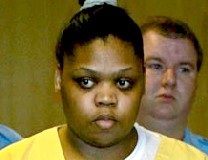
Tiffany Hall was 24 when she was charged in September 2006. She later entered a…
5 victims
Tiffany Hall
Murderer · USA · 2006
Tiffany Hall was 24 when she was charged in September 2006. She later entered a…
5 victims
 Banita Jacks
Murderer · USA · 2007
Banita Jacks was a Washington, DC resident convicted of murdering her four daug…
4 victims
Banita Jacks
Murderer · USA · 2007
Banita Jacks was a Washington, DC resident convicted of murdering her four daug…
4 victims
 Holly Grigsby
Murderer · USA · 2011
Holly Grigsby was sentenced to life in prison without parole on July 15, 2014.…
4 victims
Holly Grigsby
Murderer · USA · 2011
Holly Grigsby was sentenced to life in prison without parole on July 15, 2014.…
4 victims
 Jessica Tata
Murderer · USA · 2011
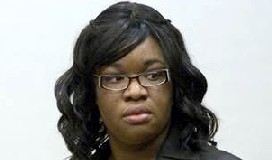
Jessica Tata was a Houston home day care owner who fled to Nigeria after a fire…
4 victims
Jessica Tata
Murderer · USA · 2011
Jessica Tata was a Houston home day care owner who fled to Nigeria after a fire…
4 victims
 Amanda Bennett
Murderer · USA · 2011
Amanda Bennett was an Indiana woman who shot her three children and set the fam…
3 victims
Amanda Bennett
Murderer · USA · 2011
Amanda Bennett was an Indiana woman who shot her three children and set the fam…
3 victims
 James Belknap
Mass murderer · USA · 2012
James Roy Belknap was a Nicholas County man who killed four people. He pleaded…
4 victims
James Belknap
Mass murderer · USA · 2012
James Roy Belknap was a Nicholas County man who killed four people. He pleaded…
4 victims
 Phillip Bocharski
Murderer · USA · 1995
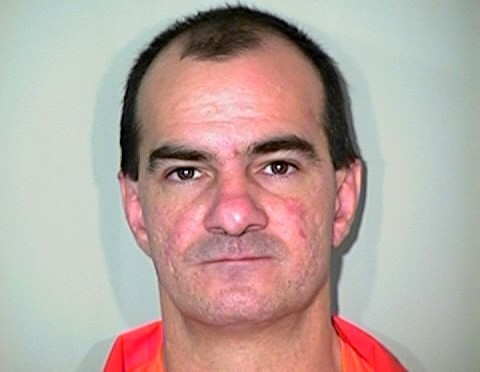
Phillip Bocharski was convicted in Yavapai County of burglary in the first degr…
1 victim
Phillip Bocharski
Murderer · USA · 1995
Phillip Bocharski was convicted in Yavapai County of burglary in the first degr…
1 victim
 Eric Owen Mann
Murderer · USA · 1989
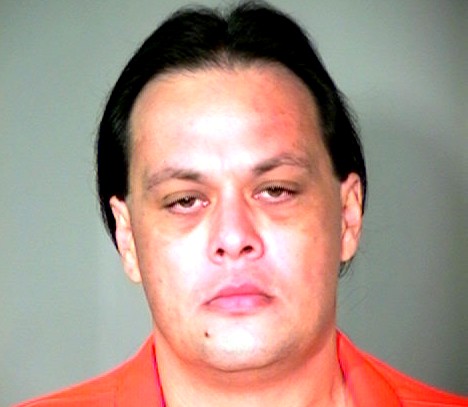
Defendant: Eric Owen Mann · Presiding Judge: John F. Kelly · Prosecutor: John W…
2 victims
Eric Owen Mann
Murderer · USA · 1989
Defendant: Eric Owen Mann · Presiding Judge: John F. Kelly · Prosecutor: John W…
2 victims
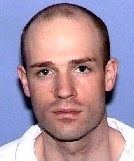 Randy Halprin
Murderer · USA · 2000
Randy Halprin (Randy Ethan Halprin), TDCJ Number 999453 · Date of birth: 09/13/…
1 victim
Randy Halprin
Murderer · USA · 2000
Randy Halprin (Randy Ethan Halprin), TDCJ Number 999453 · Date of birth: 09/13/…
1 victim
 Jerry Lynn McCracken
Mass murderer · USA · 1990
Jerry Lynn McCracken was an Oklahoma death row inmate executed by lethal inject…
4 victims
Jerry Lynn McCracken
Mass murderer · USA · 1990
Jerry Lynn McCracken was an Oklahoma death row inmate executed by lethal inject…
4 victims
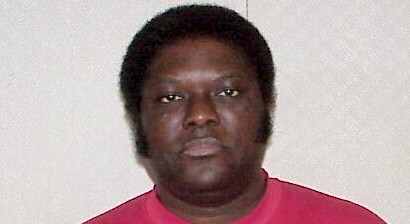 Beoria Simmons
Serial killer · USA · 1981
Beoria Simmons (DOB 5-17-54) was convicted of three counts of murder and rape a…
3 victims
Beoria Simmons
Serial killer · USA · 1981
Beoria Simmons (DOB 5-17-54) was convicted of three counts of murder and rape a…
3 victims
- Gender
- female
- Country
- USA
- Location
- Staten Island, New York City, Richmond County, New York, USA
- Date of birth
- 1969
- Age at first offence
- 38
- Characteristics
- domestic violence, motive unknown, rape, police officer
- Victim profile
- Her husband, Douglas Mercereau, 39, New York City fire marshal
- Method of murder
- Shooting (9mm handgun)
- Date(s) of murder
- December 2, 2007
- Years active
- 2007
- Date of arrest
- March 20, 2008
- Status
-
Life imprisonment
Sentenced to 25 years to life in prison on July 1, 2009
Case overview
Janet Redmond-Mercereau was convicted of second-degree murder for killing her husband, Supervising Fire Marshal Douglas Mercereau, by shooting him three times in the head while he slept in their home.
Timeline
- Dec. 2, 2007 — Supervising Fire Marshal Douglas Mercereau was shot three times in the head at close range with his 9mm handgun while he slept in his bed in their Oakwood home; Janet Redmond-Mercereau called 911 and reported finding him dead.
- March 21, 2008 — Janet Redmond-Mercereau was ordered held without bail after she was charged with shooting Douglas Mercereau in the head.
- May 11, 2009 — A jury found Janet Redmond-Mercereau guilty of second-degree murder.
- July 2, 2009 — The trial court imposed the sentence following the jury verdict.
- July 1, 2009 — She was sentenced to 25 years to life in prison.
- Dec. 2, 2007 — Seven years after the murder, she served out her sentence of 25 years to life.
- May 24, 2011 — The Appellate Division affirmed the conviction in Supreme Court, Appellate Division, Second Department, New York. The People, etc., respondent, v. Janet Redmond Mercereau, appellant. 2009–06525 (Ind.No. 92/08).
The offence
Douglas Mercereau, an FDNY fire marshal, was fatally shot three times in the head with his 9mm handgun while he slept in his bed in their Oakwood home on Staten Island.
Evidence described in the proceedings indicated that he was still alive after the first shot; the second shot was fired only four inches from his head.
Prosecutors said the couple’s marriage was unhappy and that Ms. Redmond-Mercereau was “a volcano” who killed her husband after years of being teased and criticized about her housekeeping and her weight.
Investigation
Investigators believed Janet Redmond-Mercereau wiped the gun clean of prints, removed her clothes and threw them into the washing machine, and took “several showers” to get rid of any gunpowder residue.
Police found the victim’s 9mm service revolver a few feet from his blood-soaked body inside the Tarring Street home; there were three bullets in his head.
The case was described as relying largely on circumstantial evidence; prosecutors emphasized motive as “critical to the case.”
Police and ACS conducted four interviews with the girls and although the girls were not able to provide details of the killing, they contradicted their mother’s account of the crime.
A spent shell casing from the murder weapon was discovered in the basement of the Tarring Street home, described as a careless firing site; the shooting instructor who took meticulous care with his weapons would have been unlikely to choose it.
Investigators believed the round fired through an archery target in the basement was a “test shot.”
Janet Redmond-Mercereau told emergency responders exactly how many times her husband was shot.
Authorities described three shell casings found in the house: one in the kitchen, one in the dining room, and one near Douglas Mercereau’s body; investigators believed she scattered them throughout the house.
Police also took steps to check her account: a re-enactment was planned to check her alibi that she slept through the shots, by firing three shots from the murder weapon in the fire marshal’s room while detectives positioned themselves in other rooms and outside the house.
Police found blood on Janet Redmond-Mercereau’s fingernails and found her freshly dried clothes in the dryer; when asked how the blood got there, she said it came from her menstrual period and not from contact with her dead husband.
Investigators described crime-scene work that included combing through the house and dismantling drains and pipes in an effort to find blood and brain matter.
Arrest and pretrial
Janet Redmond-Mercereau voluntarily surrendered to police in March last year after calling 911 and reporting finding her husband dead in his bed.
She was charged with shooting Douglas Mercereau in the head and ordered held without bail.
During a Staten Island Family Court proceeding, Judge Terrence McElrath asked: “Did you murder your husband?” Janet Redmond-Mercereau replied by invoking the Fifth Amendment.
Her lawyers continued to assert her innocence; they argued that the forensic evidence “just did not add up,” and that “juries make mistakes.”
Trial
The jury was described as deadlocked for over three days before reaching a unanimous verdict.
The 12-member panel was sequestered during deliberations and returned a unanimous verdict.
Janet Redmond-Mercereau was found guilty of second-degree murder.
Assistant District Attorney Yolanda L. Rudich described the case as supported by circumstantial evidence that excluded any reasonable conclusion that anyone else cold-bloodedly executed her husband as he slept, and she said: “We don’t have a smoking gun here,” and “There were never any other suspects.”
In arguing for the maximum sentence, the assistant district attorney recounted the shooting and said: “But she didn’t care,” and “and she didn’t stop there.”
In asking the judge for leniency, Mario Gallucci described Janet Redmond-Mercereau as “a loving wife and mother.”
During sentencing, the judge read a presentence report by the Department of Probation that described the crime as “cold, calculated and callous.”
Justice Robert J. Collini said the department recommended the maximum punishment, “and this court agrees.”
Janet Redmond-Mercereau showed no emotion after the sentence was pronounced; Justice Robert J. Collini offered her the opportunity to speak on her own behalf twice, and she said she would “stand by” what her lawyers had said.
People and roles
- Janet Redmond-Mercereau — defendant and wife of Douglas Mercereau.
- Douglas Mercereau — victim; FDNY supervising fire marshal.
- Mario Gallucci — lawyer for Janet Redmond-Mercereau.
- Joseph Benfante — lawyer for Janet Redmond-Mercereau.
- Yolanda L. Rudich — assistant district attorney.
- Adam Silberlight — assistant district attorney who prosecuted the case with Yolanda L. Rudich.
- Daniel M. Donovan, Jr. — District Attorney, Staten Island, N.Y., in the appellate proceedings.
- Robert J. Collini — trial judge (Supreme Court, Richmond County).
- Terrence McElrath — Family Court judge.
- Brian Mercereau — victim’s brother; the girls were placed with him.
- Cindy Thompson — sister of Douglas Mercereau.
- James Mercereau — victim’s brother.
- Bill Kregler — president of the Fire Marshals Benevolent Association.
- Nicholas Scoppetta — Fire Department Commissioner.
- Judge Stephen Rooney — judge who denied bail.
Sentencing
Janet Redmond-Mercereau was sentenced to 25 years to life in prison.
Justice Robert J. Collini imposed the maximum punishment after reading the presentence report’s characterization of the crime as “cold, calculated and callous,” stating: “and this court agrees.”
She was not eligible for parole until March 2033; if the parole board did not grant release, she would have to continue out her life sentence.
She served time at Bedford Hills Correctional Facility for Women in Westchester County, N.Y.
Appeals
Janet Redmond Mercereau appealed from a judgment of the Supreme Court, Richmond County (Collini, J.), rendered July 2, 2009, convicting her of murder in the second degree upon a jury verdict and imposing sentence.
Appellate decision
The Appellate Division stated:
- It reviewed the record and affirmed the judgment.
- The sentence was not excessive.
The court addressed a request by the defendant to introduce into evidence a video demonstration of an experiment conducted by her expert; it described the Supreme Court as properly exercising its discretion in denying the request.
The Appellate Division also addressed the denial of a for-cause challenge of a prospective juror, and the inquiries made after the Supreme Court learned during deliberations that the brother of one of the sworn jurors had suddenly died.
Aftermath
The victim’s two daughters were ages 5 and 6 at the time of the slaying; they were placed with the victim’s brother, Brian, and were described as doing “all right, under the circumstances.”
ACS placed the children in the New Jersey home of the victim’s brother, Brian.
The case materials described the defendants’ public behavior after the murder; she was nicknamed “The Merry Widow.”
Family members gathered during and after proceedings:
- James Mercereau spoke during sentencing about the victim’s warmth and compassion; “Justice feels really, really great,” he added outside the courtroom.
- Bill Kregler criticized her behavior in court, including statements: “There’s no winning, no satisfaction, no pleasure — only justice served.” and “She could have said something today,” and “But she left the courtroom with the same smirk that she’s come into the courtroom with for the last few weeks.”
- Cindy Thompson said: “I lost a good friend. The world has lost a really good person.” and said: “the icing on the cake. We’re done with her.”
The Appellate Division decision listed the panel: ANGIOLILLO, J.P., FLORIO, LOTT and AUSTIN, JJ., concur; ENTER: Matthew G. Kiernan Clerk of the Court.

Spotted an error, or have more information about this case?