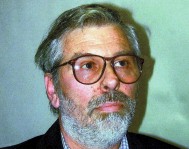
Michele Profeta
Murderer Andrea Volpe
Murderer · Italy · 2004
The Beasts of Satan were a suspected satanic cult in Italy. Members of this gro…
3 victims
Andrea Volpe
Murderer · Italy · 2004
The Beasts of Satan were a suspected satanic cult in Italy. Members of this gro…
3 victims
 Nicola Sapone
Murderer · Italy · 2004
Nicola Sapone was one of the members of the suspected satanic cult “The Beasts…
3 victims
Nicola Sapone
Murderer · Italy · 2004
Nicola Sapone was one of the members of the suspected satanic cult “The Beasts…
3 victims
 Gianluca Casseri
Murderer · Italy · 2011
Gianluca Casseri committed suicide by shooting himself the same day after an ar…
2 victims
Gianluca Casseri
Murderer · Italy · 2011
Gianluca Casseri committed suicide by shooting himself the same day after an ar…
2 victims
 Luigi Chiatti
Murderer · Italy · 1992
Luigi Chiatti was an Italian serial killer. He was born Antonio Rossi to a 24-y…
2 victims
Luigi Chiatti
Murderer · Italy · 1992
Luigi Chiatti was an Italian serial killer. He was born Antonio Rossi to a 24-y…
2 victims
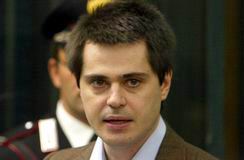 Giovanni Scattone
Murderer · Italy · 1997
Giovanni Scattone was accused in relation to the killing of Marta Russo, a 22-y…
1 victim
Giovanni Scattone
Murderer · Italy · 1997
Giovanni Scattone was accused in relation to the killing of Marta Russo, a 22-y…
1 victim
 Ernesto Picchioni
Murderer · Italy · 1944
March 12, 1949 — He was sentenced to life in prison. · 2016 — The case record l…
16 victims
Ernesto Picchioni
Murderer · Italy · 1944
March 12, 1949 — He was sentenced to life in prison. · 2016 — The case record l…
16 victims
 Leonard Keith Lawson
Murderer · Australia · 1961
Leonard Keith Lawson (b. 16 August 1927) was a commercial artist and photograph…
2 victims
Leonard Keith Lawson
Murderer · Australia · 1961
Leonard Keith Lawson (b. 16 August 1927) was a commercial artist and photograph…
2 victims
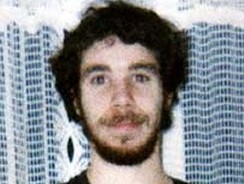 Marc Lepine
Mass murderer · Canada · 1989
Marc Lépine committed a shooting at the École Polytechnique engineering school…
14 victims
Marc Lepine
Mass murderer · Canada · 1989
Marc Lépine committed a shooting at the École Polytechnique engineering school…
14 victims
 Wallace Fugate
Murderer · USA · 1991
Wallace Fugate was executed by lethal injection in Georgia on August 16, 2002.…
1 victim
Wallace Fugate
Murderer · USA · 1991
Wallace Fugate was executed by lethal injection in Georgia on August 16, 2002.…
1 victim
- Gender
- male
- Country
- Italy
- Location
- Padua, Italy
- Date of birth
- October 3, 1947
- Age at first offence
- 54
- Characteristics
- attempt to collect insurance money, motive unclear
- Victim profile
- Pierpaolo Lissandron / Walter Boscolo
- Method of murder
- Shooting
- Date(s) of murder
- January 29/February 10, 2001
- Years active
- 2001
- Date of arrest
- February 16, 2001
- Status
-
Died in custody
Sentenced to 30 years in prison on 2002; died in prison on July 16, 2004
Case details
Michele Profeta was described as a serial killer of Padua. He was said to have targeted victims for money and to have planned to extort money from the community. He was arrested in Padua while preparing for his third murder.
Background
Michele Profeta was born in Palermo in 1947. Little was known of his early childhood, but his mother was described as authoritarian and separated in age from her children by more than 40 years. Michele Profeta was her second child. His life was described as being marked by personal upsets and failures, family disagreements, and health problems. From early youth, he was diagnosed with a congenital heartd eficiency. During his university years, Profeta developed a compulsive obsession for gambling, which was described as dogged him for the rest of his life. The gambling obsession was described as leading to a miserable economic condition, debts, and the interruption of his university studies. His private life was described as suffering devastating repercussions. Profeta was said to have had a failed marriage with two children and a disastrous professional life, including trying many paths, earning only humiliation and lay-offs. The account described a growingly narcissistic and ambitious personality in Profeta, and it described him as feeling rage against society that had “emarginated him.” The moment of decision was described as coming at the beginning of 2001 after he was fired for the umpteenth time and forced into the job of distributing advertisement flyers. In the same period, his marriage was described as entering its final phase. The account described Profeta as living a double life for 15 years: keeping his second marriage alive while having an affair with a secretary of the finance agency where he had worked in Palermo. He was described as living alternately with the two women, both unaware of the other, and as spending most of his time away from home at the casino. He was described as studying statistics to land an “easy” win. Just before turning 50, he was described as being transferred to the Veneto region. He was described as moving to the Adriatic coast with his wife and children and moving to the Mestre suburb of Venice with his mistress. The account described this “ménage à trois” as wearing and degrading his quality of life, and it described that there was never enough money due to the gambling vice and an insecure job situation.
The offence
Michele Profeta was described as conceiving a plan to extort money from the community. He contacted authorities and asked for 12 billion lire, with the threat of unleashing a chain of random homicides in an unspecified Italian city. The author threatened a bloodbath unless 12bn lire (£3.9m) was paid. The plan was described as involving threats to litter the city of Padua with the corpses of estate agents. The account described the killings as being dubbed the number 12 murders because of the number’s apparent significance to the killer.
Investigation
A classified notice was placed by police in Corriere della Sera at his insistence: “For Hire - Specialist metal worker, 12 years' experience.” Police initially questioned a suspected double murderer who threatened to litter Padua with the corpses of estate agents. Police traced a series of calls to Palermo from public telephone boxes which used the same phone card to contact the second victim, an estate agent. Police said they found three pistols in Profeta’s apartment, one of which matched the calibre of the murder weapon. Police found stencils of the type used in three anonymous letters to police and newspapers. A pack of playing cards was found to be missing its four kings. Police suggested Profeta may have been planning another killing as the king of clubs was in his pocket. Police said the first victim, taxi driver Pierpaolo Lissandron, had been shot in the back of the neck by his passenger on 29 January. Police believed it was a mistake as the taxi was stopped outside an estate agent’s office. Police stated that Profeta was arrested in connection only with the second killing at that time but that a link would soon be made. The motive remained a mystery. During the investigation, the account stated that Profeta would never be afraid of being discovered and would never have any doubt about the success of his plan. It also described that there were no witnesses of the first murder and that there were no fingerprints on the letter, and it said ballistics tests came up negative. The account described Profeta’s delirium omnipotens and described police viewing the threatening note as seemingly coming from a mythomaniac, but police later said they were wrong.
Timeline
- January 12, 2001 — The first threatening note, written with a stencil, turned up at a police station in Milan.
- January 28, 2001 — Michele Profeta was in Padua; he took a taxi at the train station and told the taxi driver to stop before a bar, then pulled a revolver and killed Pier Paolo Lissandron with a single shot.
- January 29, 2001 — The taxi driver Pierpaolo Lissandron was shot in the back of the neck by his passenger.
- February 10, 2001 — Profeta fired 3 times into the head of Walter Boscolo, 37 years old, while he was showing an apartment in the centre of Padua.
- February 12, 2001 — Twelve days after the first murder he called Boscolo to arrange an appointment at 12am.
- February 16, 2001 — Michele Profeta was arrested in Padua while preparing for his third murder.
- April 12, 2002 — During a psychiatric exam on request of the defence attorney by Prof. Vittorino Andreoli, Michele Profeta admitted responsibility for two of the crimes for the first time.
- June 30, 2002 — Profeta was transferred from the Due Palazzi prison of Padua to that of Voghera, after being discovered in a possible escape attempt.
- July 16, 2004 — Michele Profeta died in prison.
Arrest
Michele Profeta was arrested on February 16, 2001 in Padua. The account stated he was arrested while he was preparing for his third murder, and it said he had a loaded pistol and the king of clubs with him. It also stated that he had been betrayed by a telephone call-card used to contact both Boscolo and his own family in Palermo, and that he was traced to one of his cellular phones. Another account said he was arrested after police traced calls to Palermo and after he was arrested while driving past the spot of the first killing. He denied the accusations. Prosecutor Paolo Luca said: “He denied even those things which to us seemed evidential.” Police said they found three pistols in his apartment, which he shared with a girlfriend, one of which matched the calibre of the murder weapon. Stencils of the type used in anonymous letters were discovered.
Evidence and material left by the accused
After the killing of Walter Boscolo, the account stated that next to Walter Boscolo’s body, the killer left another note and 2 playing cards: the king of diamonds and the king of hearts. The murder of the real estate agent was added to the list of those considered very similar to those of the taxi driver Pier Paolo Lissandron and the dustman Furio Dubrini. The account said there was no evidence to indicate that the same hand had shot Dubrini. The account stated that at Profeta’s house in Mestre, a deck of cards minus the kings and a stencil were found that had been used to write the messages received by the authorities and left next to the victims. Police found a pack of playing cards missing its four kings. Police said the author threatened a bloodbath unless 12bn lire (£3.9m) was paid. The account stated that the first threatening note was written with a stencil. The author’s threatening message was associated with 12 billion lire.
Trial and sentencing
After Profeta opposed a psychiatric examination, the Court condemned him to life imprisonment. The account stated that in his cell he dedicated himself to a study of the Bible while awaiting the verdict of the Court. After the first sentencing, Profeta sent a manuscript to his lawyer in which he claimed that he had killed under orders from “...from a friendly voice, I believed I was in God’s hands but instead I wound up in the hands of evil”. In the months prior to his decease, the account stated that he had taken up his university studies again and was preparing for his first exam. The account stated that three years later, when the life sentence went to the appeals court, Profeta suffered a heart attack. A separate statement in the provided case information recorded: Sentenced to 30 years in prison on 2002.
Psychiatric examination and statements
A defence attorney’s request led to a psychiatric exam performed by Prof. Vittorino Andreoli. On April 12, 2002, Michele Profeta admitted his responsibility for two of the crimes for the first time. In Andreoli’s opinion, the motive was to be found in “delirium omnipotens” of which the accused was afflicted. The account stated that throughout the duration of the investigation, Profeta alternated between formal confessions and brusque retractions. The account also stated that the magistrates found dozens of cellular phones in the serial killer’s house in Padua, and that Profeta was convinced he could avoid being identified by the IMEI code. It also stated that Profeta had repeatedly refused to undergo psychiatric examination. A manuscript sent after the first sentencing included the claim about killing under orders “...from a friendly voice, I believed I was in God’s hands but instead I wound up in the hands of evil”. The account stated that it remained difficult to establish for how much of the time during his paranoid delirium Michele Profeta was aware and coherent, and how much was the result of a seriously disturbed personality.
Prison events
On June 30, 2002, Profeta was transferred from the Due Palazzi prison of Padua to that of Voghera after being discovered in a possible escape attempt. The prison guards found a file hidden in his eyeglasses’ case. He served his life sentence at Voghera Penitentiary. He was taken to the lawyer’s hall in the San Vittore Prison to take his exam in History of Philosophy.
Aftermath
On July 16, 2004, Michele Profeta died in prison after collapsing unexpectedly while responding to questions at the examination board. The account described that he had assumed a reverently humble attitude while responding to the questions of the examination board, and it said he unexpectedly collapsed. The provided case information listed his death in prison on July 16, 2004.
People involved
Michele Profeta
Michele Profeta was the accused, described as a serial killer of Padua and as a debt collector. At the time of arrest, he was described as 53 years old. One account said he was arrested after allegedly taunting police with a series of clues thought to be inspired by the novelist Patricia Cornwell. Police said they found stencils and pistols in his apartment and a pack of playing cards missing its four kings. Media reports said he was a former estate agent forced for unknown reasons to close his office, spawning a grudge. The account also described that he shared his apartment with a girlfriend.
Victims mentioned
- Pier Paolo Lissandron / Pierpaolo Lissandron — A taxi driver who was shot in the back of the neck by his passenger on 29 January and died about an hour after being taken to the hospital.
- Walter Boscolo — A young real estate agent who was 37 years old; he was shot 3 times into the head on February 10, 2001.
- Furio Dubrini — A dustman whose murder was said to be added to the list of those considered very similar; the account said there was no evidence to indicate the same hand had shot Dubrini.
Other individuals named
- Paolo Luca — Prosecutor; he stated: “He denied even those things which to us seemed evidential.”
- Vittorino Andreoli — Prof.; he performed the psychiatric exam.
- Patricia Cornwell — Named as the novelist whose work police thought the clues might be inspired by.
- Pertini or Bellini — Named as the voice calling a string of other estate agents.

Spotted an error, or have more information about this case?