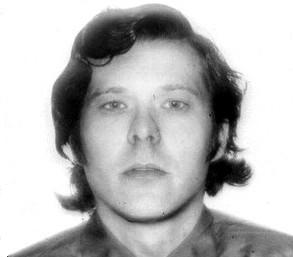
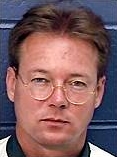
Timothy Charles Palmes
Murderer Ervil LeBaron
Murderer · USA · 1972
Ervil Morrell LeBaron (1925 to August 16, 1981) was the leader of a polygamous…
35 victims
Ervil LeBaron
Murderer · USA · 1972
Ervil Morrell LeBaron (1925 to August 16, 1981) was the leader of a polygamous…
35 victims
 Brian Kevin Rosenfeld
Murderer · USA · 1985
Brian Kevin Rosenfeld Brian Kevin Rosenfeld was sentenced to three concurrent l…
23 victims
Brian Kevin Rosenfeld
Murderer · USA · 1985
Brian Kevin Rosenfeld Brian Kevin Rosenfeld was sentenced to three concurrent l…
23 victims
 Marvin Gray
Murderer · USA · 1975
Marvin Gray was convicted killer who claimed responsibility for 23 slayings and…
23 victims
Marvin Gray
Murderer · USA · 1975
Marvin Gray was convicted killer who claimed responsibility for 23 slayings and…
23 victims
 Yahweh ben Yahweh
Murderer · USA · 1980
Yahweh ben Yahweh was born and legally named Hulon Mitchell Jr. (October 27, 19…
23 victims
Yahweh ben Yahweh
Murderer · USA · 1980
Yahweh ben Yahweh was born and legally named Hulon Mitchell Jr. (October 27, 19…
23 victims
 Brian Cavitt
Murderer · USA · 2006
Brian Cavitt was sentenced to life in prison on December 11, 2007. Brian K. Cav…
2 victims
Brian Cavitt
Murderer · USA · 2006
Brian Cavitt was sentenced to life in prison on December 11, 2007. Brian K. Cav…
2 victims
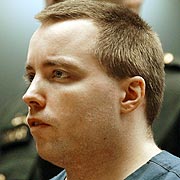 Jeffrey Mailhot
Serial killer · USA · 2003
Jeffrey Mailhot lived in Woonsocket and was described by neighbours as a “nice…
3 victims
Jeffrey Mailhot
Serial killer · USA · 2003
Jeffrey Mailhot lived in Woonsocket and was described by neighbours as a “nice…
3 victims
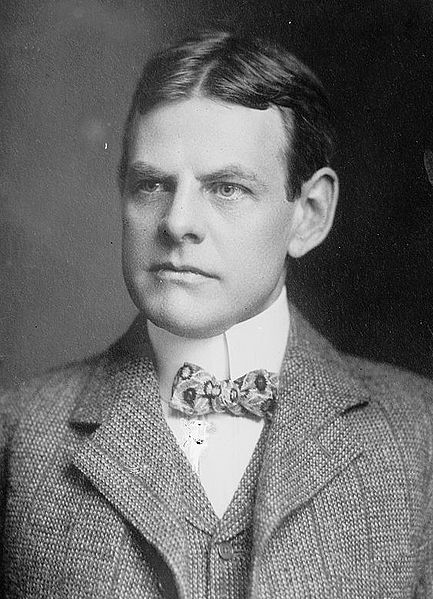 Fitzhugh Goldsborough
Murderer · USA · 1911
Fitzhugh Coyle Goldsborough shot American journalist and novelist David Graham…
1 victim
Fitzhugh Goldsborough
Murderer · USA · 1911
Fitzhugh Coyle Goldsborough shot American journalist and novelist David Graham…
1 victim
 Chester Turner
Serial killer · USA · 1987
Chester Dewayne Turner was born November 5, 1966 in Warren, Arkansas. He became…
13 victims
Chester Turner
Serial killer · USA · 1987
Chester Dewayne Turner was born November 5, 1966 in Warren, Arkansas. He became…
13 victims
- Gender
- male
- Country
- USA
- Location
- Duval County, Florida, USA
- Date of birth
- 1951
- Age at first offence
- 25
- Characteristics
- torture, robbery
- Victim profile
- James N. Stone ( furniture store owner )
- Method of murder
- St abbing with knife
- Date(s) of murder
- October 4, 1976
- Years active
- 1976
- Date of arrest
- —
- Status
-
Executed
Executed by electrocution in Florida on November 8, 1984
Case information
Defendant: Timothy Charles Palmes (also styled Timothy Charles PALMES) Age at execution: 33 Execution date: November 8, 1984 Method of execution: electrocution Location of execution: Florida
Status
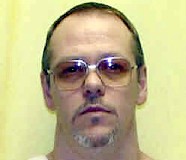
Timothy Charles Palmes was executed by electrocution in Florida on November 8, 1984.
Timeline
- October 3, 1976 — Ronald Straight and Timothy Charles Palmes, with Palmes’s girlfriend Jane Alpert, purchased lumber, hardware, and cement to build a heavy box large enough to hold a man.
- October 4, 1976 — Palmes and Ronald Straight implemented their murder plan after Jane Alpert lured the victim into an apartment where they were waiting; they hit the victim on the head three times with a blunt instrument and stabbed him fourteen times; the victim’s body was placed in the box, cement was added, and it was dumped in the St. Johns River.
- October 14, 1976 — Jane Alpert was returned to Jacksonville, Florida; she was given immunity from prosecution in exchange for her testimony in the prosecution of Palmes and Ronald Straight.
- October 22, 1976 — Palmes was returned to Jacksonville, Florida; he was advised of his constitutional rights and questioned by police.
- October 23, 1976 — At Palmes’s first appearance, a public defender was appointed to represent him.
- October 24, 1976 — Palmes was again advised of his rights at 2:40 p.m. and interrogated; the interrogation ended at 6:30 p.m.
- October 25, 1976 — At 12:30 a.m. Palmes was again informed of his constitutional rights and led police officers to the site where the victim’s body had been dumped into the St. Johns River.
- October 28, 1976 — Palmes was indicted for first degree murder.
- October 29, 1976 — Palmes asked to speak with police; he was advised of his rights and specifically stated he did not want a lawyer; he signed a written waiver of rights and gave his confession; the public defender’s office requested and was granted permission to withdraw as counsel due to conflict.
- October 29, 1976 (4:00 p.m.) — Police met with Palmes; he indicated he wanted to make a statement; he was again informed of his rights and exhaustively questioned about whether he wanted an attorney; he said he did not and signed a written waiver of rights form; it took an hour for him to relate his statement which was transcribed and notarized by a court reporter.
- June 22, 1977 — An order of judgment and sentence was issued; Palmes was sentenced to death.
- 1977 — A jury convicted Palmes of first degree murder; Palmes waived his right to jury sentence recommendation.
- January 1983 — The Florida Supreme Court affirmed the trial judge’s denial of a motion to vacate; Palmes v. State, 425 So.2d 4 (Fla.1983).
- February 17, 1984 — Appeal from the United States District Court for the Middle District of Florida was decided in the Eleventh Circuit.
- May 18, 1982 — The Governor of Florida signed a death warrant for Palmes’s execution.
- November 6, 1984 — The Eleventh Circuit denied Palmes’s motion for a certificate of probable cause; execution was stayed until 10:00 A.M. on Thursday, November 8, 1984 for the purpose of affording an opportunity to appeal to the United States Supreme Court.
- November 7, 1984 — The appeals courts stopped a double execution scheduled in Florida State Prison; the Florida Supreme Court granted an indefinite stay of execution to Chester Levon Maxwell, and the United States Court of Appeals for the 11th Circuit granted a stay of execution until 10 A.M. Thursday to Timothy Charles Palmes.
- November 8, 1984 — The United States Supreme Court refused to stay Palmes’s execution; Palmes was scheduled to die in Florida’s electric chair for the murder of a furniture store owner; his execution proceeded by electrocution.
People involved
Timothy Charles Palmes — defendant; convicted of first degree murder; executed by electrocution on November 8, 1984.
Ronald Straight — co-defendant; executed May 20, 1986; attacked the victim with a hammer; stabbed the victim with a butcher knife and machete; together with Palmes and Jane Alpert tortured and killed the victim and discarded the wooden box in the St. Johns River; sentenced to death.
James N. Stone — victim; Jacksonville furniture store owner; lured to an apartment where Straight and Palmes attacked him with a hammer; bound with wire and placed in a wooden box; beaten, fingers amputated, tortured; stabbed 18 times with a butcher knife and machete; killed.
Jane Alpert — Palmes’s girlfriend; lured the victim into an apartment where Palmes and Ronald Straight were waiting; returned to Jacksonville on October 14, 1976; granted immunity from prosecution in exchange for her testimony in the prosecution of Palmes and Ronald Straight; took $2,800 from the store.
Chester Levon Maxwell — scheduled for execution in Florida State Prison at the same time as Palmes; his execution was stayed by the Florida Supreme Court.
Louie L. Wainwright — Secretary, Florida Dept. of Offender Rehabilitation.
Charles G. Strickland, Jr. — Superintendent of Fla. State Prison at Starke, Florida.
Jim Smith — Attorney General of State of Florida.
Judges listed in Eleventh Circuit proceedings — FAY and HENDERSON, Circuit Judges; BOYLE, District Judge, and in another Eleventh Circuit proceeding VANCE, HENDERSON and CLARK, Circuit Judges.
Background
In August or September 1976, Palmes and Ronald Straight offered to collect the victim’s delinquent business accounts for him. The victim refused to employ Palmes, prompting Palmes to say, "You know, I am going to kill him."
The offence
Palmes, with Jane Alpert and Ronald Straight, purchased lumber, hardware, and cement on October 3, 1976 to build a heavy box large enough to hold a man. The next day the group implemented their murder plan.
Jane Alpert lured the victim into an apartment where Palmes and Ronald Straight were waiting. Palmes and Straight hit the victim on the head three times with a blunt instrument and stabbed him fourteen times. The victim’s body was placed in the box; cement was added; the box was dumped in the St. Johns River.
The killing was also described as involving: Straight and Palmes attacking the victim with a hammer; binding the victim’s hands and feet with wire; placing him in a wooden box they had built; beating him for about 30 minutes; amputating several of his fingers; torturing him; the victim begging for his life; and Straight and Palmes stabbing Stone 18 times and tossing the wooden box in the St. Johns River.
During the murder scheme, Palmes, Straight, and Alpert fled taking the victim’s car, money, and personal effects. The victim’s secretary, Jane Allen, took $2,800 from the store. Palmes and the other actors took the victim’s money and watch; the wooden box was disposed of in the St. Johns River.
Investigation and arrest
Palmes and the others were apprehended in California. Palmes was returned to Jacksonville on October 22, 1976.
Trial
A jury convicted Palmes of first degree murder in 1977. Palmes waived his right to jury sentence recommendation. After a sentencing hearing, a Florida circuit judge sentenced Palmes to death. The Florida Supreme Court affirmed the conviction and sentence. The United States Supreme Court denied certiorari.
Confession and motion to suppress
Palmes’s incriminating statements and confession were litigated on voluntariness.
The district court found that Palmes was mentally alert during the interrogations and that the physical circumstances were comfortable: he was given food and water, allowed to use the bathroom, and there was no suggestion of coercion. The district court found the transcribed confession taken on October 29th was voluntary and that Palmes waived his right to counsel. The Eleventh Circuit affirmed those determinations.
The court addressed Palmes’s argument that refusing to sign a written waiver of rights form should be construed as invoking the right to counsel and declined to construe it as such, stating the refusal to sign did not independently signal a request for counsel. The court also found that, on October 29th, Palmes signed a written waiver and initiated the interview in a context where he had been advised of his rights.
Verbatim Miranda-rights exchange excerpt
You have the following rights under the United States Constitution: You do not have to make a statement or to say anything. Anything you say can be used against you in court. You have the right to talk to a lawyer for advice before you make a statement or before any questions are asked of you. You have the right to have the lawyer with you during any questioning. If you cannot hire--afford to hire a lawyer, one will be appointed for you before any questioning, if you wish. If you decide to answer questions now without a lawyer present you still have the right to stop answering at any time. You may also stop the questioning at any time and consult with your appointed or privately employed lawyer. Tim, going back to the middle portion of your rights, do you understand that you have the right to talk to a lawyer? Yes, I do. Do you want to talk to a lawyer? No, I don't believe there is any need. Do you realize that you can have a lawyer with you during this statement or during any questioning if you so desire? I understand that. Would you like for us to call an attorney for you? No. Would you like for us to call the Public Defender's Office? No. Would you like for us to call the judge? No, I'm ready to make a statement on my own. I believe my own mind in this thing is enough. I plan to plead guilty in the case, anyway. So, I think I'm going to go ahead and make a statement and get it off of my mind now. Okay. Do you further understand that anytime during the statement you can still stop us and we will still contact a lawyer for you? I understand. Okay. Do you have any questions regarding your rights? No, I don't. Okay. Suppression Hearing at 29-30.
Trial judge ruling restricting testimony on confession circumstances
When defense counsel attempted to elicit testimony of voluntariness during direct examination, the state objected and the trial court sustained the objection, ordering a recess while the state argued the issue had been decided at the suppression hearing and that Palmes chose not to testify at that hearing. The judge limited testimony as a result.
When discussing the fairness issue, the Eleventh Circuit noted that the Florida Supreme Court found under Florida law the trial judge erred in refusing to allow Palmes to testify about circumstances of his confession, but both the district court and the Florida Supreme Court found the error harmless based on the evidence and the fact that Palmes testified about some circumstances of directing police to the body and conversations with police officers during the week of October 22, 1976.
Sentencing
Palmes was sentenced to death after a sentencing hearing before a Florida circuit judge. Palmes had waived his right to jury sentence recommendation and the jury conviction was for first degree murder.
At the sentencing hearing, Palmes’s attorney attacked perceived inaccuracies and bias in the presentence investigation and called six character witnesses. Counsel argued statutory and non-statutory mitigating factors and pointed out disparity between Palmes and Jane Alpert, who had been granted full immunity from prosecution. A psychiatric report discussing possible effect of drugs on Palmes’s behavior was introduced. The trial judge read a prepared sentence of death.
In the written judgment and sentence, the trial judge found the statutory aggravating factor in Florida Statute sec. 921.141(5)(h) (1975) and applied the factor based on findings including a premeditated design to effect the death of the victim and details about the murder plan, including construction of a casket, involvement of a six year old child in the crime by keeping her home from school and instructing her to answer the door when the victim knocked, and scheduling around the first of the month when cash collections from the victim’s business would be greatest. The trial judge cited medical examiner testimony including fourteen stab wounds on the victim’s chest and shoulder area, six penetrating into the body cavity perforating the lungs and each potentially fatal, the victim’s hands and feet tied by a single link of wire, three injuries to the head caused by a blunt instrument, four stab wounds on the back of the victim’s right hand, and partial amputation of the index finger; the judge also found that during pre-death tortures the victim begged to be freed and offered money.
The Eleventh Circuit addressed sentencing constitutionality claims, including Palmes’s challenge to the aggravating factor "heinous, atrocious, and cruel" and the claim that the sentence was disproportionate compared to immunity granted to Jane Alpert. The court found the trial judge properly applied the factor and concluded that the sentence met the constitutional standard of individualized determination based on character and circumstances.
Appeals
United States Supreme Court and Eleventh Circuit proceedings
Palmes sought relief through federal habeas corpus proceedings after state remedies were exhausted.
The Eleventh Circuit decision addressed multiple issues including: whether Palmes’s statements and confession violated constitutional rights due to alleged involuntariness; whether denying Palmes the opportunity to testify about his state of mind was reversible error (and found the error harmless); whether Palmes received effective assistance of counsel, including claims about counsel during the week of October 22-29, failure to argue suppression due to illegal arrest, failure to object to excusal for cause of jurors with death penalty scruples under Witherspoon, and failure to object to prosecutor comments allegedly touching on fifth amendment rights; and whether the death sentence was contrary to the eighth and fourteenth amendments.
The court concluded the district court properly denied relief and affirmed.
Procedural default ruling
Four additional substantive issues were found barred from federal habeas review due to procedural default under Florida law as applied through Wainwright v. Sykes. These issues were: whether statements and confession were the product of illegal arrest and detention; whether prospective jurors were improperly excused for cause under Witherspoon; whether the prosecutor improperly commented upon Palmes’s fifth amendment right to remain silent; and whether certain jurors formed and expressed opinions before hearing all evidence. The Eleventh Circuit held that Palmes failed to show cause to excuse the default.
Other details
Appointed counsel and withdrawal due to conflict
On October 23, 1976, a public defender was appointed to represent Palmes. Between October 23 and October 29 the public defender’s office had no contact with Palmes. On October 29, the public defender’s office requested and was granted permission to withdraw as counsel due to conflict. The Florida Supreme Court found that the formal appointment at first appearance did not initiate legal representation since nothing was done toward actually providing legal counsel.
Prosecutor comments alleged to touch fifth amendment rights
The Eleventh Circuit described two statements that Palmes contended infringed on his fifth amendment right to remain silent.
- During defense counsel’s cross-examination:
- Q: What did she tell you about if Mr. Stone was coming back?
- PROSECUTOR: Excuse me, Your Honor. I'm not sure what day we are referring to.
- DEFENSE COUNSEL: I'm talking about October 4th.
- PROSECUTOR: I object, Your Honor. It's beyond the scope of direct examination.
- DEFENSE COUNSEL: Your Honor, I think that he has testified he was working there on that date and it's extremely relevant what occurred on that date.
- PROSECUTOR: He didn't. He didn't testify he worked there on direct examination on October 4th. I only--direct examination dealt only with September 25th. The Prosecutor can call him as his own witness if he wishes.
- At the conclusion of testimony of key state witness Pat Miles:
- THE COURT: All right, gentlemen.
- PROSECUTOR: Nothing further.
- THE COURT: Any further questions by the State?
- PROSECUTOR: Nothing further, Your Honor.
- DEFENSE COUNSEL: Nothing further from the defense, Your Honor.
- THE COURT: All right. Do you anticipate needing this witness for further testimony, Mr. Greene?
- PROSECUTOR: It's possible, Your Honor, the State may need him in rebuttal.
- THE COURT: Sargeant Miles, you are going to be excused. However, remain available in the event you are needed for recall. (R.Vol. II at 333).
Witherspoon doctrine explanation quoted
The trial judge explained the Witherspoon doctrine to prospective jurors, including the following verbatim language:
The Court will now explain to you the standard by which a qualification to serve as a jury is to be measured. The Court will then ask you to search your own conscience and to tell the Court whether measured by that standard you feel that you are qualified to serve as a juror. The fact that you may have reservations about, or conscious or religious scruples against capital punishment, does not disqualify you to serve as a juror. It is entirely possible that a juror who believes that capital punishment should never be inflicted, and who is irrevocably committed to its abolition, could nevertheless subordinate his personal views to what he perceives to be his duty to abide by his oath as a juror and to obey the law of the State. If you are willing to consider rendering a verdict that might result in the death penalty and are not irrevocably committed, before the trial begins, to vote against a verdict that may result in the penalty of death, regardless of the facts and circumstances that might emerge in the course of the proceedings, you are qualified to serve as a juror. However, if you would automatically vote against a verdict that might result in the penalty of death without regard to any evidence that might be developed at trial, or if your attitude toward the penalty of death would prevent you from making an impartial decision as to the defendant's guilt, then you are not qualified to serve as a juror. Please examine your own conscience and tell the Court whether measured by that standard you feel that you are qualified to serve as a juror. In summary, if after searching your conscience you would automatically vote against a verdict of guilty despite the facts and circumstances merely because it could result in the penalty of death, then you would not be qualified to serve as a juror. On the other hand, if your attitude towards the death penalty would prevent you from making an impartial decision, an impartial decision as to the defendant's guilt, I would now like for you to raise your hands. Does anybody sitting in the jury box feel that despite any facts and circumstances which may be proved that you would automatically vote against a verdict if you were convinced that the defendant is guilty; you would automatically vote against a verdict which could result in the penalty of death? Tr.T.Vol. III at 37-40. We find that this was an adequate statement.
Execution stay and Supreme Court refusal to intervene
The record included timing around execution and stays: both Palmes and Chester Levon Maxwell were scheduled to be executed at Florida State Prison at 7 A.M. Wednesday; the Florida Supreme Court granted an indefinite stay of execution to Maxwell; and the United States Court of Appeals for the 11th Circuit granted a stay of execution until 10 A.M. Thursday to Palmes.
The United States Supreme Court refused to stay Palmes’s execution; by a vote of 7 to 2, the High Court refused to intervene, with Justices William J. Brennan Jr. and Thurgood Marshall dissenting.
Spotted an error, or have more information about this case?