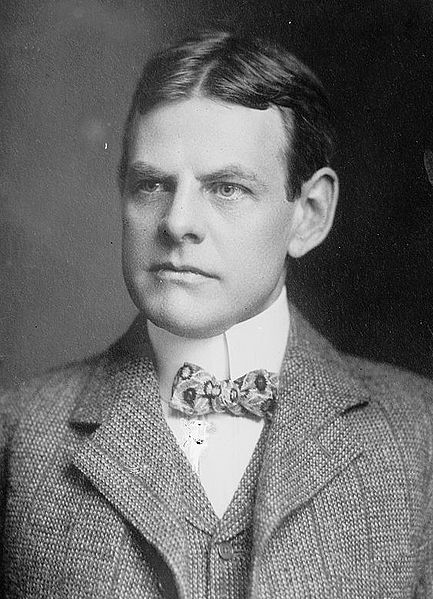
Fitzhugh Goldsborough
Murderer William Hale
Murderer · USA · 1921
Name: William Hale · Known as: the so-called "King of the Osage Hills" · Occupa…
24 victims
William Hale
Murderer · USA · 1921
Name: William Hale · Known as: the so-called "King of the Osage Hills" · Occupa…
24 victims
 John S. Williams
Murderer · USA · 1910
John S. Williams was convicted of murder and sentenced to life imprisonment on…
18 victims
John S. Williams
Murderer · USA · 1910
John S. Williams was convicted of murder and sentenced to life imprisonment on…
18 victims
 Edward Adams
Murderer · USA · 1920
Edward J. "Eddie" Adams was born in 1887 on a farm in Hutchinson, Kansas as W.J…
7 victims
Edward Adams
Murderer · USA · 1920
Edward J. "Eddie" Adams was born in 1887 on a farm in Hutchinson, Kansas as W.J…
7 victims
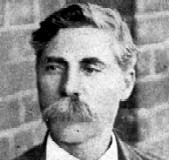 Floyd Allen
Murderer · USA · 1912
Floyd Allen (July 5, 1856 – March 28, 1913) was an American landowner and patri…
5 victims
Floyd Allen
Murderer · USA · 1912
Floyd Allen (July 5, 1856 – March 28, 1913) was an American landowner and patri…
5 victims
 Carl Otto Wanderer
Murderer · USA · 1920
Carl Otto Wanderer (1887–1921) was described as a murderer known for what becam…
2 victims
Carl Otto Wanderer
Murderer · USA · 1920
Carl Otto Wanderer (1887–1921) was described as a murderer known for what becam…
2 victims
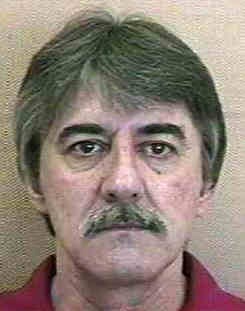 Arthur Martin Boyd
Murderer · USA · 1982
Arthur Martin Boyd was executed by lethal injection in North Carolina on Octobe…
1 victim
Arthur Martin Boyd
Murderer · USA · 1982
Arthur Martin Boyd was executed by lethal injection in North Carolina on Octobe…
1 victim
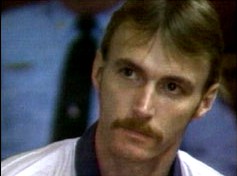 Nicholas Ingram
Murderer · USA · 1983
Nicholas Lee Ingram was convicted of the June 3, 1983 malice murder of J.C. Saw…
1 victim
Nicholas Ingram
Murderer · USA · 1983
Nicholas Lee Ingram was convicted of the June 3, 1983 malice murder of J.C. Saw…
1 victim
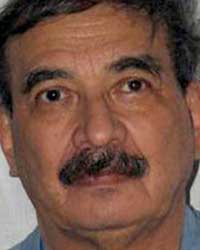 Robert Diaz
Serial killer · USA · 1981
Robert Rubane Diaz (also known as David Robert Diaz), American nurse; convicted…
12 victims
Robert Diaz
Serial killer · USA · 1981
Robert Rubane Diaz (also known as David Robert Diaz), American nurse; convicted…
12 victims
 Russell Maurice Johnson
Serial killer · Canada · 1973
Russell Maurice Johnson (born 1947) was confined to maximum security at the Oak…
7 victims
Russell Maurice Johnson
Serial killer · Canada · 1973
Russell Maurice Johnson (born 1947) was confined to maximum security at the Oak…
7 victims
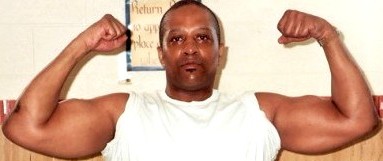 Cecil Emile Davis
Murderer · USA · 1997
Cecil Emile Davis was the appellant in State of Washington v. Cecil Emile Davis…
1 victim
Cecil Emile Davis
Murderer · USA · 1997
Cecil Emile Davis was the appellant in State of Washington v. Cecil Emile Davis…
1 victim
- Gender
- male
- Country
- USA
- Location
- New York City , New York, USA
- Date of birth
- 1869
- Age at first offence
- 42
- Characteristics
- revenge
- Victim profile
- David Graham Phillips, 43 (American journalist and novelist )
- Method of murder
- Shooting
- Date(s) of murder
- January 23, 1911
- Years active
- 1911
- Date of arrest
- —
- Status
-
Died in custody
Fitzhugh Coyle Goldsborough shot himself the same day; David Graham Phillips died the next day (January 24, 1911)
Overview
Fitzhugh Coyle Goldsborough shot American journalist and novelist David Graham Phillips outside the Princeton Club at Gramercy Park in Manhattan on January 23, 1911. Goldsborough then shot himself, and Phillips died the next day, January 24, 1911.
Timeline
- 1 January 23, 1911 — Goldsborough shot David Graham Phillips six times from a .32 caliber automatic pistol outside the Princeton Club at Gramercy Park; he then shot himself and fell dead. Phillips was carried into the clubhouse and removed by ambulance to Bellevue Hospital.
- 1 January 24, 1911 — Phillips’s condition worsened and he died.
Background
David Graham Phillips was an American journalist and novelist. He was forty-three years old at the time of his death. Phillips was born in Madison, Indiana, and was educated at DePauw University in his home state and at Princeton. After graduating from Princeton, he began his career as a journalist at Cincinnati. In 1890, he moved to New York and joined the staff of the Sun. In 1893, Joseph Pulitzer hired him as London correspondent for the New York World, and four years later he became an editorial writer for the newspaper.
Phillips was an uncompromising enemy of economic and political privilege. He climaxed his journalistic career in 1906 by attacking the servility of the United States Senate to big business in his series "The Treason of the Senate" in William Randolph Hearst's Cosmopolitan. These articles helped lead President Theodore Roosevelt to brand Phillips and other reform-minded journalists, including Lincoln Steffens, as "muckrakers." Beginning in 1901, Phillips also turned to fiction. His novels attacked the same targets he had attacked in his columns, including the "extravagance of the wealthy classes, the abuse of political power, and the oppression of the poor." As time went on, he especially exposed the superficiality of America's leisured classes and particularly their women.
In his later work, he created a caricature of Margaret Severence, the female protagonist of The Fashionable Adventures of Joshua Craig (1909). Phillips wrote that she left "the care of her mind to chance. . . . Her person was her real care. To her luxurious, sensuous nature every kind of pleasurable physical sensation made keen appeal, and she strove in every way to make it keener." He also wrote, "health meant beauty," and that she engaged in daily yawning exercises. Phillips was frequently criticized for basing his characters on people he had met, but readers generally did not identify Margaret Severence with a real person.
Fitzhugh Coyle Goldsborough was Phillips’s assassin and was thirty-one years old at the time of the shooting. Goldsborough was born in Washington, where his father Edmund was a well-known physician. He showed early musical talent and was active in musical circles at Harvard, where he attended for three years. After studying and performing as a violinist in Vienna and Berlin, he joined the Pittsburgh Orchestra as a first violinist. About 1910, he left Pittsburgh in mid-season, leaving behind the message: "The Pittsburgh smoke has driven me crazy. You will never see me again."
Goldsborough’s passions included poetic gifts and a strong attachment to his sister. He formed the belief that Phillips was a literary vampire who had sucked his ideas and had stolen his characters from his family. In his diary entries, Goldsborough referenced vampires, including the note: "To create characters with real blood in their veins, beyond the powers of many writers. Much easier to take them from real life -- to utilize their actual flesh and blood by the easy, distinguished, legalized, and lucrative method of literary vampirism." He also proposed "brotherly love." Goldsborough wrote of his obsession with his own name and with the career of an enemy he believed was feeding on his life's blood. The police learned Goldsborough was a member of a prominent family of the Eastern Shore of Maryland, which included a famous Civil War admiral.
The offence
On Monday, January 23, 1911, Phillips rose and dressed and left his apartment shared with his adored sister, Mrs. Carolyn Frevert, after her separation from her husband. He left the National Arts Club on the south side of Gramercy Park and headed for the Princeton Club on the northern side of the square to collect his mail.
As Phillips walked eastward on Twenty-First Street towards the Princeton Club, he noticed a man leaning against the iron railing of a house a few doors before the club entrance. Suddenly the man blocked his path, and fired six shots from a .32 caliber automatic pistol. Phillips staggered back towards the railing. A florist, John Jacoby, was near enough to prevent Phillips from falling. Two club members, Newton James and Frank Davis, heard the assailant cry something like: "There you are! I guess that does for you." The assailant then pointed the gun to his own head, adding, "I'll finish the job now." He walked to the curb, fired again, and fell dead.
Investigation
Summoned by telephone, Phillips’s private physician, Eugene Fuller, arrived at the club to supervise removal by ambulance to Bellevue Hospital. At Bellevue, surgeons confirmed that the first bullet fired caused the most dangerous wound. It entered the upper part of Phillips’s chest between the first and second rib, passed through the right lung and came out at the back under the left shoulder blade. Another bullet passed through the right side of the abdominal wall without penetrating the intestines. The remaining shots wounded Phillips in the left forearm, both thighs, and the right hip. The doctors removed from the muscles of his hip the only bullet that remained lodged in his body and issued an optimistic bulletin, identifying septic pneumonia in the injured lung as their main concern.
Phillips told his sister at Bellevue that during the past few months he had been receiving anonymous threatening letters and telephone calls. Shortly before the shooting, he had received a message signed in his own name that menaced: "This is your last day." A detective from police headquarters told reporters that Phillips had complained about the threats; in the policeman's view: "that crank has got him."
The murderer's identity and address were discovered from an envelope in his pocket. A detective and reporters proceeded to his lodgings, a top-floor rear-hall room rented for $3 a week at the Rand School of Social Science on East Nineteenth Street. The police learned Goldsborough had taken the room for its vantage point for spying on the movements of Phillips.
Goldsborough’s papers and diary contained evidence of his preoccupations and beliefs, including references to vampires and the conviction that Phillips had stolen his ideas and characters. The police found a clipping of a newspaper interview with Phillips published on November 2, 1910, on the very day Goldsborough had moved into the Rand School building; the portion about Phillips’s reported views on standards of morality was heavily underscored. Goldsborough’s diary also included passages about a woman he believed he saw through a window in the second story of the National Arts Club building and about being followed or shadowed by men he described in entries.
Goldsborough’s efforts to communicate with Phillips were recorded as beginning in the previous June; he wrote that he "called last night again on Phillips" but was told Phillips had gone to Pittsfield, Massachusetts. The diary recorded that Goldsborough concluded the information must be true since it was separately confirmed by two bellboys. Despite his belief that Phillips had ignored his letters, Goldsborough wrote and the letters assumed a threatening tone, signing the last letter "David Graham Phillips."
Goldsborough formed and recorded a theory that Phillips was plotting with others to spread a story that Goldsborough was making advances. He also recorded a description of a man who seemed to wish to arouse him into belligerency by staring at him on the street and rattling a spoon in his coffee cup when he came in a ten-cent restaurant, with clothing described as worn and second-hand.
Arrest
No arrest was described. Goldsborough died by suicide after the shooting.
Trial
No trial information was provided.
Sentencing
No sentencing information was provided.
Appeals
No appeal information was provided.
Outcome
Phillips was visited in the hospital by Mrs. Frevert and his brother, Harrison C. Phillips, a Denver newspaper man, who had come to New York unannounced almost at the time of the shooting. On Tuesday evening, January 24, Phillips’s condition worsened; he was unable to retain food, and internal hemorrhages began from both his stomach and the punctured lung. He became weaker with the loss of blood. Shortly before he lapsed into unconsciousness, surgeons bending over him heard him murmur: "I could have won against two bullets, but not against six."
The article about Goldsborough and Phillips described the contrast between the funerals of victim and murderer. Phillips’s service arrangements were made by Senator Albert J. Beveridge of Indiana, who was his college roommate at DePauw and a life-long friend; pallbearers included Senator Beveridge and the novelist Robert Chambers. Phillips was lauded by Hildegarde Hawthorne in the New York Times for his "vivid interest in the trend of American life, both in its public and private aspects." Goldsborough’s service was conducted in private and in as much obscurity as his prominent relatives could manage.
Aftermath
The article described that before Goldsborough’s service, the family had been embarrassed by the disclosure that a younger brother of Goldsborough had been in a sanitarium near Washington for the past couple of months under treatment for mental troubles.
An editorial on January 26 in the New York Times searched for an explanation for Goldsborough’s suicide. The editorial stated that the insane "differ from the sane by being more, not less, logical in passing from premise to conclusion, and they are weak, not in reasoning power, but in the power to select and judge the data from which they reaason." It said the special mark of a man with an "exaggerated ego" was a lack of sense of proportion, which tended to make men murderous but did not drive men to suicide. It stated that murderers with an oversized ego and a delusion of persecution were "confident that everybody would admit the rightness of [their acts]." The editorial concluded that Goldsborough’s long-meditated crime "was followed by a lucid interval in which he appreciated its enormity and punished it." The family explained the murder and suicide by saying Goldsborough had been suffering from a bad attack of flu.
Other details
Goldsborough’s acquaintances described him as known by fellow lodgers as an impecunious and unsociable music teacher. The article also described Goldsborough as appearing to insist on reading home-made poetry and epigrams to the whole office at the Pittsburgh Orchestra and noted the reaction of colleagues. William T. Mossman, manager of the Pittsburgh Orchestra, said that Goldsborough "insisted on inflicting his home-made poetry and epigrams on all who would listen." Mossman described how Goldsborough would rush into the manager's office "waving a new bit of poetry of his own making and insist on reading it to the whole office, and then would want to know what we all thought of it." Mossman’s colleagues judged Goldsborough’s looks to be "those of a man we didn't care to tell the truth to about his compositions, and we would always praise his works."
When trumpeter Otto Kegel told Goldsborough it was the worst poetry he had ever heard, the article described Goldsborough breaking a $400 violin over his head, fleeing screaming from his house, and not being seen for three days and nights. Goldsborough’s identity and address were linked to an envelope found in his pocket.
Goldsborough visited Mayor William J. Gaynor’s office in the early summer of 1910 and was shunted aside to Gaynor’s secretary Robert Adamson. Goldsborough told Adamson: "Do you know David Graham Phillips"? Adamson replied that he did, and Goldsborough continued: "Well, he has written up me and my family in one of his books, The Fashionable Adventures of Joshua Craig ." The article described Adamson getting the impression that the reference reflected appreciation rather than resentment.
The article described that the murderer believed he was being shadowed by detectives or some persons seeking to do him an injury and that he told Adamson he was being followed by two private detectives without cause.
The article described the domestic background for Phillips’s apartment: Phillips shared an apartment with his sister, Mrs.
The article described Phillips’s reported habits as working at his desk until early morning hours and producing manuscripts at the rate of six thousand words a day. Phillips was described as having boasted: "If I were to die tomorrow, I would be six years ahead of the game." It also described Phillips praising work and sleep as life's greatest joys and said he wrote: "If I were to die tomorrow, I would be six years ahead of the game."
Spotted an error, or have more information about this case?