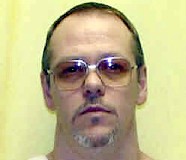
Donald Palmer
Murderer Brian Kevin Rosenfeld
Murderer · USA · 1985
Brian Kevin Rosenfeld Brian Kevin Rosenfeld was sentenced to three concurrent l…
23 victims
Brian Kevin Rosenfeld
Murderer · USA · 1985
Brian Kevin Rosenfeld Brian Kevin Rosenfeld was sentenced to three concurrent l…
23 victims
 Yahweh ben Yahweh
Murderer · USA · 1980
Yahweh ben Yahweh was born and legally named Hulon Mitchell Jr. (October 27, 19…
23 victims
Yahweh ben Yahweh
Murderer · USA · 1980
Yahweh ben Yahweh was born and legally named Hulon Mitchell Jr. (October 27, 19…
23 victims
 Russell Ellwood
Murderer · USA · 1991
Russell Ellwood was a former taxi driver. Authorities suspected him of killing…
20 victims
Russell Ellwood
Murderer · USA · 1991
Russell Ellwood was a former taxi driver. Authorities suspected him of killing…
20 victims
 Robert Martines Perez
Murderer · USA · 1994
Name: Robert Martines Perez · Other name used in proceedings: Robert Martinez P…
15 victims
Robert Martines Perez
Murderer · USA · 1994
Name: Robert Martines Perez · Other name used in proceedings: Robert Martinez P…
15 victims
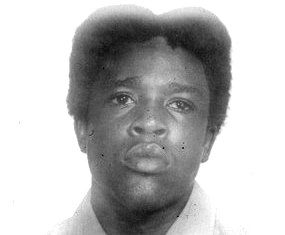 James Dupree Henry
Murderer · USA · 1974
James Dupree Henry was sentenced by Florida state courts to be executed for the…
1 victim
James Dupree Henry
Murderer · USA · 1974
James Dupree Henry was sentenced by Florida state courts to be executed for the…
1 victim
 Alec Kreider
Homicide · USA · 2007
Alec Devon Kreider (born February 4, 1991) was a Lancaster County, Pennsylvania…
3 victims
Alec Kreider
Homicide · USA · 2007
Alec Devon Kreider (born February 4, 1991) was a Lancaster County, Pennsylvania…
3 victims
 Daisuke Mori
Murderer · Japan · 2000
Daisuke Mori (守大助, Mori Daisuke, born April 28, 1971) was a Japanese nurse who…
1 victim
Daisuke Mori
Murderer · Japan · 2000
Daisuke Mori (守大助, Mori Daisuke, born April 28, 1971) was a Japanese nurse who…
1 victim
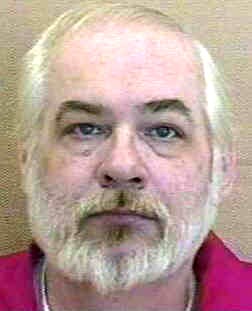 John Thomas Noland
Murderer · USA · 1982
John Thomas Noland was executed in North Carolina by lethal injection on Novemb…
2 victims
John Thomas Noland
Murderer · USA · 1982
John Thomas Noland was executed in North Carolina by lethal injection on Novemb…
2 victims
 Jorge Villanueva Torres
—
Jorge Villanueva Torres was known as el 'Negro Torpedo' and as el 'Monstruo de…
Jorge Villanueva Torres
—
Jorge Villanueva Torres was known as el 'Negro Torpedo' and as el 'Monstruo de…
 Gary Edward Ladbrook
Murderer · New Zealand · 1992
Gary Edward Ladbrook was jailed for life after he raped and suffocated Mrs Sole…
1 victim
Gary Edward Ladbrook
Murderer · New Zealand · 1992
Gary Edward Ladbrook was jailed for life after he raped and suffocated Mrs Sole…
1 victim
- Gender
- male
- Country
- USA
- Location
- Belmont County, Ohio, USA
- Date of birth
- February 11, 1965
- Age at first offence
- 24
- Characteristics
- robbery, drugs
- Victim profile
- Charles W. Sponhaltz, 43, and Steven R. Vargo, 41
- Method of murder
- Shooting
- Date(s) of murder
- May 8, 1989
- Years active
- 1989
- Date of arrest
- May 23, 1989
- Status
-
Executed
Sentenced to death on October 26, 1999; executed by lethal injection in Ohio on September 20, 2012
Parties and identifiers
Donald Palmer, also known as “Duke,” was the defendant and death-row inmate. His personal details included: Name: Donald L. Palmer, Jr. aka "Duke"; Date of Birth: February 11th, 1965; Height; 6'1"; Weight; 220; Education: H.S. Diploma/Technical training. He was identified with the number: Donald L. Palmer #A215-600. An address appeared as: 878 Coitsville-Hubbard Rd Youngstown, Ohio 44505. He was listed under “State v. Palmer.” A pro death penalty page and other non-legal navigation-style identifiers appeared in the text, but do not affect the case facts.
Timeline
- May 7, 1989 — Donald Palmer, along with his sister and co-defendant Edward Alan Hill, left Columbus, Ohio for Martins Ferry, Belmont County, Ohio.
- May 8, 1989 — The victims Charles Sponhaltz and Steven Vargo were found deceased on a rural road in Belmont County, Ohio.
- May 15, 1989 — Donald Palmer contacted Columbus police officer Fred Thompson and asked whether he was a suspect; he said he and Hill were in Belmont County at the time of the homicides and reported that he was missing a .22 caliber pistol.
- May 16, 1989 — Investigator Fred Thompson located Palmer and Hill at Palmer’s residence and took them to the Columbus police station.
- May 23, 1989 — The Belmont County Grand Jury indicted Palmer on four counts of aggravated murder and two counts of aggravated robbery in relation to the deaths of Charles Sponhaltz and Steven Vargo, including firearm and aggravating circumstances specifications.
- May 30, 1989 — Palmer appeared in open court for arraignment; the trial court determined he was indigent and appointed counsel; he entered a not guilty plea.
- October 5, 1989 — Palmer’s jury trial began.
- October 13, 1989 — The jury returned a guilty verdict on all counts and specifications.
- October 18, 1989 — The mitigation phase commenced.
- October 26, 1999 — Palmer was sentenced to death.
- November 28, 1989 — Palmer filed his notice of appeal.
- October 20, 1999 — State v. Palmer, No. 96 BA 70, 1999 WL 979228 (Ohio Ct.App. Oct. 20, 1999) (unpublished).
- April 17, 2006 — Palmer v. Bagley, 2006 WL 1027733 (S.D.Ohio Apr. 17, 2006) (unpublished), adopted by the district court.
- September 20, 2012 — Donald Palmer was executed by lethal injection in Ohio at the state prison in Lucasville, in southern Ohio; the execution occurred about 23 years after the 1989 shootings and his time of death was 10:35 a.m.
- March 2014 — Ten Ohio inmates, including Palmer, were scheduled for execution through March 2014 (as stated in the text).
Background
Donald Palmer grew up moving from place to place, often going back to the town he was born in: Martins Ferry, Ohio. He changed schools 21 times before graduating from Martins Ferry High School. He lived in Ohio, Pennsylvania, Missouri, Connecticut, West Virginia, Kansas and Florida before being arrested, including living in “more than 2 dozen places in those 7 states.” His childhood was “mostly as a poor kid,” but he had “a few years of wealth between the ages of 8-12,” connected to his mother’s 3rd and last marriage, which ended as a separation since 1978 until her death; Sept. '03. He went to church (Protestant) off and on throughout his childhood and said he believed in God and in Christ. He stated: "God is too big to fit into one religion." and said he did not believe in "One True Religion". He stated beliefs about the universe being of intelligent design and being made “in the image of his Creator.” He included religious reflections and statements about the death penalty, voting, and being “anti-social,” and described life-writing, penpals, and personal goals. He stated: “I've been on death row in the state of Ohio for more than 14 years.” He described “Hobbies; Writing, drawing, painting, reading, working out, introspection, poetry, singing and listening to music.” He stated goals including: “Enjoy life, no matter the circumstances, and die a better man.”
The offence
Donald Palmer was convicted of fatally shooting Charles Sponhaltz and Steven Vargo in the head. The killings occurred along a rural Ohio road in 1989 in Belmont County, Ohio, described as eastern Ohio in the execution report. The victims were both married fathers. The victims were not known to Palmer; the text stated Palmer “didn’t know the men.” Sponhaltz’s body was dumped in a field; Vargo’s was left on the road.
Events leading up to the shootings (as described in the record)
Palmer told police that he and co-defendant Edward Hill were driving from Columbus to a Belmont County home of a man who had dated Palmer’s ex-wife and Hill’s sister. As they were driving back and forth in front of the home, Sponhaltz, who was keeping an eye on the house, “lightly hit the back of their pickup with his own truck and yelled at them: “What in the hell are you trying to prove?” according to the records. Palmer then shot Sponhaltz twice in the head.
Vargo, a passing driver, stopped and asked “What the hell did you guys do,” Palmer told police, according to the records. Palmer then shot Vargo twice in the head.
Weapon and mechanics described in trial record
Palmer’s weapon was described as a loaded .22 caliber single-action revolver, with a hammer mechanism. The evidence at trial demonstrated that the type of weapon used by Palmer could not have been fired unless the hammer mechanism was first pulled back and cocked. Palmer conceded that the gun must have been cocked and ready to fire when he allegedly struck Sponhaltz. The trial record described that for each shot fired, Palmer had to pull back and cock the hammer mechanism, and then pull the trigger.
Palmer’s accounts of intent and sequence
Palmer’s confession and trial testimony were described as giving different accounts about the number of shots and the sequence. The text stated that Palmer’s confession and trial testimony indicated that a total of three shots may have been fired at Sponhaltz. The text also stated that Sponhaltz was shot twice in the head, and that if three shots were fired, one missed. During his confession, Palmer told police that he shot Sponhaltz twice after Sponhaltz fell to the ground and that he knew the shots would kill Sponhaltz. The trial testimony said Palmer attempted to intervene, hit Sponhaltz while holding the loaded .22 caliber single-action revolver, and the gun discharged, and that Hill then yelled “Kill him, Kill him” and Palmer shot Sponhaltz two more times. Palmer’s trial testimony described the shooting of Vargo as happening after encountering him, while the confession described different steps involving loading Sponhaltz’s body and then walking to Hill’s vehicle and shooting Vargo. The text described that Vargo was shot in an execution-style manner: once in the left side of head in the temple and once in the right side of the head in the temple. One of the shots into the right side of Vargo’s head had been fired from point-blank range.
Palmer admitted killing Vargo because Palmer had feared that Vargo may have witnessed the first shooting. A deputy sheriff testimony described Palmer’s statements during incarceration about the killings: David Taylor testified that appellant told him he shot Sponhaltz again to make sure he was dead. Deputy sheriffs David Taylor and William Hatzer testified that Palmer said he shot Vargo because he feared Vargo had witnessed Sponhaltz’s killing. The text included a specific quotation attributed to Palmer in the appellate narrative:
- “shot Sponhaltz ‘to make sure he was dead’ (Tr. 1014)”
- “shot Vargo because he ‘might have witnessed the first shooting’ (Tr. 1034)” It also described Palmer telling special deputy David Taylor that he shot Sponhaltz and then “shot him again to make sure he was dead.” The text further described Hill’s statements as: Hill yelled “Kill him, Kill him” and Palmer shot Sponhaltz two more times.
Argument between Sponhaltz and Hill
The record described that after the traffic accident, Hill and Sponhaltz got out of their vehicles and, according to Palmer, Sponhaltz started an argument with Hill.
Investigation and police interaction
After the killings, the police uncovered evidence linking Edward Alan Hill and his friend Donald L. Palmer to the crime scene. Hill was seen in the general vicinity before and after the homicides occurred. Early in the morning on the day of the homicides, Hill was stopped near the parking lot of a Knight’s Inn by Sergeant Jon Hawthorne of the Belmont County Sheriff’s Department. Sergeant Hawthorne ran the license plates and found the vehicle was registered to Edward Alan Hill. Sergeant Hawthorne later connected Palmer and Hill to the homicides based on the vehicle description matching the homicide scene.
Fred Thompson, an investigator with the Belmont County Sheriff’s Department, commenced the investigation. Thompson began looking for a brown Charger with license plate number 546 STC. On May 15, 1989, Thompson returned a telephone call received from Palmer. Palmer asked Thompson whether he was a suspect and told Thompson he and Hill had been in Belmont County at the time of the homicides. Palmer stated he was missing a .22 caliber pistol, the same caliber as used in the shooting. At the end of the conversation, Palmer gave Thompson Hill’s telephone number. Thompson contacted Hill and arranged a meeting. Before the meeting, the police located Hill, Palmer and Hill’s vehicle and asked the men to accompany officers to the police station. The police obtained Hill’s permission to impound his vehicle. After being advised of his rights, Hill gave a statement placing him in the vicinity of the crime; when advised he was a suspect, Hill asserted his Fifth Amendment rights and refused to speak further. Palmer was questioned next and confessed to the crimes, providing information about Hill’s role. Hill was questioned briefly but refused to speak. Hill was taken to a hearing in Franklin County court for transfer to Belmont County; Palmer and Hill were encouraged by a transporting officer to tell what had happened but refused to speak. At Hill’s initial appearance two days after arrest, Hill was appointed counsel. During the transport back to Belmont County jail after initial appearance, Palmer asked whether the police had found certain evidence he had told them about; the officer responded no. Hill stated he knew the location of the evidence. Upon arriving at the jail, Hill agreed to lead officers to the location of the evidence, and the officers videotaped Hill’s statements that he was willing to lead police, and that he understood his rights, including his right to have counsel present. Hill led officers to the discovery of the victims’ wallets and personal items and spent shell casings.
Motion to suppress in connection with Hill’s statements
Prior to introduction of evidence, defense counsel filed a motion to suppress all evidence and statements obtained from Hill after his initial appearance. The court held a suppression hearing at which officers and Hill testified. The trial judge found Hill initiated the conversation and validly waived rights and consented to speak with police; thus, the prosecution was permitted to introduce the evidence at trial.
Arrest and questioning
Palmer was questioned by police after Hill’s initial appearance and after accompaniment to the police station. The text described Palmer confessed when questioned next after Hill refused to speak about the crime as a suspect. Palmer later told police details about Hill’s role and the evidence location.
Charging and trial court proceedings
Hill was indicted on six counts in association with the homicides of Sponhaltz and Vargo. Palmer was indicted on four counts of aggravated murder in the deaths of Charles Sponhaltz and Steven Vargo with firearm and aggravating circumstances specifications, and two counts of aggravated robbery with firearm specifications. At arraignment, Palmer was determined indigent and counsel was appointed; he entered a not guilty plea. Palmer’s trial proceeded to jury trial. Palmer alleged at trial that he did not intend to cause the deaths of the victims. The jury returned a guilty verdict on all counts and specifications on October 13, 1989. During mitigation, the jury concluded that aggravating circumstances outweighed mitigating circumstances, and recommended the death penalty. The trial court accepted the jury’s recommendation and sentenced Palmer to death.
Specific mitigation-phase matters described
During mitigation, defense counsel presented evidence concerning Palmer’s youth, lack of significant criminal record, intoxication, and sequence of events in his life. In the appellate narrative, Palmer was 24 years of age at the time of the homicides. The appellate narrative referenced Dr. Newton L.P. Jackson, Jr., who testified during mitigation that Palmer suffered from a borderline personality disorder causing intense emotional feelings including sudden bursts of anger. The appellate narrative stated that he did not suffer from a mental disease or defect that would impede capacity, but that diagnosis was entitled to some weight in mitigation. The appellate narrative said there was testimony during mitigation that Palmer was a cocaine dealer, and gave little or no weight to lack of prior criminal record and/or delinquency adjudications.
Evidence regarding alleged other acts
George Goolie testified that on the day of the homicides, Palmer called him and referred to performing sexual acts with him and killing him afterwards. The trial court ordered that the testimony be stricken from the record prior to jury deliberations. The appellate narrative also described testimony from gas station attendants that Palmer and Hill looked as if they were about to rob the place. It described that two gas station attendants testified about suspicious visits hours before the homicides. The appellate narrative described Sergeant Hawthorne’s testimony as connecting Palmer and Hill through stopping them at Knight’s Inn and the vehicle description.
Appeals and habeas corpus
Direct appeal (Ohio Court of Appeals and Supreme Court of Ohio)
The direct appeal involved an Ohio Appellate case: State v. Palmer, Not Reported in N.E.2d, 1996 WL 495576 (Ohio App. 7 Dist. 1996) (Direct Appeal), with COX, Judge. The appellate court described the appeal as from a jury verdict and judgment rendered by the Belmont County Common Pleas Court finding Palmer guilty on aggravated murder counts under R.C. 2903.01(A) and R.C. 2903.01(B), along with firearm and aggravating circumstances specifications; and two counts of aggravated robbery under R.C. 2911.01(A)(2), along with firearm specifications; and that the jury recommended and the trial court imposed death. The appellate narrative described Palmer’s asserted trip purpose as picking up a social security disability check for his sister. It described Palmer’s contentions about the collision and subsequent argument. It addressed numerous assignments of error numbered one through twenty-four, finding each without merit. Examples of assignments included:
- failure to record side bar conversations and chambers discussions; appellate held no prejudice shown and no request to record off-the-record proceedings;
- jury instruction on inferences and instructions regarding inference and intent;
- admission of evidence and argument about other acts, including testimony about alleged sexual acts and that it was stricken;
- denial of involuntary manslaughter instruction as a lesser included offense;
- denial of self-defense instruction;
- issues regarding jury instructions on “purposely” and plain error;
- admission of handgun evidence for authentication issues and demonstrative use;
- unsworn testimony oath issue for Sheriff McCort and waiver due to no objection;
- prosecutor’s voir dire questions about death penalty;
- prosecutorial misconduct claims during guilt and penalty phases;
- constitutionally insufficient evidence claims;
- election of counts prior to sentencing;
- exclusion of Reverend Bush mitigation testimony for lack of proffer;
- challenges to sentencing-phase unanimity instruction;
- ineffective assistance of counsel claims analyzed under Strickland v. Washington;
- independent weighing process and proportionality review arguments;
- cumulative error claim.
The appellate narrative stated that upon independent review required by R.C. 2929.05(A), it found aggravating circumstances established beyond a reasonable doubt and held the death sentence not disproportionate to similar cases, and affirmed the trial court judgment. The appellate narrative described aggravating circumstances as:
- as to counts I and IV, aggravated murder committed while involved in conduct causing purposeful killing of two or more persons and committed while committing, attempting to commit, fleeing immediately after, or committing aggravated robbery while either the principal offender in the aggravated murder or having committed the aggravated murder with prior calculation and design;
- as to counts III and VI, aggravated murder while committing a felony committed while involved in conduct causing purposeful killing of two or more persons and committed while committing, attempting to commit, fleeing immediately after, or committing aggravated robbery while either the principal offender in the aggravated murder or having committed the aggravated murder with prior calculation and design;
- additionally, with regards to count VI, Palmer committed the offense for the purpose of escaping detection, apprehension, trial and punishment for another offense committed by him. It also described that the appellate court stated there was never a denial that Palmer was the principal perpetrator in the deaths and referenced statements offered to police and testimony of Fred Thompson, Sheriff Thomas McCort and additional deputy sheriffs assigned to watch Palmer.
The appellate narrative described the court’s weighing of mitigating factors against aggravating circumstances, stating:
- it found no evidence that victims induced or facilitated the offenses;
- no evidence of duress, coercion or strong provocation;
- no evidence of mental disease or defect lacking capacity to appreciate criminality or conform conduct, though borderline personality disorder diagnosis was entitled to some weight;
- it found Palmer was 24 years of age and that youth mitigation was not established as a factor;
- it said lack of significant criminal record and/or delinquency adjudications received little or no weight because testimony indicated he was a cocaine dealer;
- it found no mitigating weight concerning participation because he alone fired the gunshots which killed the victims;
- it described childhood and family background including lack of stable father figure, mother with three unsuccessful marriages, addiction to prescription drugs, and Palmer’s own drug use and an unsuccessful marriage.
The appellate narrative concluded that aggravating circumstances outweighed all mitigating factors beyond reasonable doubt and that death was not excessive or disproportionate.
U.S. Court of Appeals for the Sixth Circuit habeas appeal
The text stated: Palmer v. Bagley, 330 Fed.Appx. 92 (6th Cir. 2009) (Habeas). It included procedural background: after conviction and death sentence for capital murder were affirmed on direct appeal, and denial of postconviction motions were affirmed, petitioner filed a federal petition for writ of habeas corpus. The district court for the Southern District of Ohio denied the petition and granted a certificate of appealability (COA). The petitioner appealed, and the Court of Appeals, Griffin, Circuit Judge, held:
- the Court of Appeals would not consider any issue raised by petitioner arising from denial of habeas corpus for which COA was not granted;
- the refusal to instruct on involuntary manslaughter did not violate due process;
- any error in the jury instruction allowing conviction without finding he had specific intent to kill was harmless;
- the district court did not abuse its discretion in raising issue whether the death-sentenced petitioner’s challenge to prosecutor’s comment during closing argument was procedurally defaulted;
- the challenge to prosecutor’s comment during closing argument was procedurally defaulted;
- the prosecutor’s closing arguments on the period of time in which petitioner could have calculated and designed plan to kill was correct statement of Ohio law;
- the State was permitted to admit evidence regarding failure to pay child support and sexual abuse of his children in the sentencing phase. It concluded: “Affirmed.”
The Sixth Circuit opinion also addressed that under AEDPA it could not grant relief unless requirements of 28 U.S.C. § 2254(d)(1) and (2) were met and applied standards concerning “unreasonable application” and “contrary to” clearly established Supreme Court precedent. It described that the Supreme Court of Ohio denied the involuntary manslaughter instruction claim on the merits, and that the evidence supported purposeful killing of both victims based on shot placement and other factors. It discussed an alleged instructional error on “purpose” and “gist of the offense,” stating the trial court erred in giving the “gist of the offense” paragraph, but held there was no reasonable likelihood the jury applied it in an unconstitutional manner, and alternatively held any error harmless. It included the “gist of the offense” instruction content verbatim in a list labeled [1] through [6], with emphasis. It addressed and quoted the prosecutor’s closing argument remark about no legally required period of time and that even if 10 to 15 seconds were true, it was legally possible to form sufficient prior calculation and design in that period. It also addressed procedural default of the closing argument claim.
The Sixth Circuit discussed the admission of evidence in the penalty phase regarding child support failure and sexual abuse, concluding it did not violate clearly established Supreme Court precedent and did not so infect the trial with unfairness due to overwhelming guilt evidence.
Sentencing and execution
Palmer was sentenced to death by the trial court on the jury’s recommendation. His death sentence date in the status field was October 26, 1999.
The execution was carried out by lethal injection in Ohio on September 20, 2012. It occurred at the state prison in Lucasville in southern Ohio. The time of death was 10:35 a.m.
Last words and victim-family attendance
The execution report stated that Palmer used his last words to repeatedly apologize to the family members of his two victims and hoped their pain could die with him. It stated that Palmer told “six women in the room” who were the widows, daughters and a niece of the men he killed. The report quoted Palmer verbatim: “I want you to know I’ve carried you in my heart for years and years,” Palmer told six women in the room who are the widows, daughters and a niece of the men he killed. “I’m so sorry for what I took from you ...I hope your pain and hurt die with me today.” It also quoted: Palmer told the women that he knows the pain of losing a parent, a sibling and a child, and that he wished his execution could bring their loved ones back to them. “I know it can’t,” he said. “I pray that you have good lives now. I’m sorry.”
The report stated that Palmer’s time of death was 10:35 a.m. It stated that his Columbus attorney, David Stebbins, said Palmer was sorry for the murders and never got the chance to apologize to the men’s families. Stebbins planned to be among the witnesses but did not attend as the text described his plan.
The report stated that Palmer had decided not to request mercy from the Ohio Parole Board, which can recommend clemency for a condemned inmate to the governor. It stated Belmont County prosecutor Christopher Berhalter told the board that the execution should proceed because Palmer’s guilt was undisputed and because of the brutality of the crimes.
Corrections officials and last meal
Corrections officials said Palmer asked that his last meal include: a chipped ham and Velveeta cheese sandwich, ranch-flavored Doritos, peanut M&Ms, hazelnut ice cream, cheese cake and soda.
Identified witnesses and victim relatives
Witnesses included:
- the widow of Charles Sponhaltz, Tiffany Nameth,
- Sponhaltz’s two daughters, Charlene Farkas and Tiffany Sponhaltz-Pugh,
- Steven Vargo’s widow, Valerie Vargo Jolliffee,
- and a niece. The report included quotations from witnesses after the execution.
It quoted Tiffany Sponhaltz-Pugh as: “We finally have closure to this situation after 23 years, but there’s nothing that can bring back my father.”
It quoted Valerie Vargo as saying Palmer ruined her life, and it described she had been married for two months and she was looking forward to growing old with him. It quoted in the execution-report section: In a letter to the parole board opposing clemency, Valerie wrote that Steven “was a loving man and always helped people. That led to his death. Palmer gave no leniency and deserves no leniency.” It also quoted Tiffany Nameth: “I'll never forget having to tell my children that their daddy would not be coming home.” It quoted Tiffany Pugh: “He not only took my father's life, he broke my family apart. He missed my softball games, graduation and wedding. He never got to see his three grandchildren. My father deserves justice.”
Additional execution-report claims
The report stated that ten Ohio inmates, including Palmer, were scheduled for execution through March 2014, and Palmer would be the second that year if the execution went forward. The report also included that Palmer was executed about 23 years after the shootings along a rural Ohio road in 1989.
Other details
The appellate narrative contained verbatim quotes from juror instruction and testimony within the decision text, including: “To infer or to make an inference is to reach a reasonable conclusion of fact which you may make but are not required to make from other facts which you find have been established by direct evidence.” (Tr. 1231) and an emphasized parenthetical. In the Sixth Circuit opinion, the “gist of the offense” instruction was reproduced as: [1] Purpose to cause the death of another is an essential element of the crime of aggravated murder. [2] A person acts purposely when it is his specific intention to cause a certain result. It must be established in this case that at the time in question there was present in the mind of the defendant a specific intention to cause the death of [the victims]. [3] A person acts purposely when the gist of the offense is a prohibition against conduct of a certain nature regardless of what the offender intends to accomplish thereby, if it is his specific intention to engage in conduct of that nature. [4] Purpose is a decision of the mind to do an act with a conscious objective of producing a specific result. To do an act purposely is to do it intentionally and not accidentally. Purpose and intent mean the same thing. The purpose with which a person does an act is known only to himself unless he expresses it to others or indicates it by his conduct. [5] The purpose with which a person brings about a result is determined from the manner in which it is done, the weapon used, and all other facts and circumstances in evidence. [6] No person shall be convicted of aggravated murder unless he is specifically found to have intended to cause the death of another. Palmer, 2005 WL 3965400, at *36 (emphasis added). The appellate narrative also included a jury instruction for sentencing-phase unanimity, quoted as: “You shall recommend the death sentence, if you unanimously find by proof beyond a reasonable doubt that the aggravating circumstances outweigh the mitigating factors. If you do not so find as to any one or all of the four counts of the indictment, you shall unanimously recommend either life sentence with parole eligibility after serving 20 years of imprisonment or life sentence with eligibility after serving 30 years of imprisonment.” (Mitigation Tr. 162).
The text referenced co-defendant Edward Hill being convicted and sentenced to 35 years to life in prison. It also included that Hill took the wallets of the victims and hid them so that the victims could not be identified immediately. It included that Sponhaltz’s truck was found parked in a field about a mile from Vargo’s body. It included that Vargo’s body was found approximately fifty feet from the location where Sponhaltz had apparently been shot. It included that Sponhaltz’s truck was dumped in a field; Vargo’s was left on the road.
It referenced that prior to homicides, in early hours of May 8, 1989, Sergeant Hawthorne stopped Hill and Palmer near parking lot of a Knight’s Inn, and that Hill’s car apparently looked suspicious with parking lights on and there had been some recent thefts in the area. It referenced that two attendants copied Hill’s license plate number. It referenced that later Sergeant Hawthorne made a connection between Palmer and the homicides because Hill’s vehicle fit description of the vehicle spotted at the homicide scene. It referenced that after the homicides, Palmer and Hill returned to Columbus, and that appellant reportedly threw his gun in the immediate vicinity of the Hoover Reservoir. It referenced that Palmer was sentenced to death and that his time on death row was “more than 14 years” per the personal statements included.
Spotted an error, or have more information about this case?