
Byron Ashley Parker
Murderer Brian Kevin Rosenfeld
Murderer · USA · 1985
Brian Kevin Rosenfeld Brian Kevin Rosenfeld was sentenced to three concurrent l…
23 victims
Brian Kevin Rosenfeld
Murderer · USA · 1985
Brian Kevin Rosenfeld Brian Kevin Rosenfeld was sentenced to three concurrent l…
23 victims
 Marvin Gray
Murderer · USA · 1975
Marvin Gray was convicted killer who claimed responsibility for 23 slayings and…
23 victims
Marvin Gray
Murderer · USA · 1975
Marvin Gray was convicted killer who claimed responsibility for 23 slayings and…
23 victims
 Yahweh ben Yahweh
Murderer · USA · 1980
Yahweh ben Yahweh was born and legally named Hulon Mitchell Jr. (October 27, 19…
23 victims
Yahweh ben Yahweh
Murderer · USA · 1980
Yahweh ben Yahweh was born and legally named Hulon Mitchell Jr. (October 27, 19…
23 victims
 Russell Ellwood
Murderer · USA · 1991
Russell Ellwood was a former taxi driver. Authorities suspected him of killing…
20 victims
Russell Ellwood
Murderer · USA · 1991
Russell Ellwood was a former taxi driver. Authorities suspected him of killing…
20 victims
 Daniel Reneau
Murderer · USA · 1996
Daniel Earl Reneau was convicted of capital murder in connection with a robbery…
1 victim
Daniel Reneau
Murderer · USA · 1996
Daniel Earl Reneau was convicted of capital murder in connection with a robbery…
1 victim
 Benjamin Boyle
Murderer · USA · 1979
Benjamin Herbert Boyle was convicted for the murder of Gail Lenore Smith, and h…
2 victims
Benjamin Boyle
Murderer · USA · 1979
Benjamin Herbert Boyle was convicted for the murder of Gail Lenore Smith, and h…
2 victims
 Joseph Albert Guay
Mass murderer · In the Air - Canada · 1949
Joseph Albert Guay (born 1917) was a resident of Quebec City who was responsibl…
23 victims
Joseph Albert Guay
Mass murderer · In the Air - Canada · 1949
Joseph Albert Guay (born 1917) was a resident of Quebec City who was responsibl…
23 victims
 Scott Roeder
Murderer · USA · 2009
Scott Roeder was an anti-abortion activist. George Tiller, a physician from Wic…
1 victim
Scott Roeder
Murderer · USA · 2009
Scott Roeder was an anti-abortion activist. George Tiller, a physician from Wic…
1 victim
 Deryl Dedmon
Murderer · USA · 2011
Deryl Dedmon led a group of white teenagers who assaulted and killed James Crai…
1 victim
Deryl Dedmon
Murderer · USA · 2011
Deryl Dedmon led a group of white teenagers who assaulted and killed James Crai…
1 victim
 Martin Edward Grossman
Murderer · USA · 1984
Martin Edward Grossman (also known as Martin Grossman, Martin E Grossman, Marti…
1 victim
Martin Edward Grossman
Murderer · USA · 1984
Martin Edward Grossman (also known as Martin Grossman, Martin E Grossman, Marti…
1 victim
- Gender
- male
- Country
- USA
- Location
- Douglas County, Georgia, USA
- Date of birth
- August 1960
- Age at first offence
- 24
- Characteristics
- kidnapping, rape
- Victim profile
- Christie Ann Griffith (female, 11)
- Method of murder
- Strangulation
- Date(s) of murder
- June 1, 1984
- Years active
- 1984
- Date of arrest
- 6 days after
- Status
-
Executed
Executed by lethal injection in Georgia on December 11, 2001
Case overview
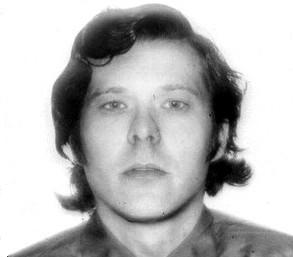
Byron Ashley Parker was convicted of murder and rape and was sentenced to death for the kidnapping, raping, and strangling of 11-year-old Christie Ann Griffith in 1984.
STATUS and execution
Parker’s execution was carried out at approximately 7:26pm on Tuesday, December 11, 2001. The execution order was filed by the Superior Court of Douglas County on November 27, 2001, setting a seven-day window that opened at noon, December 11, 2001, and closed at noon, December 18, 2001. The Commissioner of the Department of Corrections scheduled Parker’s execution to take place at 7:00pm on December 11, 2001.
Parker declined a meal offered late Tuesday afternoon to other inmates at the Diagnostic and Classification Prison at Jackson, and had chocolate milk and coffee before his execution. Witnesses said Parker’s only words once he was in the chamber were to ask for a prayer and to echo the chaplain when he ended it with “Amen.” Witnesses said Parker “mostly stared at the ceiling” during the 10-minute procedure.
Timeline
- June 1, 1984 — Christie Ann Griffith disappeared.
- May 15, 1984 — Parker was placed on probation in Fulton County.
- June 5, 1984 — Parker was questioned by law enforcement.
- June 6, 1984 — Parker signed a consent-to-search form; officers searched Parker’s house and found a small amount of marijuana.
- June 7, 1984 — Parker agreed to a polygraph examination but failed to show up; two warrants were issued; Parker was arrested; he later agreed to a polygraph after speaking with an attorney beforehand.
- Morning of June 13, 1984 — The five days of interrogation continued up to the morning of June 13, just hours prior to the court hearing to appoint new counsel.
- July 17, 1984 — Parker was indicted by the Douglas County grand jury for malice murder, rape and kidnapping of Christy Ann Griffith.
- November 5-9, 1984 — Parker was tried by jury.
- June 1, 1984 (sentencing) — Parker was sentenced to death for the malice murder of Christy Ann Griffith in Douglas County on or about June 1, 1984.
- July 24, 1987 — Parker filed a habeas corpus petition in Butts County Superior Court.
- May 5, 1995 — Relief was denied in an unpublished order.
- May 24, 1996 — The Georgia Supreme Court denied Parker’s application for certificate of probable cause to appeal.
- December 16, 1996 — Certiorari was denied.
- November 15, 1996 — Parker filed a federal habeas corpus petition in the United States District Court for the Northern District of Georgia.
- August 13, 1999 — The district court denied relief.
- March 15, 2001 — The Eleventh Circuit affirmed the district court’s denial of relief.
- May 31, 2001 — Rehearing was denied.
- November 26, 2001 — The United States Supreme Court denied certiorari.
- November 27, 2001 — The Superior Court of Douglas County filed an execution order setting the seven-day execution window.
- December 11, 2001 — Parker was executed by lethal injection in Georgia (scheduled at 7:00pm; carried out at approximately 7:26pm).
Background
Christie Ann Griffith was an 11-year-old girl who disappeared on June 1, 1984. Foul play was soon suspected.
Parker was a resident of the trailer park where Griffith lived. Law enforcement questioned a number of persons residing in the trailer park, including Parker, who was questioned on June 5 and again on June 6. Parker was asked to take a polygraph examination on June 7. Parker assented but failed to show up for the examination. After Parker failed to appear, two warrants were issued for his arrest: one charged him with the misdemeanor offense of possession of less than an ounce of marijuana, and the other was for violation of the terms and conditions of his probation because he “failed to appear as directed to the Douglas County Probation Office.”
Parker had been convicted earlier on felony charges and was placed on probation in Fulton County on May 15, 1984. The probation was transferred to Douglas County that day, and Parker was scheduled to meet with his assigned Douglas County probation officer on June 1. Parker failed to appear then, but he met with his probation officer on June 5 and asked for permission to leave the state.
Parker had earlier been charged in an incident involving a young girl in Florida. The Eleventh Circuit background also stated that Parker had been charged with, and acquitted of, the kidnapping and sexual battery of an eight year-old girl in 1982.
In Fulton County, Georgia, Parker had pled guilty to “making terroristic threats” to two women two weeks prior to the disappearance of Griffith, and he had been sentenced to five years probation.
The offence
The Georgia Supreme Court’s direct appeal facts described that Parker’s victim disappeared on June 1, 1984. Parker was later linked to the disappearance and admitted responsibility after a polygraph examination and interrogation. Law enforcement officers found Griffith’s body after following the location information Parker provided using a map.
Parker offered Griffith a ride after she asked him if he had seen the taxi that was to carry her to her brother’s high school graduation. Parker took her to a secluded area and killed her. His 2-year-old son waited inside a nearby locked car during the crime. Parker left the victim’s body tied to a tree.
Parker was sentenced to death for malice murder of Christy Ann Griffith. The jury also found him guilty of rape. The trial court entered a judgment of nolle prosequi on the kidnapping count.
Investigation
After Griffith’s disappearance, foul play was suspected. Officers questioned persons in the trailer park where the victim lived, including Parker.
- Parker signed a consent-to-search form on June 6.
- Officers searched Parker’s house on June 6 and found nothing relating to possible criminal activity except for a small amount of marijuana.
Because Parker’s statements regarding his whereabouts at the time the victim disappeared were not entirely consistent, and because investigators learned Parker had earlier been charged in an incident involving a young girl in Florida, investigators focused their attention on Parker as a suspect.
Arrest and interrogation
After Parker failed to show for the polygraph examination, two warrants were issued for his arrest. Parker was arrested on these warrants.
After further talking with law enforcement officers, Parker told them he would take a polygraph examination provided he was allowed to talk to his attorney beforehand. Parker called an attorney prior to his arrest and arranged to meet him that day. The attorney met Parker at the FBI Atlanta office, where the examination was to take place. The attorney testified that he told Parker that Parker could not be required to take the test, but Parker responded that if he did not, his probation would be revoked and he would be “put in jail for five years . . . on that marijuana charge.”
The attorney testified that he then talked to the sheriff who “indicated” that if “Parker could clear himself at that particular time with this polygraph test, . . . he could go on home.” The attorney testified that he discussed the situation with Parker, who adamantly denied any involvement in the disappearance of the girl. They agreed that Parker should go ahead and take the examination.
As the attorney left, he indicated: “to them that I was not going to sit in on this, I would be at my home, and as soon as this is completed for someone to call me.”
The sheriff confirmed discussion of the marijuana warrant with the attorney. The sheriff testified: “I can’t promise you anything, . . . but if this young man passes the test . . . I’ll go to the district attorney and ask him, you know, explain to him the situation and ask him to cause the warrant to be dismissed.”
The sheriff denied discussing the probation warrant and denied threatening Parker with five years of prison if he refused to take the examination, and explained that the probation warrant was issued from another county and he had no control over it.
Parker took the polygraph examination. The examiner wanted to conduct another test before final conclusions, but told the sheriff that, not withstanding Parker’s answers, Parker knew where the body was. Parker was returned to Douglas County. He talked briefly to law enforcement officers, and then was allowed to talk to his mother and two sisters for about half an hour.
Parker was given Miranda warnings again and the interrogation resumed. The sheriff testified that in accordance with the attorney’s request, he and Parker attempted to call the attorney at the attorney’s office and at the attorney’s home, and that “[Parker] tried, you know, one or more times. I tried several times because Parker was being interviewed, and I did not reach [the attorney] until after I had discovered the remains of [the victim]. So it could have been 2:00 or 3:00 o’clock in the morning, but I had tried up to near midnight at both numbers and failed to reach him.”
At approximately midnight, Parker admitted responsibility for the victim’s disappearance and agreed to reveal the location of the body. He drew a map, which law enforcement officers used to find the body. Afterwards, Parker was interrogated again, and the confession was tape-recorded.
In the Eleventh Circuit’s account, Parker’s interrogation continued in the absence of counsel “for the next five days,” up to the morning of June 13, just hours prior to the court hearing to appoint new counsel. After returning to jail following the polygraph-related events, the interrogation concerning Griffith’s whereabouts continued past midnight. Shortly after midnight Parker stated that he had killed Christie Ann Griffith, although he denied raping her, and he drew a map showing the location of the body.
The Eleventh Circuit stated that after a search, the body was found and the sheriff reached Parker’s attorney at home between 3:30 a.m. and 4:30 a.m. and informed him that Parker had made a statement admitting he had killed Griffith.
The Eleventh Circuit also noted that Parker asserted his right to counsel at a preliminary hearing before Judge Robert James of the Superior Court of Douglas County. The interrogation of Parker continued without counsel for five days.
Trial
Charges and verdicts
Parker was indicted by the Douglas County grand jury on July 17, 1984 for malice murder, rape and kidnapping of Christy Ann Griffith.
At a jury trial on November 5-9, 1984, Parker was found guilty of murder and rape. The court entered a judgment of nolle prosequi on the kidnapping count.
Aggravating circumstances and sentencing
The jury found the existence of three statutory aggravating circumstances:
- one O.C.G.A. § 17-10-30(b)(7) circumstance; and
- two (b)(2) circumstances, i.e., the murder was committed during the commission of the capital felonies of kidnapping with bodily injury and rape, and fixed the sentence for murder as death.
The trial court imposed a consecutive life sentence for rape.
Remand and further appellate modifications
The Georgia Supreme Court adjudicated some issues but remanded the case for further proceedings on admissibility of Parker’s custodial statements.
After remand, the state appellate court affirmed the murder conviction and death sentence, but set aside the rape conviction because the trial court erroneously declined to charge on child molestation as a lesser included offense.
The death sentence was affirmed based upon the (b)(2) kidnapping with bodily injury aggravating circumstance. The other two circumstances were set aside:
- the (b)(7) due to instructional error; and
- the (b)(2) based on rape since the rape conviction itself was reversed.
Appeals
Georgia Supreme Court
Parker v. State, 256 Ga. 543-45, 350 S.E.2d 570 (1986) included reversals and affirmances described above.
State habeas corpus
Parker filed a habeas corpus petition in Butts County Superior Court on July 24, 1987 and subsequently amended the petition.
Evidentiary hearings were held on March 26, 1990; May 21, 1990; July 19, 1990; and March 9, 1992. Relief was denied on May 5, 1995 in an unpublished order.
The Georgia Supreme Court denied Parker’s application for certificate of probable cause to appeal on May 24, 1996. Certiorari was denied on December 16, 1996. Parker v. Zant, 519 U.S. 1043 (1996).
Federal habeas corpus and appeal
Parker filed a federal habeas corpus petition in the United States District Court, Northern District of Georgia on November 15, 1996. On August 13, 1999, the district court denied relief.
Parker was granted permission to appeal on six issues but pursued only four in the United States Court of Appeals for the Eleventh Circuit. The briefing schedule was stayed pending a decision by the United States Supreme Court on a particular issue.
In an opinion entered March 15, 2001, the Eleventh Circuit affirmed the district court’s denial of relief. Parker v. Head, 244 F.3d 831 (11th Cir. 2001). Rehearing was denied on May 31, 2001. Parker v. Head, 260 F.3d 628 (11th Cir. 2001). The United States Supreme Court denied certiorari on November 26, 2001.
The Eleventh Circuit identified Parker’s appeal arguments as:
- his conviction and sentence were based on inculpatory statements obtained after he invoked his right to counsel;
- he was deprived of due process and protection against cruel and unusual punishment by improper comments by the prosecutor during closing argument;
- he was denied a fair and impartial jury due to prejudicial comment by a prospective juror in the presence of other jurors; and
- his trial counsel was ineffective when his lawyer: (a) admitted to the jury that Parker was guilty of capital murder; (b) failed to obtain or present a competent mental health expert during both phases of the trial; and (c) made prejudicial reference to Parker’s possible eligibility for parole if given a life sentence.
The Eleventh Circuit concluded that the district court’s denial of Parker’s petition for writ of habeas corpus was affirmed.
Aftermath
After Parker’s execution, news accounts stated that Hazel Griffith, mother of Christie Ann Griffith, said she would go to her daughter’s grave and that she would tell her, “ ‘Baby, rest in peace because your killer is dead in hell.’ ” Hazel Griffith was also quoted as saying: “He took everything away from me, and I hope he burns in hell.”
Investigators reported that about 20 friends and relatives visited Parker on his last day. Corrections spokesman Mike Light said Parker was emotional all day Tuesday and cried for the first time after his relatives left.
Teresa Lummas, Parker’s older sister, said: “Byron’s not the same person who committed this crime,” and “Byron’s rehabilitated. He's remorseful and tried to make up for what he did. ... I don't think it will help the family of Christie have peace or any closure.”
Hazel Griffith was also quoted as saying: “I am eager,” and “It will be a bit of closure. It won't be much, but it will be closure. I won't have to hear his name any more. He will be wiped out, off the map.”
An investigator was allowed to watch insertion of IVs as part of efforts to challenge the constitutionality of lethal injection, and a judge ordered the Department of Corrections to allow this investigator to be present for the strap-down and insertion of the IVs.
Other details
Parker was 41 at the time of execution.
The execution occurred in Georgia at approximately 7:26pm on Tuesday, December 11, 2001.
Notes in the appellate materials included:
- Parker had also pled guilty to “making terroristic threats” to two women in Fulton County, Georgia, two weeks prior to the disappearance of Griffith, and had been sentenced to five years probation.
- The attorney who met Parker at the FBI Atlanta office did not represent the defendant at trial.
- The Eleventh Circuit discussed that although Parker argued waiver for limited polygraph questioning, the subject matter Parker agreed to respond to was the disappearance of Christie Griffith.

Spotted an error, or have more information about this case?