
Michael Passaro
Murderer Russell Ellwood
Murderer · USA · 1991
Russell Ellwood was a former taxi driver. Authorities suspected him of killing…
20 victims
Russell Ellwood
Murderer · USA · 1991
Russell Ellwood was a former taxi driver. Authorities suspected him of killing…
20 victims
 Robert Martines Perez
Murderer · USA · 1994
Name: Robert Martines Perez · Other name used in proceedings: Robert Martinez P…
15 victims
Robert Martines Perez
Murderer · USA · 1994
Name: Robert Martines Perez · Other name used in proceedings: Robert Martinez P…
15 victims
 Billy Frank Vickers
Murderer · USA · 1993
Billy Frank Vickers Vickers was executed by lethal injection in Texas on Januar…
14 victims
Billy Frank Vickers
Murderer · USA · 1993
Billy Frank Vickers Vickers was executed by lethal injection in Texas on Januar…
14 victims
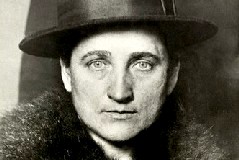 Tillie Klimek
Serial killer · USA · 1914
Ottilie “Tillie” Klimek, also known as Ottilie “Tillie” Klimek (or Tillie Gbure…
6 victims
Tillie Klimek
Serial killer · USA · 1914
Ottilie “Tillie” Klimek, also known as Ottilie “Tillie” Klimek (or Tillie Gbure…
6 victims
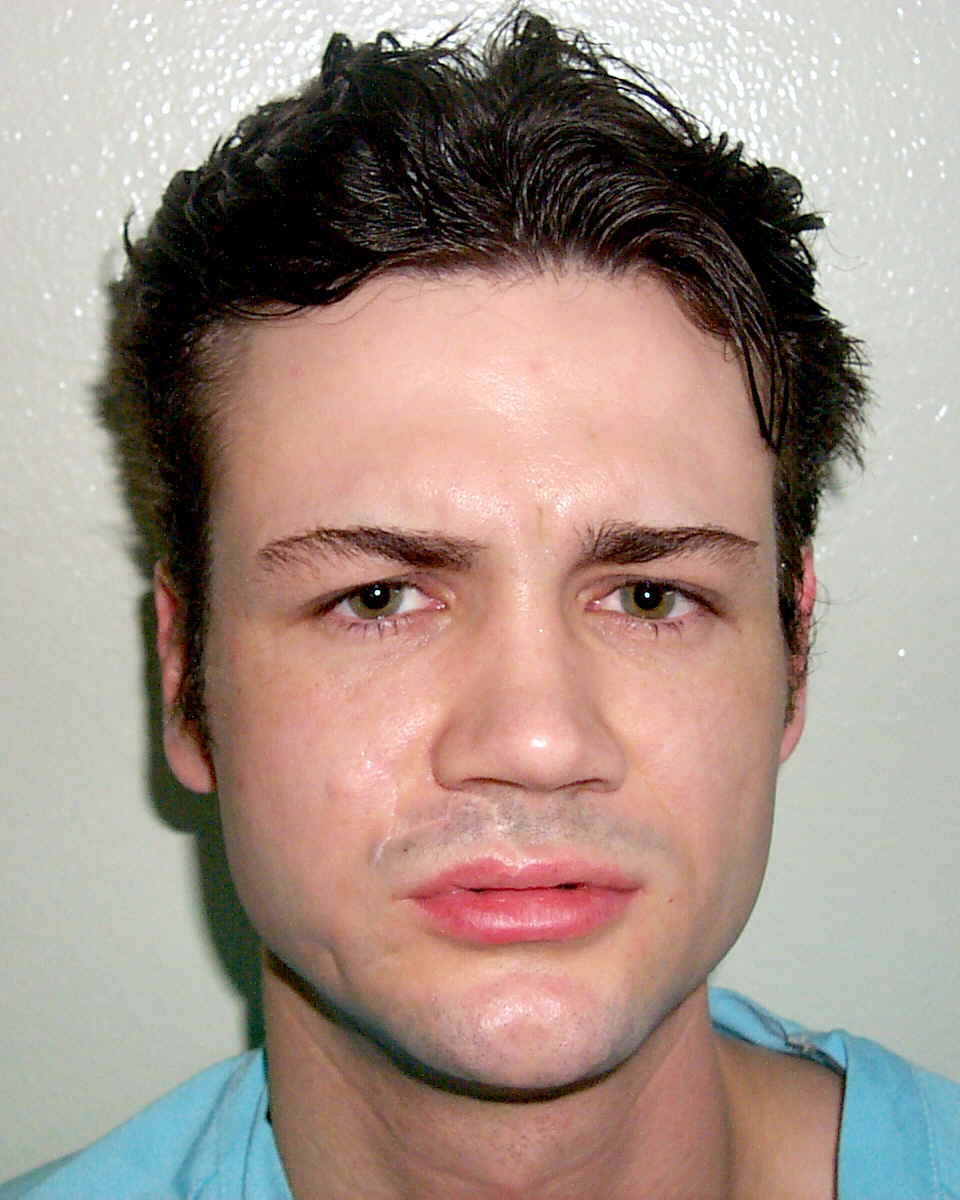 Christopher James Beck
Murderer · USA · 1995
Christopher James Beck was executed by lethal injection in Virginia on October…
3 victims
Christopher James Beck
Murderer · USA · 1995
Christopher James Beck was executed by lethal injection in Virginia on October…
3 victims
 Suleiman Khater
Mass murderer · Egypt · 1985
Suleiman Mohammed Abdul-Hamid Khater (Arabic سليمان خاطر, also transcribed Sole…
7 victims
Suleiman Khater
Mass murderer · Egypt · 1985
Suleiman Mohammed Abdul-Hamid Khater (Arabic سليمان خاطر, also transcribed Sole…
7 victims
 Monique Berkley
Murderer · USA · 2005
Monique Berkley was a Clayton, North Carolina woman at the center of a fatal lo…
1 victim
Monique Berkley
Murderer · USA · 2005
Monique Berkley was a Clayton, North Carolina woman at the center of a fatal lo…
1 victim
 Scott William Cox
Serial killer? · Several States USA / Canada · 1980
Name: Scott William Cox Tia Hicks vanished in 1990 after Scott William Cox was…
20 victims
Scott William Cox
Serial killer? · Several States USA / Canada · 1980
Name: Scott William Cox Tia Hicks vanished in 1990 after Scott William Cox was…
20 victims
- Gender
- male
- Country
- USA
- Location
- Horry County, South Carolina, USA
- Date of birth
- J uly 26, 1962
- Age at first offence
- 36
- Characteristics
- parricide, alcohol, drug addict
- Victim profile
- Maggie Passaro, 2 (his daughter)
- Method of murder
- Fire ( set fire to a family minivan )
- Date(s) of murder
- November 23, 1998
- Years active
- 1998
- Date of arrest
- Same day
- Status
-
Executed
Executed by lethal injection in South Carolina on September 13, 2002
Case details
Michael Passaro pled guilty to murder and arson and was sentenced to death for the killing of his 2-year-old daughter, Maggie, during an incident involving a custody dispute with his estranged wife, Karen Passaro.
Timeline
- November 23, 1998 — Passaro drove the family minivan with Maggie strapped in a child safety seat and parked it at his estranged wife Karen Passaro’s condominium complex; he poured gasoline on the floor of the vehicle, ignited it, and jumped out, leaving Maggie to die.
- April 1999 — Jonathan Simons examined Passaro.
- August 16, 2000 — Passaro pleaded guilty to murder and first-degree arson and received a death sentence; a 30-year sentence for arson was imposed concurrently.
- May 29, 2002 — The South Carolina Supreme Court heard Passaro’s appearance in person before the justices regarding waiving his appeals.
- July 29, 2002 — The South Carolina Supreme Court issued its opinion affirming and granting Passaro’s ability to waive general appellate review.
- September 13, 2002 — Passaro was executed by lethal injection at 6:15 p.m. in South Carolina.
Background
Passaro and his wife Karen Passaro separated because of marital difficulties, and Karen subsequently filed for divorce. A family court issued a temporary order affecting custody of their child, Maggie. The order granted Passaro weekend custody of Maggie beginning on Friday when he would pick her up from daycare and ending Monday when he would return her to daycare; Karen would pick up Maggie on Monday afternoon and keep her until Friday. The parties had conflicts concerning the custody arrangement, particularly during holidays.
Passaro wrote and recovered a suicide note in the van, explaining his wish to kill himself and Maggie so they could spend time in heaven away from Karen.
Passaro’s first wife, Donna, was struck and killed by an automobile while attempting to help another motorist involved in a separate accident. Donna died in 1988. Passaro later became devastated, and he pursued multiple relationships and work after her death; his background also included alcohol and drug abuse and treatment for depression.
Passaro had been prescribed medication, primarily Prozac, to calm him and help him sleep. Passaro stated the medication did not affect his ability to reason, coherently, or rationally. The medical evidence presented at the hearing below confirmed this assessment.
The offence
On the Monday before Thanksgiving, Passaro did not take Maggie to daycare. Instead, he drove his van to Karen’s condominium complex, poured gasoline on the floor of the vehicle, ignited the gasoline, and jumped out leaving Maggie to die strapped in a child safety seat.
Investigators found a suicide note in the van written by Passaro, explaining his wish to kill himself and Maggie so they could spend time in heaven away from Karen.
Fire investigators testified the fire started near the middle seat of the van. The remains of a plastic, 1-gallon gasoline can were found melted into the floor near where Maggie was strapped in a child safety seat.
Maggie’s body was found after the fire was extinguished and investigators were searching for a cause of the fire. Clay Nichols, a forensic pathologist who examined Maggie, said:
"She was alive when the fire was raging. She burned to death as a result of the flame and fire in the car,"
"I can't think of a more painful way to die."
Witnesses testified Passaro jumped out of the van soon after it exploded. John Watts testified:
"We pulled him away to the grassy area,"
"We asked him if anyone else was in the van, and he would not answer us."
Paramedics testified Passaro was conscious when they arrived, and the clothing on his right arm and the back of his legs was singed.
Investigation
After Passaro’s indictment, the State served notice of its intent to seek the death penalty.
The suicide note had singed edges and was recovered from the white 1995 Ford minivan. A prosecutor read aloud statements from the note to Karen Passaro during the sentencing hearing.
Passaro’s counsel waived closing arguments at Passaro’s behest, and Passaro made a brief closing statement to the judge:
"Donna (8) was a big part of my life. I was devastated by her passing, and when I met Karen I thought I would have another chance at happiness.
We started having difficulties in our marriage and happiness turned to tragedy.
Thank you, your honor."
Arrest
Passaro was sentenced to death and remained in custody; his later execution occurred while he was an inmate at the Broad River Correctional Institution and then at Lieber Correctional Institution in Dorchester County.
Trial
Passaro pleaded guilty to both charges of murder and arson after the trial judge conducted a Blair hearing and found him competent.
A trial judge found Passaro entered pleas of guilty freely, voluntarily, and intelligently. The trial court reconvened to begin the required sentencing phase.
At the Singleton hearing, Dr. Pamela Crawford testified Passaro was competent under the Singleton standard to waive his appeal and to be executed. Dr. Crawford found Passaro suffered from no major mental illness and had suffered mild depression in his past, including periods after the death of his first wife and after his incarceration for the murder of his daughter. Dr. Crawford’s findings were consistent with the report of the findings of the defense psychiatric expert.
The trial court found Passaro competent under the Singleton standard. The court found Passaro able to understand the nature of the proceedings, the crimes for which he was tried, the reason for and the nature of the punishment, and that he possessed sufficient mental capacity or ability to rationally communicate with counsel.
Passaro’s counsel filed a timely notice of appeal; Passaro, pro se, filed a motion to dismiss his appeal. The matter was remanded to determine whether Passaro was competent to waive his right to appeal.
During oral arguments before the South Carolina Supreme Court, the justices questioned Passaro at length regarding his competency and waiver decision.
Passaro made statements to the justices before the court regarding his decision to waive appeals. He also told the court:
"Death or life (in prison) are both death sentences,"
Sentencing
At the conclusion of the sentencing hearing the trial judge found the existence of statutory aggravating circumstances beyond a reasonable doubt:
- physical torture
- the offender by his act of murder knowingly created a great risk of death to more than one person in a public place by means of a weapon or device which would normally be hazardous to the lives of more than one person
- the murder of a child 11 years of age or younger
The trial court found mitigating circumstances existed but Passaro waived his right for the court to consider any mitigation. Passaro’s counsel filed a timely notice of appeal.
The trial judge concluded the evidence warranted the imposition of the death sentence for murder and a concurrent sentence of 30 years for arson.
Appeals
After Passaro’s conviction and sentence, Passaro requested to waive general appellate review and to be executed without further appeals.
The South Carolina Supreme Court decided that Passaro may waive his right to general appellate review, and found that he was competent to do so and that the request was knowing and voluntary.
The Supreme Court opinion recorded that at oral arguments the justices questioned Passaro extensively about his trial, the appeals process, and the consequence of his request to terminate any appeals on his behalf. The court stated that:
"Our own questioning of him leaves no doubt of his competency,"
The opinion also addressed appellate counsel’s argument that waiving appellate review was “little more than government-assisted suicide.” The Supreme Court concluded Passaro’s waiver was not denied and proceeded with a review of the sentence as required by S.C. Code Ann. § 16-3-25(C).
The Supreme Court reviewed whether the death sentence was imposed under the influence of passion, prejudice, or any other arbitrary factor and concluded the sentence was not influenced by such arbitrary factors. The Supreme Court also conducted circumstances of aggravation review and proportionality review.
In its proportionality review, the Supreme Court concluded there was no factually similar case involving the murder of a person under eleven years of age by arson where the death sentence was upheld. It noted the Supreme Court had upheld death sentences in other cases where a defendant murdered a person under the age of eleven, and listed examples including:
- State v. Ard (upholding death sentence for the murder of an unborn, but viable, son)
- State v. Rosemond (upholding death sentence for murdering a girlfriend’s ten-year-old daughter by shooting her)
- State v. Wilson (upholding death sentence for gunning down elementary school students)
The Supreme Court concluded Passaro’s death sentence was properly imposed after finding the existence of at least one aggravating circumstance, not imposed arbitrarily, and not disproportionate. The opinion concluded:
"Passaro may waive his right to general appellate review. He is competent to do so, and his request is both knowing and voluntary."
The decision was affirmed, with TOAL, C.J., MOORE, WALLER and PLEICONES, JJ., concurring.
In a letter received March 5, 2002, Passaro waived his right to file a pro se brief. The Supreme Court opinion reproduced Passaro’s letter text:
"In following the court's order of December 17, 2001, I understand that I have 20 days to respond to your [Office of Appellate Defense] brief and the state's brief. I received a copy of your brief and the state's brief on February 11, 2002 and after reading both briefs, I do not feel that any more [sic] is needed to be said. I agree with the state. Therefore, I am waiving the 20 days for my response."
Outcome
Passaro was executed by lethal injection in South Carolina on September 13, 2002 at 6:15 p.m.
Before the execution, Passaro declined to appeal his sentence. His counsel, Joe Savitz, had been positioned to file appeal papers if Passaro changed his mind, but Passaro did not.
Passaro smiled, blew kisses at his family, told them he loved them, and said “that it was over,” then let his final few breaths out as his eyes slowly closed.
Two sisters and the grandfather of the young victim also watched the execution through the glass and bars. The victim’s family issued a statement that they would rather focus on Maggie’s life instead of the death of her father.
Other details
Custody dispute and note
The suicide note included language read into the sentencing hearing by Prosecutor Greg Hembree from the typewritten note with singed edges recovered from the minivan. Hembree read:
"Well, Karen [Passaro] won the war, and it's at the expense of our daughter,"
"I guess that I'm getting the last laugh now, Karen. "Whatever anyone does, please make sure Karen doesn't kill herself. I want her to live in pain."
Hembree asked Karen Passaro:
"Has he achieved his objective?"
Karen Passaro replied:
"Yes. I will live like this forever, for the rest of my life. I can't concentrate or even focus some days,"
"Maggie will never get to grow up. ... And in the process he took away my future."
In the Supreme Court opinion, the justices described the suicide note as explaining Passaro’s wish to kill himself and Maggie so they could spend time in heaven away from Karen. The Supreme Court also referenced the mitigation waiver and described the case facts as not disputed.
Witness testimony and expert testimony
Jonathan Simons, a clinical psychologist who examined Passaro, testified Passaro knew right from wrong and addressed Passaro’s thinking about his wife and daughter. Simons testified:
"My impression is that in Michael's mind his identity became somewhat blurred. He felt his wife was robbing him of his identity, and he had to win that battle,"
In response to a question by Prosecutor Hembree whether Passaro’s hatred for Karen Passaro was greater than his love for Maggie Passaro, Simons testified:
"I think some people could see that. ... He had this delusion of being with Maggie and going to heaven to see his 1st wife."
Susan Lewis, who taught Passaro in a nursing class, testified for the defense that Passaro needed emotional support and wasn’t thinking clearly. Lewis also said Passaro had poor life skills and judgment and was under stress with his classes, work, and pending divorce. Lewis testified:
"He thought he had a solution to his problems, and he hoped she was hurt at the outcome," Lewis said.
Officers, responders, and conduct at the scene
Firefighters asked Passaro if anyone was inside the van, but he refused to answer.
A first officer on the scene later testified that Karen Passaro heard commotion and came outside, recognized the van, and demanded repeatedly to know whether her daughter was inside. Horry County Fire Capt. James Cyganiewicz testified that she collapsed in sobs after he broke the news.
Medication and mental state evidence referenced in the opinion
The Supreme Court opinion recorded that Dr. Crawford testified Passaro had mild depression in his past, including periods after the death of his first wife and after his incarceration for the murder of his daughter, and found no major mental illness.
The opinion also referenced that Passaro was prescribed medication, primarily Prozac, to calm him and help him sleep, and that Passaro stated the medication did not affect his ability to reason, coherently, or rationally.
Statement about waiver and competency
The Supreme Court opinion included references to standards for competency and knowing and voluntary waiver, and cited the Singleton standard.
The justices concluded no evidence suggested Passaro was not competent under the Singleton standard, and they concluded the waiver was knowing and voluntary.
Personal statement and opposition to appellate counsel
At oral arguments and in filings, Passaro argued for waiving appellate review and opposed the actions of counsel seeking to continue appeals.
The opinion described appellate counsel’s argument that allowing Passaro to waive general appellate review was “little more than government-assisted suicide,” and it recorded the court’s rejection of that argument.
Prosecution statements about sentencing
Prosecutor Greg Hembree stated after Passaro’s sentencing:
"There's no joy in sending someone to death row,"
"There's satisfaction that it was the appropriate sentence. Michael Joseph Passaro deserves the death penalty. The burning death of a 2-year-old is inexcusable."
Additional written statement in connection with consent to execution
Passaro opposed efforts to spare him from lethal injection and urged the courts to ignore efforts of attorneys to do so. He wrote in a letter to the South Carolina Supreme Court:
"You do not have to live this life. I do,"
"The state says I should die for what I did, and I am not going to stand in their way."
Other referenced relationships and work history (as described)
Passaro was described as a Navy veteran and a former nurse technician. He studied to be a nurse and worked as a paramedic near Myrtle Beach. The materials also described that he met Karen at a hospital where she worked and that they had been married, separated in June 1998, and had a child named Maggie.
Spotted an error, or have more information about this case?