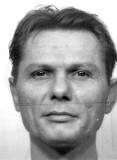
James Emery Paster
Murderer Ervil LeBaron
Murderer · USA · 1972
Ervil Morrell LeBaron (1925 to August 16, 1981) was the leader of a polygamous…
35 victims
Ervil LeBaron
Murderer · USA · 1972
Ervil Morrell LeBaron (1925 to August 16, 1981) was the leader of a polygamous…
35 victims
 Brian Kevin Rosenfeld
Murderer · USA · 1985
Brian Kevin Rosenfeld Brian Kevin Rosenfeld was sentenced to three concurrent l…
23 victims
Brian Kevin Rosenfeld
Murderer · USA · 1985
Brian Kevin Rosenfeld Brian Kevin Rosenfeld was sentenced to three concurrent l…
23 victims
 Marvin Gray
Murderer · USA · 1975
Marvin Gray was convicted killer who claimed responsibility for 23 slayings and…
23 victims
Marvin Gray
Murderer · USA · 1975
Marvin Gray was convicted killer who claimed responsibility for 23 slayings and…
23 victims
 Yahweh ben Yahweh
Murderer · USA · 1980
Yahweh ben Yahweh was born and legally named Hulon Mitchell Jr. (October 27, 19…
23 victims
Yahweh ben Yahweh
Murderer · USA · 1980
Yahweh ben Yahweh was born and legally named Hulon Mitchell Jr. (October 27, 19…
23 victims
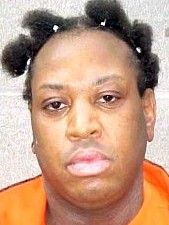 Sherman Rutledge
Murderer · USA · 1997
Sherman Rutledge was charged with armed robbery, first degree murder of Ryan Ha…
1 victim
Sherman Rutledge
Murderer · USA · 1997
Sherman Rutledge was charged with armed robbery, first degree murder of Ryan Ha…
1 victim
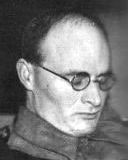 Harold Hill
Murderer · Gran Bretaña · 1941
Harold Hill was convicted of the murder of Doreen Joyce Hearne aged 8 and Kathl…
2 victims
Harold Hill
Murderer · Gran Bretaña · 1941
Harold Hill was convicted of the murder of Doreen Joyce Hearne aged 8 and Kathl…
2 victims
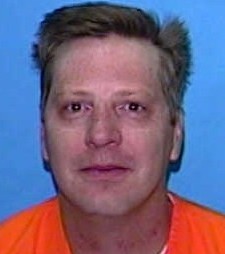 John Richard Marek
Murderer · USA · 1983
Name: John Richard Marek · DC Number: #094417 · Race: WHITE · Sex: MALE · Hair…
1 victim
John Richard Marek
Murderer · USA · 1983
Name: John Richard Marek · DC Number: #094417 · Race: WHITE · Sex: MALE · Hair…
1 victim
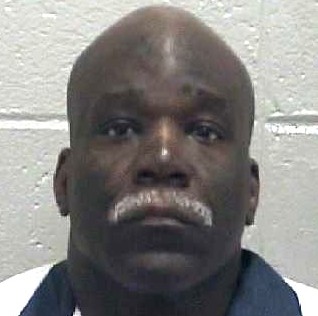 Michael Anthony Cohen
Murderer · USA · 1985
Michael Anthony Cohen, 40, was sentenced to death in Glynn County in December 1…
1 victim
Michael Anthony Cohen
Murderer · USA · 1985
Michael Anthony Cohen, 40, was sentenced to death in Glynn County in December 1…
1 victim
 Melissa Drexler
Homicide · USA · 1997
Melissa Drexler was born in 1979 and was also known as “The Prom Mom.” She atte…
1 victim
Melissa Drexler
Homicide · USA · 1997
Melissa Drexler was born in 1979 and was also known as “The Prom Mom.” She atte…
1 victim
- Gender
- male
- Country
- USA
- Location
- Harris County, Texas, USA
- Date of birth
- January 30, 1945
- Age at first offence
- 35
- Characteristics
- murder for hire, rape
- Victim profile
- Robert Edward Howard, 38 / Diana Trevino Oliver, 27 / Cynthia Johnson, 18
- Method of murder
- Shooting / St abbing with knife / Strangulation
- Date(s) of murder
- October-December 1980
- Years active
- 1980
- Date of arrest
- —
- Status
-
Executed
Executed by lethal injection in Texas on September 20, 1989
Offender
James Emery Paster (#752) was convicted of capital murder and sentenced to death. He was a High school graduate or GED. He was 44 (35).
Victim(s)
Robert Edward Howard, 38, was shot and killed outside a Houston nightclub on Oct. 25, 1980. Cynthia Johnson was raped, and after LeBlanc unsuccessfully attempted to strangle her, Paster strangled her to death and drove a nail up her nose. Diana Trevino Oliver was forced into the trio’s car, taken to a field, raped, and then McCoy stabbed her to death. The number of victims was at least three: Robert Edward Howard, Diana Trevino Oliver, and Cynthia Johnson.
Timeline
- October 1980 — Paster and two accomplices, Stephen McCoy and Gary LeBlanc, agreed to kill Robert Edward Howard at the suggestion of Howard’s ex-wife and her current husband; Paster sought and was promised $1,000 for the slaying.
- October 25, 1980 — Paster, McCoy, and LeBlanc went to the Legal Tender Club parking lot, slit Howard’s truck tire, waited for Howard to leave the club, and Paster shot Howard in the back of the head.
- Mid-November 1980 — The trio forced Diana Trevino Oliver into their car, took her to a field, raped her, and then McCoy stabbed her to death.
- December 31, 1980 — The trio found Cynthia Johnson stranded on the side of the road, took her to a warehouse, raped her, and after LeBlanc unsuccessfully attempted to strangle her, Paster strangled her to death and drove a nail up her nose.
- June 1, 1983 — Paster was indicted for the capital murder of Robert Edward Howard.
- August 22, 1983 — At Paster’s Jackson v. Denno hearing, Paster asserted for the first time that he was under the influence of drugs when his confession was taped; on this date the state trial court dictated oral findings.
- September 21, 1983 — The jury found Paster guilty of capital murder.
- September 22, 1983 — After a punishment hearing, Paster was sentenced to death.
- 1985 — Paster v. State, 701 S.W.2d 843 (Tex.Crim.App.1985) (en banc) affirmed the conviction and sentence.
- February 24, 1986 — The Supreme Court denied certiorari. (Paster v. Texas, 475 U.S. 1031, 106 S.Ct. 1240, 89 L.Ed.2d 348 (1987) appears in the materials describing the denial.)
- June 2, 1986 — Paster’s execution was first scheduled for June 2, 1986.
- May 27, 1986 — The state habeas court withdrew the order scheduling Paster’s execution and set an evidentiary hearing.
- October 24, 1986 — After three days of hearings, the state habeas court entered findings of fact and conclusions of law and recommended that relief be denied.
- March 25, 1987 — The Texas Court of Criminal Appeals denied habeas relief without written order based on the findings of the state habeas court.
- July 8, 1987 — Paster’s second execution date was scheduled for August 14, 1987.
- July 30, 1987 — Paster filed a petition for writ of habeas corpus in the United States District Court for the Southern District of Texas.
- August 4, 1987 — The state habeas court denied relief.
- August 10, 1987 — The Texas Court of Criminal Appeals denied relief.
- August 11, 1987 — A stay of execution was granted by the state habeas court.
- October 5, 1988 — The federal district court entered an order adopting the federal magistrate’s memorandum which denied habeas relief on all seventeen grounds for relief and vacated the stay of execution; the district court also denied a certificate of probable cause to appeal.
- June 27, 1989 — The United States Court of Appeals, Fifth Circuit affirmed the district court’s judgment and denied all relief requested.
- September 20, 1989 — Paster was executed by lethal injection in Texas.
The offence
Paster was convicted of capital murder and the punishment phase evidence included evidence of the emotional impact on the families of the victims and about the victims’ physical condition when they were found by police. At the suggestion of Howard’s ex-wife and her current husband, Paster and his accomplices agreed to kill Robert Edward Howard. Paster and the others went to the Legal Tender Club; they slit Howard’s truck tire and waited for him to leave the club. When Howard noticed the flat tire and opened his hood to get the jack, Paster approached from Howard’s rear and shot him in the back of the head.
In the weeks that followed, the same trio forced Diana Trevino Oliver into their car, took her to a field, raped her, and then McCoy stabbed her to death. Later, the trio found Cynthia Johnson stranded on the side of the road, took her to a warehouse, raped her, and after LeBlanc unsuccessfully attempted to strangle her, Paster strangled her to death and drove a nail up her nose.
Investigation and confession
Earlier police tape recorded Paster’s confession at Holman State Prison in Atmore, Alabama, where Paster was serving three life sentences for robbery-assault, robbery in the first degree and burglary in the first degree. Paster filed a motion to suppress the confession at his trial and the state trial court conducted a Jackson v. Denno hearing. After a second suppression hearing, the state trial court decided to admit the taped conversation.
Inmate George maintained that Paster “was always under the influence of some kind of drug,” the most common being those prescribed to him. Inmate Lopez maintained that Paster “was so doped up on pills he couldn’t even talk” the day of his confession. The only drugs Lopez identified are “the type of medication he was on.” Neither inmate testified that Paster “took an illegal drug the day of his confession and Lopez' claim that Paster ‘couldn't even talk’ that day is inherently incredible” (as quoted in the materials).
Trial
At trial, the facts of Paster’s capital crime come from his taped confession introduced at his trial and the testimony of an accomplice to the murder.
The jury found Paster guilty of capital murder on September 21, 1983. After a punishment hearing on September 22, 1983, Paster was sentenced to death.
Booth v. Maryland issue (victim impact testimony)
Paster challenged testimony about emotional impact and a portion of the prosecutor’s closing arguments as violative of the instruction in Booth v. Maryland. However, Paster never objected to this testimony or to the prosecutor’s closing argument at trial. In response to Paster’s second state petition, the state habeas court found the claim waived under state law, stating:
In Ground of Error Number Five the applicant has, for the first time, raised an issue concerning the propriety of alleged emotional appeals by the trial prosecutor for the jury to consider the emotional impact of the crime upon the victim's family. This contention has not been preserved by timely objection and the error, if any, had been waived.
The district court and the appellate court treated the claim as procedurally barred under Wainwright v. Sykes.
Motion for a continuance and Jackson v. Denno hearing
At Paster’s Jackson v. Denno hearing on August 22, 1983, Paster asserted for the first time that he was under the influence of drugs when his confession was taped. A week later, inmates Roberto Lopez and James George were subpoenaed from the Holman State Penitentiary in Atmore, Alabama, because Paster asserted they would corroborate his story. On September 19, 1983, one of Paster’s attorneys moved for a continuance to secure the presence of the Alabama witnesses, and Paster filed a similar motion pro se the same day. Later that day, after Paster conferred with his attorneys, Paster withdrew his motion for a continuance, with the following quoted exchanges:
MR. GUERINOT: At this time, Judge, we would state for the record that the Defendant at a prior date, specifically August 29, 1983, subpoenaed Mr. Lopez and Mr. George from the Holman Unit of the state penitentiary in Alabama at Atmore. After having discussed this thoroughly with Mr. Paster , we have decided we would waive their appearance in this trial. They are no longer needed as witnesses in this case.
THE COURT: Do you so agree, Mr. Paster ?
MR. PASTER : Yes, Your Honor, I do.
The next day, there were further quotations reiterating the withdrawal:
MR. HANSEN: Judge, I believe this was resolved yesterday, but just so that the record is perfectly clear, there was a sworn Motion for Continuance filed by the Defendant yesterday requesting a continuance in order to secure his witnesses from Alabama. I know that he waived yesterday the appearance of those witnesses, but I would like the record to indicate that the Defendant has withdrawn his sworn Motion for Continuance at this time. Would the Court rule on that?
MR. GUERINOT: We have withdrawn it, Judge.
THE COURT: Is that true, Mr. Paster ?
MR. PASTER : Yes, sir, it is, Your Honor.
Paster asserted that his rights to compulsory process and the effective assistance of counsel were violated when the trial court refused to grant the continuance. He also sought an evidentiary hearing in federal court.
In describing the Strickland v. Washington test, the court quoted:
The reasonableness of counsel's actions may be determined or substantially influenced by the defendant's own statements or actions. Counsel's actions are usually based, quite properly, on informed strategic choices made by the defendant and on information supplied by the defendant. In particular, what investigation decisions are reasonable depends critically on such information.
This is not a case in which counsel failed to pursue leads that might have opened up new territory for the defense.
Physical appearance, legal materials, and medical care
Paster argued that jail personnel deprived him of sleep and that he was denied adequate food, clothing and grooming facilities, as well as medical care. The state habeas court made findings relevant to his physical appearance at trial and his complaint that jail personnel deprived him of sleep, including a finding that he “disliked the bologna and pimento sandwiches he was served while incarcerated.” The materials also record other findings that he “was not served hot meals due to the logistical problem of always being in court during the time the meals were served” and that “The State did not deprive the Applicant of proper nutrition during the trial.” A motion for hot meals was filed and “was eventually complied with.”
The materials record that he “appeared one day before the jury looking unkempt.” The state habeas court found that the Applicant “was not tried in jail clothes or in shackles. He wore street clothes during the trial,” that “The Applicant was given the opportunity to bathe and shave ...,” that “The record reflects that the Applicant himself expressed satisfaction to the court with the new set of clothes he was given to wear,” and that “The state did not deprive the Applicant of an acceptable physical appearance.” The state habeas court found that he had to be “awakened early in the morning” because he was initially housed in a jail “quite a distance” from the courthouse, and that during voir dire he once fell asleep, but that he was moved to a downtown jail upon request of defense counsel and thereafter “had no further problem in staying awake during the trial.” It also recorded that the state court found his statement that he slept all the time before the jury during the trial was “neither credible nor supported by the record,” and that “The State did not deprive the Applicant of sleep during the trial.”
On access to legal materials, the state habeas court found that as soon as he filed a motion for access to legal material it was granted and that the Applicant was granted access to a law library and counsel was allowed to deliver additional legal material. It further found: “The State did not intentionally deprive the Applicant of access to legal materials during his trial.”
On medical care, the materials record that Paster complained of pain in his shoulder but was not immediately taken to a doctor “because he was in court all day long.” The trial court ordered that he receive medical treatment. The state habeas court found that he “was taken to Ben Taub Hospital, examined by a doctor and advised there was nothing wrong with his shoulder.” It also found that he “was never in such pain that he could not either proceed with the trial or confer with his attorneys,” and that by his own admission his injury “was not severe enough to affect his ability to assist his attorneys.” The trial record reflected that the judge called the doctor and in open court confirmed the doctor’s opinion that Paster’s injury would not prevent “an intelligent conversation with his counsel in preparing the defense to his case ...”
Sentencing
Paster was sentenced to death after a punishment hearing on September 22, 1983.
Appeals
Direct appeal
The Texas Court of Criminal Appeals affirmed Paster’s conviction and sentence on direct appeal in Paster v. State, 701 S.W.2d 843 (Tex.Crim.App.1985) (en banc). The Supreme Court denied certiorari on February 24, 1986. Paster v. Texas, 475 U.S. 1031, 106 S.Ct. 1240, 89 L.Ed.2d 348 (1987).
Habeas proceedings
Paster’s execution was first scheduled for June 2, 1986. In May 1986, he filed a state habeas petition through his attorney and a pro se request for stay of execution in federal district court. On May 27, 1986, the state habeas court withdrew the order scheduling his execution and set an evidentiary hearing. The federal district court dismissed his application for a stay of execution as moot. On October 24, 1986, after three days of hearings, the state habeas court entered findings of fact and conclusions of law and recommended that relief be denied. On March 25, 1987, the Texas Court of Criminal Appeals denied habeas relief without written order based on the findings of the state habeas court.
On July 8, 1987, Paster’s second execution date was scheduled for August 14, 1987. On July 30, 1987, Paster filed a petition for writ of habeas corpus in the United States District Court for the Southern District of Texas. Because two claims had not been exhausted, the federal court deferred action, and he filed a second state habeas petition and motion for stay of execution in state court. On August 4, 1987, the state habeas court denied relief, and on August 10, 1987, the Texas Court of Criminal Appeals denied relief. On the state’s motion, the federal district court deferred consideration of the request for stay pending state habeas action. On August 11, 1987, the state habeas court granted a stay of execution.
On October 5, 1988, the federal district court entered an order adopting the federal magistrate’s memorandum, which denied habeas relief on all seventeen grounds for relief and vacated the stay of execution. The district court also denied a certificate of probable cause to appeal.
Fifth Circuit appeal
James Emery Paster, Petitioner-appellant, v. James A. Lynaugh, Director, Texas Department of Corrections, respondent-appellee; 876 F.2d 1184; United States Court of Appeals, Fifth Circuit. June 27, 1989; Appeals from the United States District Court for the Southern District of Texas. Before GEE, GARWOOD, and JONES, Circuit Judges. Edith H. Jones, Circuit Judge: The Fifth Circuit affirmed the district court’s judgment and denied all relief requested by Paster. It denied a certificate of probable cause and denied a stay of execution.
The Fifth Circuit addressed three issues relating to seven grounds for relief in Paster’s federal habeas petition:
- whether Paster’s Booth v. Maryland claim was procedurally barred;
- whether an evidentiary hearing was required in federal court to determine whether Paster was harmed by the state trial court’s failure to grant a continuance to secure prospective witnesses;
- whether Paster’s trial was rendered fundamentally unfair because he was deprived of sleep, medical care, adequate food, clothing and grooming facilities.
The materials state that the court resolved each issue in turn, finding that Paster was not entitled to relief on the merits and that there was no basis for granting a certificate of probable cause or issuing a stay of his execution. It recorded:
Motion for certificate of probable cause DENIED; stay of execution DENIED.
Other details
Imprisonment at the time of the confession
Execution and accomplices
The materials record that Howard’s ex-wife and her boyfriend each received a life term for their roles in the crime. Also implicated was Stephen A. McCoy, who was executed for another murder that also involved Paster. A footnote states: “McCoy has been executed for his participation in the murder of Cynthia Johnson.”
Booth-related legal background
A footnote states: “Texas law has recognized a prohibition against the use of victim impact evidence at a capital murder trial from as early as 1901. Vela v. State, 516 S.W.2d 176, 179 (Tex.Crim.App. 1975) (citing a line of cases from 1901-1971 holding that such evidence was inadmissible).” Another footnote cites Jackson v. Denno: Jackson v. Denno, 378 U.S. 368, 380, 84 S.Ct. 1774, 1783, 12 L.Ed.2d 908 (1964), requiring “a fair hearing in which both the underlying factual issues and the voluntariness of [a] confession are actually and reliably determined.”

Spotted an error, or have more information about this case?