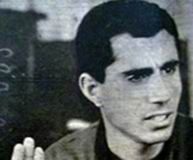
Suleiman Khater
Mass murderer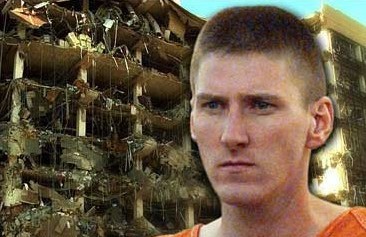 Timothy McVeigh
Mass murderer · USA · 1995
Timothy James McVeigh (April 23, 1968 – June 11, 2001) was a United States Army…
168 victims
Timothy McVeigh
Mass murderer · USA · 1995
Timothy James McVeigh (April 23, 1968 – June 11, 2001) was a United States Army…
168 victims
 Julio Gonzalez
Mass murderer · USA · 1990
Julio Gonzalez was sentenced to 174 twenty-five-year sentences (a total of 4,35…
87 victims
Julio Gonzalez
Mass murderer · USA · 1990
Julio Gonzalez was sentenced to 174 twenty-five-year sentences (a total of 4,35…
87 victims
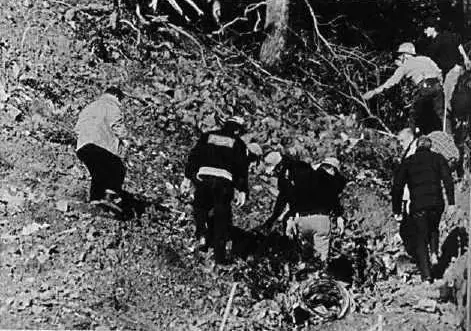 David Burke
Mass murderer · USA · 1987
David Augustus Burke (May 18, 1952–December 7, 1987) was an employee of USAir,…
43 victims
David Burke
Mass murderer · USA · 1987
David Augustus Burke (May 18, 1952–December 7, 1987) was an employee of USAir,…
43 victims
 Baruch Goldstein
Mass murderer · Palestine · 1994
Baruch Kappel Goldstein (Hebrew: ברוך גולדשטיין ; December 9, 1956 – February…
29 victims
Baruch Goldstein
Mass murderer · Palestine · 1994
Baruch Kappel Goldstein (Hebrew: ברוך גולדשטיין ; December 9, 1956 – February…
29 victims
 Marilyn Lemak
Murderer · USA · 1999
Marilyn Lemak (also referred to in criminal court as Marilyn Lemak; born May 30…
3 victims
Marilyn Lemak
Murderer · USA · 1999
Marilyn Lemak (also referred to in criminal court as Marilyn Lemak; born May 30…
3 victims
 Aileen Wuornos
Serial killer · USA · 1989
Aileen Carol Wuornos was an American serial killer who killed seven men in Flor…
7 victims
Aileen Wuornos
Serial killer · USA · 1989
Aileen Carol Wuornos was an American serial killer who killed seven men in Flor…
7 victims
 Peter Howse
Murderer · New Zealand · 1982
Peter Howse was a convicted murderer and rapist who was sentenced to life in pr…
1 victim
Peter Howse
Murderer · New Zealand · 1982
Peter Howse was a convicted murderer and rapist who was sentenced to life in pr…
1 victim
 Dwayne Allen Wright
Homicide · USA · 1989
Dwayne Allen Wright was executed by lethal injection on October 14, 1998 in Vir…
3 victims
Dwayne Allen Wright
Homicide · USA · 1989
Dwayne Allen Wright was executed by lethal injection on October 14, 1998 in Vir…
3 victims
 Sean Sellers
Homicide · USA · 1985
Sean Sellers was executed by lethal injection in Oklahoma on February 4, 1999.…
3 victims
Sean Sellers
Homicide · USA · 1985
Sean Sellers was executed by lethal injection in Oklahoma on February 4, 1999.…
3 victims
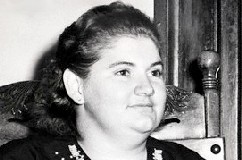 Martha Beck
Serial killer · USA · 1948
Martha Beck was executed by electrocution at Sing Sing prison in New York on Ma…
4 victims
Martha Beck
Serial killer · USA · 1948
Martha Beck was executed by electrocution at Sing Sing prison in New York on Ma…
4 victims
- Gender
- male
- Country
- Egypt
- Location
- Ras Barqa, Southern Sinai, Egypt
- Date of birth
- 1961
- Age at first offence
- 24
- Characteristics
- —
- Victim profile
- Israeli tourists (including 4 children)
- Method of murder
- Shooting
- Date(s) of murder
- October 5, 1985
- Years active
- 1985
- Date of arrest
- Same day (surrenders)
- Status
-
Executed
Sentenced to a life term at hard labor by a Military Tribunal on December 28, 1985. Found hanged in his cell on January 8, 1986
Case record: Suleiman Khater
Background
Suleiman Mohammed Abdul-Hamid Khater (Arabic سليمان خاطر, also transcribed Soleiman, Sulaiman, Sulayman, Suliman etc.) was an Egyptian soldier and a member of the Central Security Forces. He was born in 1961 in the village of Ekyad (sometimes transcribed Akyad) in Al-Sharkeyya governorate, Egypt, and he was the youngest of three boys and two girls born to a simple family.
During his childhood, Suleiman witnessed the Israeli strike on Bahr el-Bakar Primary School on April 8, 1970, when the Israeli Air Force bombarded the school using the American Phantom airplanes and killing 30 children. His sister later told Al-Jazeera that Suleiman rash out to see what’s happening and came back with a shock of what he saw.
Suleiman joined the obligatory military service as a soldier in the Central Security Forces.
The offence
On October 5, 1985, during Khater’s usual shift in the area of Ras Barqa (or Ras Barga) in Southern Sinai, he saw a group of Israeli tourists, 12, trying to climb the cliff where his booth was located. He warned them saying “Stop no passing” in English, but they didn’t listen to him and kept going towards the military booth.
He fired warning shots in the air. Getting no response or reaction from the 12 Israelis, Suleiman shot at them and left 7 of them dead, including 4 children.
Investigation
During the investigations, Suleiman said that these Israelis snake into the Egyptian lands without a permission and refused to obey or listen to his warnings.
In the investigation record, Khater told his story:
“I was on a cliff high from the ground, serving during my shift, and I saw a group of foreigners; women, children and apparently a man wearing swimsuits. I said: “Stop no passing” in English, they didn’t obey. And the passed by the booth. My mission there was to guard the borders, to guard the equipment that no one, Egyptian or foreigner, should see. This is a no entry area and no one should be there, and these are my orders. It isn’t the case that I let pass any girl who strips in front of me”. (Pointing to another accident where an Israeli woman stripped in front of an Egyptian soldier in Sinai to get the CSF equipment frequency from him) “Why did you order us not to let anyone pass then? If you wanted us to let them then just tell us so”. As the investigator asked him, “why do you insist on filling your weapon, Suleiman?” Khater answered, “because whoever loves his country takes care of his weapon, and vice versa.. that’s pretty axiomatic”. He said, “because I love it as much as I love Egypt” when he was asked “how do you reason that you memorize your weapon’s number?"
Arrest / detention
Suleiman turned in himself after the incidents.
Trial
Suleiman was charged in front of a military tribunal despite being a member of police forces and not a military soldier. During the trial, Suleiman’s lawyer requested that he’ll be introduced to a civil court but his request has been refused. The governmental journals said he was crazy, and the dissident journals demanded that he will be introduced to a civil court, not a military one. Many appeals, conferences, and statements demanded the same.
At the court, Suleiman said:
“I’m not afraid of death, it’s fate. What I’m afraid of is that the sentence I’m going to receive might affect my colleagues badly and kill their patriotism”.
He also said during sentencing:
“This sentence is a sentence against Egypt, because an Egyptian soldier did his duty”,
and talked to the guards saying: “Go guard Sinai, Suleiman doesn’t need any guards".
Sentencing
Suleiman was sentenced by the military tribunal to a life term at hard labor on December 28, 1985.
Appeals
So many appeals, conferences, and statements demanded that he be tried in a civil court rather than a military one.
Outcome
The military tribunal sentenced Khater a life term at hard labor on December 28, 1985, and he was deported to the Military Prison in Nasr City, Cairo. Right after which, Khater was transferred to the prison hospital.
On his 9th day in prison, and exactly on January 7, 1986, it was announced that Suleiman has committed suicide. He was later found hanged in his cell on January 8, 1986.
The official version said that Suleiman committed suicide. The forensic report said that he committed suicide. The official statement said that he committed suicide using the bed sheets, al-Mosawer official magazine said that it was using a plastic sheet, and the forensic report said that it was using a piece of a commando costume.
Many Egyptians cast doubt on the government’s version of Suleiman’s death. His brother said:
“I raised my brother very well, and I know how faithful and religious he is. He can not have committed suicide. They killed him in his prison”.
National (governmental) journals said that Suleiman hung himself to a window 3 meters away from the ground. Witnesses said that suicide is not the only possibility and that there were strangling marks on the neck, and bruises on his legs.
Suleiman’s family issued a request to redo the dissection by an independent committee, however their request was declined.
Aftermath
After Suleiman’s death news was known, angry university and school students went out in protests.
After all, the Israelis families got a compensation from the Egyptian government.
Suleiman’s mother later said:
“My son was killed, by the government, for the sake of America and Israel, so that they will be satisfied”.
During the political context around the shooting, Egypt’s most promoinent lawyers stood in line to passionately defend Khater.
While Israel demanded that he be harshly punished, a number of voices in the Arab world expressed support for his actions, including the parliament of Kuwait.
After his death, the Iranian government of Ayatollah Khomeini issued a stamp “In honour of the martyrdom of Sulayman Khater, Hero of Sinai” and named a street in Tehran for him.
Other details
Suleiman wrote a letter in prison in which he mentioned a discussion with another prisoner. In the letter he mentioned that when one of the prisoners asked him “what are you thinking about?” he answered:
“I’m thinking of Egypt my mother. I’m thinking she’s a good woman like my mother who works really hard, and I’m telling her: “I’m just one of your loving sons, of your soil, and my blood is of your Nile”, and when I cry, I picture her setting right next to me, just like my mother at home who used to hold me to her chest and say: “Don’t cry Suleiman, you did exactly what I was expecting from you””.
Suleiman was associated with a Ras Barqa incident in Southern Sinai.
Suleiman was transferred to the prison hospital after being deported to the Military Prison in Nasr City, Cairo.
Spotted an error, or have more information about this case?