
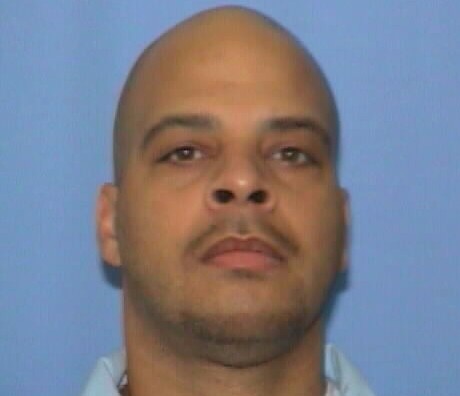
Maurice Lydell Harris
Murderer Brian Kevin Rosenfeld
Murderer · USA · 1985
Brian Kevin Rosenfeld Brian Kevin Rosenfeld was sentenced to three concurrent l…
23 victims
Brian Kevin Rosenfeld
Murderer · USA · 1985
Brian Kevin Rosenfeld Brian Kevin Rosenfeld was sentenced to three concurrent l…
23 victims
 Russell Ellwood
Murderer · USA · 1991
Russell Ellwood was a former taxi driver. Authorities suspected him of killing…
20 victims
Russell Ellwood
Murderer · USA · 1991
Russell Ellwood was a former taxi driver. Authorities suspected him of killing…
20 victims
 Robert Martines Perez
Murderer · USA · 1994
Name: Robert Martines Perez · Other name used in proceedings: Robert Martinez P…
15 victims
Robert Martines Perez
Murderer · USA · 1994
Name: Robert Martines Perez · Other name used in proceedings: Robert Martinez P…
15 victims
 Billy Frank Vickers
Murderer · USA · 1993
Billy Frank Vickers Vickers was executed by lethal injection in Texas on Januar…
14 victims
Billy Frank Vickers
Murderer · USA · 1993
Billy Frank Vickers Vickers was executed by lethal injection in Texas on Januar…
14 victims
 Cesar Armando Librado Legorreta
Serial killer · Mexico · 2011
Cesar Armando Librado Legorreta was a Mexican serial offender who worked as a c…
6 victims
Cesar Armando Librado Legorreta
Serial killer · Mexico · 2011
Cesar Armando Librado Legorreta was a Mexican serial offender who worked as a c…
6 victims
 Melissa Nicole Norris
Homicide · USA · 1995
Melissa Nicole Norris Melissa Nicole Norris was 15 years old at the time of the…
1 victim
Melissa Nicole Norris
Homicide · USA · 1995
Melissa Nicole Norris Melissa Nicole Norris was 15 years old at the time of the…
1 victim
 Dana Ray Edmonds
Murderer · USA · 1983
Dana Ray Edmonds Edmonds was sentenced to death after a bench trial in 1983 for…
1 victim
Dana Ray Edmonds
Murderer · USA · 1983
Dana Ray Edmonds Edmonds was sentenced to death after a bench trial in 1983 for…
1 victim
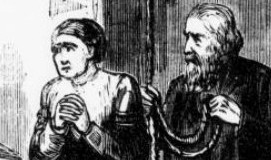 Margaret Waters
Murderer · United Kingdom · 1866
Margaret Waters was an English murderess who was hanged by executioner William…
19 victims
Margaret Waters
Murderer · United Kingdom · 1866
Margaret Waters was an English murderess who was hanged by executioner William…
19 victims
 Jose de la Cruz
Murderer · USA · 1987
Jose De La Cruz was convicted for the 1988 murder of Domingo Rosas. De La Cruz…
1 victim
Jose de la Cruz
Murderer · USA · 1987
Jose De La Cruz was convicted for the 1988 murder of Domingo Rosas. De La Cruz…
1 victim
- Gender
- male
- Country
- USA
- Location
- Gardena, California, USA
- Date of birth
- 1966
- Age at first offence
- 28
- Characteristics
- robbery, drugs
- Victim profile
- Alicia Allen and her fetus ( his fiancée who was 17 weeks pregnant )
- Method of murder
- Shooting
- Date(s) of murder
- August 9, 1994
- Years active
- 1994
- Date of arrest
- September 16, 1994
- Status
-
Sentenced to death
Sentenced to death on December 20, 1996; California Supreme Court affirmed the death sentence in a 5-1 decision after finding no prejudicial error in the trial judge’s manner of questioning
Case overview
Maurice Lydell Harris was sentenced to death on December 20, 1996. The California Supreme Court affirmed the death sentence in a 5-1 decision regarding his conviction for killings involving Alicia Allen and her fetus and the attempted murder of Bernard Canto.
Background
Alicia Allen was killed while 17 weeks pregnant.
Prosecutors presented evidence that Allen had been wearing earrings, a gold chain, and four rings shortly before the murder. Prosecutors said there was no jewelry on or near the corpse.
Maurice Harris denied the murder. He claimed he had been innocently caught up in events involving Bernard Canto.
Harris said he and Canto had sold drugs together, using contacts Harris made as a convicted drug offender. Harris claimed he had been involved in several large-scale cocaine deals before serving a term in federal prison.
The offence
Harris was found guilty of first degree murder of Alicia Allen and first degree murder of a fetus.
In addition, the jury convicted Harris of the attempted murder of Canto.
Special circumstances found by the jury included:
- Alicia Allen was murdered in the course of a burglary and a robbery.
- The killings of Allen and her fetus constituted multiple murder.
Investigation
Harris was tied to the murder through testimony from Regina Mills. Mills testified about Harris’s statements and said Harris was arrested at her residence.
Arrest
Harris was arrested at Regina Mills’s residence.
Trial
Witness testimony for the prosecution
Regina Mills testified for the prosecution under a grant of immunity from prosecution for harboring a fugitive and possession of stolen property. Mills said Harris told her he had been involved in a robbery and that he thought he shot a pregnant woman.
Bernard Canto testified for the prosecution. Canto was Allen’s boyfriend and an acquaintance of the defendant.
Canto testified that Harris shot him a little over a mile from the residence Canto shared with Allen, about an hour before police responded to the report of Allen’s shooting. Canto testified that Harris had called him and said he was going to repay a $1,500 debt to Canto, but then shot him in front of the defendant’s apartment.
Canto’s death and use of testimony
Canto was hospitalized for a month. Canto was later murdered in Chicago a little more than a year later, before Harris’s trial. Canto’s preliminary hearing testimony was introduced at the trial.
Harris’s account
After the prosecutor cross-examined Harris, Harris presented a version of events that he said he had not told to anyone before the trial.
Harris denied the murder and claimed he was innocently caught up in events involving Canto. Harris said that on the day of the shootings, Canto contacted him for help in meeting requests of two visitors from Chicago who wanted to buy a kilogram of cocaine. Harris said that after he was unable to get the kilo from his supplier, he decided to use a kilo of fake cocaine, believing the buyers were in a hurry and would not test the merchandise before going home.
Harris said that when he got to the house, two men attacked him and tied him up. He said he loosened his hands and ran out.
Harris denied giving a contrary version of events to Mills. Mills testified that Harris called her from jail and threatened to kill her because he believed she was the one who told the police where he was.
Trial judge’s questioning
The trial judge was Los Angeles Superior Court Judge Charles Horan, a former deputy district attorney.
During questioning, Horan and Harris engaged in the following colloquy:
Court: When you were in the house, you say you heard a gun go off? Who did you figure was being shot?
Defendant: I thought I was being shot at.
Court: At some point did it dawn on you that perhaps somebody else had been shot in the house?
Defendant: No.
Court: Never did?
Court: Did you think that Mr. Canto might be in there?
Defendant: Yes, I figured it was a possibility he was in there.
Court: You didn’t see him, though?
Court: Did you ever call the house later on to see if anybody got killed?
Defendant: No, I didn’t.
Court: Why not?
Defendant: Just never crossed my mind....
Court: Weren’t you curious?
Defendant: I was more distraught.
Court: In the next couple of days did you ever call the house or try to contact Mr. Canto?
Defendant: Like I said, I believe it was the next day that I read the newspaper.
Court: You said two days later.
Defendant: I believe it was either that day or the next day.
Court: It wouldn’t be in the next morning’s paper since it happened so late.
Defendant: I couldn’t say for sure. I couldn’t say what day it was.
Court: You never called to find out what happened?
Sentencing
The jury found special circumstances including that Allen was murdered in the course of a burglary and a robbery and that the killings of Allen and her fetus constituted multiple murder.
The trial judge imposed the maximum penalty on Maurice Harris for the murder of Alicia Allen and her fetus. Harris was sentenced to death on December 20, 1996.
Appeals
The California Supreme Court affirmed the death sentence imposed for the 1994 killing of a pregnant Gardena woman, saying the trial judge’s manner of questioning the defendant during his testimony may have been improper but was not prejudicial. The decision was 5-1.
Justice Ming Chin wrote for the high court. Chin said that while he could “not endorse all of the trial court’s questioning...and, indeed, would find some of it inappropriate” if the defense had objected, there was no prejudice.
Chin wrote:
“We must assume that jurors followed their instruction not to ëdisbelieve any witness’ or to decide the facts based on anything the court said or did, and to disregard any intimations or suggestions the court may have made regarding the believability of any witness,” the justice wrote.
“Further, the evidence of guilt was strong and the weaknesses in defendant’s assertions of innocence would have been apparent to the jury even absent the court’s questions.”
Justice Joyce L. Kennard wrote separately. Kennard criticized the judge’s questioning and said he “became an advocate for the prosecution, abandoning the neutrality required of a judge,” but agreed that the questioning was not prejudicial.
Kennard argued, however, that the death sentence should be reversed because Horan erroneously excluded defense evidence concerning Canto’s activities that might have resulted in a different verdict in the penalty phase.
The case was People v. Harris, 05 S.O.S. 4199.
Outcome
The California Supreme Court affirmed the death sentence.
Other details
Harris was associated with dealings related to a car restoration business, according to Canto’s testimony. Canto claimed that Harris had called him about repaying a $1,500 debt before Harris shot him.
Allen’s death involved the murder of her fetus as well as her own death.
Spotted an error, or have more information about this case?