
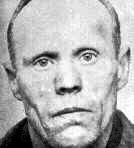
James Mathis
Murderer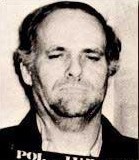 Ervil LeBaron
Murderer · USA · 1972
Ervil Morrell LeBaron (1925 to August 16, 1981) was the leader of a polygamous…
35 victims
Ervil LeBaron
Murderer · USA · 1972
Ervil Morrell LeBaron (1925 to August 16, 1981) was the leader of a polygamous…
35 victims
 Brian Kevin Rosenfeld
Murderer · USA · 1985
Brian Kevin Rosenfeld Brian Kevin Rosenfeld was sentenced to three concurrent l…
23 victims
Brian Kevin Rosenfeld
Murderer · USA · 1985
Brian Kevin Rosenfeld Brian Kevin Rosenfeld was sentenced to three concurrent l…
23 victims
 Marvin Gray
Murderer · USA · 1975
Marvin Gray was convicted killer who claimed responsibility for 23 slayings and…
23 victims
Marvin Gray
Murderer · USA · 1975
Marvin Gray was convicted killer who claimed responsibility for 23 slayings and…
23 victims
 Yahweh ben Yahweh
Murderer · USA · 1980
Yahweh ben Yahweh was born and legally named Hulon Mitchell Jr. (October 27, 19…
23 victims
Yahweh ben Yahweh
Murderer · USA · 1980
Yahweh ben Yahweh was born and legally named Hulon Mitchell Jr. (October 27, 19…
23 victims
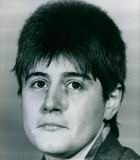 Michaela Roeder
Murderer · West Germany · 1984
Michaela Roeder, known as the “Angel of Death,” was a nurse who was charged in…
17 victims
Michaela Roeder
Murderer · West Germany · 1984
Michaela Roeder, known as the “Angel of Death,” was a nurse who was charged in…
17 victims
 Trevor Joseph Hardy
Serial killer · United Kingdom · 1974
Trevor Joseph Hardy (born 1947 in Manchester, Lancashire) was also known as the…
3 victims
Trevor Joseph Hardy
Serial killer · United Kingdom · 1974
Trevor Joseph Hardy (born 1947 in Manchester, Lancashire) was also known as the…
3 victims
 Pamela Lynn Perillo
Murderer · USA · 1980
Name: Pamela Lynn Perillo Sentenced to death on September 2, 1980; resentenced…
2 victims
Pamela Lynn Perillo
Murderer · USA · 1980
Name: Pamela Lynn Perillo Sentenced to death on September 2, 1980; resentenced…
2 victims
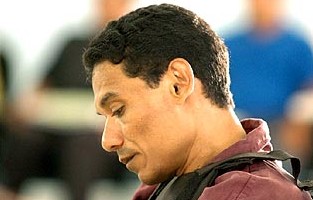 Francisco Das Chagas
Serial killer · Brasil · 1989
Francisco das Chagas was a bicycle mechanic in Brazil. He confessed to killing…
42 victims
Francisco Das Chagas
Serial killer · Brasil · 1989
Francisco das Chagas was a bicycle mechanic in Brazil. He confessed to killing…
42 victims
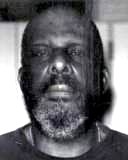 William Baker
Mass murderer · USA · 2001
William D. Baker, 66, returned to the Navistar International engine plant in Me…
4 victims
William Baker
Mass murderer · USA · 2001
William D. Baker, 66, returned to the Navistar International engine plant in Me…
4 victims
- Gender
- male
- Country
- USA
- Location
- Douglas County, Georgia, USA
- Date of birth
- 1946
- Age at first offence
- 34
- Characteristics
- kidnapping, robbery
- Victim profile
- J.L. Washington and his wife Ruby Washington, both 69
- Method of murder
- Stabbing with knife - Shooting
- Date(s) of murder
- November 27, 1980
- Years active
- 1980
- Date of arrest
- —
- Status
-
Sentenced to death
Sentenced to death in May 1991
Case information
- Name: James Mathis
- Age: 51
- Status: Sentenced to death in May 1991
Timeline
- May 1991 — James Mathis was sentenced to death in Douglas County.
- Thanksgiving Day 1980 — James Mathis was seen in the back seat of the Washingtons’ vehicle as they drove through their apartment complex.
- 1981 — A jury found James Mathis guilty of murder, kidnapping, and armed robbery.
- 1989 — A U.S. District judge reversed James Mathis’ death sentence because of ineffective counsel.
- 1990 — The district court, on September 12, 1990, once again granted relief as to death sentences and denied relief as to convictions.
- Oct. 14, 1992 — Rehearing and Rehearing En Banc were denied on Dec. 14, 1992 by the United States Court of Appeals, Eleventh Circuit.
- Dec. 14, 1992 — Rehearing and Rehearing En Banc denied.
The offence
James Mathis was convicted of two counts of murder, two counts of kidnapping, and one count of armed robbery. He was sentenced to death for the murder convictions, life sentences for the kidnapping convictions, and a twenty-year sentence for the armed robbery conviction, with the latter three sentences to be served consecutively.
James Mathis was sentenced in May 1991 for killing J.L. Washington and Ruby Washington, both 69.
On Thanksgiving Day 1980, Mr. Mathis was seen in the back seat of the Washingtons’ vehicle as they drove through their apartment complex. Their bodies were found in a wooded area. Both had been beaten, stabbed and shot.
Investigation
The bodies of J.L. Washington and Ruby Washington were found in a wooded area after they were driven through their apartment complex, and both had been beaten, stabbed and shot.
Trial
On May 28, 1981, a jury found James Mathis guilty of murder, kidnapping, and armed robbery.
At the sentencing proceeding, which commenced immediately after the return of the guilty verdict, James Mathis’ trial counsel, John Coney, did not cross-examine the state's witness and did not offer any evidence on his client’s behalf.
John Coney concluded his closing argument with the following statement:
What it comes down to is that there is nothing really you or I can do for [the victims], they are gone. I am part of this community just like you are and a resident of this county just like you are. I have children just like most of you. Again, if I did not believe in our system of law I wouldn't be here. So what it all comes down to is the decision that you, ladies and gentlemen, will have. The State, [the prosecutor] has very graphically stated to you that, and you have so found that James Mathis took into his hands the life of [the victims], and now you, ladies and gentlemen, have the life of another human being, another human being in your hands. And what the State is asking you to do is to sentence James Mathis to death which is exactly what you have convicted him of. You will be the one, not the judge, not the State, not [the prosecutor], not [the sheriff], but you will be the ones that make that decision of life or death. As I say, it is a decision which, whatever it may be, just like the guilt or innocence part of it, the decision, the responsibility in which I would share with you, I will have my doubts, my reservations as to whether or not anything I did contributed to that decision. Thank you.
John Coney did not ask the jury to return a sentence other than death or otherwise ask the jury to have mercy upon his client. The jury returned a sentence of death.
Sentencing
James Mathis received death sentences for the murder convictions, life sentences on the kidnapping convictions, and a twenty-year sentence on the armed robbery conviction, with the latter three sentences to be served consecutively.
Appeals
Federal habeas corpus proceedings
Following the affirmance of his convictions and sentences on direct appeal, Mathis filed a petition for writ of habeas corpus in the state court. He then filed a petition for writ of habeas corpus in federal court.
On October 28, 1987, Mathis filed a habeas corpus petition in the federal district court.
On December 9, 1987, the district court ordered respondent to file transcripts and records of the state proceedings within ten days under Rule 4, Rules Governing Section 2254 Cases, 28 U.S.C. fol. § 2254, and sua sponte allowed Mathis twenty days to amend his petition “to state any additional grounds for relief from conviction or sentence, including but not limited to petitioner's mental competency, which are known or could be known with the exercise of due diligence.”
The district court advised Mathis:
“Failure to so amend the petition will be considered a waiver of any additional grounds for relief.”
On December 17, 1987, respondent filed the requested transcripts and records.
After Mathis had not amended his petition in response to the district court's order of December 9, respondent, on January 29, 1988, filed an answer to Mathis’ original petition.
In the answer, respondent raised the following defense:
“Petitioner has received full and fair postconviction determinations of all of the issues raised in the instant petition during the review of his convictions both on direct appeal and through the [p]etitioner's two state habeas corpus actions. Those courts have made reliable determinations that there were no factual bases to any of the [p]etitioner's claims or that the [p]etitioner had procedurally defaulted on the presentation of some of those claims. The [p]etitioner has shown insufficient cause to require this Court to relitigate the factual claims allegedly supporting the issues raised herein. .... It appears that the [p]etitioner has raised all of the claims presented herein in his first state habeas corpus action, and therefore, exhaustion is not an issue at the present time.”
Respondent further elaborated:
“[T]he [p]etitioner has apparently exhausted his available state remedies by the raising of the claims presented herein both in his first state habeas corpus action and in his direct appeal to the Supreme Court of Georgia . Respondent submits that the consideration of these claims in the state courts provided the [p]etitioner with a full and fair opportunity to litigate these claims and therefore the factual findings of the state courts, which are amply supported by the record in the instant case, are entitled to a presumption of correctness. Under 28 U.S.C. § 2254(d), the findings of fact made by a state court after a full and fair hearing on the merits shall generally be presumed to be correct unless the proceedings in the state court fall within one of the statutory exceptions which rebut the presumptions of reliability. Such a presumption of correctness applies both to explicit and implicit findings of fact. Respondent submits that the [p]etitioner in the instant case has received full and fair hearings of his claims in the state courts. This Court should not grant an evidentiary hearing on the issues raised, but should presume that the factual findings made by the state courts are reliable. The burden is on the [p]etitioner himself in this habeas corpus proceeding to establish a need for an evidentiary hearing. "The threshold inquiry for the court in evaluating whether the burden has been met is to determine whether the allegation, if proved, would establish the right of habeas relief." As the [p]etitioner has received full and fair hearings in the state courts, [r]espondent submits that this Court should deny relief without any additional hearings. (Citations omitted.)”
After Mathis had submitted a brief and a supplemental brief, the district court, by order of July 26, 1988, rejected Mathis’ claim of ineffective assistance of counsel at the guilt phase, but sua sponte “defer[red] ruling on the petition and require[d] counsel to submit further affidavits and documentary information regarding the sentencing phase of petitioner's trial.”
In its order, the court observed:
“In the absence of a demonstration of existence of available mitigating evidence or prejudice resulting from [trial] counsel's closing argument [at sentencing], the Court could simply deny Mathis 's ineffective assistance claim.”
The district court nevertheless granted petitioner “another opportunity to present all available information to buttress his claim” and directed petitioner:
“to submit any available affidavits or documentary evidence regarding mitigating circumstance within 30 days of [its] order.”
Respondent objected to petitioner’s submission, including:
“Petitioner has not demonstrated that the hearing held in the state habeas corpus proceeding was inadequate under the guidelines of 28 U.S.C. § 2254 and the criteria of Townsend v. Sain, 372 U.S. 293 [83 S.Ct. 745, 9 L.Ed.2d 770] (1963). Absent such a showing by the [p]etitioner, the state court's findings of fact must be given a presumption of correctness and those findings of fact must be evaluated also in the context of any possible deliberate bypass of the state proceeding which may amount to a waiver of the [p]etitioner's right to present additional evidence before this Court regarding his claims of ineffective assistance of counsel [at] the sentencing phase of his trial. As such, absent an explanation as to why the evidence presented to this Court was not presented to the state habeas corpus court, and a showing as to why the state court proceedings did not meet the criteria of 28 U.S.C. § 2254 so as to authorize this Court to conduct additional evidentiary proceedings, [r]espondent maintains that the [p]etitioner's proffer of alleged mitigating evidence is improperly presented to this Court for its review and should not be considered by this Court in any determination of the allegations presented in this habeas corpus petition. .... Alternatively, [r]espondent questions whether the [p]etitioner's offer of new substantive evidence foreclosed from state court credibility determinations and review renders this petition unexhausted under the guidelines of Hart v. Estelle, 634 F.2d 987, 989 (5th Cir. Unit A 1981). Here, as in Hart, the [p]etitioner has presented a "weak" case of only two affidavits of possibly mitigating evidence to the state habeas corpus court, and indeed initially to this Court. However, after this Court's order of July 26, 1988, [p]etitioner has proffered 18 new exhibits which should have or could have been presented to the state court. As such, the state court has been denied the opportunity to review this evidence. In balancing the rights of the parties involved, [r]espondent suggests that the state courts should be given this opportunity. (Citations omitted.)”
On January 26, 1989, the district court relied heavily on the supplemental evidence submitted by petitioner in finding that petitioner had received ineffective assistance of counsel at sentencing and granted petitioner habeas corpus relief as to his death sentences.
On March 15, 1989, the court rejected petitioner’s remaining claims relating to the guilt phase.
After dismissal of respondent’s appeal from the district court’s judgment granting petitioner partial habeas corpus relief, the district court on September 12, 1990, once again granted petitioner relief as to his death sentences and denied relief as to his convictions.
Appellate decision details (Eleventh Circuit)
The United States Court of Appeals, Eleventh Circuit, in Mathis v. Zant, 975 F.2d 1493, addressed an appeal by respondent, Walter Zant, Warden, Georgia Diagnostic and Classification Center.
Mathis was described as a Georgia prison inmate and was stated to stand convicted of:
- two counts of murder,
- two counts of kidnapping, and
- one count of armed robbery.
The opinion stated that Mathis faced:
- death sentences on the murder convictions,
- life sentences on the kidnapping convictions,
- and a twenty-year sentence on the armed robbery conviction, with the latter three sentences to be served consecutively.
The district court had granted Mathis’ petition for a writ of habeas corpus pursuant to 28 U.S.C. § 2254 as to his death sentences and denied the petition as to his convictions.
In granting habeas relief, the district court relied on:
- ineffective assistance of counsel at sentencing in violation of the Sixth and Fourteenth Amendments, and
- prosecutorial misconduct during the closing argument at sentencing in violation of the Due Process Clause of the Fourteenth Amendment.
The Eleventh Circuit stated it:
- vacated the district court’s judgment granting relief as to petitioner's death sentences on the basis of ineffective assistance of counsel at sentencing,
- remanded the case for further proceedings,
- but retained jurisdiction over all remaining claims.
The Eleventh Circuit disposition included that it directed the district court on remand to:
- articulate its ground or grounds for circumventing the presumption of correctness accorded a state court’s factual findings under 28 U.S.C. § 2254(d) by sua sponte permitting petitioner to submit additional evidence on his claim of ineffective assistance of counsel at sentencing,
- determine whether petitioner could demonstrate cause and prejudice for failing to present to the state courts the supplemental evidence submitted to the district court,
- decide whether petitioner's development of supplemental evidence amounted to the presentation of a separate claim of ineffective assistance of counsel not yet exhausted in the state courts.
The opinion concluded with: “IT IS SO ORDERED.”
Dissent
A dissenting opinion by CLARK, Senior Circuit Judge stated that the remand should be unnecessary. The dissent argued:
- the district court had authority to consider additional evidence not presented to the state court, and
- the record indicated the district court did not improperly circumvent the presumption of correctness under 28 U.S.C. § 2254(d).
The dissent stated: “Accordingly, I dissent.”
The dissent described the timing of the sentencing and counsel performance. It stated that:
- At sentencing, counsel did not cross-examine the state's witness and did not offer any evidence on Mathis’ behalf.
- After affirmance on direct appeal, Mathis, represented by new counsel, filed a petition for writ of habeas corpus in the state court alleging ineffective assistance by Mr. Coney, including failure to adequately investigate and present mitigating evidence and that the closing argument was deficient.
The state habeas petition allegations included:
“Trial counsel obtained a psychological evaluation of Petitioner prior to trial, said evaluation is part of the permanent record in this case. A reading of the evaluation would show that Petitioner suffers from a diminished mental capacity and suffers from irresistible impulses. While it is unlikely, that the jury would have brought back a verdict of insanity, it is not inconceivable. Notwithstanding this fact, trial counsel never introduced the examining doctor's testimony either during the guilt/innocence phase or the penalty phase of Petitioner's trial. Certainly, it should have at least been introduced as mitigating circumstances. Moreover, trial counsel chose not to speak with Petitioner's co-workers, employer or relatives in order to solicit their testimony at the penalty stage of the trial. Trial counsel maintained that this was because he did not think they would testify.... Trial counsel's opening and closing argument were ineffective for any purpose. Trial counsel's closing argument [in the sentencing phase] is a lengthy monologue on how difficult it is to be a criminal defense attorney. At no time during counsel's closing did he even remotely suggest that the jury should show mercy or not execute Petitioner.”
The dissent described testimony at a state court evidentiary hearing. John Coney testified that Mathis’ aunt, Lizzie Pounds, retained him to represent Mathis.
The dissent stated that Coney decided not to have Lizzie Pounds testify. It included the following testimony quoted from Mr. Coney:
[ Mathis ] had a great deal of confidence in his Aunt Lizzie. He lived with she and her husband and it was somewhat my decision to in effect leave Lizzie out of it. I told James I was not going to get her actively involved in it because win or lose, she had been in that community for a long time and would still be living there and her health wasn't all that good anyway. She is a very emotional type person and Lizzie had blood pressure problems and things like that. And so, I didn't--well, I wouldn't let Lizzie come in the courtroom. Because I didn't think it was best for her. And I told James that I was going to leave her out of it. . . . . . But I would not put Lizzie through that because I didn't feel like a lot of people, you know, knew Lizzie's relationship with James except in the community where they lived and Lizzie, at that time, was on the maintenance staff at the courthouse and I didn't want to--well, again, I just didn't feel like Lizzie was up to it.
The dissent also included questioning about whether Mr. Coney spoke with others:
[ Mathis ' habeas counsel]: Did you speak to anyone, any uncles, cousins, aunts, uncles, anyone, regarding them testifying in the penalty stage for James ? [Mr. Coney]: Not other than his Aunt Lizzie.
The dissent described the affidavits presented to the state court. It stated that Mathis’ habeas counsel presented affidavits of Lizzie Pounds and another family member, each attesting they were not asked to testify during the sentencing phase and that they would have testified, among other things, that Mathis had been abused by his father as a child and that Mathis was good-natured and tried to help his family and friends when he could.
The dissent stated that in response to the question whether Coney was aware Mathis had been abused as a child, Coney admitted:
“Lizzie told me that they had been hard on him.”
The dissent further described that Coney testified that he relied on a psychiatric evaluation of Mathis to argue to the jury that “the electric chair was not the answer,” and that he retracted this testimony after reviewing the trial transcript.
It stated that the trial transcript indicated neither the evaluation nor the testimony of the doctor was introduced at either the guilt or the sentencing phase.
The dissent cited other procedural and statutory discussions, including references to:
- Townsend v. Sain,
- Keeney v. Tamayo-Reyes,
- Colemen v. Thompson,
- Strickland v. Washington,
- Thomas v. Zant,
- and Sumner v. Mata, and it quoted passages from the case law including:
“The language of Congress, the history of the writ, the decisions of this Court, all make clear that the power of inquiry on federal habeas corpus is plenary. Therefore, where an applicant for a writ of habeas corpus alleges facts which, if proved, would entitle him to relief, the federal court to which the application is made has the power to receive evidence and try the facts anew.” and “Where the facts are in dispute, the federal court in habeas corpus must hold an evidentiary hearing if the habeas applicant did not receive a full and fair evidentiary hearing in the state court....” and “In all other cases where the material facts are in dispute, the holding of such a hearing is in the discretion of the district judge.” and “In every case he has the power, constrained only by his sound discretion, to receive evidence bearing upon the applicant's constitutional claim.”
The dissent also stated that it considered only whether the panel should remand, and it stated:
“Accordingly, a remand is unnecessary.” and “It is my view that our panel should decide the heart of the case, that is, was the district court correct in concluding attorney Coney was deficient in his performance and as a result of the deficiency Mathis was prejudiced.”
Outcome
James Mathis was sentenced to death in May 1991. The Eleventh Circuit vacated the district court’s judgment granting relief as to petitioner's death sentences on the basis of ineffective assistance of counsel at sentencing and remanded for further proceedings, retaining jurisdiction over remaining claims.

Spotted an error, or have more information about this case?