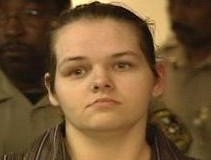
Brandy Holmes
Murderer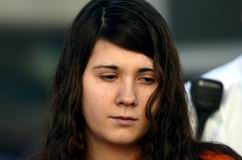 Miranda Barbour
Murderer · USA · 2013
Miranda Barbour, 19, defendant. · Elytte Barbour, 22, defendant and husband of…
100 victims
Miranda Barbour
Murderer · USA · 2013
Miranda Barbour, 19, defendant. · Elytte Barbour, 22, defendant and husband of…
100 victims
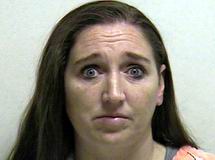 Megan Huntsman
Murderer · USA · 1996
Megan Huntsman was 40 at sentencing. She was a mother of three children who wer…
6 victims
Megan Huntsman
Murderer · USA · 1996
Megan Huntsman was 40 at sentencing. She was a mother of three children who wer…
6 victims
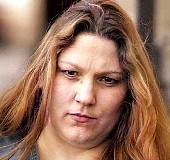 Angela Johnson
Murderer · USA · 1993
Angela Jane Johnson was convicted in federal court of aiding and abetting the m…
5 victims
Angela Johnson
Murderer · USA · 1993
Angela Jane Johnson was convicted in federal court of aiding and abetting the m…
5 victims
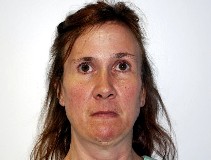 Michele Kalina
Murderer · USA · 1996
Michele Kalina pleaded guilty to murder for one of five infants she initially w…
5 victims
Michele Kalina
Murderer · USA · 1996
Michele Kalina pleaded guilty to murder for one of five infants she initially w…
5 victims
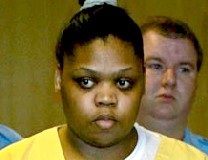 Tiffany Hall
Murderer · USA · 2006
Tiffany Hall was 24 when she was charged in September 2006. She later entered a…
5 victims
Tiffany Hall
Murderer · USA · 2006
Tiffany Hall was 24 when she was charged in September 2006. She later entered a…
5 victims
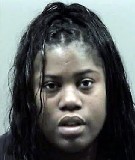 Banita Jacks
Murderer · USA · 2007
Banita Jacks was a Washington, DC resident convicted of murdering her four daug…
4 victims
Banita Jacks
Murderer · USA · 2007
Banita Jacks was a Washington, DC resident convicted of murdering her four daug…
4 victims
 Jesse Walter Bishop
Murderer · USA · 1977
Jesse Walter Bishop (March 1, 1933 – October 22, 1979) was convicted of the mur…
1 victim
Jesse Walter Bishop
Murderer · USA · 1977
Jesse Walter Bishop (March 1, 1933 – October 22, 1979) was convicted of the mur…
1 victim
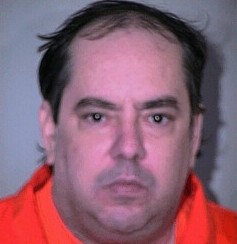 Frank Silva Roque
Murderer · USA · 2001
Frank Silva Roque was born July 8, 1959. He was a Boeing aircraft mechanic at a…
1 victim
Frank Silva Roque
Murderer · USA · 2001
Frank Silva Roque was born July 8, 1959. He was a Boeing aircraft mechanic at a…
1 victim
 Gregory Beaver
Murderer · USA · 1985
Gregory Warren Beaver was a 30-year-old man who was executed by lethal injectio…
1 victim
Gregory Beaver
Murderer · USA · 1985
Gregory Warren Beaver was a 30-year-old man who was executed by lethal injectio…
1 victim
 Adolph Gil Hernandez
Murderer · USA · 1988
Adolph Gil Hernandez was executed by lethal injection in Texas on February 8, 2…
1 victim
Adolph Gil Hernandez
Murderer · USA · 1988
Adolph Gil Hernandez was executed by lethal injection in Texas on February 8, 2…
1 victim
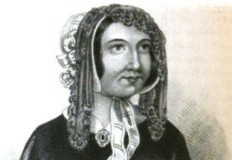 Maria Manning
Murderer · United Kingdom · 1849
Maria Manning was also identified as Marie Manning and Marie de Roux. Maria Man…
1 victim
Maria Manning
Murderer · United Kingdom · 1849
Maria Manning was also identified as Marie Manning and Marie de Roux. Maria Man…
1 victim
- Gender
- female
- Country
- USA
- Location
- Shreveport, Caddo Parish, Louisiana , USA
- Date of birth
- July 25, 1979
- Age at first offence
- 24
- Characteristics
- armed robbery, robbery, attempt to collect insurance money
- Victim profile
- Reverend Julian L. Brandon, 68
- Method of murder
- Shooting
- Date(s) of murder
- January 1, 2003
- Years active
- 2003
- Date of arrest
- 5 days after
- Status
-
Sentenced to death
Sentenced to death on February 16, 2006; conviction and death sentence affirmed on direct appeal
Parties and identities
Brandy Aileen Holmes was convicted of first-degree murder and sentenced to death. She was tried in a capital case in Louisiana; direct appeal was heard under La. Const. art. V, § 5(D) by the Louisiana Supreme Court.
Brandy Holmes’s boyfriend and co-defendant was Robert Coleman.
The victims were:
- Julian L. Brandon, Jr., a retired minister. He was 70 years of age at the time of his death.
- Alice Brandon, his wife. She was 68 years of age at the time of the offense and survived the attack. She later died in October 2008. At the time of trial, she remained permanently disabled and required around-the-clock care.
A family friend, Calvin Barrett Hudson, discovered Reverend Brandon’s body on January 5, 2003 and called the sheriff’s office.
Other named individuals included:
- Julian Brandon’s two daughters: Julie Lloyd and Dawn Finley.
- Patricia Camp, a resident of a gated community called “Nob Hill,” who testified she identified Holmes’s picture from a photographic lineup.
- Terrance Blaze, whose body was found after the Brandon slaying was discovered. His girlfriend testified.
- Patricia Camp’s attempted-entry incidents were separate, unadjudicated conduct introduced at the penalty phase.
- Brenda Bruce (Holmes’s mother).
- Sean George (Holmes’s 15-year-old brother).
- Demetrius Clemens, Holmes’s nephew who was nine years of age and identified a videotaped interview.
- Johnny Wright, whom police explored during interviews after Holmes implicated him.
- Assistant District Attorney Brady O’Callahan.
- Caddo Parish Sheriff’s Office personnel including Captain Bobby Abraham, Detective Kay Ward, Officer Sheila Hostnick, Lieutenant Bill Duncan, Detective Charles Bradford, Lieutenant Duncan, Sergeant Gary Frake, and Corporal Sheila Hostnick (also referenced as “CPSO Detective Kay Ward,” and “Corporal Sheila Hostnick”).
- Assistant District Attorney Ed Blewer.
- Attorney General James D. Caldwell and District Attorney Paul Carmouche; other named appellee counsel included Hugo A. Holland, Jr., Lea R. Hall, Jr., Brady Dennis O’Callaghan, and Catherine Marion Estopinal.
- Appellant counsel included Jelpi Pierre Picou, Jr., Sarah Lynn Ottinger, and Caroline Wallace Tillman.
- Tom Donaldson, president of the National Organization on Fetal Alcohol Syndrome.
- Charles Ogletree, described as Holmes’s attorney and a Harvard Law School professor.
Two sanity commission psychiatrists were appointed:
- Dr. Charles Armistead
- Dr. George Seiden
Mitigation experts included:
- Dr. Mark Vigan (psychology)
- Dr. Richard Williams (general medicine and psychiatry; psychiatric specialty in the treatment of addiction disorders)
- Dr. James Patterson (medicine, psychiatry, and functional neuroimaging)
At the penalty phase, the State also presented crime-scene analysis evidence from Lieutenant Mark Rogers (crime scene analyst and blood stain spatter analysis expert).
Timeline
- January 1, 2003 — Holmes and her boyfriend Robert Coleman forced their way into Julian Brandon’s home; Reverend Brandon was shot and then stabbed and slashed to death; Alice Brandon was shot and survived the attack.
- December 27, 2002 — State alleged Holmes attempted to gain entry to Patricia Camp’s home under false pretenses.
- December 30, 2002 — State alleged Holmes attempted to gain entry to Patricia Camp’s home under false pretenses.
- Christmas Eve 2002 — Holmes and Coleman traveled from Mississippi to Shreveport; evidence described a theft from Holmes’s father’s residence in Tylertown, Mississippi occurring immediately before they traveled.
- January 4, 2003 — State alleged Holmes participated in the homicide of Terrance Blaze days after the Brandon killings.
- January 5, 2003 — Calvin Barrett Hudson became concerned when the couple did not attend church; he found Reverend Brandon’s body and called the sheriff’s office.
- February 14, 2003 — A Caddo Parish grand jury indicted Brandy Aileen Holmes for first-degree murder of Julian L. Brandon, Jr.
- February 15, 2006 — Jury selection and the penalty phase in the capital trial began in Caddo District Court; the jury had already convicted Holmes of first-degree murder of Julian Brandon.
- February 14, 2006 — A unanimous jury found Holmes guilty as charged.
- February 16, 2006 — The jury unanimously determined Holmes be sentenced to death and found three aggravating circumstances.
- December 2, 2008 — Louisiana Supreme Court upheld the death sentence in a 5-2 ruling.
Background
Holmes was described as a Caucasian female and was born on July 25, 1979, to the legal union of Johnny Holmes and Brenda Bruce in Tylertown, Mississippi. The trial record stated her parents separated and she moved with her mother to Shreveport when she was two years of age.
Her mother testified about Holmes’s pregnancy and alcohol use, and testified she named Holmes Brandy because it was the drink she liked.
At trial and in the penalty-phase mitigation evidence, Holmes’s experts presented evidence of fetal alcohol syndrome (FAS), diminished mental capacity, and alleged brain abnormalities.
At the penalty phase, Brenda Bruce testified she drank whiskey during the first three months of the pregnancy and switched to beer afterward. Brenda Bruce also testified that Holmes was in special education and that she was institutionalized at Sand Hill Hospital in Mississippi for six months after she was allegedly raped at twelve years of age.
The record described Holmes’s school history, including special education placement and completion of the sixth grade.
The record stated Holmes had juvenile delinquency adjudications and multiple adult convictions listed in footnote material:
- As a juvenile: carrying a concealed weapon; attempted simple escape; damage to property; possession of stolen property; theft; and unauthorized entry of an inhabited dwelling (also described that she was arrested for damage to property and possession and concealing stolen property, though those charges were dismissed).
- As an adult: felony convictions for attempted aggravated escape and aggravated battery.
- Misdemeanors: seven counts of simple criminal damage to property; four counts of simple battery; and two counts of battery of a police officer. Holmes was described as having a juvenile sentence to juvenile prison until age 21 for unauthorized entry of a dwelling, with later charges for battery while incarcerated, and ultimately a sentence as an adult to two years at the Louisiana Correctional Institute for Women.
The record described that Holmes had an extremely lengthy juvenile and adult criminal history and that, since the age of 14 or 15, she appeared to have been continuously incarcerated except for a period of approximately seven months preceding the present offense. The record also stated she had no history of gainful employment.
The record stated Holmes claimed she had one child, but that no evidence presented supported that allegation.
The offence
Forced entry and robbery-murder in Blanchard
During the early evening hours of January 1, 2003, Holmes and Robert Coleman forced their way into the rural home of Julian Brandon, a retired minister and a 70-year-old. The source described Julian Brandon’s wife, Alice, as 68 years of age.
Reverend Brandon was shot near contact range in the underside of his jaw with a .380 caliber handgun. The bullet separated into two pieces: one fragment entered the victim’s brain; the other exited the top of his head and was later recovered from the dining room ceiling, adjacent to the front entryway. Julian Brandon collapsed immediately.
Holmes and Coleman then took Mrs. Brandon to the rear bedroom and demanded her valuables, cash, and credit cards as she begged for her life.
The source described that Holmes and Coleman placed a pillow over Mrs. Brandon’s face, shot her in the head, and left her for dead.
After the shooting, Holmes and Coleman heard Reverend Brandon struggling with his wounds. After retrieving three Chicago Cutlery knives from the kitchen, they stabbed and slashed him to death. The source detailed slashing cuts to Reverend Brandon’s nose and face; stabbing wounds on the top and rear of his head and chest; and additional specifics about knife damage, including that one knife struck his head so forcefully that it shattered and pieces of the knife were found strewn about the crime scene.
The source described that Holmes and Coleman cut Reverend Brandon’s throat several times, including two large cutting wounds going around the entire neck and severing the carotid artery and jugular vein. It further described six stab wounds, some penetrating as deep as six inches into his left upper chest, involving the heart and lungs and resulting in internal bleeding. It described an additional stab wound on the right side of the chest involving the abdomen and liver, and a six-inch knife found embedded up to the handle in his back.
Attack on Alice Brandon and later death
The source stated Mrs. Brandon survived being shot in the head, but at the time of trial remained permanently disabled and required around-the-clock care. In the later discussion of appeals and background, it stated she died in October 2008.
Investigation
Tip and initial identification of suspects
After television news reported the crime, the Caddo Parish Sheriff’s Office received a tip from persons at an apartment complex near the crime scene. The callers said Holmes had been bragging about killing an elderly couple down the road near a church and that she was trying to sell their jewelry.
Detectives then went to the trailer of Brenda Bruce (Holmes’s mother) located near the homicide scene. There, the source states that detectives located Holmes, Coleman, Brenda Bruce, and Holmes’s 15-year-old brother, Sean George. All four agreed to accompany the officers to the sheriff’s office for interviews.
Recorded and unrecorded statements
The source stated that over the next two days and after being Mirandized numerous times, Holmes made six recorded and unrecorded statements implicating herself and others in varying degrees. It stated that in only the first statement did Holmes deny involvement in the murder of Reverend Brandon.
Holmes’s claims about how the events occurred
The source stated that Holmes claimed she was the shooter in both the murder of Reverend Brandon and the attempted murder of his wife. It further described that she claimed that two days after the violent entry into the Brandon home, she and two young nephews bicycled to the Brandons’ residence, and that only the youngest nephew, nine years of age, entered the residence with her. She stated she returned because she dreamed the woman was still alive and left after hearing Mrs. Brandon’s heavy breathing. The source also stated that the nine-year-old nephew entered with his aunt, observed Reverend Brandon lying in a pool of blood, and heard Mrs. Brandon screaming. The source described that a neighbor witnessed both nephews fleeing from the residence, leaving Holmes inside the home.
Physical and forensic evidence
The source stated that the gun used in the shootings was not recovered, but ballistics evidence demonstrated that the weapon used in the Brandon homicide was the same weapon that had belonged to Holmes’s father and had been stolen from his residence in Tylertown, Mississippi. The theft was described as occurring immediately before Holmes and Coleman traveled from Mississippi to Shreveport on Christmas Eve 2002. The source also states that in one of Holmes’s statements, she admitted she had stolen her father’s .380 handgun while visiting him in Mississippi.
The source stated that a surveillance video from Hibernia Bank depicted Holmes and Coleman attempting to use the Brandons’ credit card at an ATM.
A search of the Bruce trailer where Holmes and Coleman stayed led to discovery of incriminating items. The source described:
- A multi-colored bracelet found in a clear plastic food service glove and recovered from the rain gutter; Mrs. Brandon’s daughter identified the bracelet as one given to her mother earlier.
- A box of food service gloves recovered from the bedroom Holmes shared with Coleman; the source described a diamond pattern consistent with blood transfer stains observed at the crime scene.
- Three fired .380 cartridge casings found in the rain gutter. Laboratory analysis revealed Reverend Brandon’s DNA on one of the casings.
The source also described forensic analysis matching the .380 projectile recovered from Reverend Brandon’s brain and the dining room ceiling to a projectile recovered from a tree at the home of Holmes’s father in Mississippi, where the father had fired the gun into a tree before it was stolen.
Evidence related to another unadjudicated homicide
At the penalty phase, in addition to victim-impact evidence from the Brandons’ two daughters, the State introduced evidence that Holmes attempted another violent home entry days before the charged offense in a gated community known as “Nob Hill.” The source states that as a result of Holmes’s admissions during investigation, it became known that she participated in the homicide of Terrance Blaze days after the Brandons were shot.
The source stated that for the Blaze homicide, Holmes originally directed authorities to Blaze’s body during interrogation concerning the Brandon homicide. Holmes claimed Blaze had been killed by a gang member due to a drug debt. Forensic evidence later showed Blaze had been killed in the car owned by Holmes’s mother.
The source stated:
- The bullet recovered from the back of Blaze’s skull had the same class characteristics as the bullet recovered from the tree in Mississippi.
- A cartridge casing near Blaze’s body matched the cartridge case found in Mississippi where Holmes’s father had fired the weapon.
- High velocity blood spatter and other bloodstains matched to Blaze were found in Holmes’s mother’s automobile and on Coleman’s right boot and right pant leg.
- Blood spatter evidence indicated Coleman was in the driver’s seat while Blaze rode as a passenger, and the gunshot to the back of Blaze’s head originated from the back seat.
- Holmes later admitted shooting Blaze in an unsolicited letter to the assistant district attorney.
Arrest and custody interviews
The source described the questioning process and the interviews relevant to Holmes’s multiple inculpatory statements during the suppression portion of the appeal.
On the evening of January 5, 2003, Detective Kay Ward, accompanied by Officers Sheila Hostnick, Bobby Abraham, and Bill Duncan, went to the mobile home where Holmes was staying with her mother Brenda Bruce. The source states the officers encountered Holmes, Brenda Bruce, Sean George, and Robert Coleman. All agreed to accompany the officers to the sheriff’s office.
Ward administered Miranda warnings at the outset. The source stated Holmes indicated she understood the Miranda warnings, signed a waiver of rights form, and agreed to give a statement at 12:23 a.m. The source states Ward described Holmes as “very cooperative” and said at no time Holmes requested to stop the interview or request the presence of counsel.
The source stated that in one recorded statement, Holmes implicated Johnny Wright in the murder and Ward chose to record the statement.
The source described that Ward, while attempting to locate Johnny Wright, left the sheriff’s office, and returned. It states Holmes then gave another statement at approximately 3:00 a.m., having been Mirandized again and waived rights.
The source further described that Ward took another statement after 4:00 a.m. and before that statement, police learned the cassette tape had become blank after Ward left the office.
The source states Holmes left the interview room to use the restroom and then destroyed the cassette tape of the most recent interviews. Ward later observed that two waiver of rights forms had also been destroyed. It states that when Ward asked Holmes whether she would give another statement, Holmes responded that she was tired.
The source states that at 8:26 a.m. Holmes gave another statement. It then states that the next day Detective Jeff Ivey contacted Holmes with Ward. The source also states that she executed yet another waiver of rights form before making a final statement.
Trial
Charges and verdict
A Caddo Parish grand jury indicted Holmes on February 14, 2003 for first-degree murder of Julian L. Brandon, Jr.
The source stated that on February 14, 2006, a unanimous jury found Holmes guilty as charged.
The source stated that the trial involved a direct appeal and that Holmes appealed raising 45 assignments of error, combined into 17 arguments, with numerous assignments remaining not argued.
Mental competency to proceed
Holmes contended the trial court erred when it ruled she had the mental capacity to stand trial. The record described that defense counsel filed a motion for appointment of a sanity commission on March 17, 2005, nearly a year before trial, alleging difficulties in communicating, placement in the mental health unit of the jail, earlier learning and developmental disorders, and possibility she suffered from FAS.
The trial court granted the motion and appointed Dr. Charles Armistead and Dr. George Seiden.
The source included verbatim quotations from Dr. Armistead’s report and Dr. Seiden’s opinion, including:
“This patient is considered to be of borderline intelligence, but appears to understand the charges against her, the general function of her lawyer and the judge and the trial procedures. She also understands the consequences of being found guilty and not guilty. She apparently has a history of a psychotic disorder, perhaps bi-polar with depressive episodes of elation. She is considered able to stand trial and able to cooperate with her lawyer in her own defense. From her ability of recollect and recount the events with which she is charged, it is my impression that she was competent at the time of the alleged offenses and understood the meaning and significance of her acts, although perhaps influenced by the use of cocaine at the time.”
and:
“Based on my evaluation, I have concluded that Brandy Alaine [sic] Holmes currently has the ability to consult with her attorney with a reasonable degree of rational understanding and currently has a rational and factual understanding of the proceedings against her. Specifically, she understands the nature of the charges against her and can appreciate their seriousness. She understands what defenses are available to her. She can distinguish a guilty plea from a not guilty plea and understands the consequences of each. She has an awareness of her legal rights. She understands the range of possible verdicts and the consequences of conviction. She has the ability to recall and relate facts pertaining to her actions and whereabouts at certain times. She has the ability to assist counsel in locating and examining relevant witnesses. She has the ability to maintain a consistent defense. She has the ability to listen to the testimony of witnesses and inform her lawyer of any distortions or misstatements. She has the ability to make simple decisions in response to well-explained alternatives. If necessary to her defense strategy, she is capable of testifying in her own defense. Her mental condition is not likely to deteriorate under the stress of trial. I have also concluded, with reasonable medical certainty, that at the time of the alleged offense, Ms. Holmes was not suffering from any mental disease or defect that rendered her incapable of distinguishing right from wrong with reference to the conduct in question.”
The source quoted verbatim a letter from Holmes to the district attorney, beginning:
“Good Evening Sir! I apologize to Mr McClatchey, But this isn't true. But Sir let me put my point across please. If I refused to take your offer of 2 life sentences, what in the world would you Believe, I would ask my Lawer (which do not see eye to eye) to come back with a much more offering, then you guy's asked me to accept. Mr. McClatchey told me I'll Be Better off with life. Yes I did shot & kill Terrance Blaze, but only because I was threatting and Beatting up to do so. I'm asking would you, please disregard this plead offering. Because I did not ask him to take this act. Thank you and have a nice day.”
Mental retardation and FAS issues raised at trial
The appeal included Holmes’s claim that she suffered from compromised intelligence and a diminished mental age due to FAS, and that death should be vacated.
The source states Holmes filed a “Motion to Quash Indictment” alleging that neurological and psychological deficiencies disqualified her from the death penalty under the reasoning in Atkins and Roper.
The trial court denied the motion after a hearing, including a statement from the court:
“I have had a chance to carefully review that motion [to quash] as well as the attached report from Dr. Vigan, which is in conjunction, of course, with his testimony. I would note for the record, of course, Code of Criminal Procedure, Article 532 through 533; and I will also note for the record the unrebutted testimony of the IQ of Miss Holmes, which is 77 which is borderline. I understand all of what I have heard today through the testimony of Dr. Vigan and Dr. Williams. However, I conclude that as a matter of law that there is no legal basis for me to grant the motion to quash. Accordingly, motion to quash the indictment is denied in all respects. If we get to the penalty phase, if we get to the penalty phase, of course, the jury can hear all of the evidence presented today as well as any other evidence, some of which the DA may want to present. Motion denied.”
The source also quoted an argument response by the State during a hearing on the re-urged motion:
“[La.Code Crim. Proc. art.] 905.5.1 is very clear that defense counsel has to make the claim first that the defendant is mentally retarded, which they haven't done; and second, before the court ․ [can] make any sort of pretrial ruling, both the State and the defense have to agree that so be done, and that wasn't done here either. So I don't understand why we're even talking about mental retardation here. Absent some sort of proper notice by the defense that they're going to claim mental retardation defense and absent some agreement by both parties, this court doesn't have any power to do anything concerning mental retardation.”
The trial court later denied the re-urged motion stating:
“I believe there is no basis whatsoever to quash the indictment even based on the new material submitted to the Court.”
Evidence exclusion and other trial rulings
The appeal described several rulings, including:
- A motion to suppress Holmes’s multiple inculpatory statements was denied.
- The court granted the State’s motion in limine preventing admission of evidence of mental deficit or FAS at the guilt phase.
- The voir dire scope was limited and a State challenge for cause was granted as to prospective juror Veronica Ivy.
The source quoted the trial court’s voir dire challenge rationale:
“No.”
and later:
“Ms. Ivy stated basically different things at different times. I believe that she fits in a category established by the jurisprudence as a theoretical supporter of the death penalty. But I believe, based on the totality of her answers, that she is not one who can impose it. She said, quote, I don't know if I could do it. She said, I prefer not to do it. She said, I don't want to be the one to do it. I don't want to judge. Who am I to judge? I would have to live with that. She voiced a religious foundation for her viewpoints. She said, I didn't believe in judging. And I place great stock in her answer which was concise and to the point of no when asked by Mr. Holland as his last question whether or not she could vote to impose the death penalty. She said emphatically, no. She equivocated before. She equivocated after. But her clear and concise answer to Mr. Holland's question was no. I examined her demeanor very carefully. I think she has wrestled with this issue. I think she's troubled by the possibility of her being called upon to consider and apply the law regarding the punishment issues in a death penalty case, in a first degree murder case. And based on what I have observed by her demeanor, what I infer about her feelings and her tone and everything about her demeanor, coupled with her answer to Mr. Holland that I referred to, I believe that the cause challenge by the State has merit and is accordingly granted.”
On the State’s motion in limine at the guilt phase, the trial court stated:
“It is clear that Ms. Holmes has tendered a plea of not guilty. Period. She has not pled not guilty and not guilty by reason of insanity. Accordingly, she may not introduce evidence of insanity or mental defect at the time of the offense during the guilt phase.”
Sentencing
Aggravating circumstances and death verdict
On February 16, 2006, the jury unanimously determined Holmes be sentenced to death, finding all three aggravating circumstances urged by the State:
- The defendant was engaged in the perpetration or attempted perpetration of an armed robbery, first-degree robbery and simple robbery.
- The defendant knowingly created a risk of death or great bodily harm to more than one person.
- The victim was 65 years of age or older.
The Louisiana Supreme Court later upheld the death sentence after a 5-2 ruling, with separate dissents focusing on arguments that Holmes was mentally retarded and therefore could not be sentenced to death.
Defense mitigation evidence and expert testimony
At the penalty phase, mitigation evidence included testimony from Holmes’s mother Brenda Bruce and from experts:
- Dr. Mark Vigan (psychology)
- Dr. Richard Williams (general medicine and psychiatry; addiction disorders)
- Dr.
The thrust of the mitigation evidence was that Holmes suffered from fetal alcohol syndrome (FAS) and that FAS caused diminished mental capacity and adversely affected decision-making.
The source included verbatim testimony from Dr. Vigan and Dr. Williams, including:
“these results indicate borderline intelligence, but not chronic static organic brain syndrome.”
and:
“organic brain impairment, or loss of mental and emotional-loss of cognitive abilities secondary to some kind of brain dysfunction or damage or abnormalities.”
Under cross-examination, Dr. Vigan agreed Holmes functioned mentally at least on a seventh grade level, concluded Holmes was responsible for her actions, lacked empathy for other people, and did not learn well from prior punishment, and stated no prior evaluations diagnosed her with FAS.
The source included Dr. Williams’s opinion statements:
“She [the defendant] had brain damage not by her own choice. It was a conduit from the toxicity of alcohol. So I think she has a diminished capacity in accepting responsibility for her behavior.”
and:
“this possibly [may] be the very first case in American jurisprudence where somebody was convicted of first degree [murder] and the evidence of fetal alcohol syndrome was presented to a jury in the death phase.”
The source described that Dr. Patterson evaluated MRI and PET scans and found MRI structural abnormalities consistent with published reports on fetal alcohol syndrome, while the MRI did not show other brain abnormalities expected by the literature, and PET scan results were not consistent with published FAS results.
The source stated the jury was unpersuaded by the experts’ mitigation evidence and imposed death unanimously.
Other crimes and evidence at penalty phase
At the penalty phase, the State introduced evidence of unadjudicated conduct:
- An unsuccessfully attempted violent home entry/robbery days before the charged offense in a gated community known as “Nob Hill.”
- Evidence related to Holmes’s involvement in the homicide of Terrance Blaze days after the murder of Reverend Brandon.
The State’s amended notice of intent included:
- On or about December 27, 2002: involvement in an attempt to gain entrance information under false pretenses to Nob Hill.
- On or about December 27, 2002 and December 30, 2002: involvement in attempts to gain entry under false pretenses into Patricia Camp’s home intending to burglarize and/or murder Ms. Camp.
- Unadjudicated offenses surrounding Terrance Blaze’s death in Caddo Parish on or about January 4, 2003.
At the penalty phase, a 9-1-1 recording and testimony established that the call originated from 3737 Roy Road, where Holmes had been staying. Patricia Camp testified Holmes rang her doorbell twice, once on December 27, 2002 and once on December 30, 2002, asking for “Theresa McGee” and asking to use the telephone. Camp identified Holmes in a photographic lineup and in court.
Detective Kay Ward testified that Holmes admitted going to Camp’s residence, “but the lady wouldn't open the door. And she stated in the interview that if the lady would have opened the door that they would have killed them.”
The source stated that Holmes’s confession and directed police actions led to the discovery of Blaze’s body. Forensic evidence showed a gunshot to the back of Blaze’s head.
Holmes’s initial statement claimed a gang member named “Marcus” killed Blaze due to a drug debt, and the source described how Marcus allegedly forced Holmes to drive, pick up Blaze, and then shot Blaze from the back seat. The source stated that later evidence contradicted this explanation:
- DNA analysis revealed Blaze’s blood in Holmes’s mother’s car.
- Mark Rogers testified circumstantial evidence suggested Holmes shot Blaze in the back of the head from the rear seat while Coleman was in the driver’s seat.
- Assistant District Attorney Ed Blewer identified the letter Holmes wrote him in which she admitted that:
“she did shot and kill Terrance Blaze․”
The State also introduced Holmes’s 9-1-1 call and Camp’s identification at the penalty phase.
The source describes evidentiary rulings including:
- Defense objections to admission of certain evidence were addressed and most claims were rejected.
- A recording of a confession letter was introduced in the penalty phase in redacted form.
Victim impact evidence
The appeal discussed victim-impact evidence under La. Code Crim. Proc. art. 905.2 and State v. Bernard.
At the penalty phase, two victim-impact witnesses testified:
- Julie Lloyd, who testified about her parents’ livelihoods, relationships, and identified Reverend Brandon’s diplomas.
- Dawn Finley, who described the gunshot injuries inflicted on her mother during the attack and stated she needed around-the-clock care. The source described that Finley narrated a “day-in-the-life” video depicting her mother’s routine, including feeding and tracheotomy procedures.
The source stated that the videotape had been edited/redacted before Coleman’s trial to comply with Bernard. The Louisiana Supreme Court found the admission proper given the link to the statutory aggravating circumstance and definition.
Appeals
Direct appeal and issues raised
Holmes appealed her conviction and sentence, raising numerous assignments of error. The Louisiana Supreme Court addressed major issues, including:
- Mental competency to proceed to trial.
- Mental retardation/FAS-based arguments under Atkins and Roper.
- Due process claims about alleged inconsistent prosecution theories between Holmes’s and Coleman’s trials and related limine rulings.
- Suppression of multiple inculpatory statements.
- Exclusion of FAS evidence at the guilt phase.
- Voir dire issues, including challenge for cause of Veronica Ivy and scope of voir dire regarding FAS.
- Admission of other crimes evidence at the penalty phase and cross-examination of Dr. Vigan.
- Admission of a portion of Holmes’s letter to assistant district attorney Ed Blewer admitting she shot and killed Terrance Blaze.
- Denial of trial counsel’s motion to withdraw.
U.S. Supreme Court denial of review
After sentencing and direct appeal, CNN coverage described that on October 5, 2009, the U.S. Supreme Court declined to hear an appeal from Holmes, involving claims that fetal alcohol syndrome should have been considered by the state court that reviewed her sentence and that her alleged developmental disabilities should disqualify her from execution.
The U.S. Supreme Court action was described as the justices declining to hear the appeal, giving no reason for rejecting the petition.
In support of the high court appeal, the source included a quotation from Tom Donaldson:
“Her mother testified that she drank throughout her pregnancy, and in fact named her daughter after her favorite drink. Brandy’s capacity to appreciate the criminality of her actions or to conform to the law is very seriously impaired.”
The source described Holmes as 29 and scheduled as one of two women scheduled to be executed in Louisiana, and stated she was held at the Louisiana Correctional Institute for Women at St. Gabriel.
It also described arguments raised in the petition by her attorney Charles Ogletree, including claims about whether the state supreme court reviewed extensive mitigating circumstances and compared them to similar cases, and claims about the prosecutor’s statements regarding relative culpability of Coleman.
Outcome on direct appeal
The Louisiana Supreme Court affirmed Holmes’s first-degree murder conviction and the death sentence, stating:
- It affirmed the defendant’s first-degree murder conviction and imposition of the death sentence.
- It concluded the trial court did not commit manifest error in finding Holmes mentally competent to stand trial.
- It held the motion to quash the indictment based on mental retardation/Atkins and Roper arguments lacked legal basis, and also addressed statutory procedure for mental retardation claims in capital sentencing.
- It rejected various due process, suppression, and evidentiary claims.
- It reviewed the death sentence for constitutional excessiveness and found it not constitutionally excessive.
Outcome
The Louisiana Supreme Court affirmed Holmes’s first-degree murder conviction and death sentence. The conviction and death sentence became final after direct review under the framework described in the decision, including issuance steps and notification procedures before execution.
The source also included editorial content stating “Death row female inmate denied high court review” and described the U.S. Supreme Court declining to hear Holmes’s appeal.
Other details
Defendant’s recorded interview actions involving evidence destruction
The source described Holmes’s actions related to a cassette tape and waiver of rights forms. It stated:
- The cassette tape for the most recent interviews appeared blank after Ward returned.
- Holmes was found in a women’s restroom area with the cassette in the garbage can and the label peeled off, and the recording tape removed.
- The source states Holmes substituted a blank tape for the one she destroyed and left in the bathroom.
Trial evidence and other written admissions
The source states Holmes wrote an unsolicited letter to the assistant district attorney admitting she shot and killed Terrance Blaze, and that the State introduced a redacted version of the letter at the penalty phase.
The source also described a recorded 911 call and the testimony about it being from 3737 Roy Road.
Co-defendant
The source included a procedural description about Robert Coleman, including that he was convicted of first-degree murder and sentenced to death, and that the Louisiana Supreme Court later reversed his conviction and sentence in 2007 based on equal protection issues relating to the State’s peremptory challenges against an African-American prospective juror, remanding for a new trial.
However, the decision in Holmes’s appeal focused on whether evidence of Coleman’s conviction and death verdict could be presented and addressed the relevance at Holmes’s trial phases.

Spotted an error, or have more information about this case?