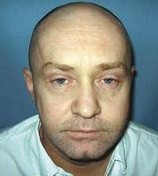
Max Landon Payne
Murderer Brian Kevin Rosenfeld
Murderer · USA · 1985
Brian Kevin Rosenfeld Brian Kevin Rosenfeld was sentenced to three concurrent l…
23 victims
Brian Kevin Rosenfeld
Murderer · USA · 1985
Brian Kevin Rosenfeld Brian Kevin Rosenfeld was sentenced to three concurrent l…
23 victims
 Russell Ellwood
Murderer · USA · 1991
Russell Ellwood was a former taxi driver. Authorities suspected him of killing…
20 victims
Russell Ellwood
Murderer · USA · 1991
Russell Ellwood was a former taxi driver. Authorities suspected him of killing…
20 victims
 Robert Martines Perez
Murderer · USA · 1994
Name: Robert Martines Perez · Other name used in proceedings: Robert Martinez P…
15 victims
Robert Martines Perez
Murderer · USA · 1994
Name: Robert Martines Perez · Other name used in proceedings: Robert Martinez P…
15 victims
 Billy Frank Vickers
Murderer · USA · 1993
Billy Frank Vickers Vickers was executed by lethal injection in Texas on Januar…
14 victims
Billy Frank Vickers
Murderer · USA · 1993
Billy Frank Vickers Vickers was executed by lethal injection in Texas on Januar…
14 victims
 Carl Morgan
Murderer · United Kingdom · 2004
Carl Morgan (born 1981) was a former producer of the rap group So Solid Crew. I…
1 victim
Carl Morgan
Murderer · United Kingdom · 2004
Carl Morgan (born 1981) was a former producer of the rap group So Solid Crew. I…
1 victim
 Lenard Philmore
Murderer · USA · 1997
Lenard Philmore · 11/14/1997 — Offence: Lenard Philmore was convicted in the mu…
1 victim
Lenard Philmore
Murderer · USA · 1997
Lenard Philmore · 11/14/1997 — Offence: Lenard Philmore was convicted in the mu…
1 victim
 David Attias
Homicide · USA · 2001
David Attias was described as an 18-year-old student at the University of Calif…
4 victims
David Attias
Homicide · USA · 2001
David Attias was described as an 18-year-old student at the University of Calif…
4 victims
 Stephen Lawrence Anderson
Mass homicide · New Zealand · 1997
1995 — Stephen Lawrence Anderson was diagnosed with schizophrenic. · 8 February…
6 victims
Stephen Lawrence Anderson
Mass homicide · New Zealand · 1997
1995 — Stephen Lawrence Anderson was diagnosed with schizophrenic. · 8 February…
6 victims
 Eldon Schurz
Murderer · USA · 1989
Eldon Schurz was tried in Arizona in connection with the attempted robbery and…
1 victim
Eldon Schurz
Murderer · USA · 1989
Eldon Schurz was tried in Arizona in connection with the attempted robbery and…
1 victim
 James Ritchie
Serial killer · USA · 2016
James Dale Ritchie (November 4, 1976 – November 12, 2016) was known in the medi…
5 victims
James Ritchie
Serial killer · USA · 2016
James Dale Ritchie (November 4, 1976 – November 12, 2016) was known in the medi…
5 victims
- Gender
- male
- Country
- USA
- Location
- Cullman County, Alabama, USA
- Date of birth
- November 10, 1970
- Age at first offence
- 22
- Characteristics
- robbery
- Victim profile
- Braxton Brown, 58 (store owner)
- Method of murder
- Shooting ( double-barreled shotgun)
- Date(s) of murder
- March 23, 1992
- Years active
- 1992
- Date of arrest
- —
- Status
-
Executed
Executed by lethal injection in Alabama on October 8, 2009
Case overview
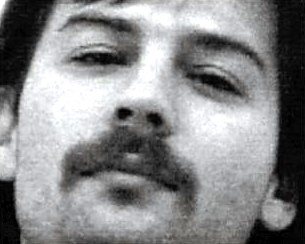
Max Landon Payne was convicted of capital murder arising from the robbery, kidnapping, and killing of Braxton Brown, the owner of West Point Grocery. Payne was sentenced to death after a jury recommended death by an 11-1 vote. He was executed by lethal injection in Alabama on October 8, 2009.
People
- Max Landon Payne — defendant
- Braxton Brown — victim; owner of West Point Grocery
- Wilma Faye Easterling — Payne’s sister
- Evelyn Schrimser — Payne’s sister
- Sandra Walker — Payne’s girlfriend
- Alma Lee — Payne’s sister
- Alma — Payne’s sister (named in testimony as Alma in connection with West Point Grocery)
- Ricky Smith — witness; arrived at Easterling’s house
- Evelyn Smith — Ricky Smith’s wife
- George Cleghorn — witness
- Christy Sue Godsey — customer who saw Payne at West Point Grocery
- Becky Noone — customer who saw Payne at West Point Grocery
- Mitchell Love — investigator with the Cullman County Sheriff’s Department
- Phillip Lambert — chief investigator for the sheriff’s department
- Ted Manus — investigator
- Anthony Dotson — coroner on March 24, 1992
- John Hardin — volunteer fireman
- Peggie Lindsey — investigator with the Alabama Department of Forensic Sciences
- Dr. Joseph Embry — performed the autopsy
- Brent Wheeler — Alabama Department of Forensic Sciences in Huntsville
- Morris Glen Brown — serologist for the Alabama Department of Forensic Sciences
- Roger D. Morrison — Department of Forensic Sciences
- James Beavers — identity used by Payne when traveling to Florida (Payne was identified as “James Beavers” by the bus ticket agent and at Miami)
- John Robert Butchko — Miami detective who met Payne at the bus station
- Douglas Price — friend/witness; released a handwritten statement about organ donation
- Donald Blocker — prison minister who knelt beside Payne’s family and friends before the curtains were opened
- Brian Corbett — corrections spokesman
- Grantt Culliver — warden who read the execution order to Payne
- Chris Summers — prison chaplain
- Rev. Johnnie Savoie — priest
- Todd Stacy — Gov. Bob Riley’s press secretary
- Bruce Nestor — attorney for Payne (Minneapolis)
- Clay Crenshaw — Assistant Alabama Attorney General
- Len Brooks — Cullman County district attorney at the time
- Jason Allen — sheriff’s deputy
- Toby Welch — dispatcher
- Gordon Nichols — deputy sheriff with the Cullman County Sheriff’s Department
- Bobby Watson — sergeant with the Cullman County Sheriff’s Department
- Judy Gail Byrum — alarm company operator/receiver of alarm
- Sheriff Laney — sheriff involved in the suppression hearing testimony
- Sidney Yarbrough — deputy sheriff
- DeMonia, Nichols, Weston — officers who joined Deputy Mitch Love at the automobile scene (as listed in testimony)
- Tracey Shields — person whose affidavit was read into evidence
- Christine Hyde — witness who testified to a conversation with James Beavers in December 1992
- Becky Graves — witness at West Point Grocery at about 8:10 p.m.
- Kelley Mosley — witness across from West Point Grocery at around 9:00 p.m.
- Claudia Wheatly — friend to whom possessions were left
- Richard Flowers — fellow Death Row inmate to whom possessions were left
- Calvin Stallworth — fellow Death Row inmate to whom possessions were left
- Thomas Arthur — mentioned as another death-row inmate whose execution dates were requested
- Robert Bryant Melson — mentioned as another death-row inmate whose execution dates were requested
- Teresa Pulliam — Jefferson County Circuit Judge who rejected Arthur’s claim
- Troy Wicker Jr. — referenced in connection with Arthur’s claim
- Gunmen/other individuals named in connection with witnesses’ lists or legal discussion — no additional distinct named individuals beyond those listed above were supported as participants in the underlying events in the provided text
Timeline
- March 23, 1992 (evening) — Braxton Brown was robbed and abducted from West Point Grocery and was subsequently shot two times in the face with a shotgun.
- Around 8:25 or 8:30 p.m. (March 23, 1992) — Two customers saw Payne at West Point Grocery.
- Approximately 8:33 p.m. (March 23, 1992) — Judy Gail Byrum received an alarm from West Point Grocery.
- 8:36 p.m. (March 23, 1992) — Sheriff’s deputy Jason Allen received a call that there had been a holdup at West Point Grocery.
- 8:48 p.m. (March 23, 1992) — Gordon Nichols arrived at West Point Grocery.
- Around 9:08 p.m. (March 23, 1992) — Bobby Watson arrived at the scene and requested an investigator be sent.
- Around 8:55 or 9:00 p.m. (March 23, 1992) — Ricky Smith arrived at Easterling’s house and was told Payne had robbed and kidnapped Brown.
- Around 9:15 p.m. (March 23, 1992) — Payne arrived at George Cleghorn’s house and asked to use a telephone and asked for bullets for a .22 rifle.
- Shortly after 9:08 p.m. (March 23, 1992) — Alma arrived at West Point Grocery and informed Sergeant Watson that Payne was traveling in a blue Ford Maverick automobile with one missing headlight.
- 10:00 p.m. (March 23, 1992) — Investigator Ted Manus received information that gunshots had been heard.
- 10:15 p.m. (March 23, 1992) — Investigator Mitchell Love arrived at Easterling’s residence and located a blue Ford Maverick automobile.
- 12:05 a.m. (March 24, 1992) — Rebecca Herbstreth sold someone identifying himself as James Beavers a bus ticket to Key West, Florida.
- Approx. 7:50 a.m. (March 24, 1992) — A man walked into the Greyhound Bus Station in Birmingham with a wallet that he had found about a block away; it contained Braxton Brown’s Social Security card and nine different credit cards with Brown’s name.
- Morning of March 24, 1992 — Volunteer fireman John Hardin searched for Braxton Brown and discovered a partial dental plate on a bridge over Crooked Creek.
- March 24, 1992 — A search team discovered Braxton’s body in Crooked Creek; an autopsy was later performed by Dr. Joseph Embry.
- March 25, 1992 — A detective from Metro Dade Police Department in Miami, Florida, received a telephone call that Payne was due to arrive at the Greyhound bus station in Miami.
- March 25, 1992 — Payne was arrested in Dade County, Florida.
- April 16, 1992 — Payne was indicted by the Cullman County grand jury.
- May 23, 1994 — Payne’s trial began.
- June 13, 1994 — Payne was sentenced to death.
- June 23, 1994 — appellate counsel was appointed for Payne.
- January 12, 1994 — Judge Frank Brunner recused.
- January 24, 1994 — Judge Fred Folsom recused.
- February 3, 1994 — Judge Robert Austin was appointed to try the case.
- October 8, 2009 — Payne was executed by lethal injection in Alabama.
- 6:25 p.m. (October 8, 2009) — Payne was pronounced dead by lethal injection.
The offence
Braxton Brown, owner of West Point Grocery in Cullman County, Alabama, was robbed and abducted on March 23, 1992 and was shot two times in the face with a shotgun. Brown died from the shotgun wounds, and his body was found in Crooked Creek the following day.
Payne was alleged to have:
- robbed West Point Grocery,
- taken Braxton Brown at gunpoint to Payne’s sister’s house,
- forced Brown into a car,
- driven to a nearby bridge and shot Brown twice in the face with a shotgun,
- dumped the body into Crooked Creek,
- then purchased a bus ticket to Florida under the name of James Beavers.
Investigation and evidence
- An alarm company operator, Judy Gail Byrum, received an alarm from West Point Grocery at approximately 8:33 p.m. on March 23, 1992, followed by a call to the sheriff’s department.
- Deputy Gordon Nichols arrived at West Point Grocery at 8:48 p.m. and found the door open, lights off, and Marlboro packs scattered on the floor in front of the counter.
- Items reportedly linked to West Point Grocery were found on Payne when a Miami detective met him after he arrived in Miami.
- Forensic testing matched human tissue recovered from Payne’s arm sling to Brown’s blood type.
- An autopsy performed by Dr. Joseph Embry retrieved around 466 shotgun pellets from Brown’s skull.
- A forensic examiner testified that Brown was shot with a shotgun from a distance of one to one-and-a-half feet away.
Items found on Payne after arrest in Miami
The following items were found on Payne:
- Brown’s handgun;
- a jeweler’s invoice made out to West Point Grocery;
- a vehicle registration in Brown’s name;
- three cartons of Marlboro cigarettes;
- three bank deposit bags containing numerous checks written to West Point Grocery, credit card receipts, rings, and food stamps;
- bank receipts in Brown’s name;
- a total of $1,085.84.
A Greyhound bus ticket to Florida was also found in connection with Payne’s travel and he was identified as James Beavers by the bus ticket agent.
Arrest and travel
Payne traveled to Florida using a bus ticket, claiming the identity “James Beavers.” A ticket agent, Rebecca Herbstreth, sold the ticket on March 24, 1992 and identified Payne as the person who claimed to be James Beavers. Herbstreth testified that Payne wore torn blue jeans with blood stains and had cuts on his face and that he gave her a gold chain when buying the ticket.
A wallet found at the Greyhound Bus Station contained Braxton Brown’s Social Security card and nine different credit cards bearing Brown’s name.
After receiving information from Cullman authorities, Detective John Robert Butchko met Payne when the bus arrived in Miami and identified him. Butchko removed a Sterling .25 caliber automatic pistol from Payne’s right rear pocket after Payne informed him that he had a .25 caliber gun. Payne signed a consent form allowing a search of a green duffel bag.
Trial
Payne was indicted for three counts of capital murder arising from Braxton Brown’s death and was convicted on all counts.
Charges (capital murder)
Count one:
- intentional murder committed during an abduction with the intent to accomplish or aid the commission of robbery or flight therefrom.
Count two:
- intentional murder committed during an abduction with the intent to inflict serious physical injury.
Count three:
- intentional murder committed during a robbery in the first degree.
A sentencing hearing was held before the jury, and the jury recommended a sentence of death by an 11-1 vote. The trial court sentenced Payne to death.
Evidence presented and testimony
Sandra Walker testified that:
- she did not know the two individuals with Payne when the three left;
- Brown appeared nervous and scared;
- Payne ordered Brown to give Wilma money;
- Easterling and Payne went to the bathroom and Wilma told Payne “don’t do this” several times;
- Payne had a gun in his right hand inside the sling;
- Payne gave Brown the clip out of the gun;
- Payne rejected Wilma’s suggestion and responded, “No, I am going to do this.”
Walker identified Payne’s double-barreled shotgun and the handgun shown at trial as the one Payne carried.
Ricky Smith testified that:
- he arrived at Easterling’s house around 8:55 or 9:00 p.m.;
- this was the last time Brown was seen alive;
- he overheard Easterling say that Payne had robbed and kidnapped Brown.
George Cleghorn testified that:
- Payne asked to use a telephone at approximately 9:15 p.m.;
- Payne asked whether he had any bullets for a .22 rifle and whether he had any bullets.
Forensic and autopsy testimony described shotgun pellets, the distance from which the victim was shot, and tissue and blood testing.
Defence theory and witness testimony about another person
Payne presented testimony attempting to show that another man, named James Beavers, committed the murder.
Witness testimony included:
- Evelyn Smith testified she heard her husband say “Hi, James, how are you?” and that the only James she knows was James Beavers.
- Kelley Mosley testified she saw a blue Ford Maverick at the store around 9:00 p.m. and described three people inside.
- James Beavers testified he lived across the street from Easterling and denied knowledge of the crime but said he saw Payne when Payne helped him fix his automobile.
- Christine Hyde testified she had a conversation with James Beavers in December 1992 in which Beavers admitted to shooting the victim in the face.
- Becky Graves testified she saw a man with shoulder-length blonde hair at West Point Grocery at about 8:10 p.m.
- An affidavit from Tracey Shields was read into evidence; Shields stated she saw Payne pull up to his mother’s house at around 9:15 p.m. on March 23, 1992 and saw another person in the automobile with long hair.
- Payne did not testify.
The state presented rebuttal witnesses, including people who testified James Beavers was at home on the night of the incident and did not leave.
Prosecutor comments and right to remain silent
Payne challenged prosecutor comments during closing argument as infringing his constitutional right not to testify, reviewed under a plain error standard.
The prosecutor’s comments included:
- “[Beavers's] mother, Mrs. Reynolds, said he was there all that time. [His ex-girlfriend's] son, Terry, said he was there that night. The police, by their own testimony, continued to investigate. Every time they would receive an additional report, they would go out and see if they could find James Beavers.... The investigation continued. On each occasion, there was no evidence to tie Mr. Beavers to this situation. He was available in court to testify. Let's go over to the other side and say what evidence and what circumstances do you have against the defendant. As I say, I have always felt what a person does is more reliable than what [is] said by a third party or whoever. When we go through these, ask yourself, ‘Is that consistent with a person who is not the defendant or the one that is guilty of the crime?’ ”
and:
- “It is pretty clear up to the point they leave the house here at nine o'clock that evening-not much conjecture can be involved as far as that. After that, that is the last time Braxton Brown was seen alive. He was with the defendant. We assume from the time frame that [Payne] left here, came back up here, and went down this road here, going back to the West Point Grocery. The conjecture arises ‘What happened during that time frame?’ I don't know. I don't know whether [Payne] asked for the magazine back and Braxton Brown said ‘No way.’ I don't know if he saw a patrol car. You see, unbeknown to [Payne], he doesn't know any alarm has gone off. He doesn't know that the police know anything. He may have passed a patrol car going from the West Point Grocery over here to where [Payne] lives, and he may have panicked. He may have thought that Wilma turned him in. He may have thought, ‘Now I have no choice.’ Or he may have got down here and said, ‘Braxton, I'm going to let you out here and I'm going to cut a trail here. By the time you get back up here to get help, I'll be long gone. Let's make a deal. If I let you out and you don't contact the authorities, we will forget this happened.’ Maybe at that point, Braxton said, ‘No way. I'm going to call the police when I get a chance.’ And [Payne] ended it right there on that bridge. Then he goes to the airport or bus station and buys the bus ticket.... Whatever scenario you think fits, something between here and there happened. That is for you to decide. The end result is that [Payne] undoubtedly was here on this bridge and did the murder on that occasion.”
Sentencing
Payne was sentenced to death. The jury recommended death by an 11-1 vote. In the sentencing order, the trial court found the aggravating circumstance that:
- “The Court makes a finding of fact that the capital offense was committed while the defendant was engaged or was an accomplice in the commission of or an attempt to commit, the offense of robbery and the offense of kidnapping.”
The trial court found one statutory mitigating circumstance:
- Payne’s age at the time of the offense.
The trial court also found nonstatutory mitigating circumstances, including:
- that Payne was under the influence of drugs and alcohol at the time of the commission of these offenses;
- that Payne was undergoing some emotional problems concerning the alleged paternity of a child that he thought was his;
- that Payne had a bad childhood because of his stepfather's alcohol problems, his stepfather's abuse of his sister, his mother's numerous marriages, and a generally poor childhood environment;
- that Payne currently appears to have a good relationship with his family.
The trial court weighed the aggravating circumstance against the mitigating circumstances and found that the aggravating circumstance outweighed the mitigating circumstances.
Appeals
Direct appeal
Payne’s conviction and death sentence were affirmed in:
- Payne v. State, 683 So.2d 440 (Ala. Cr. App. 1995) (Direct Appeal)
The Alabama Supreme Court affirmed in:
- Ex parte Payne, 683 So.2d 458 (Ala. 1996) (Direct Appeal)
Payne v. State, 791 So.2d 383 (Ala. Cr. App. 1999) (PCR) was also part of the postconviction litigation described in the provided text, with procedural rulings and remand directions.
Federal habeas
The provided text references:
- Payne v. Allen, 539 F.3d 1297 (11th Cir. 2008) (Habeas)
Outcome
The Alabama execution occurred on October 8, 2009. Payne was executed by lethal injection and pronounced dead at 6:25 p.m. in the Holman Correctional Facility’s execution chamber at Atmore. The execution order was read to Payne by warden Grantt Culliver and Payne spoke quietly with the prison chaplain Chris Summers as the lethal injection began.
Payne’s final words were: “I just want to tell my family I love them.”
A hand sign meaning “I love you” was described as being made by Payne before losing consciousness.
No relatives of the victim attended the execution.
Aftermath
Last meal and final possessions
For the final meal, Payne received:
- a turkey sandwich with tomatoes and mayonnaise, potato salad and cake.
Payne divided his personal possessions, including:
- a rosary necklace, a watch, a white cap and some photos to Easterling;
- two Bibles, some photos and drawings of family members to Claudia Wheatley (spelled “Claudia Wheatly” in one part of the provided text);
- his television to death row inmate Calvin Stallworth;
- additional items including a box of tobacco, seven matches, stamps, food, and a television to Richard Flowers and Calvin Stallworth.
Organ donation dispute
Douglas Price released a handwritten statement complaining that Payne was not able to donate his organs after death. The handwritten statement included: “It is like he said today at our last visit, 'Do you think people would care where a heart came from if their child is dying?'”
Corrections spokesman Brian Corbett stated that the denial was a medical issue.
Additional inmates mentioned
The provided text mentioned that:
- the attorney general’s office asked the Alabama Supreme Court to set execution dates for convicted murderers Thomas Arthur and Robert Bryant Melson;
- Arthur was 67 and had been on death row since 1983, with his most recent execution date postponed for a hearing after another inmate killed Troy Wicker Jr. in 1982, and Jefferson County Circuit Judge Teresa Pulliam rejected Arthur’s claim;
- Melson was 38 and had been on death row since May 17, 1996, convicted of killing three people during an April 1994 robbery at a Popeye's Chicken & Biscuits restaurant in Gadsden.
Spotted an error, or have more information about this case?