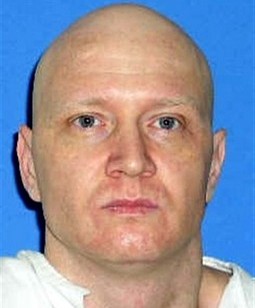
Newton Burton Anderson
Murderer Russell Ellwood
Murderer · USA · 1991
Russell Ellwood was a former taxi driver. Authorities suspected him of killing…
20 victims
Russell Ellwood
Murderer · USA · 1991
Russell Ellwood was a former taxi driver. Authorities suspected him of killing…
20 victims
 Robert Martines Perez
Murderer · USA · 1994
Name: Robert Martines Perez · Other name used in proceedings: Robert Martinez P…
15 victims
Robert Martines Perez
Murderer · USA · 1994
Name: Robert Martines Perez · Other name used in proceedings: Robert Martinez P…
15 victims
 Billy Frank Vickers
Murderer · USA · 1993
Billy Frank Vickers Vickers was executed by lethal injection in Texas on Januar…
14 victims
Billy Frank Vickers
Murderer · USA · 1993
Billy Frank Vickers Vickers was executed by lethal injection in Texas on Januar…
14 victims
 James Lowery
Murderer · USA · 1979
Defendant: James (Jim) Lowery · Age: 54 · Race: white · Status: Executed by let…
2 victims
James Lowery
Murderer · USA · 1979
Defendant: James (Jim) Lowery · Age: 54 · Race: white · Status: Executed by let…
2 victims
 Nathaniel Code
Serial killer · USA · 1984
Nathaniel Code (Nathaniel R. Code Jr.) was born on March 12, 1956, in Shrevepor…
8 victims
Nathaniel Code
Serial killer · USA · 1984
Nathaniel Code (Nathaniel R. Code Jr.) was born on March 12, 1956, in Shrevepor…
8 victims
 Oscar Franklin Smith
Murderer · USA · 1989
Oscar Franklin (Frank) Smith was the defendant. He was sentenced to death by a…
3 victims
Oscar Franklin Smith
Murderer · USA · 1989
Oscar Franklin (Frank) Smith was the defendant. He was sentenced to death by a…
3 victims
 Alexander Pichushkin
Serial killer · Russia · 1992
Alexander Yuryevich “Sasha” Pichushkin (Russian: Алекса́ндр Ю́рьевич Пичу́шкин,…
49 victims
Alexander Pichushkin
Serial killer · Russia · 1992
Alexander Yuryevich “Sasha” Pichushkin (Russian: Алекса́ндр Ю́рьевич Пичу́шкин,…
49 victims
 Jodi Arias
Murderer · USA · 2008
Jodi Arias (born July 9, 1980, in Salinas, California) and Travis Alexander wer…
1 victim
Jodi Arias
Murderer · USA · 2008
Jodi Arias (born July 9, 1980, in Salinas, California) and Travis Alexander wer…
1 victim
- Gender
- male
- Country
- USA
- Location
- Smith County, Texas, USA
- Date of birth
- August 8, 1976
- Age at first offence
- 23
- Characteristics
- rape, robbery
- Victim profile
- Frank, 60, and Bertha Cobb , 65
- Method of murder
- Shooting (shotgun)
- Date(s) of murder
- March 4, 1999
- Years active
- 1999
- Date of arrest
- —
- Status
-
Executed
Executed by lethal injection in Texas on February 22, 2007
Case identification
Newton Burton Anderson was executed in Texas on February 22, 2007.
Background
Anderson was a white male laborer. He had 8 years of education. He had red hair and blue eyes. He was 5' 10" tall and weighed 163 lb.
Anderson had prior criminal history including time served for family violence assault and four burglaries. He also had a burglary conviction with a sentence of eight years probation in that case. When Anderson committed four more burglaries less than three months into his probation, his probation was revoked and he was sentenced to eight years in state prison. Three months after he was paroled from prison, Anderson killed Frank and Bertha Cobb.
Anderson had juvenile record and had been arrested in California as a juvenile for burglary, where he received a six-year juvenile offender prison sentence. Within two months of his arrival at the juvenile detention facility, Anderson escaped. While in jail awaiting trial for capital murder in the slayings of the Cobbs, Anderson obtained or made a rope and used a hacksaw blade to cut through an air vent in his jail cell. On another occasion, Anderson smuggled a razor blade into the courthouse, cut his leg restraints, and escaped during a pretrial hearing. He also possessed a shank and attempted to bribe a correctional officer to leave his cell door unlocked. While awaiting trial in Texas, testimony also indicated that Anderson had implements that could be used in an escape attempt, and that he escaped from custody temporarily and exited the courthouse before being apprehended on February 9, 2000.
Anderson had been arrested and sentenced in Rockwall County for 3 counts of Burglary of a Habitation. His sentence was reduced from 10 years to 8 years, and he was released on mandatory supervision to Smith County on 12/3/1998.
Within about four months after being out of prison after serving four years for burglary, Anderson was arrested for the slayings of Frank Cobb and his wife, Bertha.
Anderson had previous convictions for assault causing bodily injury in a 1994 domestic violence case and for theft in February 1995. An ex-wife testified that Anderson physically abused her and that they had both used drugs during their marriage.
The victims
Frank Cobb, 71, and Bertha Cobb, 61, were murdered on March 4, 1999. Frank Cobb was a retired telephone company worker. Bertha Cobb was a retired nurse.
Kevin Cobb was identified as the son of Frank and Bertha Cobb, and he was among those who watched Anderson die. Carolyn Sanders was identified as a daughter of Frank and Bertha Cobb, and she was among those who watched Anderson die. Their daughter Carolyn Sanders and their son Kevin Cobb provided statements about Anderson’s execution.
Timeline
- February 9, 2000 — Anderson escaped from custody temporarily and exited the courthouse before being apprehended.
- 12/3/1998 — Anderson was released on mandatory supervision to Smith County.
- March 4, 1999 — Frank and Bertha Cobb were murdered during a burglary of their home in Smith County.
- May 12, 2000 — Anderson was sentenced to death after a punishment determination proceeding.
- May 22, 2002 — Anderson’s conviction and sentence were affirmed.
- March 26, 2003 — Anderson’s petition for post-conviction relief was denied.
- April 18, 2004 — Anderson filed an application for a writ of habeas corpus with the federal court.
- February 22, 2007 — Anderson was executed by lethal injection in Texas.
- 6:17 p.m. CST, February 22, 2007 — Anderson was pronounced dead.
The offence
On March 4, 1999, Frank and Bertha Cobb arrived home and caught Newton Burton Anderson in the process of burglarizing their residence.
Frank Cobb was found in the kitchen. He had been shot in the head at close range with a shotgun. His hands and feet were bound with electrical tape, and he was lying face down with his hands and feet bound with electrical tape.
Bertha Cobb’s body was found in the living room. She was face down and bound with electrical tape. Electrical tape also covered her mouth and nose. She was not clothed from the waist down. She had been shot many times in the head, and she had been raped, strangled, and suffocated.
After killing the Cobbs, Anderson robbed them. Anderson set their house on fire and fled in the couple’s maroon Cadillac.
Two witnesses saw a man walking along the highway near the Cobbs’ house in New Harmony, Texas at approximately 2:30 p.m. on March 4, 1999. A neighbor passed the Cobbs’ maroon Cadillac on the highway later that afternoon. When the neighbor arrived at home, she observed that the Cobbs’ house was on fire. A volunteer firefighter passed the maroon Cadillac en route to the Cobb house and later identified Anderson as the driver. Firefighters responded to a blaze March 4, 1999, at the Cobbs’ home in New Harmony, about 10 miles northwest of Tyler, and found the bodies in the house.
Witnesses saw Anderson drive away in the Cobbs’ maroon Cadillac.
Anderson asked for help unloading property from the maroon Cadillac on the day of the murders. He asked for help unloading clothing, a duffle bag, a suitcase, toiletry items, and an oscillating fan from the maroon Cadillac. The Cobbs’ son later identified those items as having come from his parents’ home.
Anderson left the trailer park after unloading the property. After returning, he told the nephew that he abandoned the Cadillac off the highway behind a building. Officials later discovered the vehicle where Anderson said he had left it.
That night, Anderson asked his brother-in-law’s niece and her boyfriend for a ride to a Dallas night club. He offered to pay them eighty dollars. Bertha had cashed a check for $892.00 that day and kept eight hundred dollars in cash, but investigating officers found no cash in the Cobb home. Witnesses at the night club observed that Anderson had a large amount of cash and bought a round of drinks for everyone at the bar.
When asked whether he had broken into someone’s house, Anderson replied: “Yeah. I did something like that.” Anderson later told his sister during a phone conversation that he “did it.”
At trial, a DNA expert testified for the prosecution that the DNA from the semen discovered in Bertha Cobb’s body matched Newton Anderson’s DNA.
Investigation
The house was declared a crime scene, and officials ordered the firemen off the premises after they found Frank Cobb’s body in the kitchen.
During the investigation, police found the vehicle where Anderson said he had left it and also recovered items from where Anderson lived that belonged to the Cobbs.
The Cobb’s son, daughter, and nephew watched Anderson die.
Arrest and custody
Anderson was arrested in Dallas, where he fled the day of the slayings.
While incarcerated awaiting trial on the capital murder charge in the slayings of the Cobbs, Anderson escaped attempts and used a hacksaw blade to cut through an air vent in his jail cell. During a pretrial hearing, he cut through leg restraints with a razor blade and escaped. He attempted to bribe a correctional officer to leave his cell door unlocked.
Trial
In March 1999, Anderson was indicted for the capital murders of Frank and Bertha Cobb.
Anderson pleaded not guilty, did not testify, and was convicted by a jury.
Prosecutors alleged capital murder of Frank and Bertha Cobb “during the same criminal transaction.”
At trial, the jury returned a “guilty” verdict and Anderson was sentenced to death.
The Texas Court of Criminal Appeals affirmed both verdicts in May 2002.
Evidence and testimony
A DNA expert testified for the prosecution that the DNA from semen discovered in Bertha Cobb’s body matched Newton Anderson’s DNA.
Anderson’s sister testified that during a telephone conversation on March 6, 1999, Anderson confessed to her that he killed the Cobbs.
Michael Smith, identified as Anderson’s step-nephew in one account, testified that on the day of the killings Anderson drove to his residence in a maroon Cadillac and asked him for help unloading property. Smith testified that he helped Anderson put the property in a trailer shared with Anderson’s sister and her husband. Police later recovered several items from the trailer that belonged to the Cobbs.
Prosecutor statements and objections
During closing argument, the prosecutor said: “Who is this other person? Does anyone know? We don't. And the defense never once-” The defense objected on the grounds that the prosecutor was improperly talking about his own personal knowledge. The trial court sustained the objection and instructed the jury to disregard the remark.
Shortly afterwards, the prosecutor said: “But I'll tell you this: Don't think for a minute that the State of Texas believes that there is another person-“ The defense objected again, and the trial court sustained the objection and instructed the jury to disregard the statement.
In a later description of the argument, the prosecutor stated: “[D]o you think in this case that the defense would have ever admitted that he was even in the house in the first place if ... the Cobb's property had not been found in his trailer? Do you think they would have come in and told you that? Do you think the defense would have come in her and admitted that the defendant sexually assaulted Bertha Cobb if his semen had not been in her vaginal cavity? There is no honor in what they did. They did it-“ At this point the defense objected. The trial court sustained the objection and instructed the jury to disregard the statements.
Sentencing
Anderson was sentenced to death.
Appeals
State court
In May 2002, the Texas Court of Criminal Appeals affirmed Anderson’s guilty verdict and death sentence.
In March 2003, the Texas Court of Criminal Appeals denied Anderson’s state habeas petition.
In April 2003, Anderson obtained federal habeas counsel and, learning of the trial court’s intention to set a May 2003 execution date, asked a U.S. district court to stay his execution.
Federal habeas and related proceedings
On May 1, 2003, the federal court ordered a stay.
Anderson filed his federal habeas petition ten months later and it was denied in January 2006.
He appealed to the 5th U.S. Circuit Court of Appeals, and the state district court set his execution for July 26, 2006, though the prior stay was still effective.
On November 1, 2006, the 5th Circuit affirmed the lower court’s decision to deny relief.
On January 5, 2007, Anderson filed a petition for certiorari review in the U.S. Supreme Court and an application for a stay of execution pending disposition of his petition.
In one account, about an hour before he was scheduled to die, the U.S. Supreme Court rejected an appeal that sought to delay the punishment.
Outcome
Anderson was executed by lethal injection in Texas on February 22, 2007.
Anderson was pronounced dead at 6:17 p.m. CST.
Before his execution, Newton Anderson spoke from viewing rooms. He said: “For all those that want this to happen, I hope you get what you want and it makes you feel better and gives you some kind of relief.” He said: “I don't know what else to say.” He said: “For those that I have hurt, I hope after a while it gets better.” He told them several times that he loved them. He said: “I am sorry. That's it. Goodbye.”
A handwritten statement distributed after his death included: “I only want to say that for the last eight years I have had to live with my guilt and shame. I know I was wrong and now I give my life,” and it concluded: “I give my life. I hope it is enough for everyone. If things could be undone, I would do it, I would do it!!:”
In an additional account, Anderson said he viewed the execution as “relief more than anything.” He also said: “Conditions aren't top-notch here,” and “Really, I'm tired of being here.” When asked about work after prison, he said: “I went back to what I knew how to do,” and “All I knew is how to break into houses.” When asked about the slayings, he replied: “The rest of my case, I can't explain why.”
A statement attributed to a victim’s relative included: “We now, as of this evening, start a new life. We will put one foot in front of the other and go on like our parents would have wanted us to.”
Other details
Anderson had education of 8 years and was described as a career burglar.
One account identified that Anderson was the fifth Texas inmate executed that year and the first of four set to die over the next two weeks in Texas.
The Cobbs’ names were etched into a granite victims’ memorial in downtown Tyler.
During an interview, Anderson said: “I am guilty,” and “I don't deny that. ... They had good evidence. Witnesses saw me. What can I say?”
During a death row interview, Anderson said: “I am guilty. I don't deny that.” He also stated: “I went back to what I knew how to do,” and “All I knew is how to break into houses.” When asked about the killings, he answered: “The rest of my case, I can't explain why.”
At trial, in one account, Anderson confessed during a telephone conversation with his sister and the confession was tied to March 6, 1999.
Anderson was indicted, tried, and convicted of killing two persons “during the same criminal transaction.”
In federal habeas proceedings, Anderson challenged his capital murder conviction and death sentence imposed by the 114th Judicial District Court of Smith County, Texas in cause No. 114-80325-99, styled The State of Texas vs. Newton Anderson.
In his federal habeas application, Anderson raised eleven claims:
- His trial counsel rendered ineffective assistance by offering the testimony of an expert witness who conceded his future dangerousness.
- The admission of unfairly prejudicial crime scene photographs denied him a fair trial. 3 and 4. Improper argument by the prosecutor denied him a fair trial.
- The use of undefined and vague terms in the special sentencing issues denied him the due process of law.
- The trial court's failure to inform the jury of the effect of a non-unanimous verdict as to any of the special sentencing issues denied him the due process of law.
- Not requiring that the statutory aggravating factors be alleged in the indictment denied him the due process of law.
- Requiring him to bear the burden of proof on the mitigation special sentencing issue denied him the due process of law.
- Appellate counsel's failure to raise meritorious issues constituted ineffective assistance.
- The state's unfettered discretion in deciding whether to seek the death penalty denied him due process of law.
- The trial court's failure to grant a mistrial after it struck the testimony of the State's risk assessment expert denied him a fair trial.
- The cumulative effect of the above eleven errors denied him the due process of law.
The federal court denied the habeas petition, and the federal appellate court affirmed the denial.
One account described Frank and Bertha Cobb as having been murdered during a burglary and that Anderson took approximately $100 in cash, as well as clothing and electronic equipment, and fled the scene in the couple’s car.
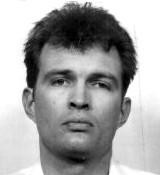
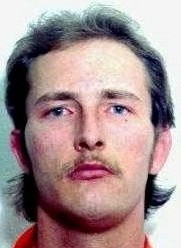
Spotted an error, or have more information about this case?