
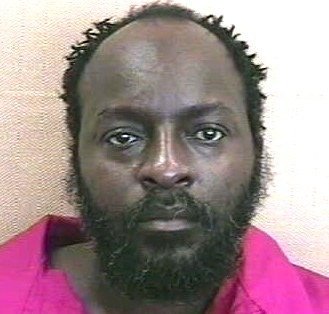
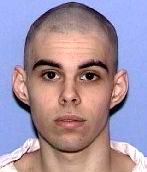
Eugene Wallace Perry
Murderer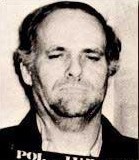 Ervil LeBaron
Murderer · USA · 1972
Ervil Morrell LeBaron (1925 to August 16, 1981) was the leader of a polygamous…
35 victims
Ervil LeBaron
Murderer · USA · 1972
Ervil Morrell LeBaron (1925 to August 16, 1981) was the leader of a polygamous…
35 victims
 Brian Kevin Rosenfeld
Murderer · USA · 1985
Brian Kevin Rosenfeld Brian Kevin Rosenfeld was sentenced to three concurrent l…
23 victims
Brian Kevin Rosenfeld
Murderer · USA · 1985
Brian Kevin Rosenfeld Brian Kevin Rosenfeld was sentenced to three concurrent l…
23 victims
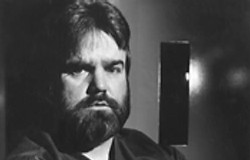 Marvin Gray
Murderer · USA · 1975
Marvin Gray was convicted killer who claimed responsibility for 23 slayings and…
23 victims
Marvin Gray
Murderer · USA · 1975
Marvin Gray was convicted killer who claimed responsibility for 23 slayings and…
23 victims
 Yahweh ben Yahweh
Murderer · USA · 1980
Yahweh ben Yahweh was born and legally named Hulon Mitchell Jr. (October 27, 19…
23 victims
Yahweh ben Yahweh
Murderer · USA · 1980
Yahweh ben Yahweh was born and legally named Hulon Mitchell Jr. (October 27, 19…
23 victims
 Tyrone Gilliam
Murderer · USA · 1988
Tyrone Gilliam was convicted in the murder of Christine Doerfler. Gilliam was e…
1 victim
Tyrone Gilliam
Murderer · USA · 1988
Tyrone Gilliam was convicted in the murder of Christine Doerfler. Gilliam was e…
1 victim
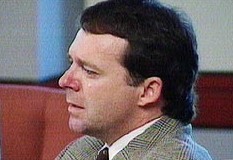 Royle Kipp
Murderer · USA · 2000
Royle Kipp joined the Collier County Sheriff's Office in 1981 when he was just…
2 victims
Royle Kipp
Murderer · USA · 2000
Royle Kipp joined the Collier County Sheriff's Office in 1981 when he was just…
2 victims
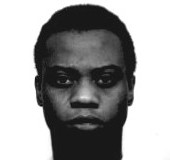 Charles Anthony Boyd
Murderer · USA · 1986
Charles Anthony Boyd was a previously convicted felon who was convicted of capi…
3 victims
Charles Anthony Boyd
Murderer · USA · 1986
Charles Anthony Boyd was a previously convicted felon who was convicted of capi…
3 victims
 Petri Gerdt
Mass murderer · Finland · 2002
Petri Erkki Tapio Gerdt (born April 17, 1983; died October 11, 2002) died in th…
6 victims
Petri Gerdt
Mass murderer · Finland · 2002
Petri Erkki Tapio Gerdt (born April 17, 1983; died October 11, 2002) died in th…
6 victims
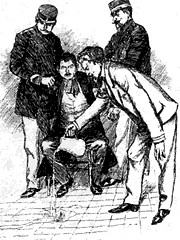 Pierre Voirbo
Murderer · France · 1868
Pierre Voirbo was a prime suspect after he had recently quarreled with the vict…
1 victim
Pierre Voirbo
Murderer · France · 1868
Pierre Voirbo was a prime suspect after he had recently quarreled with the vict…
1 victim
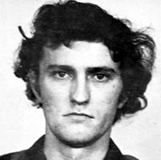 Joachim Knychala
Serial killer · Poland · 1975
Joachim Knychała (September 8, 1952 - October 28, 1985) was a Polish serial kil…
5 victims
Joachim Knychala
Serial killer · Poland · 1975
Joachim Knychała (September 8, 1952 - October 28, 1985) was a Polish serial kil…
5 victims
- Gender
- male
- Country
- USA
- Location
- Crawford County, Arkansas, USA
- Date of birth
- 1944
- Age at first offence
- 36
- Characteristics
- jewelry store robbery
- Victim profile
- Kenneth Staton and his daughter Suzanne Staton Ware
- Method of murder
- Shooting
- Date(s) of murder
- September 10, 1980
- Years active
- 1980
- Date of arrest
- September 26, 1980
- Status
-
Executed
Executed by lethal injection on August 6, 1997 in Arkansas
Case name
Eugene Wallace Perry v. A.L. Lockhart, Director, Arkansas Department of Corrections
Parties
Eugene Wallace Perry (Appellant; Appellee), inmate and death-row prisoner A.L. Lockhart, Director, Arkansas Department of Corrections (Appellee; Appellant)
Timeline
- September 10, 1980 — The bodies of Kenneth Staton and Suzanne Ware were found bound and gagged in the back of the Staton Jewelry Store in Van Buren, Arkansas; each was killed by two gunshots to the head fired at close range. An estimated $100,000 worth of jewelry and watches was missing from the store.
- September 26, 1980 — Eugene Wallace Perry was arrested.
- 1981 — Perry was convicted of capital felony murder for the killings and was sentenced to death.
- July 27, 1983 — Perry filed a petition for a writ of habeas corpus under 28 U.S.C. Sec. 2254, alleging numerous procedural errors during his Arkansas State court trial.
- May 14, 1986 — Perry filed a special supplement to his petition challenging the validity of the death sentence under Collins v. Lockhart.
- May 14, 1986 — The district court found no error undermining Perry's conviction, but held that the death sentence was invalid under Collins and ordered the State either to resentence Perry or reduce his sentence to life without parole.
- November 13, 1987 — The case was submitted.
- January 13, 1988 — The Supreme Court decided Lowenfield v. Phelps.
- August 18, 1988 — The case was resubmitted following reargument.
- April 10, 1989 — The United States Court of Appeals for the Eighth Circuit decided the appeal.
- June 16, 1989 — Rehearing and rehearing en banc were denied.
- August 6, 1997 — Perry was executed by lethal injection in Arkansas.
- August 7, 1997 — The New York Times published an account describing the execution.
Background
Eugene Wallace Perry was convicted for killing Kenneth Staton and his daughter Suzanne Ware in Mr. Staton's jewelry store. Perry was executed by injection at a prison in southern Arkansas after he proclaimed his innocence in his final words.
Perry asserted that another death row inmate, Marion Pruett, had committed the slayings. Marion Pruett confessed to the killings, but the courts rejected Pruett's confession and refused to overturn Perry's conviction.
The offence
On the evening of September 10, 1980, the bodies of Kenneth Staton and his daughter Suzanne Ware were found bound and gagged in the back of the Staton Jewelry Store in Van Buren, Arkansas. Each had been killed by two gunshots to the head fired at close range.
Perry was convicted of capital felony murder for homicides committed during the course of a robbery. Arkansas law was cited regarding the element of pecuniary gain as an aggravating circumstance and as an element of robbery.
Investigation
Police recovered evidence from the camper Perry had been using at the time of the crime, including:
- a gold coil resembling ones taken from the Statons' store,
- a buffalo nickel with an identifiable mark that Ruth Staton testified she kept in the store,
- a jewelry price tag in the handwriting of Karen Staton,
- and other incriminating evidence.
A search of Perry's Cadillac, later recovered at a salvage yard, revealed:
- a single page of the Van Buren phone book listing Kenneth Staton's phone number,
- and a copy of the September 11, 1980 edition of the Northwest Arkansas Morning Times with the headline story concerning the Staton robbery and murders.
A search of the area surrounding the Beaver Lake campsite for which a user permit was issued to “Damon Peterson” uncovered a rope that a crime lab expert testified possessed characteristics similar to the rope used to bind the hands and feet of Kenneth Staton and his daughter.
When Perry was arrested he had two rings in his possession:
- one identified by Ruth Staton as identical to her husband's wedding band,
- the other identified by Karen Staton as part of the inventory from the jewelry store.
Arrest
Perry was arrested on September 26, 1980.
Trial
In 1981, Perry was convicted of capital felony murder for these killings and was sentenced to death. The Arkansas Supreme Court affirmed the conviction and sentence, and denied Perry's request for post-conviction relief under Ark.R.Crim.P. 37.
Perry appealed the district court's denial in part of the habeas corpus relief he requested. The State cross-appealed the order setting aside Perry's sentence of death. The Eighth Circuit affirmed in part, reversed in part, and remanded for reinstatement of the death sentence.
Identity and alibi issues in the evidentiary record
Perry's defense was that he was in Alabama at the time of the murders in Van Buren, which was in northwest Arkansas.
The State presented seven witnesses who placed Perry in and around the Staton Jewelry Store on the day of the crime and in the few days immediately preceding it. Perry proffered eleven witnesses to place him in Alabama at various times.
Perry sought a court order compelling the presence of several people in Alabama he claimed were alibi witnesses. The trial court offered to pay travel expenses for Perry's witnesses but refused to enable Perry to issue subpoenas to compel their live testimony. Seven of the eleven witnesses appeared voluntarily and testified; the testimony of the other four was read into the record from depositions or written interrogatories. The State paid for the cost of the depositions and interrogatories.
Witness testimony described in the appellate record
Chantina Ginn, temporary traveling companion of Perry's accomplice Richard Anderson, testified that Anderson and Perry, using the alias “Damon Peterson,” left their campsite at Beaver Lake, Arkansas, on either September 8 or September 9 with a gun, a rope, a light brown woman’s wig, and a change of clothes. Ginn testified that the two men returned with two duffel bags full of jewelry on the night of the 10th. Ginn identified Perry as the man who called himself Damon Peterson.
A witness corroborated Ginn's testimony that Perry was camping at Beaver Lake, Arkansas, in early September.
Pat Etier testified she met a man calling himself Damon Peterson in Van Buren, Arkansas, on the afternoon of September 9. Etier identified Perry as Peterson and stated that when she met him on September 9 he was wearing a light brown woman’s wig. Etier testified that Perry spent that night with her at her home in Fort Smith, several miles from Van Buren. Etier drove Perry to Anderson's motel in Fort Smith at about 8:00 on the morning of September 10.
Two Van Buren merchants testified that Perry was in their stores on September 9.
Linda Godwin identified Perry as one of two men she saw at about 6:00 p.m. on September 10 walking hurriedly across the parking lot of the shopping center in Van Buren.
Michael Jeffcoat testified that he sold a used car to Perry on September 11 in Rogers, Arkansas.
The appellate record described deposition testimony from absent witnesses as “weak, uncertain, lacking in specificity,” including:
- a lay-away payment made in Perry's account at a shop in Alabama on September 11 that the witness did not see was made by Perry,
- a clerk in a clothing store in Alabama who testified that Perry and his daughter were in the shop sometime between the last week of August and the first two weeks of September,
- and a store manager who stated Perry was in the store during a “back to school” sale held in late August and early September.
The record described in-court testimony of four witnesses and deposition testimony of Glenda Perry as directly contradicting the State's case, including:
- Perry's younger daughter Tonya testified that Perry was in Alabama on September 1, returned on the 8th, and remained until the 10th.
- Perry's daughter Dawn gave essentially the same testimony, adding that she and Perry had shopped for clothes on the 9th.
- Wallace Perry, Perry's father, stated that Perry was at his house in Alabama on the night of the 10th and most of the day of the 11th, and Perry's mother Eulene corroborated that testimony.
- Glenda Perry testified that Perry was in Alabama on September 1, returned “about a week later,” and stayed for two or three days.
Sentencing
Perry was sentenced to death after his 1981 conviction of capital felony murder.
The district court later held that the death sentence was invalid under Collins and ordered that the State either resentence Perry or reduce his sentence to life without parole. The Eighth Circuit decided whether Collins had been overruled by Lowenfield v. Phelps and held that Collins was overruled and that the death sentence was valid and had to be reinstated.
Appeals
Federal habeas corpus proceedings
On July 27, 1983, Perry filed a petition for a writ of habeas corpus under 28 U.S.C. Sec.
On May 14, 1986, Perry filed a special supplement challenging the validity of the death sentence under Collins v. Lockhart.
The district court found no error undermining Perry's conviction, but held that the death sentence was invalid under Collins and ordered the State either to resentence Perry or reduce his sentence to life without parole (656 F. Supp. 46 (E.D. Ark. 1986)).
Contentions raised on appeal
The Eighth Circuit listed Perry’s contentions as:
- he was deprived of constitutional rights under the compulsory process clause of the sixth amendment,
- the state trial court improperly denied a second change of venue despite prejudicial publicity,
- pretrial identification procedures were tainted,
- crime scene photos were admitted erroneously.
The State cross-appealed arguing the district court misapplied Collins.
Eighth Circuit holdings on the listed contentions
The Eighth Circuit held that the compulsory process clause was not violated, because absent witnesses were not material.
The Eighth Circuit held that Perry was tried by an impartial jury and that the denial of a second change of venue did not require reversal because Perry had not shown prejudice from publicity.
The Eighth Circuit held that the photo lineup argument failed because variation in Perry's photograph did not create a substantial likelihood of misidentification, that identification was reliable under the totality of circumstances, and that exclusion of proffered testimony of Dr. Douglas Stevens was not error.
The Eighth Circuit held there was no reversible error in admitting graphic crime scene photos to corroborate testimony of the witness who found the bodies and the doctor who performed the autopsies.
Collins and Lowenfield issues
The Eighth Circuit determined that Collins could not be harmonized with nor distinguished from Lowenfield and deemed Collins overruled by Lowenfield.
The court held that Perry's sentence of death was valid under the eighth and fourteenth amendments and must be reinstated.
The court ordered reinstatement of the death sentence while affirming the order denying habeas relief on the challenge to Perry's conviction.
Outcome
The United States Court of Appeals for the Eighth Circuit affirmed in part, reversed in part, and remanded for reinstatement of the death sentence.
The order denying habeas relief on Perry’s challenge to his conviction was affirmed.
The order setting aside Perry’s death sentence was reversed, and the case was remanded with directions to reinstate the death sentence.
Aftermath
Eugene Wallace Perry was executed by lethal injection in Arkansas on August 6, 1997.
The New York Times account described Perry as proclaiming his innocence and taking refuge in the Buddha during his final words. The account also stated that the inmate had asserted Marion Pruett had committed the slayings, and that Pruett's confession had been rejected by the courts.
“I am innocent of this crime,” Mr. Perry said in his final words.
“I take refuge in the Buddha.”
Other details
The Eighth Circuit described the case as 871 F.2d 1384, with Nos. 86-2262 and 86-2287. It stated submission on Aug. 18, 1988 and decision on April 10, 1989, and that rehearing and rehearing en banc were denied June 16, 1989.
The Arkansas statutes were discussed, including citations to Ark.Stat.Ann. Sec. 43-2001, 43-2002, and 43-2006 concerning out-of-state witnesses, Ark.Stat.Ann. Sec. 41-1501 concerning capital murder, and references to Ark.Stat.Ann. Sec. 41-1302 and Ark.Stat.Ann. Sec. 41-1303 concerning sentencing and aggravating circumstances.
Spotted an error, or have more information about this case?