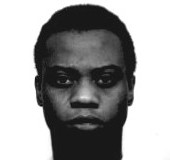
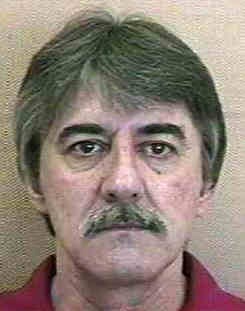
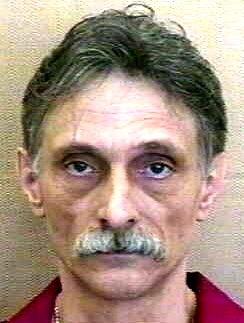
Charles Anthony Boyd
Murderer Brian Kevin Rosenfeld
Murderer · USA · 1985
Brian Kevin Rosenfeld Brian Kevin Rosenfeld was sentenced to three concurrent l…
23 victims
Brian Kevin Rosenfeld
Murderer · USA · 1985
Brian Kevin Rosenfeld Brian Kevin Rosenfeld was sentenced to three concurrent l…
23 victims
 Yahweh ben Yahweh
Murderer · USA · 1980
Yahweh ben Yahweh was born and legally named Hulon Mitchell Jr. (October 27, 19…
23 victims
Yahweh ben Yahweh
Murderer · USA · 1980
Yahweh ben Yahweh was born and legally named Hulon Mitchell Jr. (October 27, 19…
23 victims
 Russell Ellwood
Murderer · USA · 1991
Russell Ellwood was a former taxi driver. Authorities suspected him of killing…
20 victims
Russell Ellwood
Murderer · USA · 1991
Russell Ellwood was a former taxi driver. Authorities suspected him of killing…
20 victims
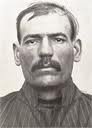 Stephanous Swart
Mass murderer · South Africa · 1927
Stephanus Andries Johannes Swart (1890 - 6 May 1927) was a South African farmer…
8 victims
Stephanous Swart
Mass murderer · South Africa · 1927
Stephanus Andries Johannes Swart (1890 - 6 May 1927) was a South African farmer…
8 victims
 Billy Wayne Waldrop
Murderer · USA · 1982
Name: Billy Wayne Waldrop · Case: United States Court of Appeals for the Eleven…
1 victim
Billy Wayne Waldrop
Murderer · USA · 1982
Name: Billy Wayne Waldrop · Case: United States Court of Appeals for the Eleven…
1 victim
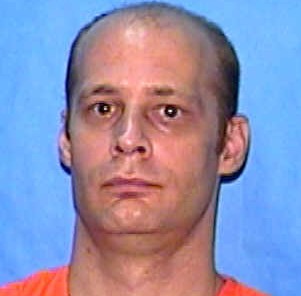 John Christopher Marquard
Murderer · USA · 1991
John Christopher Marquard was sentenced to death on February 5, 1993. The Flori…
1 victim
John Christopher Marquard
Murderer · USA · 1991
John Christopher Marquard was sentenced to death on February 5, 1993. The Flori…
1 victim
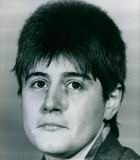 Michaela Roeder
Murderer · West Germany · 1984
Michaela Roeder, known as the “Angel of Death,” was a nurse who was charged in…
17 victims
Michaela Roeder
Murderer · West Germany · 1984
Michaela Roeder, known as the “Angel of Death,” was a nurse who was charged in…
17 victims
 Haji Mammadov
Murderer · Azerbaijan · 1995
Haji Mammadov was a former officer of the Crime Investigation Department of the…
11 victims
Haji Mammadov
Murderer · Azerbaijan · 1995
Haji Mammadov was a former officer of the Crime Investigation Department of the…
11 victims
- Gender
- male
- Country
- USA
- Location
- Dallas County, Texas, USA
- Date of birth
- August 17, 1959
- Age at first offence
- 27
- Characteristics
- rape, robbery, drug addict, history of mental illness
- Victim profile
- Tippawan Naksuwan, 37; Lashun Chappell Thomas, 22, and Mary Milligan, 21
- Method of murder
- Strangulation - St abbing with knife
- Date(s) of murder
- 1986 - 1987
- Years active
- 1986–1987
- Date of arrest
- April 15, 1987
- Status
-
Executed
Executed by lethal injection in Texas on August 5, 1999
Case record: Charles Anthony Boyd
Background
Charles Anthony Boyd was a previously convicted felon who was convicted of capital murder and sentenced to death. He was 39 years old at execution.
Boyd lived across the hall from Mary Milligan at the time of the murders. He lived with his brother from July to September 1986 at the Woodstock Apartments in northeast Dallas.
Amnesty International asked prison officials to spare Boyd so that his mental state could be reviewed. Amnesty International wrote that it was “deeply concerned that Charles Boyd, due to his severe mental retardation, was not totally responsible,” and stated that prison reports showed Boyd had an IQ of 67. Amnesty International also wrote: “His defense lawyers failed to investigate and present evidence of his mental retardation because they did not recognize that he might have such a problem.”
Boyd initially declined to make a final statement. After the drugs began flowing into his arms, he said:
"I want you all to know I did not do this crime. I asked for a 30-day stay for a DNA test so you know who did the crime." He then gasped and slipped into unconsciousness. He was pronounced dead at 6:16 p.m. CDT, 9 minutes after the lethal dose started.
The offence
On Monday, April 14, 1987, Mary Milligan’s naked body was found drowned and sexually assaulted in the bathtub of her North Dallas apartment. Mary Milligan was 21 years old.
Boyd was condemned for strangling and drowning 21-year-old Mary Milligan at her apartment April 13, 1987.
Boyd submerged his dead victims in a bathtub full of water. In one case, one of the victims was left in her bathtub for two weeks until a friend went to the apartment and found her.
Boyd’s motive was described as preying on helpless women. At the time, Milligan had a sprained ankle. Boyd also claimed that Milligan had insulted him, which led to his murdering her.
Russell Leachman, Milligan’s boyfriend at the time of the murder, disputed the scenario that Mary Milligan would have engaged Boyd in namecalling. He said:
“She was a wonderful person,”
“She had such a tender heart and would never call someone a name.”
At trial, prosecutors said Boyd committed burglary, robbery and sexual assault, making him eligible for the death penalty.
Defense attorneys suggested that jurors should find Boyd guilty of voluntary manslaughter because he was “emotionally disturbed” and because Boyd said in a confession that Milligan called him a name and that made him angry. A Dallas jury took only 10 minutes to sentence Boyd to death.
Boyd had been indicted in 1986 slayings of Tippawan Naksuwan, 37, and Lashun Chappell Thomas, 22. Those women were found stabbed in their bathrooms, and police said they were found in bathtubs in the apartment complex.
Investigation
Bill Senkel had been a Dallas Police Department (DPD) officer for 26 years. He was a close family friend of Mary Milligan’s and was now retired living in Mary’s hometown. Senkel found out about Mary’s death and immediately made a call to the DPD. He knew investigators working on the case and pleaded with them to use extra care. Senkel said:
“She (Mary) was a wonderful person,”
“She had a full life ahead of her. She will always be greatly missed in my heart. My wife and I took her in as one of our own.”
After Mary Milligan’s murder, Boyd was arrested the day after her murder when jewelry and other items taken from her apartment were pawned. Boyd was described as living near Mary and working as a night janitor at a bank building.
Boyd became a suspect after detectives learned of his past. Boyd had previous convictions for burglary and sexual assault and had been released from prison in November 1985 after serving less than half of a 5-year sentence.
Arrest
Boyd was arrested the day after Mary Milligan’s murder when jewelry and other items taken from her apartment were pawned.
Trial
Milligan’s trial began on Oct. 27, 1987. A week later, it took a Dallas jury 10 minutes to convict Boyd of Milligan’s murder.
Boyd tried only for Mary Milligan’s killing. The cases involving Tippawan Naksuwan and Lashun Chappell Thomas were dropped after Boyd was sentenced to die for Mary Milligan’s murder.
Boyd’s lawyer, Paul Brauchle, tried to get voluntary manslaughter charges instead of the death penalty “because Milligan gave him a reason, namecalling, to do this to her.”
Russell Leachman disagreed, stating Boyd was a serial killer in progress. Leachman said:
“Boyd was the most predatory and most dangerous individual on the streets,”
“He took something away from us that is irreplaceable. He was definitely on his way to becoming a true serial killer. I am just so glad he is off the street and can’t do this to other families.”
Boyd’s trial attorneys did not believe Boyd was retarded and told the court it was not an issue. After the conviction, Boyd tried to claim mental retardation.
A Dallas jury answered affirmatively the special sentencing issues.
Boyd’s IQ was described in multiple ways in the proceedings:
- Boyd was said to have an IQ of 60.
- Amnesty International said prison reports showed Boyd had an IQ of 67.
- In the federal appellate discussion, the prison packet evidence included an IQ of 67 and another prison packet stated his IQ was 80, and later testimony included IQ test results of 64 and 71 depending on the testing referenced.
Sentencing
Boyd was sentenced to death in December (December of 1987 is referenced elsewhere in the case narrative). He had been on death row since December 1987, 8 months after the death of Mary Milligan.
A jury took 10 minutes to sentence Boyd to death. The death sentence was imposed after the jury found the state proved beyond a reasonable doubt that all required special sentencing issues were answered affirmatively.
Appeals
Boyd sought to appeal in the federal courts after his conviction and sentencing.
Boyd requested a Certificate of Probable Cause (“CPC”) to appeal the district court’s denial of his petition for habeas corpus under 28 U.S.C. § 2254. He requested the CPC with claims including:
- Counsel was ineffective for failing to present mitigating evidence of his retardation to the jury at sentencing.
- The jury was prevented impermissibly from giving mitigating effect to evidence of his retardation and his positive character traits.
- The failure to instruct the jury on the parole implications of a life sentence in a capital case rendered the Texas sentencing scheme unconstitutional.
- The admission of extraneous offenses at the sentencing phase violated due process and the Eighth Amendment.
The appellate court denied Boyd’s request for a CPC. It also denied relief for the claims.
Federal appellate court discussion (U.S. Court of Appeals, Fifth Circuit) The Fifth Circuit’s decision described that:
- The Texas jury convicted Boyd of capital murder in 1987 and sentenced him to death.
- On direct appeal, the Texas Court of Criminal Appeals affirmed his conviction (referenced as Boyd v. State, 811 S.W.2d 105).
- The U.S. Supreme Court denied certiorari earlier referenced as cert. denied, 502 U.S. 971.
- Boyd filed a state habeas corpus application; relief was denied by the Texas Court of Criminal Appeals.
- A federal habeas petition was denied for all but two of Boyd’s claims, and an evidentiary hearing was held regarding ineffective assistance related to mental retardation evidence and a jury instruction issue under Penry v. Lynaugh. The district court adopted the findings of the magistrate judge and denied relief.
The Fifth Circuit concluded that counsel’s failure to develop and present evidence of Boyd’s mental retardation did not constitute deficient performance and did not prejudice the defense.
The Fifth Circuit also addressed Boyd’s claim under Penry regarding whether the jury could give effect to mitigating evidence, and concluded that Boyd had not substantially shown a constitutional deprivation based on the evidence of retardation presented at trial.
The Fifth Circuit addressed Boyd’s parole-instruction claim, stating that Simmons relief was foreclosed by Teague and that Simmons was inapplicable because Boyd would have been eligible for parole if he received a life sentence.
The Fifth Circuit addressed Boyd’s claim about the admission of unadjudicated offenses and limiting instructions at the punishment phase, concluding that evidence of extraneous offenses was relevant to the special issues and that the Constitution did not require a limiting instruction under the circumstances described.
Outcome
Boyd’s execution followed the denial of the federal CPC request. The U.S. Supreme Court earlier refused to review Boyd’s case.
Boyd’s execution occurred on Aug. 5, 1999. On the same date, Milligan’s mother, father, and sister watched Boyd as he was put to death for the murder of their daughter and sister.
Aftermath
Rus Leachman, Milligan’s boyfriend at the time of her death, said he was pleased to see the execution finally scheduled and made comments about Boyd’s dangerousness and his delay in carrying out executions.
Leachman said:
“Society will be better off without him,”
“He is a very dangerous person.”
Leachman also said:
“I am pleased to see the execution finally scheduled.”
and: “As an attorney, Mr. Leachman said, he understands why executions sometimes aren't carried out for several years.”
He also stated: “But the delay is often longer than it should be,”
“It is disappointing that it takes this long, especially when the evidence of guilt is pretty overwhelming.”
Apartment complex residents were described as terrorized after Boyd’s arrest.
Boyd had confessed after his arrest and was charged with all 3 slayings but tried only for Ms. Milligan’s killing. Besides tying him to items taken from the apartment and his confession, prosecutors also had forensic evidence from Ms. Milligan’s apartment to link him to her death.
Kevin Chapman, the former assistant district attorney in Dallas who prosecuted Boyd, said:
“I can't think about him without thinking about their families,”
“I wonder if her family wonders what ever happened to their little girl,”
“(Boyd) is the type this punishment was made for. If it's justified for anybody, Charlie deserves it. He had a 2nd chance. He had a job. He had a place to live. All he had to do is not kill people. And that's not too much to ask.”
Residents accustomed to leaving their doors unlocked were described as terrorized.
Milligan’s parents, sister and a cousin were among the people to watch Boyd die. In a prepared statement, they said:
“Our family has been in tremendous pain over the last 12 years since our daughter and sister was murdered,”
“This execution tonight will do nothing to restore our family as it was with her love, her laughter, her caring support for each of us and her joy in it. “
“We are relieved that no one else's family will have to suffer as all of us who loved Mary have had to do at the hands of Charles Boyd who has blatantly disregarded the laws of God, the laws of man and the value of human life.”
Boyd was described as an ex-convict who confessed to killing 3 women during a 10-month spree that became known as the North Dallas "bathroom slayings."
Boyd was described as the 18th condemned inmate to be put to death this year in Texas, and the 182nd overall since Texas resumed capital punishment on Dec. 7, 1982.
Other details
Charles Anthony Boyd was also described as a night janitor at a bank building.
The case narrative included a description that Boyd stole Mary Milligan’s car and jewelry after killing her.
At execution, it was stated that Boyd became the 2nd convicted killer to die in as many days in Texas and the 2nd of 6 death row inmates the state was set to execute within a 14-day period.
The decision text referenced dates and procedural details including:
- Feb. 12, 1999 for the appeal.
- Boyd filed a request for a CPC.
- Boyd filed his federal habeas petition on March 5, 1992.
- A request for a Certificate of Appealability (“COA”) was construed as a request for a CPC, filed on August 26, 1997.
Spotted an error, or have more information about this case?