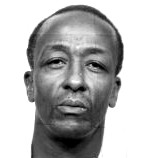
Edward Charles Pickens
Murderer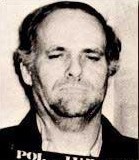 Ervil LeBaron
Murderer · USA · 1972
Ervil Morrell LeBaron (1925 to August 16, 1981) was the leader of a polygamous…
35 victims
Ervil LeBaron
Murderer · USA · 1972
Ervil Morrell LeBaron (1925 to August 16, 1981) was the leader of a polygamous…
35 victims
 Brian Kevin Rosenfeld
Murderer · USA · 1985
Brian Kevin Rosenfeld Brian Kevin Rosenfeld was sentenced to three concurrent l…
23 victims
Brian Kevin Rosenfeld
Murderer · USA · 1985
Brian Kevin Rosenfeld Brian Kevin Rosenfeld was sentenced to three concurrent l…
23 victims
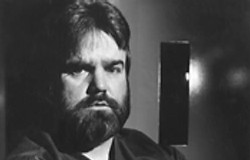 Marvin Gray
Murderer · USA · 1975
Marvin Gray was convicted killer who claimed responsibility for 23 slayings and…
23 victims
Marvin Gray
Murderer · USA · 1975
Marvin Gray was convicted killer who claimed responsibility for 23 slayings and…
23 victims
 Yahweh ben Yahweh
Murderer · USA · 1980
Yahweh ben Yahweh was born and legally named Hulon Mitchell Jr. (October 27, 19…
23 victims
Yahweh ben Yahweh
Murderer · USA · 1980
Yahweh ben Yahweh was born and legally named Hulon Mitchell Jr. (October 27, 19…
23 victims
 Mitsuhiro Kobayashi
Mass murderer · Japan · 2001
Mitsuhiro Kobayashi was a former taxi driver. During the trial, he admitted set…
5 victims
Mitsuhiro Kobayashi
Mass murderer · Japan · 2001
Mitsuhiro Kobayashi was a former taxi driver. During the trial, he admitted set…
5 victims
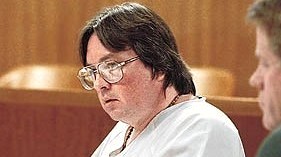 Floyd Tapson
Murderer? · USA · 1987
Floyd Tapson was convicted by a jury in the Thirteenth Judicial District Court,…
3 victims
Floyd Tapson
Murderer? · USA · 1987
Floyd Tapson was convicted by a jury in the Thirteenth Judicial District Court,…
3 victims
 Evelyn Dick
Murderer · Canada · 1944
Evelyn Dick was born to Donald MacLean and Alexandra MacLean on October 13, 192…
2 victims
Evelyn Dick
Murderer · Canada · 1944
Evelyn Dick was born to Donald MacLean and Alexandra MacLean on October 13, 192…
2 victims
 Madeleine Smith
Murderer? · United Kingdom · 1857
Madeleine Smith received a verdict of "not proven" on July 9, 1857. She died on…
1 victim
Madeleine Smith
Murderer? · United Kingdom · 1857
Madeleine Smith received a verdict of "not proven" on July 9, 1857. She died on…
1 victim
 Christine Paolilla
Homicide · USA · 2003
Christine Marie Paolilla was an American woman born on Long Island, New York on…
4 victims
Christine Paolilla
Homicide · USA · 2003
Christine Marie Paolilla was an American woman born on Long Island, New York on…
4 victims
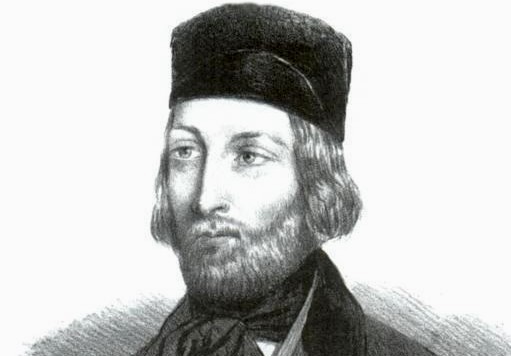 Hippolyte Visart de BOCARMÉ
Murderer · 1850
Hippolyte Visart de Bocarmé Hippolyte Visart de Bocarmé was executed by guillot…
1 victim
Hippolyte Visart de BOCARMÉ
Murderer · 1850
Hippolyte Visart de Bocarmé Hippolyte Visart de Bocarmé was executed by guillot…
1 victim
- Gender
- male
- Country
- USA
- Location
- Prairie/Arkansas County, Arkansas, USA
- Date of birth
- 1954
- Age at first offence
- 21
- Characteristics
- robbery, rape
- Victim profile
- Wesley Noble, 76 / ???
- Method of murder
- Shooting ( .22 caliber pistol)
- Date(s) of murder
- October 20, 1975
- Years active
- 1975
- Date of arrest
- —
- Status
-
Executed
Executed by electrocution in Arkansas on May 11, 1994
Case record: Edward Charles Pickens
Other details
Edward Charles Pickens was convicted of capital felony murder and was sentenced to death by electrocution.
Timeline
- October 20, 1975 — Edward Charles Pickens, Antonio Clark, and Sherwood Gooch entered a rural grocery store in Casscoe, Arkansas with a sawed-off shotgun and a .22 caliber pistol and robbed the store owner, the clerk, and seven customers; two robbers sexually assaulted the female clerk; the robbers shot multiple victims in the back of the head with the .22 caliber pistol and several were shot a second time after the pistol was reloaded; two victims including seventy-six year old Wesley Noble died; Pickens and Clark were identified as having been in possession of the weapons and as having done the shooting; Pickens was later apprehended after Memphis, Tennessee police chased and stopped a stolen vehicle carrying Pickens, Clark, and Gooch, and Pickens was found wearing the rape victim's wedding ring.
- October 1975 — Pickens was convicted for the October 1975 shooting death of Wesley Noble, a 76-year-old retired farmer.
- 1975 — Pickens was charged by information in Arkansas state court with murder in the first degree pursuant to Ark.Stat.Ann. § 41-2205 (current version at Ark.Stat.Ann. § 41-1502 (1977)).
- Several weeks prior to trial — The State amended the information to charge Pickens with capital felony murder pursuant to Ark.Stat.Ann. § 41-4702 (current version at Ark.Stat.Ann. § 41-1501 (1977)), which carried the possibility of a death sentence; Pickens was afforded a bifurcated jury trial.
- 1977 — After a two-day trial, the jury found Pickens guilty of the capital felony murder of Wesley Noble and sentenced him to death by electrocution; Pickens’ motion for a new trial was denied; the Arkansas Supreme Court affirmed the conviction and sentence in Pickens v. State, 261 Ark. 756, 551 S.W.2d 212 (1977) (en banc), cert. denied, 435 U.S. 909, 98 S.Ct. 1459, 55 L.Ed.2d 500 (1978).
- May 14, 1981 — Pickens filed a petition for a writ of habeas corpus pursuant to 28 U.S.C. § 2254 (1976) in federal district court, raising twenty separate points as grounds for relief; the district court issued an opinion denying the petition in its entirety: Pickens v. Lockhart, 542 F.Supp. 585 (E.D.Ark.1982).
- 1983 — The United States Court of Appeals for the Eighth Circuit considered Pickens’ appeal: Edward Charles Pickens, Appellant, v. A.I. Lockhart, Director, Arkansas Department of Corrections, Appellee, 714 F.2d 1455; submitted Feb. 2, 1983; decided Aug. 12, 1983.
- September 2, 1980 — Pickens sought postconviction relief under Arkansas Criminal Procedure Rule 37.
- 1982 — The district court considered the issue of Witherspoon and concluded no evidentiary hearing was required: Pickens v. Lockhart, 542 F.Supp. at 606.
- 1985 — After the first resentencing proceeding ended in a mistrial, Pickens filed applications for writs of mandamus, certiorari and error coram nobis in the state supreme court; all these writs were denied in Pickens v. State, 284 Ark. 506, 683 S.W.2d 614 (1985).
- 1985 — In 1985 the resentencing jury sentenced Pickens to death; the state supreme court reversed because the trial court erroneously limited the proof of mitigating circumstances to a time period before the murder was committed: Pickens v. State, 292 Ark. 362, 730 S.W.2d 230 (cert. denied, 484 U.S. 917, 108 S.Ct. 269, 98 L.Ed.2d 226 (1987)).
- 1988 — A second resentencing jury again imposed the death penalty; the state supreme court affirmed: Pickens v. State, 301 Ark. 244, 783 S.W.2d 341 (cert. denied, 497 U.S. 1011, 110 S.Ct. 3257, 111 L.Ed.2d 766 (1990)).
- 1990 — Post-conviction relief was denied in Pickens v. State, No. CR 89-94, 1990 WL 210641 (Ark.Sup.Ct. Dec. 17, 1990) (per curiam), cert. denied, --- U.S. ----, 111 S.Ct. 2044, 114 L.Ed.2d 128 (1991).
- 1992 — Pickens’ second federal habeas corpus petition reached final judgment in the district court: Pickens v. Lockhart, 802 F.Supp. 208 (E.D.Ark.1992); this appeal followed.
- September 24, 1993 — The United States Court of Appeals for the Eighth Circuit affirmed denial of the second petition of writ of habeas corpus in Edward Charles Pickens, Appellant, v. A.L. Lockhart, Director, ADC, Appellee, No. 92-3135; submitted April 12, 1993; decided Sept. 24, 1993.
- October 29, 1993 — Rehearing and suggestion for rehearing en banc was denied.
- May 11, 1994 — Pickens was executed by electrocution in Arkansas.
- May 12, 1994 — The New York Times reported Pickens’ execution and related procedural history.
Background
Pickens was charged in Arkansas state court with murder in the first degree pursuant to Ark.Stat.Ann. § 41-1502 (1977)). Several weeks prior to trial, the State amended the information to charge Pickens with capital felony murder pursuant to Ark.Stat.Ann. § 41-1501 (1977)), carrying the possibility of a death sentence. Because of the death penalty possibility, Pickens was afforded a bifurcated jury trial with a guilt-or-innocence phase and a penalty phase.
The offence
On the afternoon of October 20, 1975, Pickens, Antonio Clark, and Sherwood Gooch entered a rural grocery store in Casscoe, Arkansas with a sawed-off shotgun and a .22 caliber pistol. They robbed the owner, the clerk, and seven customers in the store. Two of the robbers raped the female clerk. They then made their victims lie face down on the floor and shot seven of them in the back of the head with the .22 caliber pistol. Several victims were shot a second time after the pistol was reloaded. Two victims including seventy-six year old Wesley Noble died; Noble was one of those shot a second time. The store owner later implicated Clark and Pickens in the shootings and absolved Gooch from any of the firing. The store owner testified that the dark-complexioned men did the shooting and the light-complexioned man did not. Another witness testified that Pickens had possession of the shotgun while the robbery was in progress. The female clerk testified that Pickens had possession of the .22 pistol and she did not know whether he fired the shots.
Investigation
Later the same evening, Memphis, Tennessee police, acting on a prostitute's tip, chased and stopped a stolen vehicle carrying Clark, Gooch, and Pickens. The occupants fled, but Gooch and Pickens were quickly apprehended. The car contained items taken in the robbery, and Pickens was found wearing the rape victim's wedding ring. Pickens was interrogated by Memphis and Arkansas police officers and confessed to participating in the armed robbery of the Casscoe grocery store. He identified Antonio Clark as the killer and denied firing the fatal shots.
Arrest
Pickens was apprehended after the Memphis, Tennessee police stopped a stolen vehicle carrying Pickens, Clark, and Gooch based on the prostitute’s tip. Pickens was found wearing the rape victim's wedding ring.
Trial
In 1975 Pickens was charged by information in Arkansas state court with murder in the first degree under Ark.Stat.Ann. § 41-1502 (1977)). Several weeks prior to trial, the information was amended to charge Pickens with capital felony murder under Ark.Stat.Ann. § 41-1501 (1977)), carrying the possibility of a death sentence, and Pickens received a bifurcated jury trial under Ark.Stat.Ann. § 41-1301 (1977).
Guilt phase
After a two-day trial, the jury found Pickens guilty of the capital felony murder of Wesley Noble and sentenced him to death by electrocution. Pickens’ motion for a new trial was denied. His conviction and sentence were affirmed by the Arkansas Supreme Court in Pickens v. State, 261 Ark. denied, 435 U.S. 909, 98 S.Ct. 1459, 55 L.Ed.2d 500 (1978).
The facts described in appellate proceedings included that Pickens, Clark, and Gooch entered the Casscoe grocery store armed with the sawed-off shotgun and .22 caliber pistol; robbed the owner, the clerk, and seven customers; sexually assaulted the female clerk; made the victims lie face down; shot seven victims in the back of the head; and reloaded and shot some victims again; and that Noble was shot twice.
Jury instructions and principal/accessory issues
In the guilt-innocence phase, the trial court instructed the jury:
“Members of the jury, you are instructed that in all criminal cases the distinction between accessories and principals has been abolished and that accessories and principals are subject to the same punishment. The law declares an accessory to be any person who stands by, aids, abets or assists, or who not being present, aiding, abetting or assisting, hath advised and encouraged the perpetration of the crime. Therefore, if you find that this defendant aided, abetted or assisted in the perpetration of the crime you shall assess his punishment as if he were a principal. Jury instruction 9A.”
Pickens’ legal arguments on appeal included the contention that the instruction misrepresented Arkansas law and prejudiced him.
The appellate record also described an instruction:
“Instruction 10A. … the jury was instructed that if the defendant ‘proved his affirmative defense you must acquit the defendant of capital felony murder.’”
The affirmative defense described in the appellate record was that the defendant “was not the only participant to the offense and that he did not participate in the actual commission of the homicide nor did he in any way solicit, command, induce, procure, counsel or aid its commission.”
Sentencing
At the close of the prosecution’s case in the penalty phase, the State called two witnesses who testified that they had been shot during the robbery. They did not identify who shot them. The State drew the jury’s attention to Pickens’ prior conviction and sentence in Michigan for unarmed robbery but inaccurately characterized it as a conviction for “armed robbery.” Plant did not object to the prosecutor’s misstatement. At the close of the prosecution’s case, Plant stated: “I have nothing to present.” Plant put on no evidence in the sentencing phase.
The trial judge read the verdict forms to the jury, and the jury found the presence of three aggravating circumstances:
- that the defendant had been previously convicted of a felony involving use or threat of violence;
- that the defendant knowingly created a great risk of death to persons in addition to the victim; and
- that the capital felony was committed for the purpose of avoiding lawful arrest. The jury found no mitigating circumstances and sentenced Pickens to death by electrocution.
Mitigating circumstances (name and content)
The appellate record described a verdict form labeled “Mitigating Circumstances,” with a check mark under “(d)” indicating:
“(d) Place check mark in the appropriate space: ( ) The capital felony was committed by another person and the Defendant was an accomplice or his participation relatively minor. (X) The capital felony was not committed by another person and the Defendant was not an accomplice or his participation relatively minor.”
In later proceedings, Pickens argued that he was prejudiced by failure to present evidence in mitigation and by erroneous jury instruction 9A.
Appeals
1977 direct appeal
Pickens’ conviction and sentence were affirmed by the Arkansas Supreme Court in Pickens v. State, 261 Ark. denied, 435 U.S. 909, 98 S.Ct. 1459, 55 L.Ed.2d 500 (1978).
First federal habeas appeal (Eighth Circuit)
Pickens’ first federal habeas corpus petition in district court was denied: Pickens v. Lockhart, 542 F.Supp. 585 (E.D.Ark.1982).
In the Eighth Circuit matter, the court addressed Pickens’ contention that he did not receive effective assistance of counsel under the sixth and fourteenth amendments in either phase of the bifurcated capital felony murder trial. The Eighth Circuit found:
“We find that Pickens' counsel failed to exercise the customary skills and diligence that a reasonably competent attorney would perform under similar circumstances in the penalty phase of the trial, thereby violating the sixth and fourteenth amendments of the United States Constitution; we vacate the judgment of the district court and remand with directions.”
The Eighth Circuit’s analysis included claims of counsel’s failure to interview law-enforcement officers, failure to object to venue, failure to object to the State’s amendment of the information, failure to investigate and apprise the jury of Clark’s extensive and violent criminal record, and failure to object to the trial court’s erroneous instruction on principals and accessories. It also addressed failure to present evidence in mitigation in the penalty phase and prejudicial effect of jury instruction 9A. The Eighth Circuit concluded that the death sentence must be vacated and remanded, instructing that the State vacate the death sentence and either reduce the sentence to life without parole or conduct a new sentencing procedure; if the State did not order a new sentence within a reasonable time frame determined by the district court, the petition for a writ of habeas corpus would be granted.
The opinion included a concurring and dissenting statement by HENLEY, Senior Circuit Judge, which stated that he concurred in the holding that Pickens was lawfully convicted but would uphold the death penalty largely on the district court’s reasoning.
Second federal habeas appeal (Eighth Circuit 1993)
Pickens later appealed the denial of his second federal habeas corpus petition. The Eighth Circuit affirmed the district court’s denial in Edward Charles Pickens, Appellant, v. A.L. 92-3135, with dates of submission and decision provided in the record. In that appeal, Pickens argued multiple due process and related claims, including:
- that habeas review of his coerced confession claim was erroneously procedurally barred;
- denial of due process for improper denial of full complement of twelve peremptory challenges;
- improper exclusion of prospective juror Rosemary Horner for Witherspoon reasons;
- denial of relief regarding claims about prosecutorial subornation of perjury by special prosecutor Lassiter connected to Goacher’s changed testimony;
- verdict forms unanimity on mitigating circumstances;
- ex post facto violation regarding the resentencing statute;
- improper prosecutor statements during opening and closing arguments;
- improper impeachment of Father Louis Franz;
- and claims that the jury improperly ignored mitigating evidence and that the sentence was disproportionate.
The Eighth Circuit affirmed, including holdings that the coerced confession claim was procedurally barred and that the excusing of Horner for cause did not violate constitutional rights. It also held there was no basis for setting aside the conviction on perjured testimony as a result of prosecutorial misconduct, and that the comparative proportionality review was not constitutionally required, while noting Arkansas conducted such a review.
Outcome
The death sentence was vacated and remanded for resentencing proceedings following ineffective assistance findings and prejudicial error in the penalty phase and jury instruction issues.
The resentencing proceedings resulted in death sentences again being imposed. A first resentencing ended in a mistrial after the store owner’s testimony about who did the shooting changed during voir dire. In 1985 the resentencing jury sentenced Pickens to death; the state supreme court reversed due to erroneous limitation of mitigating proof timing. In 1988 a second resentencing jury again imposed the death penalty; the state supreme court affirmed. Post-conviction relief was denied in 1990.
The Eighth Circuit affirmed denial of habeas relief on the second petition and the execution occurred by electrocution in Arkansas on May 11, 1994.
Aftermath
Pickens was executed by electrocution in Arkansas on May 11, 1994.
Spotted an error, or have more information about this case?