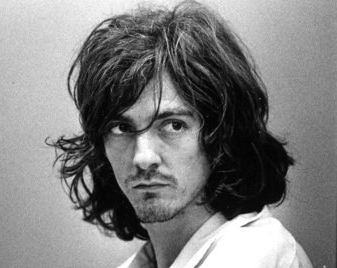
David Lee Powell
Murderer Ervil LeBaron
Murderer · USA · 1972
Ervil Morrell LeBaron (1925 to August 16, 1981) was the leader of a polygamous…
35 victims
Ervil LeBaron
Murderer · USA · 1972
Ervil Morrell LeBaron (1925 to August 16, 1981) was the leader of a polygamous…
35 victims
 Brian Kevin Rosenfeld
Murderer · USA · 1985
Brian Kevin Rosenfeld Brian Kevin Rosenfeld was sentenced to three concurrent l…
23 victims
Brian Kevin Rosenfeld
Murderer · USA · 1985
Brian Kevin Rosenfeld Brian Kevin Rosenfeld was sentenced to three concurrent l…
23 victims
 Marvin Gray
Murderer · USA · 1975
Marvin Gray was convicted killer who claimed responsibility for 23 slayings and…
23 victims
Marvin Gray
Murderer · USA · 1975
Marvin Gray was convicted killer who claimed responsibility for 23 slayings and…
23 victims
 Yahweh ben Yahweh
Murderer · USA · 1980
Yahweh ben Yahweh was born and legally named Hulon Mitchell Jr. (October 27, 19…
23 victims
Yahweh ben Yahweh
Murderer · USA · 1980
Yahweh ben Yahweh was born and legally named Hulon Mitchell Jr. (October 27, 19…
23 victims
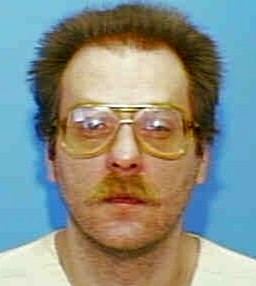 John Joseph Fautenberry
Serial killer · USA · 1990
John Joseph Fautenberry was a former Oregon truck driver. Fautenberry was broug…
6 victims
John Joseph Fautenberry
Serial killer · USA · 1990
John Joseph Fautenberry was a former Oregon truck driver. Fautenberry was broug…
6 victims
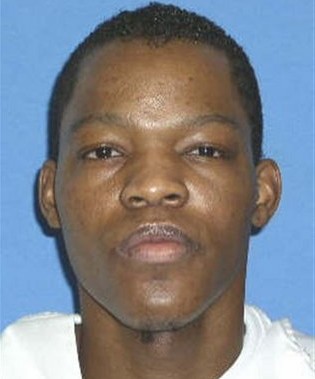 Derrick Lamone Johnson
Murderer · USA · 1999
Derrick Lamone Johnson was a Black male with black hair and brown eyes. He was…
1 victim
Derrick Lamone Johnson
Murderer · USA · 1999
Derrick Lamone Johnson was a Black male with black hair and brown eyes. He was…
1 victim
 Alan Eugene Miller
Murderer · USA · 1999
Alan Eugene Miller was sentenced to death on July 31, 2000. Miller shot two co-…
3 victims
Alan Eugene Miller
Murderer · USA · 1999
Alan Eugene Miller was sentenced to death on July 31, 2000. Miller shot two co-…
3 victims
 Francis Heaulme
Serial killer · France · 1984
Francis Heaulme was sentenced to several life sentences in different trials, 19…
9 victims
Francis Heaulme
Serial killer · France · 1984
Francis Heaulme was sentenced to several life sentences in different trials, 19…
9 victims
- Gender
- male
- Country
- USA
- Location
- Travis County, Texas, USA
- Date of birth
- January 13, 1951
- Age at first offence
- 27
- Characteristics
- to avoid arrest
- Victim profile
- Ralph Ablanedo, 26 (Austin police officer)
- Method of murder
- Shooting ( AK-47 machine gun)
- Date(s) of murder
- May 18, 1978
- Years active
- 1978
- Date of arrest
- Same day
- Status
-
Executed
Executed by lethal injection in Texas on June 15, 2010
Case overview
David Lee Powell was executed by lethal injection in Texas on June 15, 2010. He was convicted for the 1978 slaying of Austin police Officer Ralph Ablanedo, and his punishment was carried out after extended state and federal appellate proceedings.
Background
David Lee Powell was 59 years old when he was executed on June 15, 2010. The victim was Austin police Officer Ralph Ablanedo, 26 years old at the time of his death. Ralph Ablanedo was killed after a traffic stop in Austin, Texas, on May 18, 1978.
Powell had been scheduled for execution after 6 p.m. on Tuesday, June 15. Warden Charles O’Reilly invited Powell to speak, and Powell declined to make a final statement.
Powell had no response when asked by a warden for a final statement. As lethal injection drugs began flowing into his arms, Powell gasped slightly, began snoring quietly, then showed no movement. He was pronounced dead nine minutes later, at 6:19 p.m. CDT. Another account states he was pronounced dead nine minutes after the lethal dose began and that he died nine minutes later at 6:19 p.m.
Family members and others were present for the execution. Seven members of the victim’s family watched silently from a nearby window. About 150 retired and active Austin police officers traveled to Huntsville and waited outside the downtown prison as the execution was carried out. Some police officers wore black “Journey to Justice” T-shirts. After being escorted to the prison by Huntsville police, the Austin officers assembled in seven lines as an honor guard for the slain officer’s family and saluted as Bruce and Judy Mills; Ablanedo’s 87-year-old mother, Betsy; and other family members were greeted and given hugs by Austin Police Chief Art Acevedo.
Nearby protesters spoke during the execution proceedings. One protest message stated: “We are here because in one hour the State of Texas is going to murder David Lee Powell,” and “David Powell the 27-year-old drug addict is not the same person as the sober and remorseful 59-year-old man who is being executed today,” was attributed to Nell Warnes, who had visited with Powell since 2004. Another protest statement was made silently as protesters stood about 100 yards away.
Powell spent his final day packing personal property—bound and loose papers—into about 10 orange mesh bags for delivery to Huntsville’s Hospitality House for pickup by relatives not present in Huntsville.
The offence
Traffic stop and dispatch checks
The evening of May 17, 1978 included an Austin police Officer Ralph Ablanedo stop of a car and issuance of a citation to the driver for failing to display a driver’s license. Ablanedo asked the dispatcher to check for local warrants on the driver and passenger David Lee Powell.
The dispatcher found no warrants on the driver. As the car pulled away, Ablanedo learned from the dispatcher that there was a possible warrant on Powell for misdemeanor theft. Ablanedo stopped the vehicle again.
Another account states that shortly after midnight on May 18, 1978, Officer Ablanedo was on duty and received a call for a check through the National Criminal Information center (NCIC) on a person named Sheila Margaret Meinert, and later requested a check on David Lee Powell. The dispatcher computer check showed a “possible wanted” on Powell, described to Ablanedo as “... a possible misdemeanor theft.”
Shooting of Officer Ralph Ablanedo
Powell shot at Officer Ablanedo through the car’s back window with an AK-47. The first set of shots knocked Ablanedo to the ground. The AK-47 was set to semi-automatic mode, requiring more than one pull of the trigger, and Powell then switched to automatic mode and fired at Ablanedo again, knocking the officer to the ground a second time.
One account states Ablanedo suffered ten gunshot wounds and died on arrival at the hospital. Another account states Ablanedo suffered ten gunshot wounds and died on the operating table at the hospital about an hour after he was shot. Multiple witnesses described police radio and statements by Ablanedo, including repeated statements attributed to Ablanedo such as “that damn girl” or “that Goddamn girl,” with testimony from various witnesses and an emergency room physician.
A quote attributed to Ablanedo is included in testimony summarized elsewhere: “He got me with a shotgun.” Another narrative describes a claim by Mills that Ablanedo said the weapon involved a shotgun or machine gun, and that Ablanedo told Mills twice that “He got me with the shotgun.”
Shootout with police officers and grenade
Police officers tracked Powell’s car to an apartment complex parking lot. Powell fired on the officers with his AK-47 from inside the vehicle and threw a live hand grenade in the direction of officers, then fled from the car.
One account says the hand grenade did not explode because Powell had not removed all of the safeties. Another account provides more details, stating the grenade’s pin was discovered outside the passenger side of the Mustang where the person making the throwing motion had been. The safety clip was not removed. The grenade had a kill radius of 16 feet and a casualty radius of 49 feet and did not explode due to the safety clip remaining in place. One account adds that the state presented evidence that it was likely only someone who had been in the Army would have been familiar with the concept of a safety clip (also known as a jungle clip), which was added during the Vietnam War design to prevent accidental detonation if the pin got caught.
Arrest
Police arrested Powell in the early morning hours in bushes on the grounds of a nearby school. Another account states Powell was found hiding behind shrubbery on the grounds of the high school about 4:00 a.m. on May 18 and arrested without incident.
Powell’s .45 caliber pistol was found on the ground near where he was hiding, and his backpack containing seven packages of high-grade methamphetamine was discovered, with another account stating methamphetamine with a street value of approximately $5,000 was found hanging in a tree.
Police also discovered fifteen live rounds in Powell’s car after investigation revealed Powell had fired at least twenty-three rounds. Police retrieved from Powell’s car a book entitled Book of Rifles, tabbed at pages discussing a Soviet AK-47 rifle, and the book contained loose notes in Powell’s handwriting about different types and models of weapons and notes referring to other books on weapons. Books and notes regarding guerrilla warfare and a pair of handcuffs were also found in the car.
Police seized additional items from Powell’s residence, including another hand grenade, additional weapons and ammunition, more books and manuals on weaponry and combat, the components of a methamphetamine lab, and three vials of methamphetamine.
Powell was convicted and sentenced to death after the 1978 slaying.
Investigation
A dispatch workflow included the dispatcher finding no warrants on the driver, then reporting a possible warrant on Powell for misdemeanor theft, which led Ablanedo to stop the vehicle again. The shooting occurred as Ablanedo approached the car.
The hand grenade failed to explode due to not removing all safeties, with details describing the safety clip/jungle clip not removed and the location of the pin discovery.
Additional evidence included books, handwritten notes, weapons and ammunition, handcuffs, methamphetamine packages, and materials and components associated with a methamphetamine lab.
Trial
Conviction and sentencing
On September 28, 1978, Powell was convicted and sentenced to death by a Travis County jury for capital murder.
At trial, Powell also raised an insanity defense at the time of the offense. The insanity defense included testimony by Dr. Emanuel Tenay, who testified Powell had been insane on May 18, 1978 at the time Officer Ablanedo was shot and killed, believing Powell was suffering from paranoid schizophrenia due to prolonged use of psychoactive drugs such as amphetamine and methamphetamine.
The State countered with testimony from Dr. Richard Coons, a psychiatrist, and Dr. George Parker, a psychologist. Dr. Coons met with and examined Powell on four occasions on May 18, May 23, May 29 and June 4, 1978, and testified that there was no indication that Powell had been insane on May 18, 1978, disclaimed observing evidence that Powell was suffering from paranoid schizophrenia, and stated he had no indication of that condition. Dr. Parker met with Powell in June 25 and July 2, 1978 at the Travis County jail, administered standardized psychological tests, found no organic difficulties, found Powell very intelligent and articulate with an IQ of 128, and characterized personality as impulsive, high-energy, rebellious, non-conforming, immature and somewhat egocentric. Dr. Parker testified Powell was sane under Texas law and that testing showed no indication of paranoid schizophrenia.
The appellate narrative includes a discussion of penalty-stage testimony on future dangerousness, including Dr. Coons and Dr. Parker providing opinions about future dangerousness and a continuing threat.
Prior or contemporaneous accusations and related testimony
During a later account, it is stated that the computer system to check warrants was down and the occupants were initially allowed to leave; the system later revealed Powell was wanted for theft and writing bad checks, which led to another stop. Another account states there was still a check process via NCIC and local warrant status as calls were made and officers were dispatched.
Witnesses described gunfire at the apartment complex, automatic weapon fire, shootout sequence where no one was shot, and witness observations of the throwing motion over the top of the Mustang and Powell’s running toward the high school grounds.
Testimony in the summarized appellate narrative also included an account that in January 1978, after being evicted from an apartment for nonpayment of rent and personal property being impounded, Powell broke into the landlord’s storage facility to remove his belongings; when maintenance employee Lee Ramos encountered him, Ramos fled and Powell chased him and tried to get him to come outside.
The penalty stage evidence described included a search of Powell’s house after the offense revealing a hand grenade, two cannisters of ether, a box of .45 caliber ammunition, a box of 7.62 mm Russian ammunition, and a set of die used in processing ammunition for an AK-47 Russian automatic rifle, along with beakers, chemicals and paraphernalia. The police seized three small vials containing methamphetamine with a total weight of approximately one gram.
Sentencing
First death sentence
The first death sentence was imposed on September 28, 1978.
Direct appeal history and subsequent death sentences
The procedural history included multiple decisions:
- On July 8, 1987, The Texas Court of Criminal Appeals affirmed the conviction and sentence on direct appeal.
- On June 30, 1988, the U.S. Supreme Court vacated The Texas Court of Criminal Appeals’ judgment and remanded the case.
- On January 11, 1989, The Texas Court of Criminal Appeals once again affirmed the conviction and death sentence.
- On July 3, 1989, The United States Supreme Court reversed Powell’s conviction.
- On November 21, 1991, Powell was convicted and sentenced to death a second time.
- On December 7, 1994, The Texas Court of Criminal Appeals affirmed the conviction on direct appeal, but vacated the death sentence.
- On Oct 2, 1995, Powell’s petition for writ of certiorari to the U.S. Supreme Court was denied.
- On March 6, 1999, after a third punishment trial, Powell was again sentenced to death.
- On January 16, 2002, Powell’s death sentence was affirmed by the Texas Court of Criminal Appeals on direct appeal.
- On November 4, 2002, The U.S. Supreme Court denied certiorari review.
- On September 25, 2002, The Texas Court of Criminal Appeals denied Powell’s application for writ of habeas corpus.
- On April 16, 2008, the U.S. District Court denied a federal petition for writ of habeas corpus.
- On July 16, 2008 the U.S. Court of Appeals granted a certificate of appealability but affirmed the denial of habeas relief.
- On March 23, 2009, The U.S. Supreme Court denied Powell’s subsequent petition for writ of certiorari on March 23, 2009.
- On September 30, 2009 a second application for state habeas was dismissed by the Texas Court of Criminal Appeals.
The procedural history also states that on September 28, 1978 Powell was convicted and sentenced to death by a Travis County jury for capital murder.
Appeals
Powell pursued multiple appeals and post-conviction proceedings. One narrative states a 5th U.S. Circuit Court of Appeals decision issued Wednesday ruled that a fourth trial would not be granted, which paved the way for execution. Another narrative states the U.S. Supreme Court refused to review the death sentence in March 2009, moving Powell closer to being executed.
The accounts also describe that Powell’s attorneys argued unsuccessfully that exemplary behavior on death row over the past three decades showed jurors were wrong to conclude he would be a continuing danger. Travis County prosecutors responded that jurors in two retrials ordered after successful appeals in 1991 and 1999 had considered evidence of Powell’s good behavior and still sentenced him to death.
One appeal described that Powell’s legal arguments included claims that prosecutors did not disclose information in a timely manner including documents from the parole file of Powell’s girlfriend, Sheila Meinert. Those documents allegedly asserted that Meinert fired shots at Ablanedo and other officers and threw a hand grenade; Meinert later was found guilty of being a party to attempted capital murder and served four years of a 15-year sentence.
A quoted statement by prosecutor Robert Smith in the 1991 trial is included:
“I want you to picture the blood of Ralph Ablanedo seeping through his bulletproof vest. David Powell is here because of a character disorder that cannot be rectified.”
Another quoted passage by prosecutor Terry Keel includes:
“Does this make you feel safe? The death penalty is society's self-defense. You have a very manipulative, very dangerous individual here.”
In addition, a Magistrate Judge Andrew Austin quote in the narrative states:
“Powell contends that he was 'a different person' when he was retried in 1999. Regardless of whether this court might agree with that statement, the jury was not compelled to accept that contention, and it plainly did not,”
The narrative also includes a quote from Bruce Mills:
“Relief would be the word to describe it,” Mills said. “No more hearings. No more appeals.”
Another quote from Powell appears from a December 2009 letter, with verbatim content:
“I am infinitely sorry that I killed Ralph Ablanedo,”
“In a few frightful seconds, I stole from you and the world the precious and irreplaceable life of a good man.”
The narrative includes additional statements by Powell, including remarks in the visitors lounge before interviews with newspaper reporters, describing an “enormously evil act” and stating:
“But every person is more than the worst thing they have ever done, and I am no exception.”
Another quote attributed to Powell includes:
“Thirty-two years ago, I was responsible for an enormously evil act, and it must have affected most or all people who lived in Austin and their level of comfort, the way they saw themselves and their neighbors,”
Outcome
Powell was executed by lethal injection in Texas on June 15, 2010 at 6:19 p.m. CDT. He was pronounced dead nine minutes after lethal injection began. The death concluded the 32-year case.
Other details
Prior criminal history
Powell’s capital murder conviction was his only conviction. The narrative lists prior arrests for:
- auto theft in Travis County;
- auto theft and possession of dangerous drugs in Travis County;
- obscenity in New Orleans, Louisiana;
- petty theft in Travis.
Prison behavior and mental health
One narrative describes that Powell’s exemplary behavior and supporters’ claims included that he was disciplined for minor rules infractions such as having too many prison-issued socks or refusing to remove a poster from his cell wall. Testimony described him as respectful and nonviolent, with a 14-year guard Mark Morrow stating:
“He was very quiet, always well-mannered,”
and “Not a troublemaker, by any means.”
A psychiatrist Seth Silverman of Houston concluded Powell posed “virtually no risk” of future violence and described that Powell had been treating with psychotherapy after becoming convinced that “voices from androidlike robots were telling him to commit suicide,” with symptoms disappearing within several months.
Hearon’s nonprofit Capacity for Justice presented Powell with its first Brothers’ Keeper Humanitarian Award in 2008, and Powell was described as helping speed accommodations for deaf and wheelchair-using prisoners at the Travis County Jail and connecting disabled death row inmates with outside help.
A separate discussion notes that Powell’s family had a history of mental illness, and describes family members including Clem Struve and Marjorie Powell. Another account states Powell had been medicating himself with street drugs, dropped out of the University of Texas in 1970, and slid deeper into addiction over the next eight years.
Letter and responsibility
A hand-written letter to the Ablanedo family included Powell’s apology and responsibility statement, with additional explanation of regret and a spiritual and moral obligation. The narrative also includes that Powell encouraged others to stay away from watching the execution to avoid being damaged by what they witnessed and stated:
“I have encouraged everybody to stay away, to be honest. Nonetheless, there will be some there.”
The narrative describes Powell’s efforts to explain himself during his final day, including his first-ever interview with newspaper reporters while in cuffs unlocked through a hole in a metal door behind him.
Victim family details and related persons
Ralph Ablanedo was described as having been a father of two boys aged 5 and 1½ at the time of the shooting, and as married to his wife Judy. Ablanedo’s sister was Irene Ablanedo. Another account describes Ablanedo’s widowed wife Judy and Bruce and Judy Mills, where Bruce Mills was a former Austin officer who was Ablanedo’s friend and later married Ablanedo’s widow and adopted their two sons.
Betsy was identified as Ablanedo’s mother and was 87 years old at the time of the execution. Betsy Ablanedo was among those greeted by Chief Art Acevedo.
The narratives also mention family members: David Mills and Steve Mills as sons of Bruce and Judy Mills, and Armand Ablanedo and Irene Ablanedo as siblings involved in plans for witness room attendance.
Materials and evidence specifics mentioned
Evidence recovered included:
- AK-47 rifle (described as set to semi-automatic then switched to automatic);
- .45 caliber automatic pistol;
- live hand grenade that failed to explode;
- seven packages of high-grade methamphetamine in Powell’s backpack (and another account states methamphetamine of about $5,000 street value);
- book entitled “Book of Rifles” with tabbed pages discussing a Soviet AK-47;
- loose notes in Powell’s handwriting about weapons and notes referring to other books on weapons;
- books and notes regarding guerrilla warfare and a pair of handcuffs;
- .45 caliber handgun found near where Powell was hiding;
- additional weapons and ammunition, more books and manuals on weaponry and combat;
- components of a methamphetamine lab;
- three vials of methamphetamine.
Named individuals mentioned in connection with execution proceedings
Austin Police Department Chief Art Acevedo spoke publicly. Wayne Benson was identified as president of the Austin Police Officers Association and made statements regarding relief and sadness. Wayne Vincent and Wayne Vincent is identified as Austin Police Union President in one narrative. Nell Warnes was identified as someone who visited Powell since 2004.
Prosecutors quoted included Robert Smith and Terry Keel. Defense counsel named included Richard Burr.
The procedural and judicial actors mentioned included Travis County jury, Travis County District Attorney Rosemary Lehmberg, Texas Court of Criminal Appeals and United States Supreme Court, and U.S. District Court and U.S. Court of Appeals. A Magistrate Judge Andrew Austin is referenced.
Quoted statements (verbatim)
Prosecutor Robert Smith (1991 trial):
“I want you to picture the blood of Ralph Ablanedo seeping through his bulletproof vest,” prosecutor Robert Smith told jurors in 1991. “David Powell is here because of a character disorder that cannot be rectified.”
Prosecutor Terry Keel (1991 trial):
Bruce Mills (reaction to execution):
Austin Police Chief Art Acevedo (message to community):
“We’re not here to gloat or to celebrate a death,” Austin Police Department Chief Art Acevedo said. “We’re here to celebrate a life, and that is the life of Officer Ablanedo.”
Wayne Benson (Austin Police Officers Association):
“While we do not take lightly today's events, there is a sense of relief ... as the passage of time has allowed for healing,” said Wayne Benson, president of the Austin Police Officers Association. “However, no amount of time will relieve the sadness.”
Powell letter (December 2009):
“I am infinitely sorry that I killed Ralph Ablanedo,” Powell said in a December 2009 letter, intended for the officer's family and kept in the inmate’s court file. “In a few frightful seconds, I stole from you and the world the precious and irreplaceable life of a good man.”
Powell interview statement:
“And no apology I could give would be powerful enough to express my regret for that.
Protest microphone (execution site):
“We are here because in one hour the State of Texas is going to murder David Lee Powell,”
Nell Warnes (protest-related statement in narrative):
“David Powell the 27-year-old drug addict is not the same person as the sober and remorseful 59-year-old man who is being executed today,”
Magistrate Judge Andrew Austin (2005 quote in narrative):
“Powell contends that he was 'a different person' when he was retried in 1999. Regardless of whether this court might agree with that statement, the jury was not compelled to accept that contention, and it plainly did not,” Austin wrote in 2005, adding that a federal appeals court has “explicitly rejected the argument that improving oneself after committing a heinous crime prevents a jury from concluding that one is a future danger.”
Spotted an error, or have more information about this case?