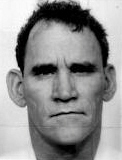
James Rexford Powell
Murderer Brian Kevin Rosenfeld
Murderer · USA · 1985
Brian Kevin Rosenfeld Brian Kevin Rosenfeld was sentenced to three concurrent l…
23 victims
Brian Kevin Rosenfeld
Murderer · USA · 1985
Brian Kevin Rosenfeld Brian Kevin Rosenfeld was sentenced to three concurrent l…
23 victims
 Yahweh ben Yahweh
Murderer · USA · 1980
Yahweh ben Yahweh was born and legally named Hulon Mitchell Jr. (October 27, 19…
23 victims
Yahweh ben Yahweh
Murderer · USA · 1980
Yahweh ben Yahweh was born and legally named Hulon Mitchell Jr. (October 27, 19…
23 victims
 Russell Ellwood
Murderer · USA · 1991
Russell Ellwood was a former taxi driver. Authorities suspected him of killing…
20 victims
Russell Ellwood
Murderer · USA · 1991
Russell Ellwood was a former taxi driver. Authorities suspected him of killing…
20 victims
 Robert Martines Perez
Murderer · USA · 1994
Name: Robert Martines Perez · Other name used in proceedings: Robert Martinez P…
15 victims
Robert Martines Perez
Murderer · USA · 1994
Name: Robert Martines Perez · Other name used in proceedings: Robert Martinez P…
15 victims
 Naveed Afzal Haq
Murderer · USA · 2006
Name: Naveed Afzal Haq Naveed Afzal Haq was an American man of Pakistani descen…
1 victim
Naveed Afzal Haq
Murderer · USA · 2006
Name: Naveed Afzal Haq Naveed Afzal Haq was an American man of Pakistani descen…
1 victim
 Thomas John Ley
Murderer · Australia/United Kingdom · 1946
Thomas John Ley (28 October 1880 — 29 July 1947) was an Australian politician w…
1 victim
Thomas John Ley
Murderer · Australia/United Kingdom · 1946
Thomas John Ley (28 October 1880 — 29 July 1947) was an Australian politician w…
1 victim
 Olaf Däter
Serial killer · Germany · 2001
Olaf Däter (born September 25, 1969 in Bremerhaven) was a German serial killer…
5 victims
Olaf Däter
Serial killer · Germany · 2001
Olaf Däter (born September 25, 1969 in Bremerhaven) was a German serial killer…
5 victims
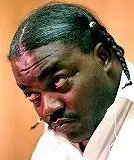 Barry Lee Fairchild
Homicide · USA · 1983
Barry Lee Fairchild was convicted of the kidnap, rape and murder of a 22-year-o…
1 victim
Barry Lee Fairchild
Homicide · USA · 1983
Barry Lee Fairchild was convicted of the kidnap, rape and murder of a 22-year-o…
1 victim
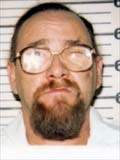 Marion Albert Pruett
Serial killer · USA · 1981
Marion Albert Pruett was born circa 1950 and was executed in Arkansas on April…
5 victims
Marion Albert Pruett
Serial killer · USA · 1981
Marion Albert Pruett was born circa 1950 and was executed in Arkansas on April…
5 victims
- Gender
- male
- Country
- USA
- Location
- Newton County, Texas, USA
- Date of birth
- August 23, 1946
- Age at first offence
- 44
- Characteristics
- kidnapping, rape
- Victim profile
- Falyssa Van Winkle (female, 10)
- Method of murder
- Strangulation with a piece of rope
- Date(s) of murder
- August 6, 1990
- Years active
- 1990
- Date of arrest
- 2 days after
- Status
-
Executed
Executed by lethal injection in Texas on October 1, 2002
Overview
James Rexford Powell was executed by lethal injection in Texas on October 1, 2002. He was sentenced to death for the capital murder of Falyssa Van Winkle that occurred on Oct. 6, 1990. The case involved the abduction and sexual assault of Falyssa, and her death by ligature strangulation after her body was found under a bridge.
Timeline
- Oct. 6, 1990 — Joe and Elaine Langley worked with their 10-year-old daughter, Falyssa, at a flea market in Beaumont; Powell was seen at the flea market around 9 a.m. and then again in connection with Falyssa before she disappeared; Falyssa left to buy peanuts; Powell later drove away in a motor home; Powell’s motor home was seen traveling toward Bon Weir on a dirt road between noon and 1 p.m.; Falyssa’s body was found that afternoon under a bridge with her hands and ankles bound with rope; she died of ligature strangulation associated with mechanical asphyxiation, and she sustained a head injury and sexual assault.
- Nov. 8, 1990 — The State of Texas indicted Powell for the capital murder of Falyssa Van Winkle while in the course of aggravated sexual assault and kidnapping.
- May 6, 1991 — Trial on the merits began.
- June 3, 1991 — The jury returned a verdict of “guilty.”
- June 6, 1991 — Following a separate punishment hearing, the same jury answered “yes” to the deliberateness and future dangerousness special issues; the trial court assessed punishment at death.
- Oct. 11, 1990 — Powell was arrested and charged with capital murder.
- 1994 — The Texas Court of Criminal Appeals affirmed Powell’s conviction and death sentence in a published 1994 opinion.
- 1995 — The Texas Court of Criminal Appeals denied rehearing; the Supreme Court denied certiorari review within the year.
- 1998 — The Court of Criminal Appeals denied Powell’s application for state habeas relief.
- About three years later (after 1998) — The federal district court denied federal habeas relief.
- 2002 — The Fifth Circuit Court of Appeals affirmed the district court’s decision.
- April (1991 appeal described) — The Fifth Circuit rejected Powell’s claims in April (as referenced in relation to U.S. Supreme Court review requests).
- Sept. 27, 2002 — The Texas Attorney General provided information that Powell was scheduled to be executed on Oct. 1, 2002.
- Oct. 1, 2002 — Powell was executed by lethal injection in Huntsville, Texas; he was pronounced dead at 6:17 p.m. CDT.
- Oct. 8, 1990 — Powell was arrested at his home in Mauriceville, northeast of Beaumont (as referenced in the account describing law enforcement actions two days after the killing).
- June 6, 1990 decade referenced — Powell was scheduled after conviction and sentence (as referenced in multiple passages tied to the scheduled execution date).
The offence
On the morning of Saturday, Oct. 6, 1990, Joe and Elaine Langley were working with their 10-year-old daughter, Falyssa, at a flea market in Beaumont. Joe Langley saw James Rexford Powell, an acquaintance, at 9 a.m. for about 10 to 15 minutes. Langley also saw Powell talk to Falyssa. Around 10 a.m., Falyssa left to buy a bag of peanuts; a little while later, Powell came by and indicated he was leaving. Langley did not see Falyssa or Powell again.
After noon and before 1 p.m., Powell’s motor home was seen traveling on a dirt road toward Bon Weir, a town northeast of Beaumont in Newton County near the Louisiana border. The vehicle was also spotted near a bridge on a dirt road. About 3:15 p.m., Falyssa’s body was found under the bridge. A rope was tied tightly around Falyssa’s neck and wrists, and her ankles were determined to have also been tied together with a rope at some point in time. Her cause of death was determined to be “mechanical asphyxiation associated with homicidal ligature strangulation.” Falyssa had also sustained a head injury and sexual assault.
A vendor saw Powell near the peanut stand around 10 a.m., and another recalled seeing Powell’s motor home leaving the market between 10 and 10:30 a.m. Witnesses reported seeing Powell’s distinctive motor home near the site where the body was discovered, and witnesses also identified Powell’s motor home traveling from the flea market area.
Investigation
Because Powell’s motor home matched the description of the one several witnesses saw near the bridge on the day of the murder, law enforcement investigators obtained a warrant to search the vehicle. The next day, a neighbor of Powell’s observed him washing the inside, outside and underside of his motor home.
Despite the cleansing, the search of the vehicle produced white dog hairs that matched a similar hair found on Falyssa’s body. Law enforcement officers also found six “forcibly removed” hairs that matched Falyssa’s head hair. Tire tracks at the crime scene matched the tires on Powell’s motor home. DNA test results revealed that sperm found on Falyssa’s body matched Powell’s DNA.
At the time of execution reporting, investigators were described as finding that the key evidence against Powell included his sperm in the child’s body; eyewitnesses who identified his motor home in the area where the child’s body was found; and a hair from the child found inside the motor home.
Arrest
Powell was arrested two days after the killing (as referenced in accounts stating he was arrested two days later). Accounts also described Powell being arrested on Oct. 11, 1990, charged with capital murder, and another account described him arrested Oct. 8, 1990 at his home in Mauriceville, northeast of Beaumont. He was described as being investigated and eventually being focused on as a lead due to his distinctive vehicle and related observations.
Trial
Powell pleaded “not guilty” in the First Judicial District Court of Newton County.
Trial on the merits began May 6, 1991. On June 3, 1991, the jury returned a verdict of “guilty.”
According to the evidence summary presented for execution-related information, witnesses identified Powell’s motor home and Powell talked to Falyssa before the abduction. Investigators used biological evidence and other physical evidence linked to the motor home, including hairs and sperm DNA matching Powell’s DNA.
In the penalty phase, the jury was described as answering “yes” to the deliberateness and future dangerousness special issues.
A poll of the jurors requested by the defense showed unanimity on the decision.
Sentencing
After a separate punishment hearing, the jury answered “yes” to the deliberateness and future dangerousness special issues. Consequently, on June 6, 1991, the trial court assessed punishment at death.
During sentencing-related discussion, it was described that testimony involving a prior acquittal was introduced during the penalty phase over defense objections, and the Texas courts upheld that admission. Powell’s defense objected to testimony and also challenged the fairness of sentencing.
First Judicial District Judge Joe Bob Golden read out the jury’s decision and said, “I assess your punishment as death.'' The jury foreman Joe Walker later stated:
“I had no remorse about it. If you had chance to look at any of the evidence, it was self-explanatory,”
“I had no feeling about convicting him. He was guilty and he deserved what he got.”
“Yes, I do. It was an unanimous decision.”
“I wouldn't want him walking around here. I don't have any kids, but I wouldn't want him to pick up any of my kids. I do believe he would do it again.”
Jefferson County Assistant District Attorney Paul McWilliams told reporters:
“The evidence in this case left them with no other decision to make. We were confident.”
Mrs. Elaine Langley said:
“I think now she can rest in peace knowing he can't do this to any more children.”
Mike Van Winkle said:
“I want the system to work right. I believe every man should have his day in court. This man certainly had it.”
Asked what he would remember most about his daughter, Van Winkle said:
“Her spirit ... she really had spirit. She trusted people. She was a kid and this creature took advantage of that for enough time he put her spirit out.”
Powell’s defense attorney Louis Dugas stated he would continue to place faith in God and rely on God to carry him, and Dugas said:
“He said he would continue to place his faith in God and rely on God to carry him.”
Powell replied “Nope” when asked if he wanted to comment on the death sentence.
Appeals
The Texas Court of Criminal Appeals affirmed Powell’s conviction and death sentence in a published 1994 opinion and denied rehearing in 1995. The Supreme Court denied certiorari review within the year.
In 1998, the Court of Criminal Appeals denied Powell’s application for state habeas relief. The federal district court denied federal habeas relief three years later. In 2002, the Fifth Circuit Court of Appeals affirmed the district court’s decision.
Accounts also described that Powell had a petition for certiorari to the Fifth Circuit pending at the time of the execution-related communications. Another account described that Powell had two matters pending before the U.S. Supreme Court: an application for a stay of execution and a request for review of an appeals court decision. Nicholas Trenticosta was identified as Powell’s appeals lawyer.
During discussion of issues raised on appeal, the accounts described claims involving alleged Sixth, Eighth and 14th Amendment violations during the sentencing phase, including the prosecution’s introduction of testimonial evidence involving a prior attempted murder charge on which Powell had been acquitted. Nicholas Trenticosta stated:
“only person sentenced in the United States whose sentence relies upon prior acquittal.”
Trenticosta also stated:
“There are no reported decisions holding that a sentencing jury may consider evidence of alleged prior criminal conduct in which the defendant has been acquitted in order to find the defendant death-eligible.”
Trenticosta also said the Fifth Circuit’s decision rejecting Powell’s claims as a “matter of logic alone ... cannot stand” and that the Fifth Circuit decided:
“that a crime of which as person has been acquitted by a jury, which was not proven beyond a reasonable doubt, may be used against him to prove the 'special issue' for future dangerousness beyond reasonable doubt and, therefore, provide justification for the compelled imposition of the death penalty.”
Regarding the international relief request, one account described that Powell sought international relief after exhausting domestic remedies.
Outcome
He was described as being in the death chamber of the Huntsville “Walls” Unit, and he was pronounced dead at 6:17 p.m. CDT.
Powell’s final statement before being given a lethal dose was:
“I am ready for the final blessing.”
A priest among his witnesses led a prayer, and Powell was described as taking several short gasps as the drugs took effect before being pronounced dead.
In a statement attributed to Powell, he had previously written from death row:
“I was not the one who committed this crime,”
and also:
“It's not only the 'poor, abused, black man' that gets screwed, sometimes it's us 'poor, old, white folks' who get shafted too.”
Other details
Victim details
Falyssa Van Winkle was 10 years old at the time of her disappearance and death. Multiple accounts referenced her as a 10-year-old girl abducted from a Beaumont flea market and antiques fair and described the body as found under a bridge on a road crossing Cow Creek between Newton and Kirbyville in Newton County, Texas, along the Texas-Louisiana state line.
Prosecutor and court personnel
Texas Attorney General John Cornyn provided information on Powell’s scheduled execution. Jefferson County Assistant District Attorney Paul McWilliams was identified as one of the prosecutors in the case and as the prosecutor who sent Powell on his trip to the death house. The accounts also referred to First Judicial District Judge Joe Bob Golden as the trial judge who read the jury’s decision.
Defense counsel
Louis Dugas was identified as Powell’s defense attorney for the trial and as counsel during appeal-related discussion.
Prior proceedings and acquittals
A prior trial in Louisiana for attempted murder was described as ending in an acquittal. Powell had been tried in Louisiana in 1984 and acquitted on charges of attempted murder, attempted aggravated rape and aggravated burglary for beating and shooting a woman at her home in Merryville, Louisiana. That woman was identified as Lucille Jackson in one account and as the victim in an attempted murder case used during the punishment phase discussion.
In one account, Lucille Jackson, who was described as 74, testified in Powell’s sentencing phase and described events from Aug. 2, 1984. The testimony included the following verbatim statements attributed to Jackson:
“Lady, do you want me to shoot you.”
and Jackson stated:
“You are going to anyway.”
Jackson also said:
“When I came to, I went to a neighbor's house.”
and:
“When someone is choking you to death, you will always remember them.”
A defense witness was also described in connection with the sentencing phase: Mrs. Carless Powell was asked about “problems” her husband had with their daughter and niece, and she said:
“There were no problems,”
three times. She was also asked if she had an opinion about whether her husband of 22 years could commit future violence, and she said, crying:
“He wouldn't hurt anyone. He wouldn't commit any criminal acts of violence.”
One account also described that the defense challenged the accuracy of trial evidence and raised issues including that a change of venue was denied and that expert testimony concerning DNA evidence was admitted, with disputes concerning qualifications and the use of an unauthenticated computer program.
Powell’s background and other claims described in accounts
One account stated Powell was “formerly of Merryville, La.” Another stated he had refused requests to be interviewed and had never talked publicly about his conviction and death sentence.
An account also said Powell had no prior criminal record. Another account described Powell as having been arrested in 1984, tried and acquitted, and described a claim that the victim in that case testified at the punishment phase of Powell’s murder trial.
Some accounts included narrative claims about other suspected victims and missing persons, but the legal outcome remained that Powell’s death sentence was affirmed and that he was executed on Oct. 1, 2002.
Final meal
Powell’s final meal was one pot of coffee.
Final words and demeanor
The execution account described Powell’s last statement as “I am ready for the final blessing,” and that he smiled, nodded and grinned to friends and family who watched through a window a few feet away.
Spotted an error, or have more information about this case?